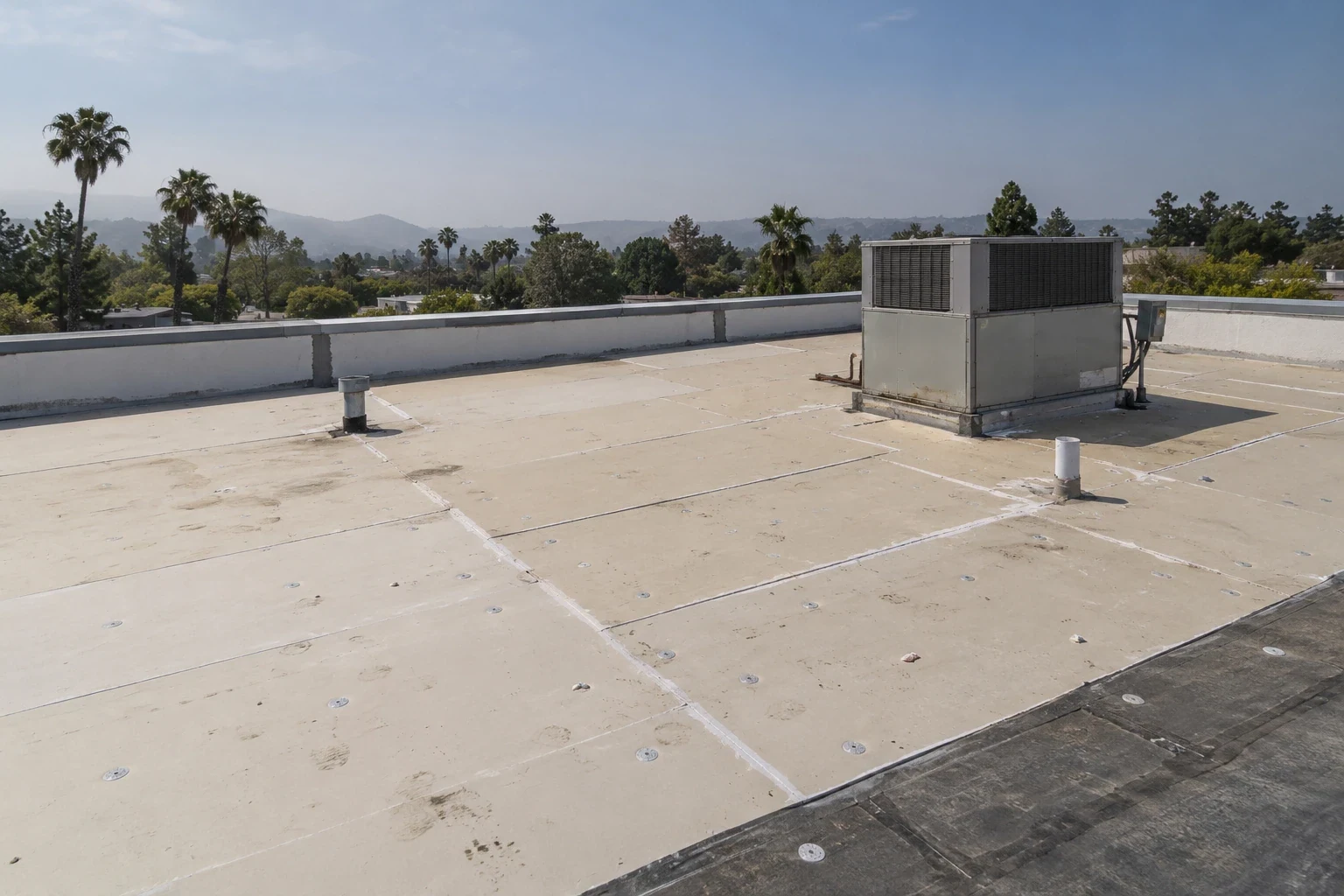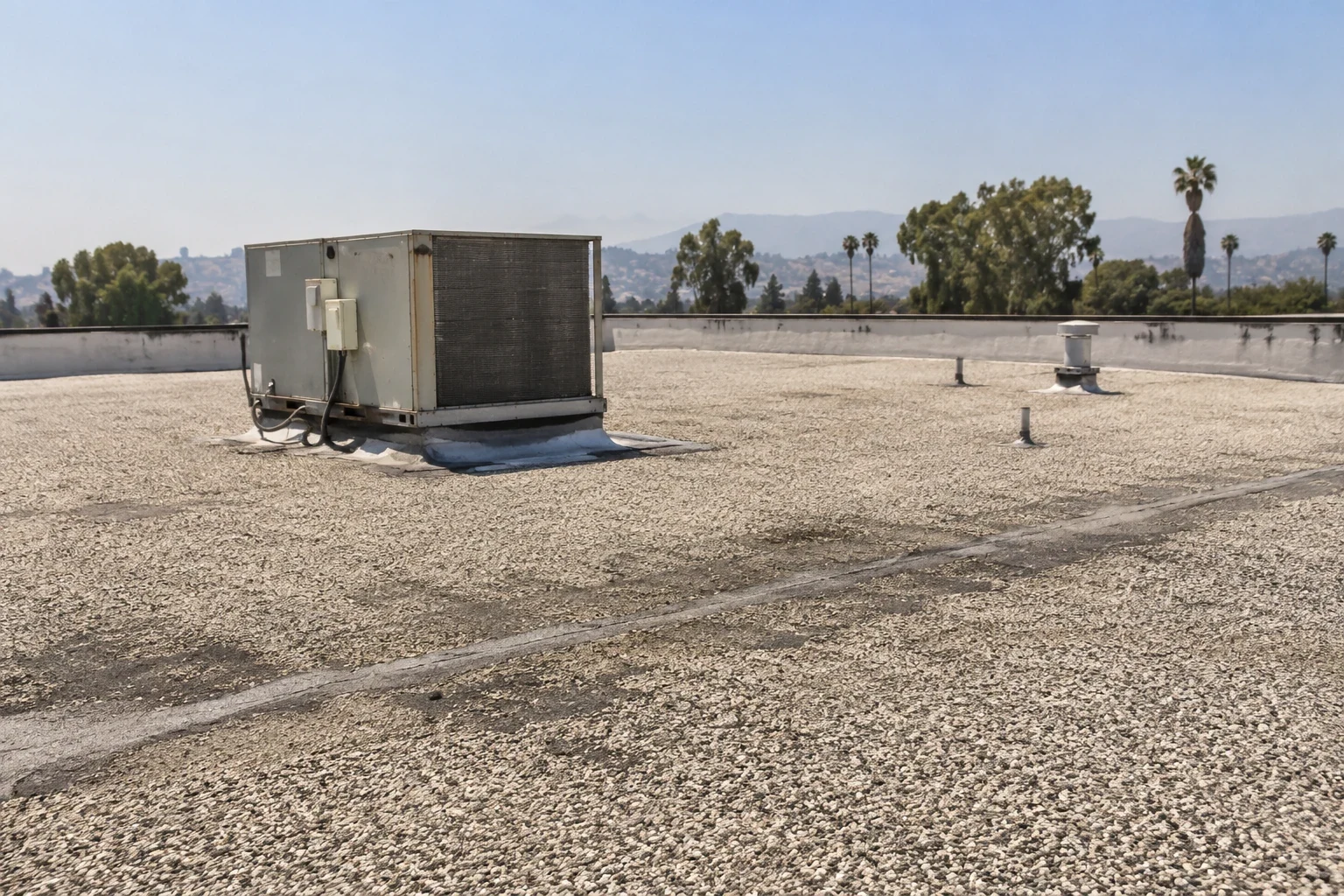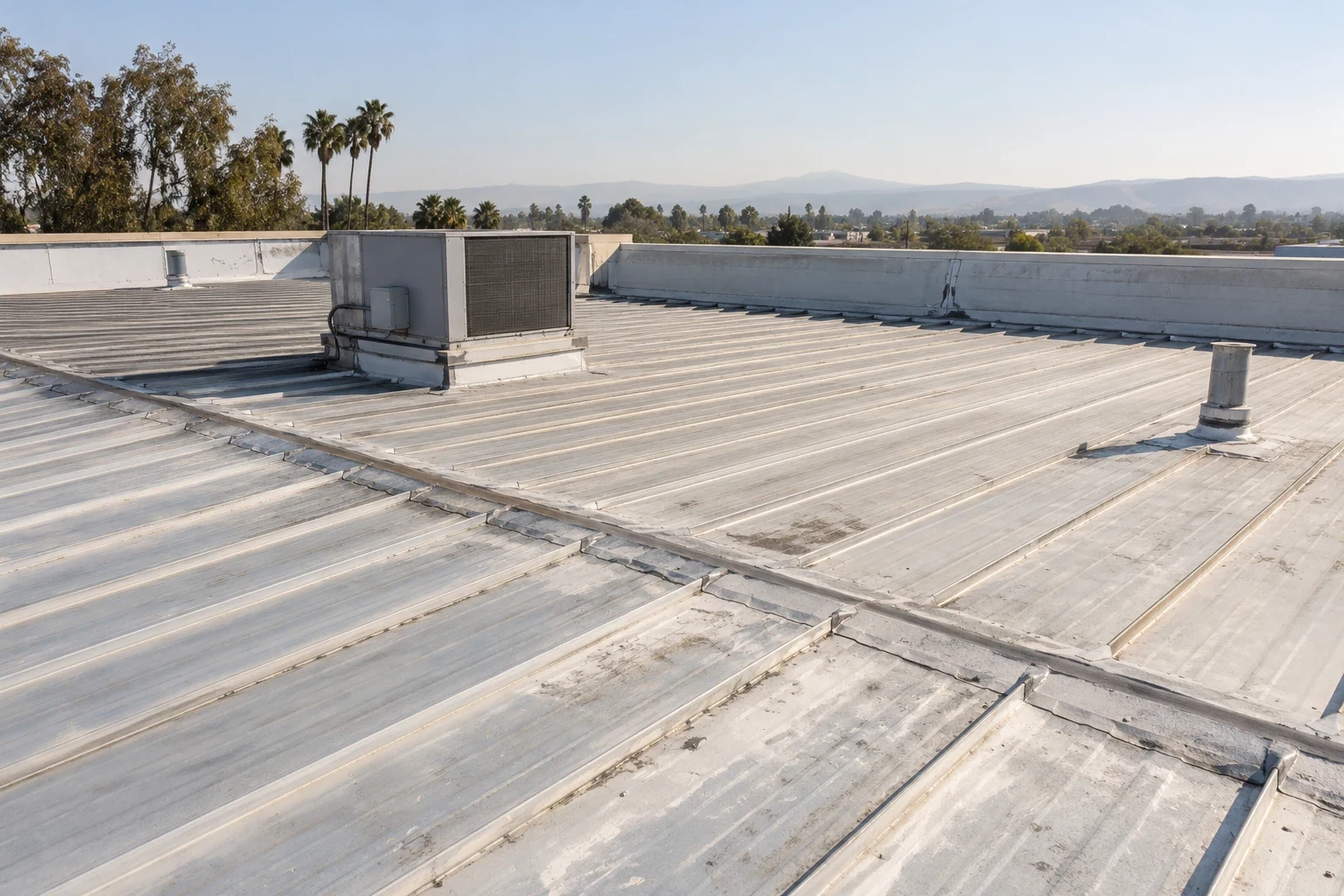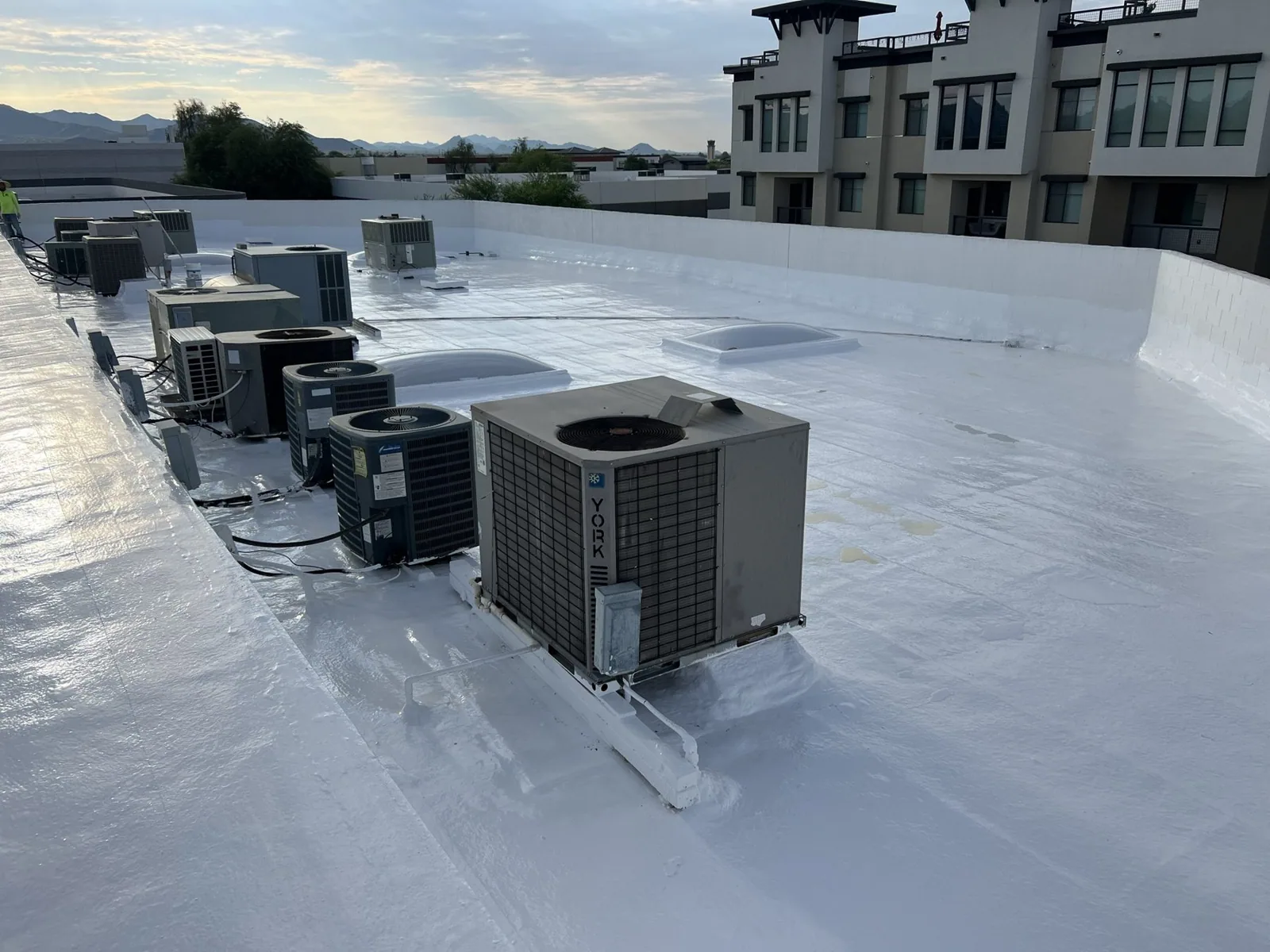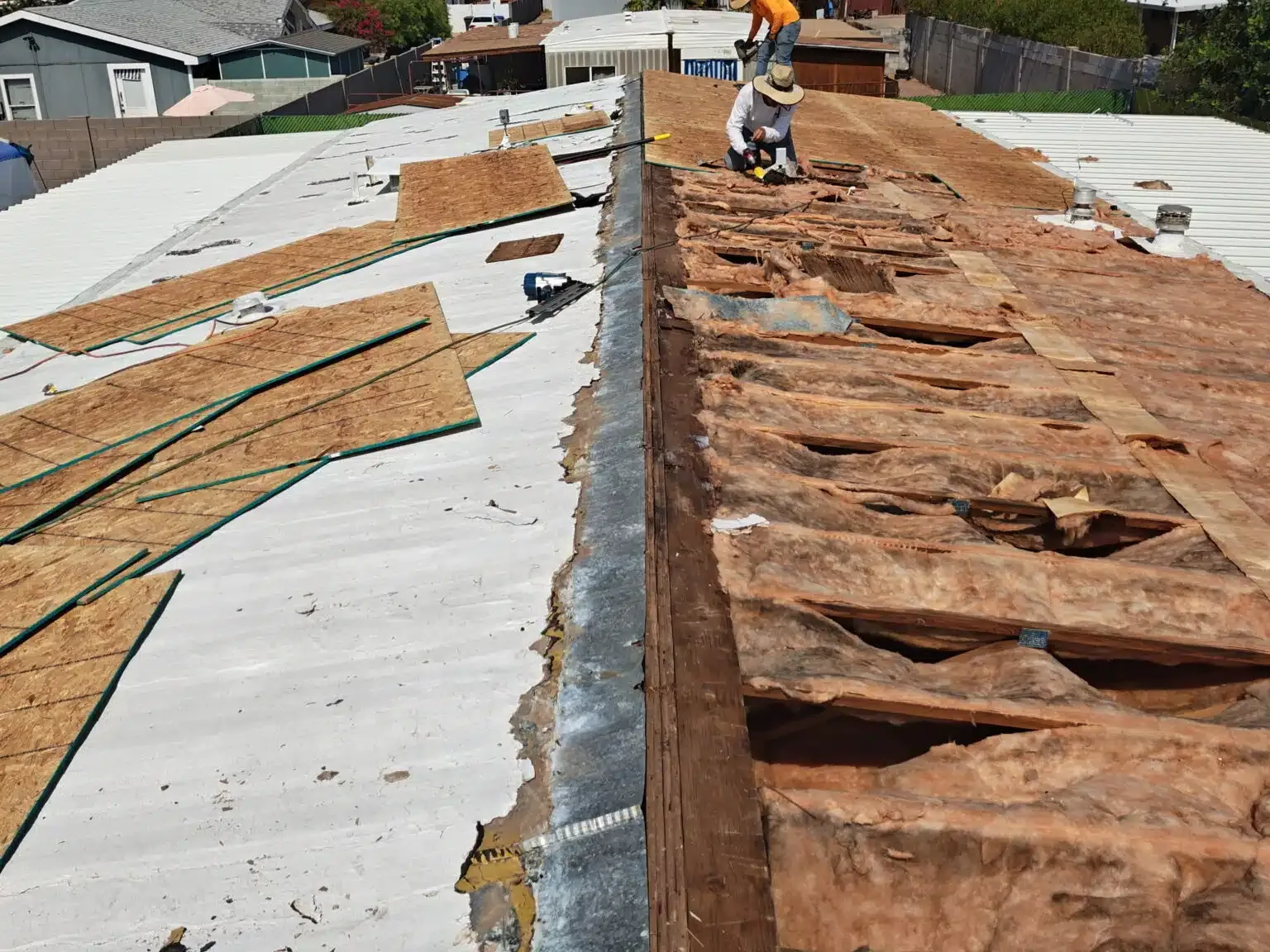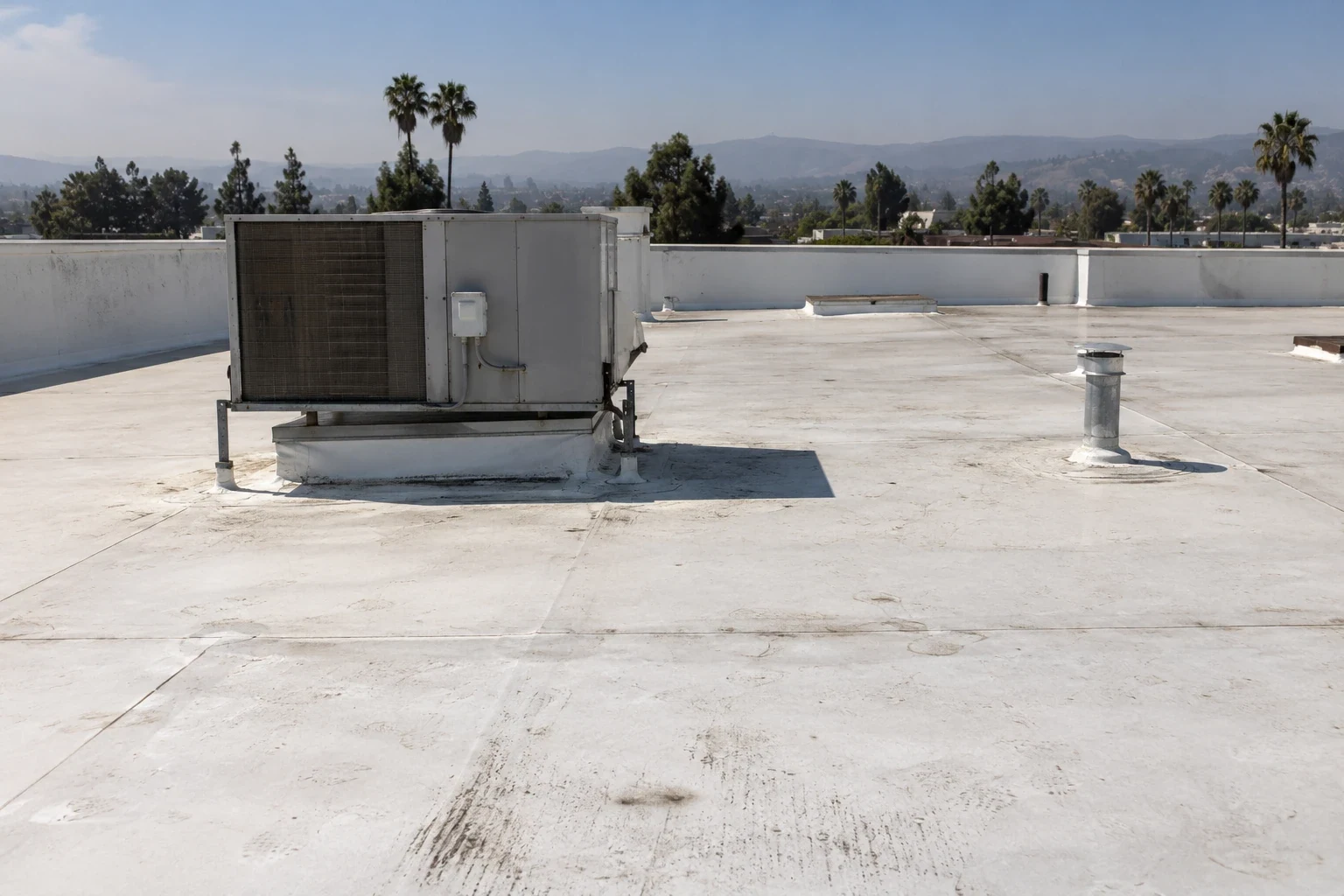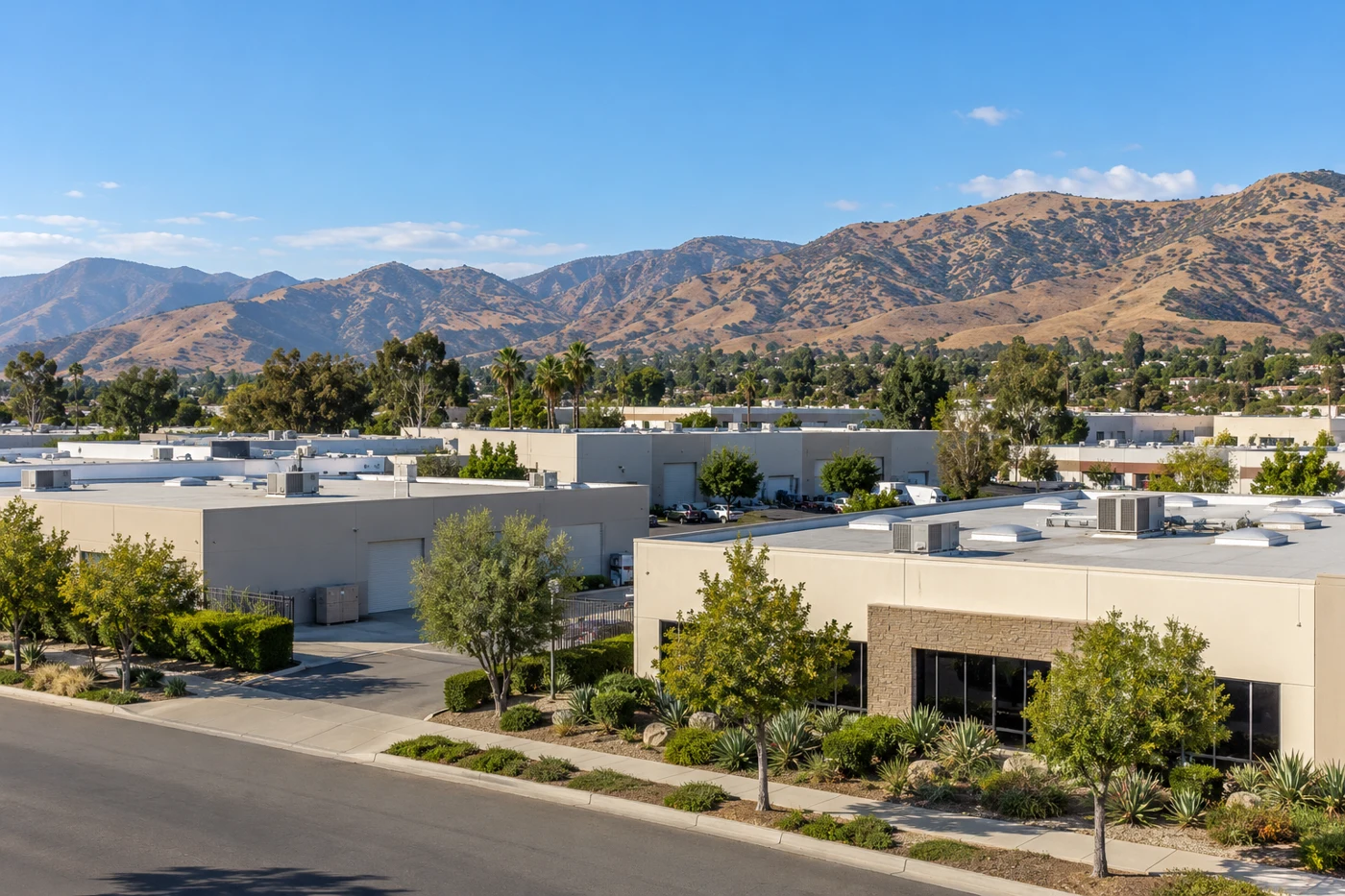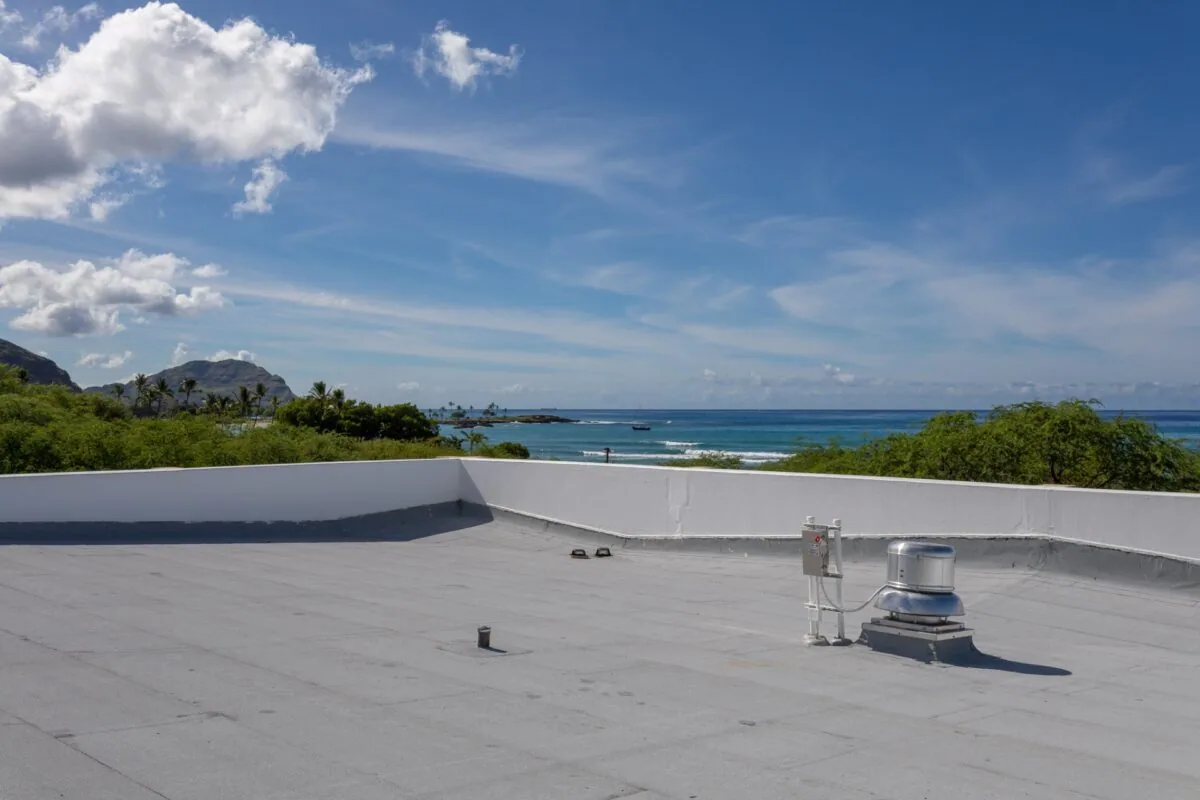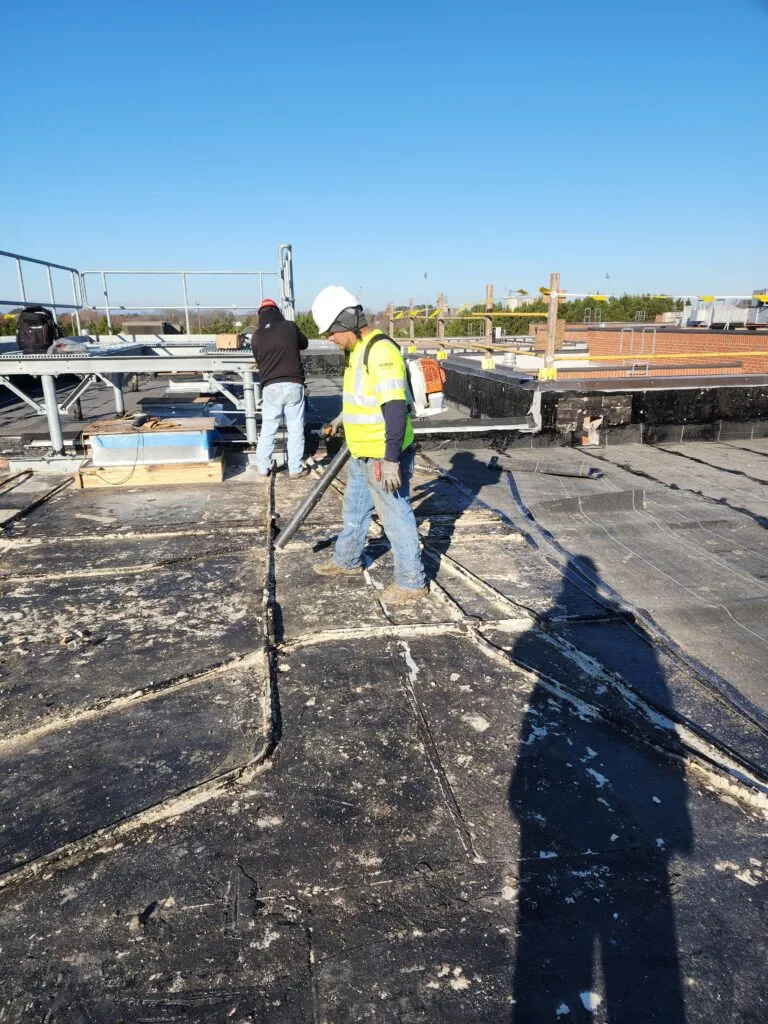
Insulation work changes the roof assembly, not just the layer visible from the surface. On a Simi Valley, CA building, we first identify the existing membrane, deck, drainage pattern, and areas that can be opened safely. Simi Valley projects more very hot days over time, so the assembly review includes exposed insulation edges, surface condition, and the owner’s operating priorities. We map the proposed work by roof zone and check transitions at drains, curbs, edges, and skylights. That gives the facility manager a defined replacement, recover, or correction scope before material is ordered. A commercial roof inspection can establish the condition record that supports that decision.
Start with the layers already in place
Before adding insulation, we identify what can be confirmed from roof records, exposed edges, existing repairs, and safe test areas. A roof may contain more than one layer, and a new cover board cannot correct a wet or unstable substrate underneath. We note membrane type, attachment, visible facer, deck condition where exposed, and any transition that may affect fastening or adhesion. If the records describe an earlier recover, we compare them with the actual edge detail instead of assuming the same build-up across every addition.
When the field clues do not establish the assembly, a focused test opening can answer a better question than a broad replacement allowance. We mark the opening, document the layers, protect it at the end of the visit, and state what remains unknown. The owner can then compare a localized repair with a larger assembly change using the same evidence. The work plan for commercial roof replacement should identify whether existing layers stay, come off, or need further investigation.
Use cover board for the job it can do
Cover board provides a firm surface above insulation and below the membrane, with performance depending on the board type, attachment, and complete system. It can support a recover or replacement assembly, but it does not make weak insulation sound or resolve trapped moisture by itself. We compare compressive strength, facer compatibility, fastening pattern, surface preparation, and the membrane method before writing the detail. On a thermoplastic assembly, the board facer and field seam plan have to work with the selected membrane, such as a TPO roof system.
Where roof traffic or service equipment concentrates, the scope separates general coverage from walk paths, pads, and reinforced areas. We mark those locations on the roof plan and call out any board or attachment change. A local repair may leave the larger field intact; a recover may need one consistent surface across the approved zone.