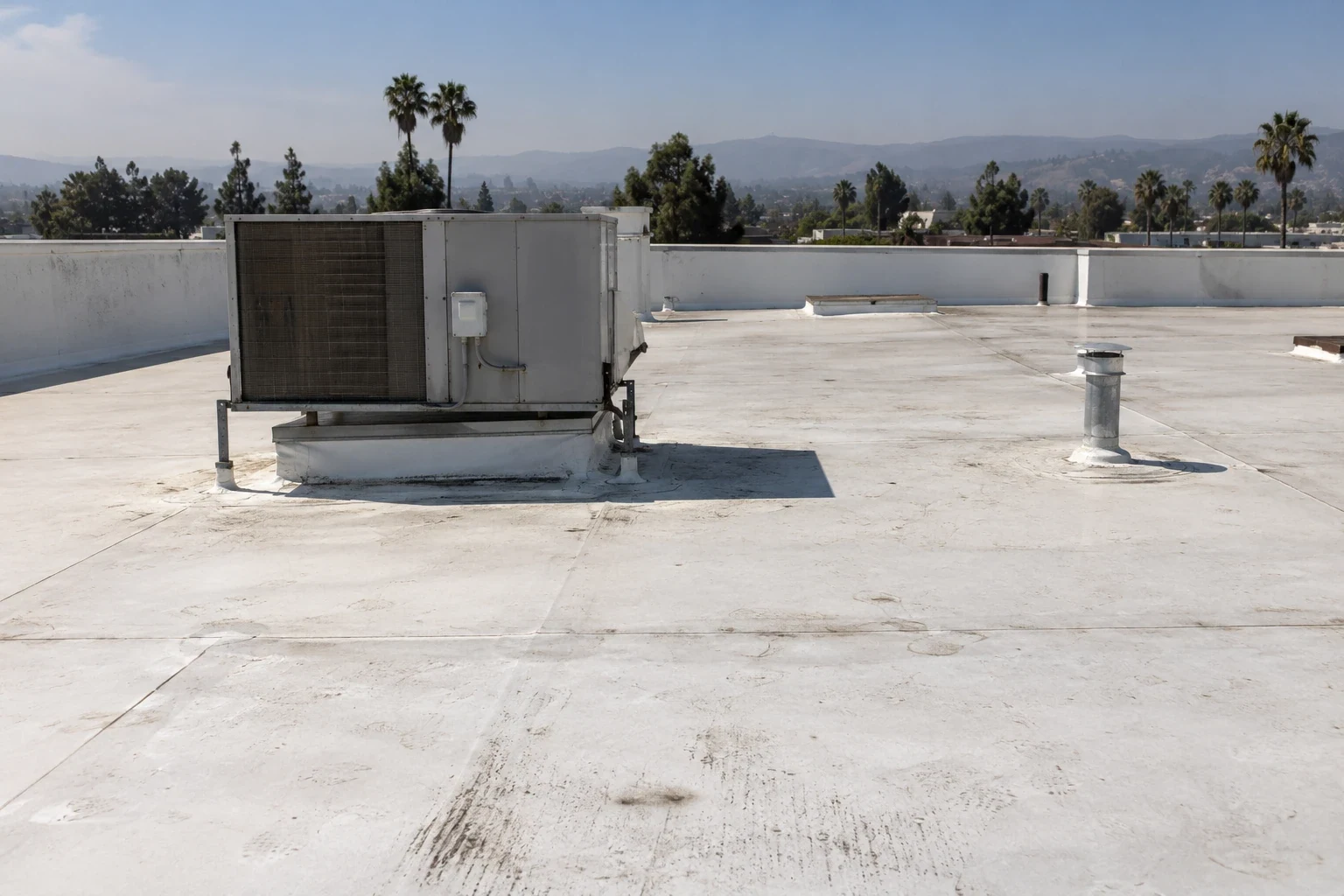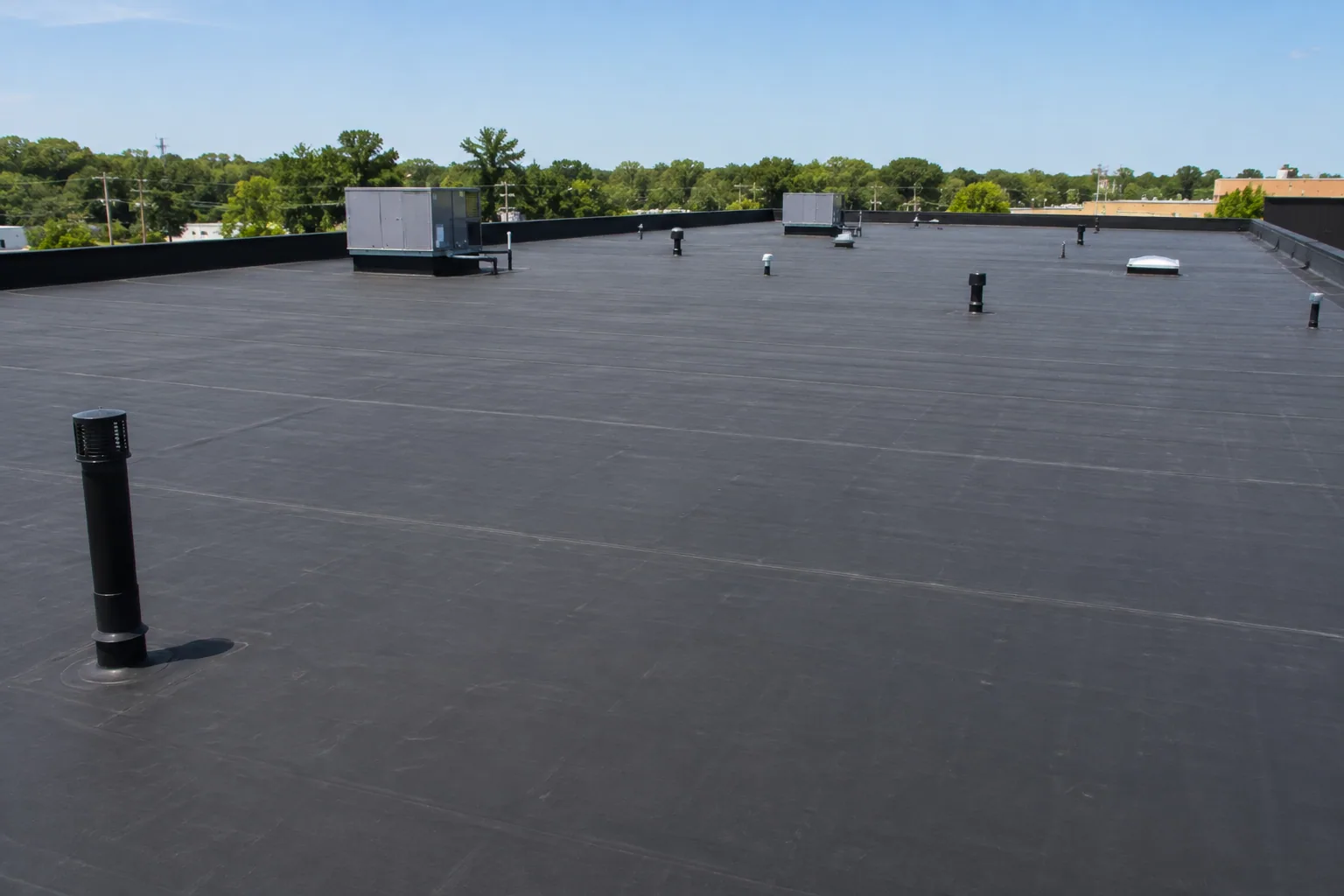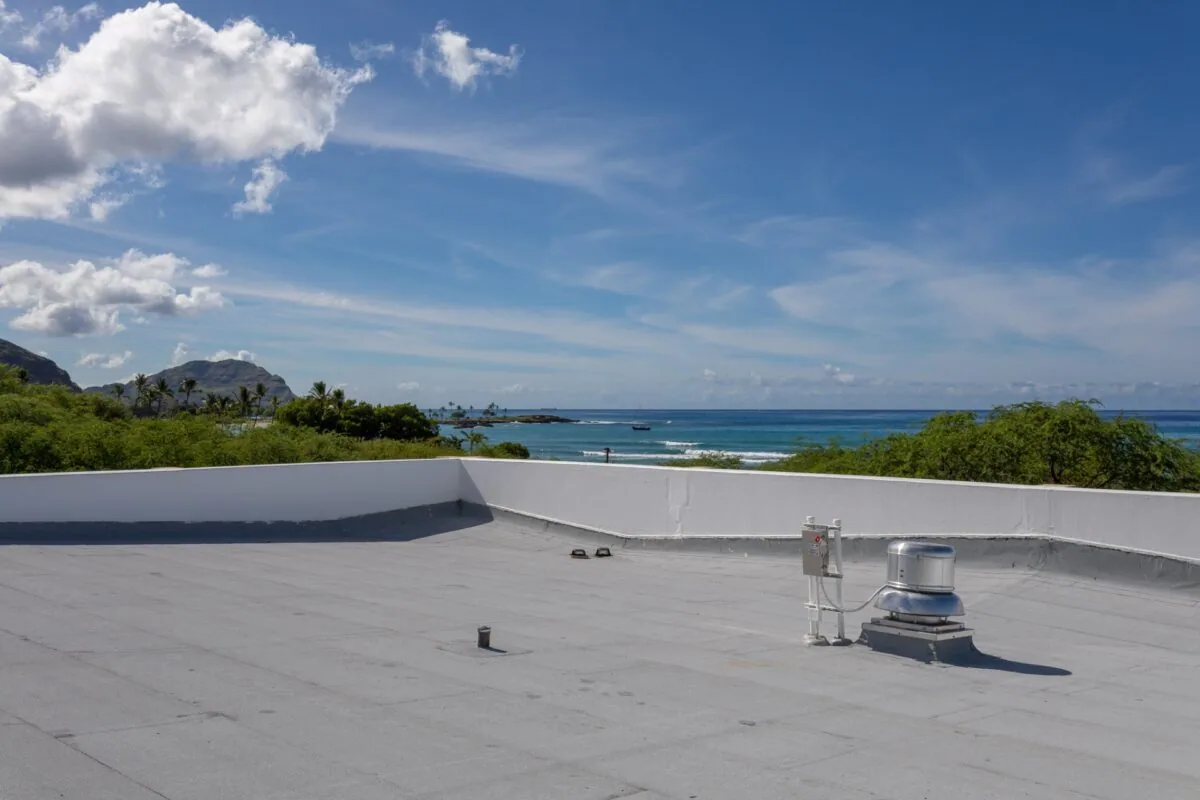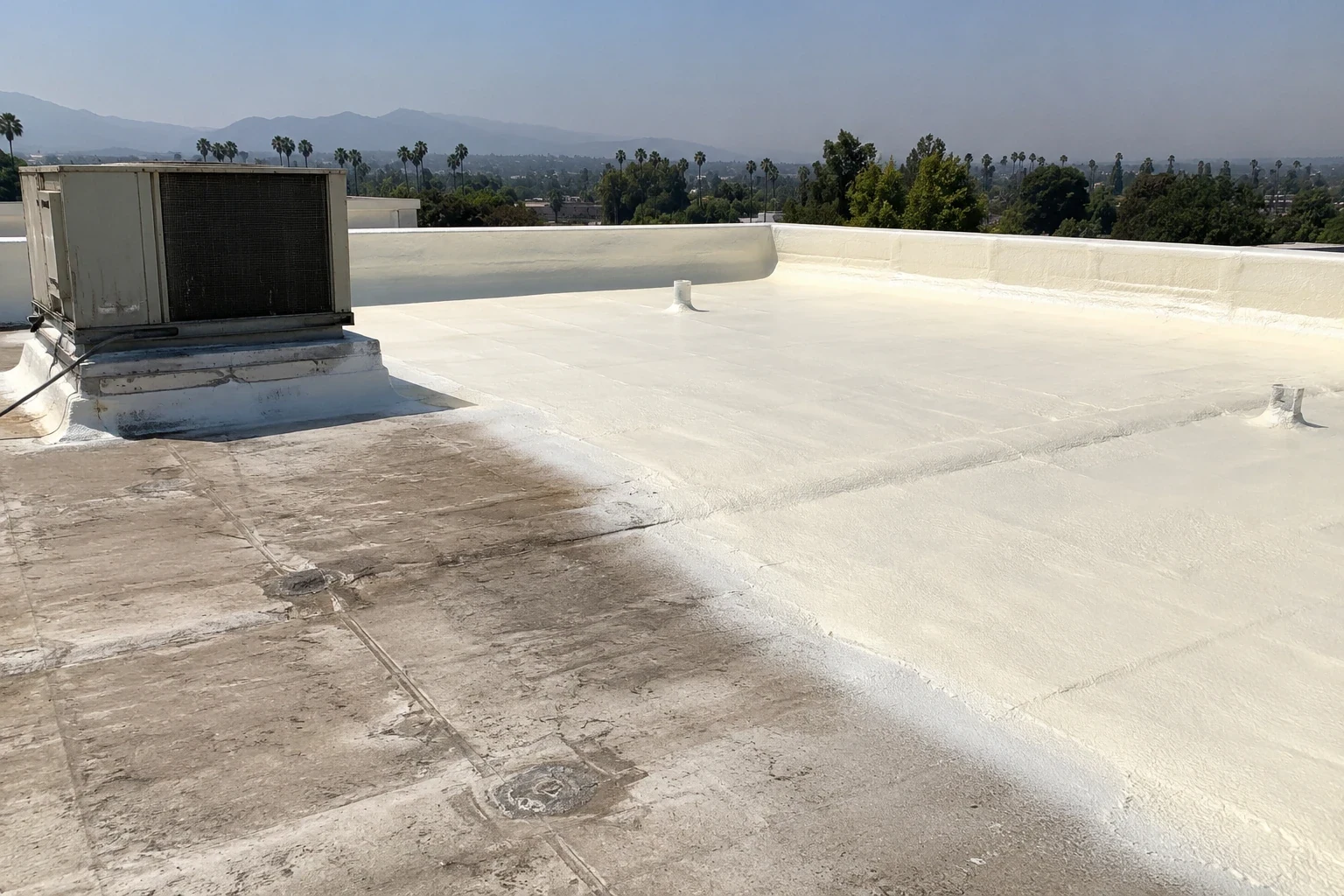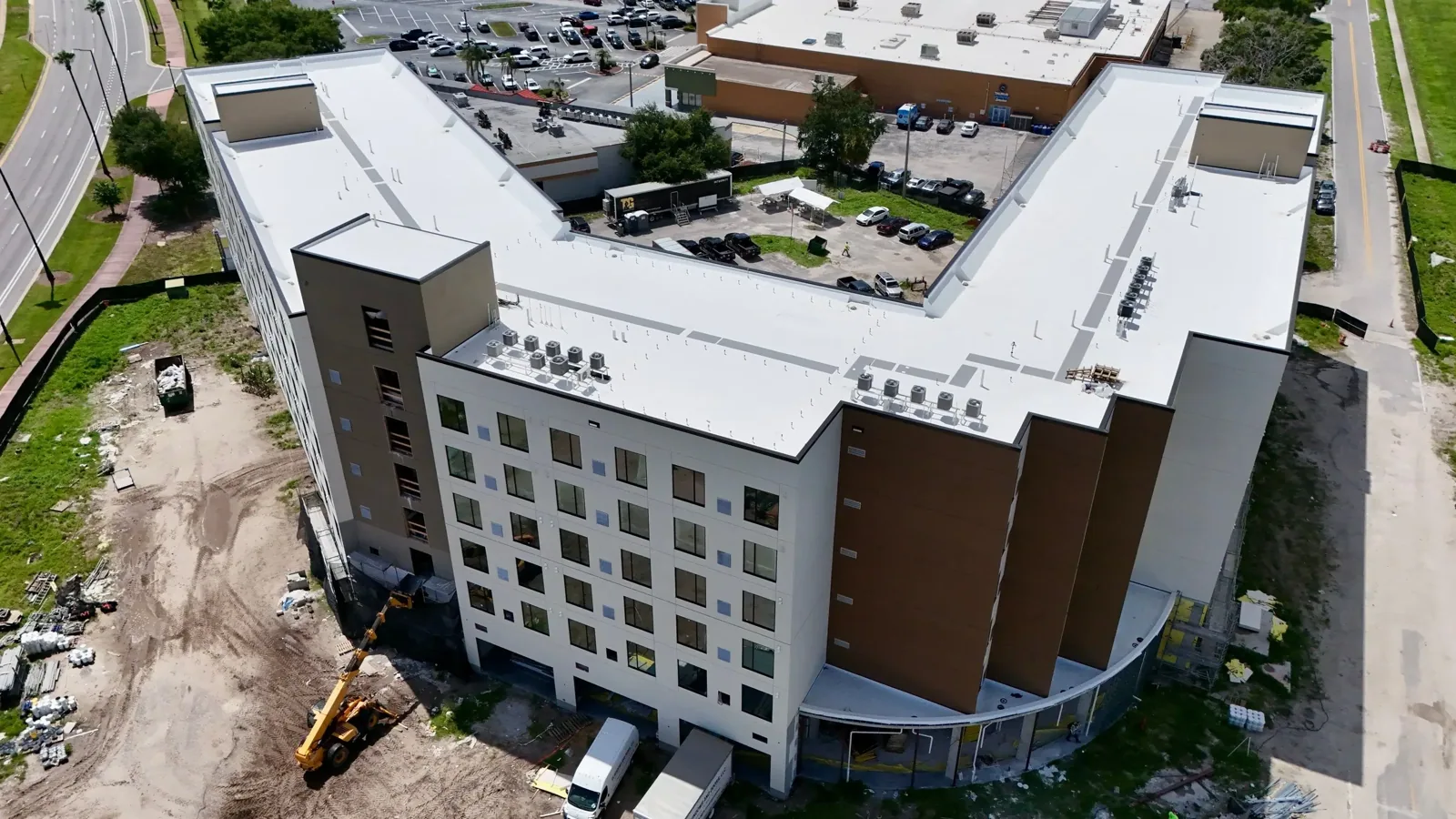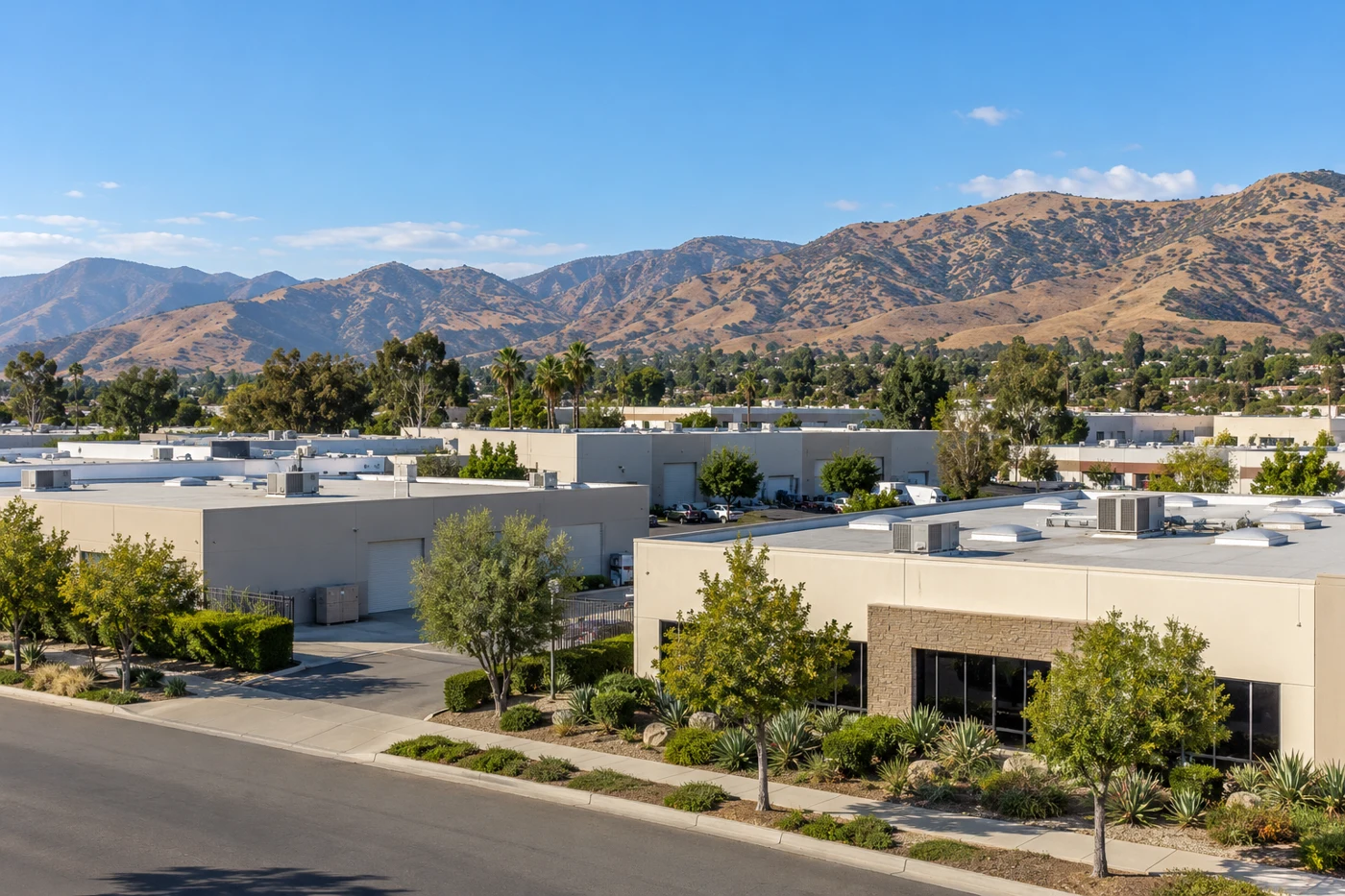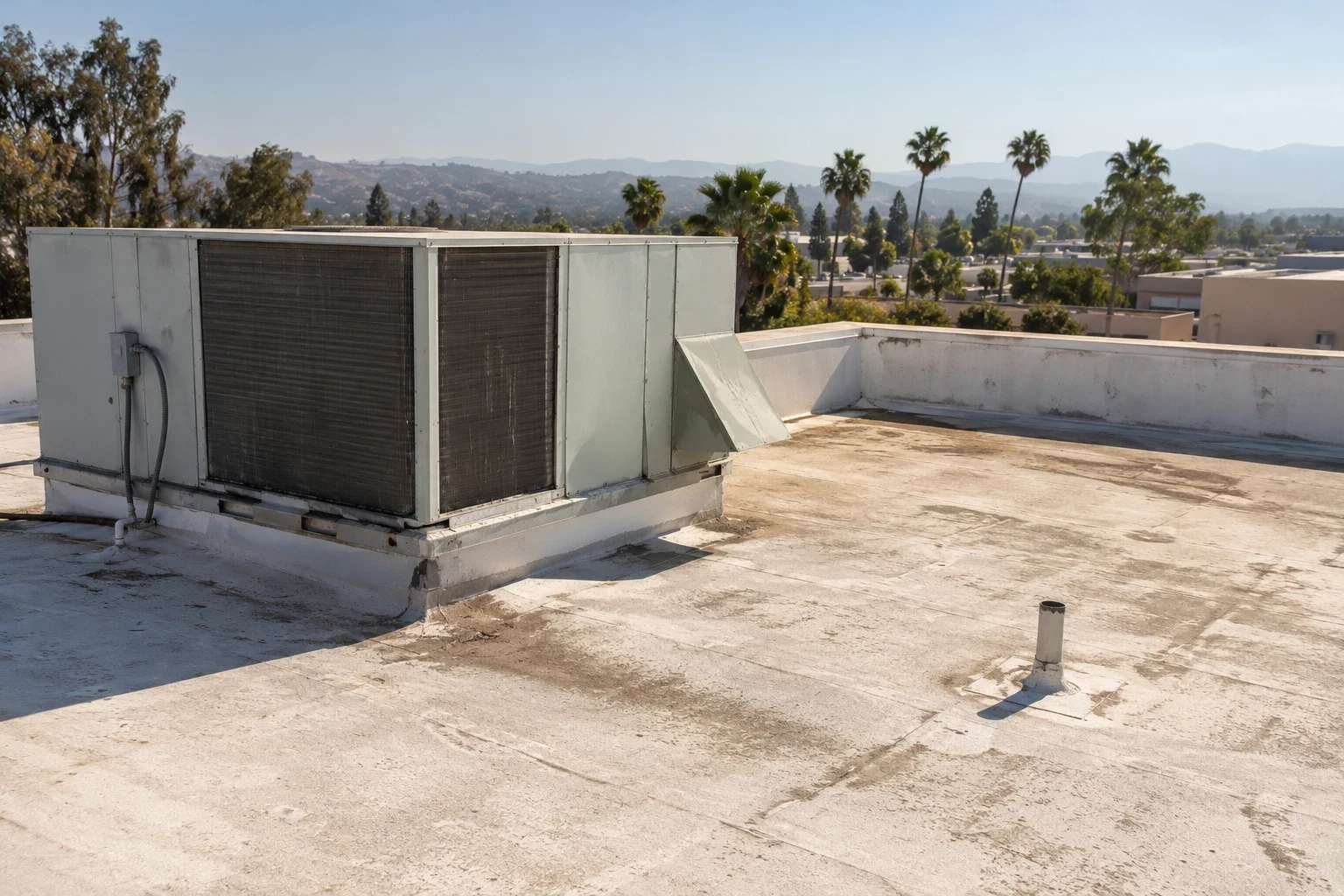
A TPO seam can look closed from a distance while a short section has released at a corner or curb. We inspect the weld, membrane surface, flashing, and insulation indicators before deciding whether to repair a detail or evaluate a larger roof zone. In Simi Valley, the City’s planning projections point to hotter summers ahead, so exposed seams and terminations deserve attention during a condition review. The projection does not diagnose the installed roof. The assembly does. A commercial roof inspection records the actual condition and gives the next decision a boundary.
Read the field and welds
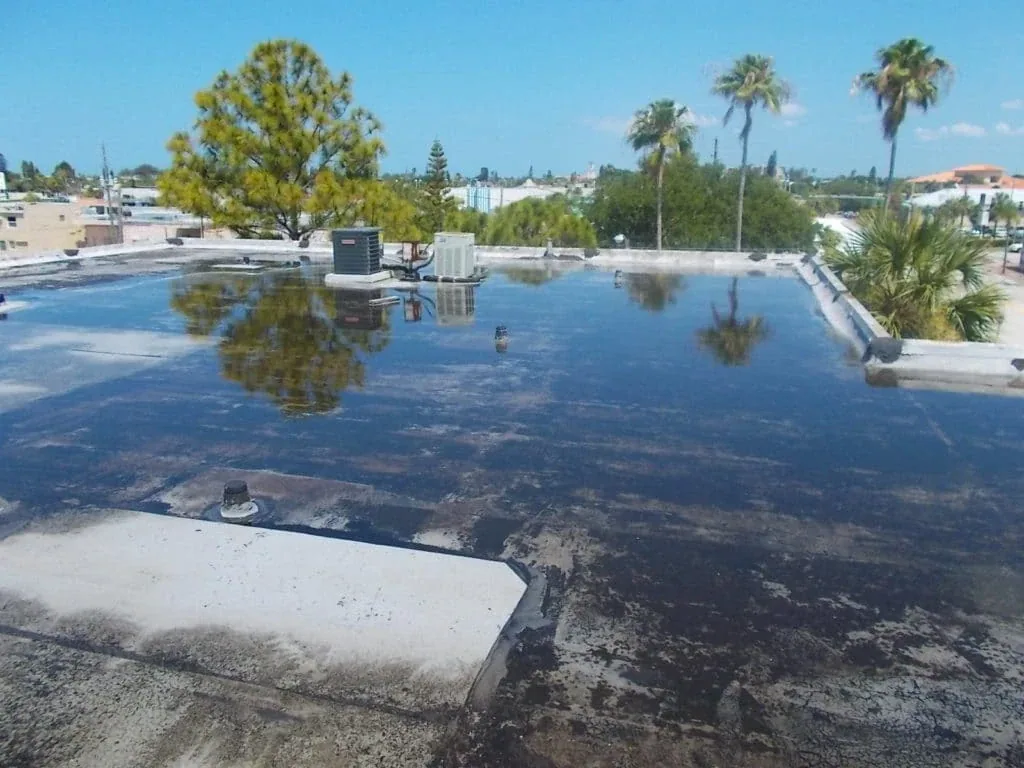
TPO is a thermoplastic single-ply membrane whose seams are joined with heat. We look for incomplete welds, contamination at a lap, fishmouths, punctures, shrinking or stressed flashing, and patches that no longer bond to the surface. A probing check at a suspect seam can help locate separation, but the result needs to be tied to the detail and material, not treated as a verdict on the entire roof. We mark the spot, check nearby transitions, and note whether the membrane is still securely attached.
Heat-welded seams need compatible membrane, clean surfaces, and proper temperature and travel speed. A repair should return to sound material with an adequate overlap and a finished edge that sheds water. We record the patch limits and test the completed weld according to the system requirements. If a repair would land on a prior patch or a brittle area, we extend the inspection before writing a price. A TPO repair scope names the location, preparation, material, and any condition outside the approved boundary.
Confirm the full assembly
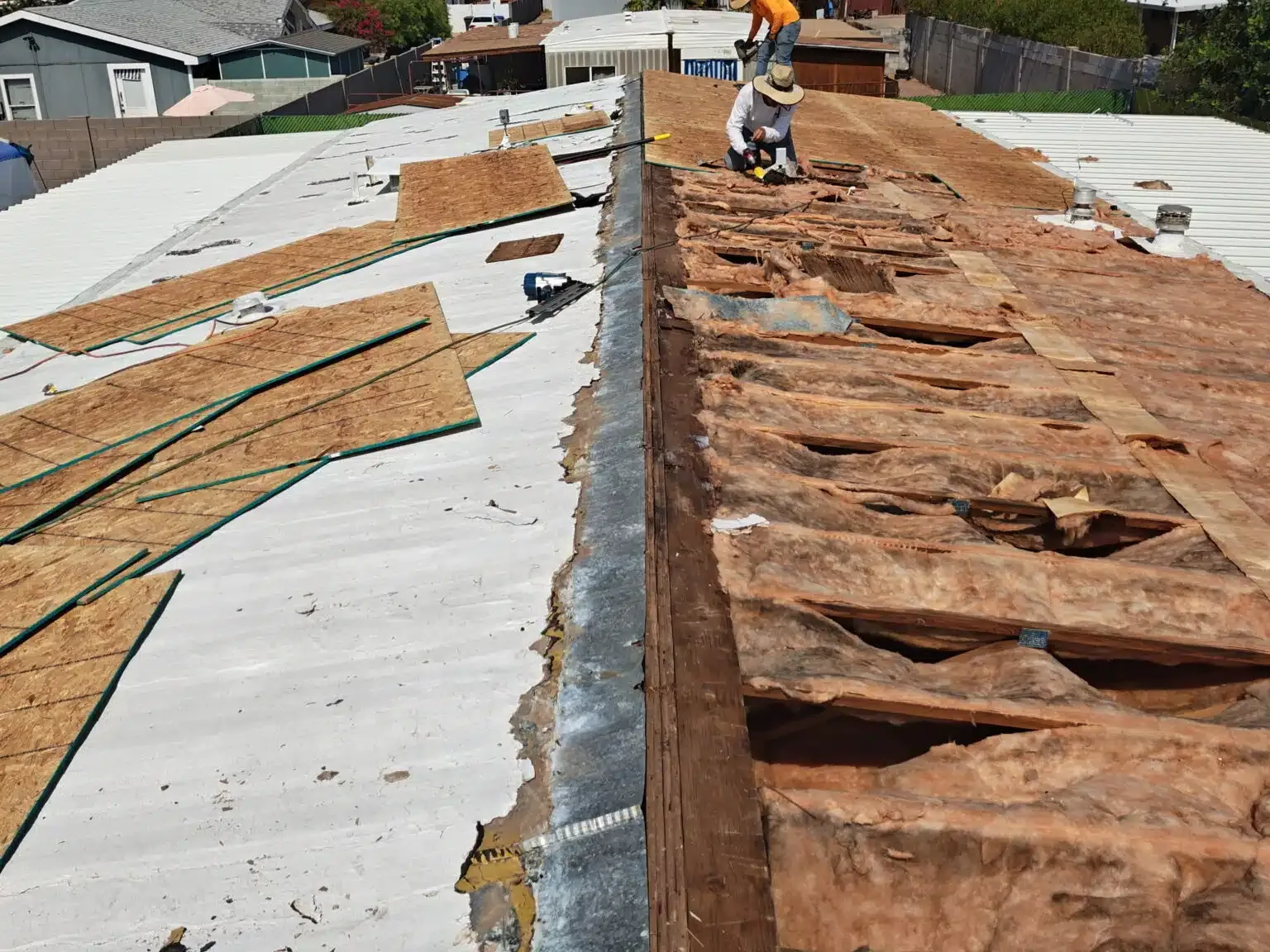
The white membrane is only the top layer. Below it may be cover board, one or more insulation layers, a vapor retarder, and a deck with an attachment pattern that controls how the roof resists uplift. Before installing TPO, we compare the existing assembly records with roof openings or other available evidence. Wet insulation, a loose substrate, or an unsuitable deck changes the scope. The owner should know which layers will remain, what is removed, how the new materials attach, and how concealed conditions are approved.
A recover can reduce removal only when the existing roof, moisture condition, and project requirements support it. We inspect the base, confirm the number of layers where possible, and document how new insulation and cover board will be fastened. If the assembly cannot provide a reliable substrate, a replacement evaluation can compare removal with a limited intervention. The proposal should state wind-design inputs, perimeter securement, edge metal, and the transition method at walls, curbs, drains, and expansion joints. Where process exposure matters, compare the same project criteria against a PVC assembly; an EPDM alternative has a different seam and repair approach.