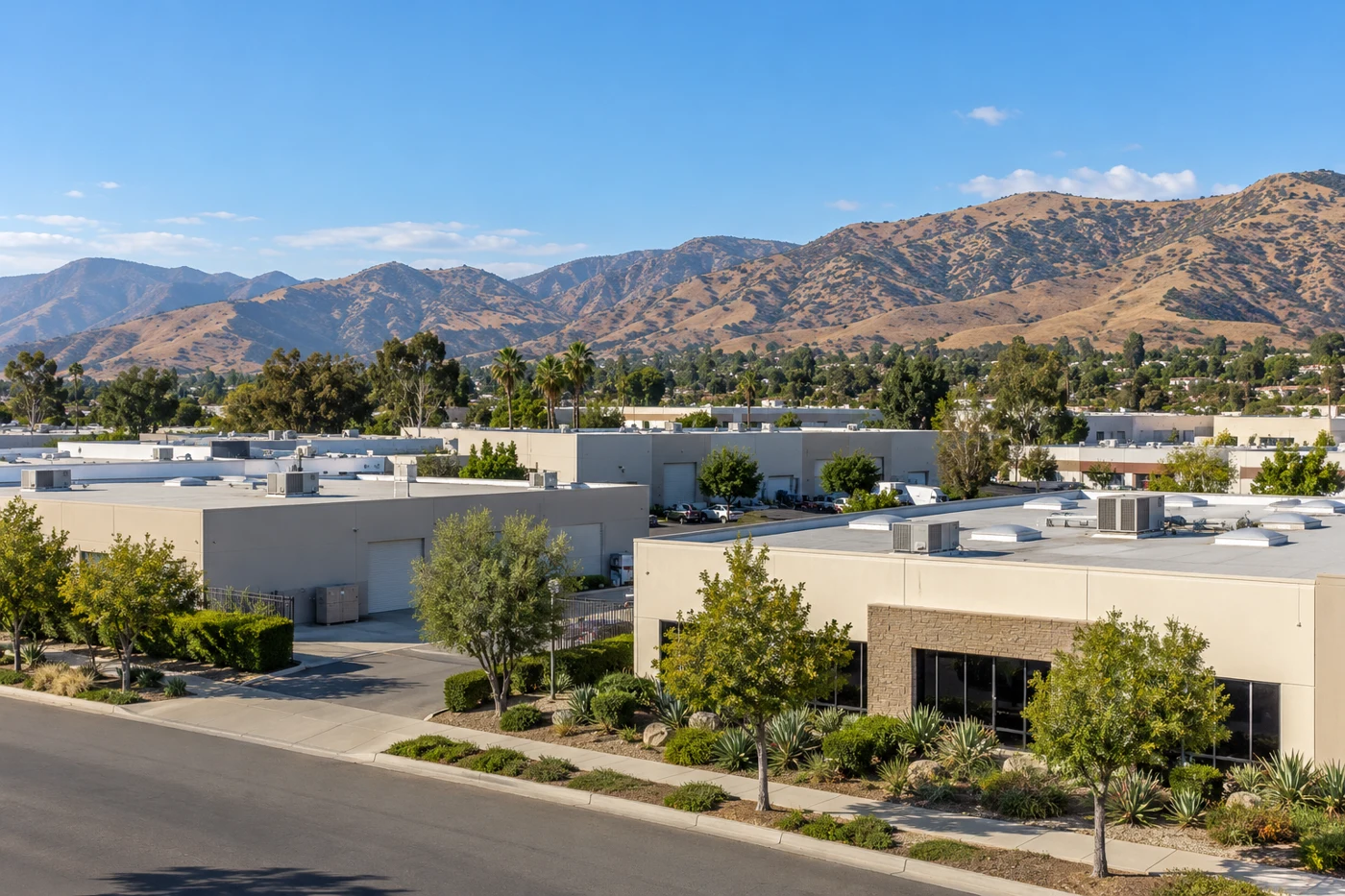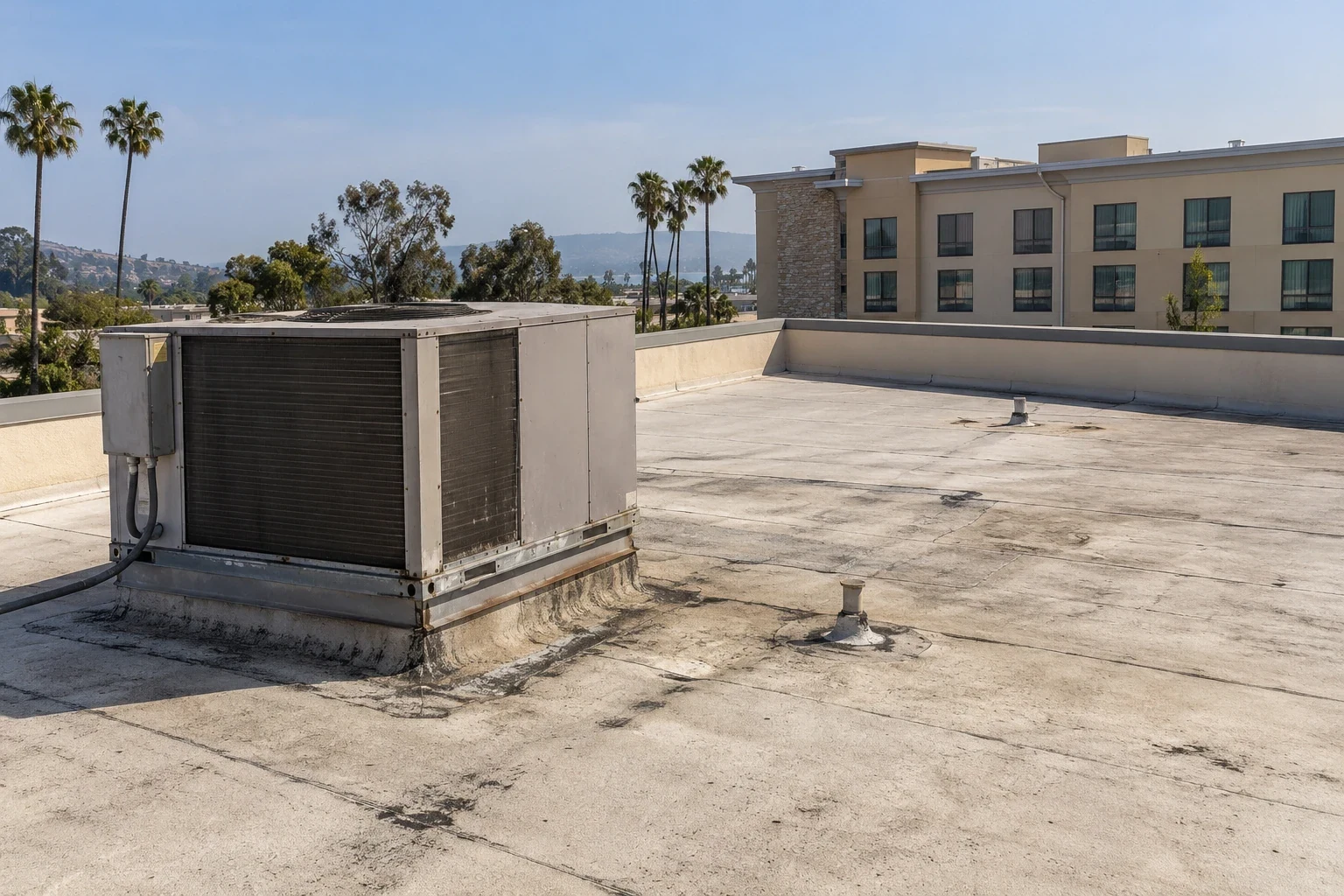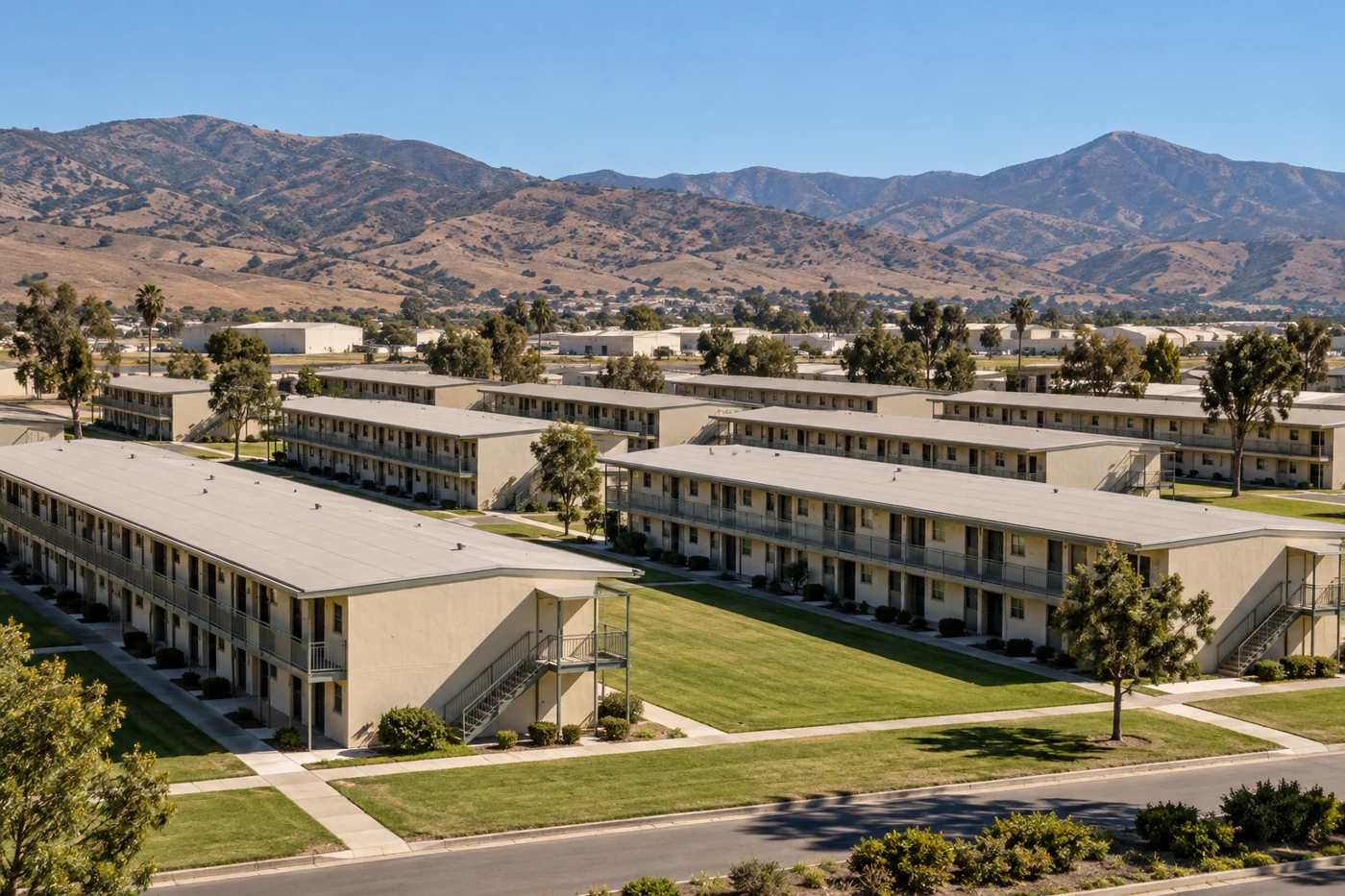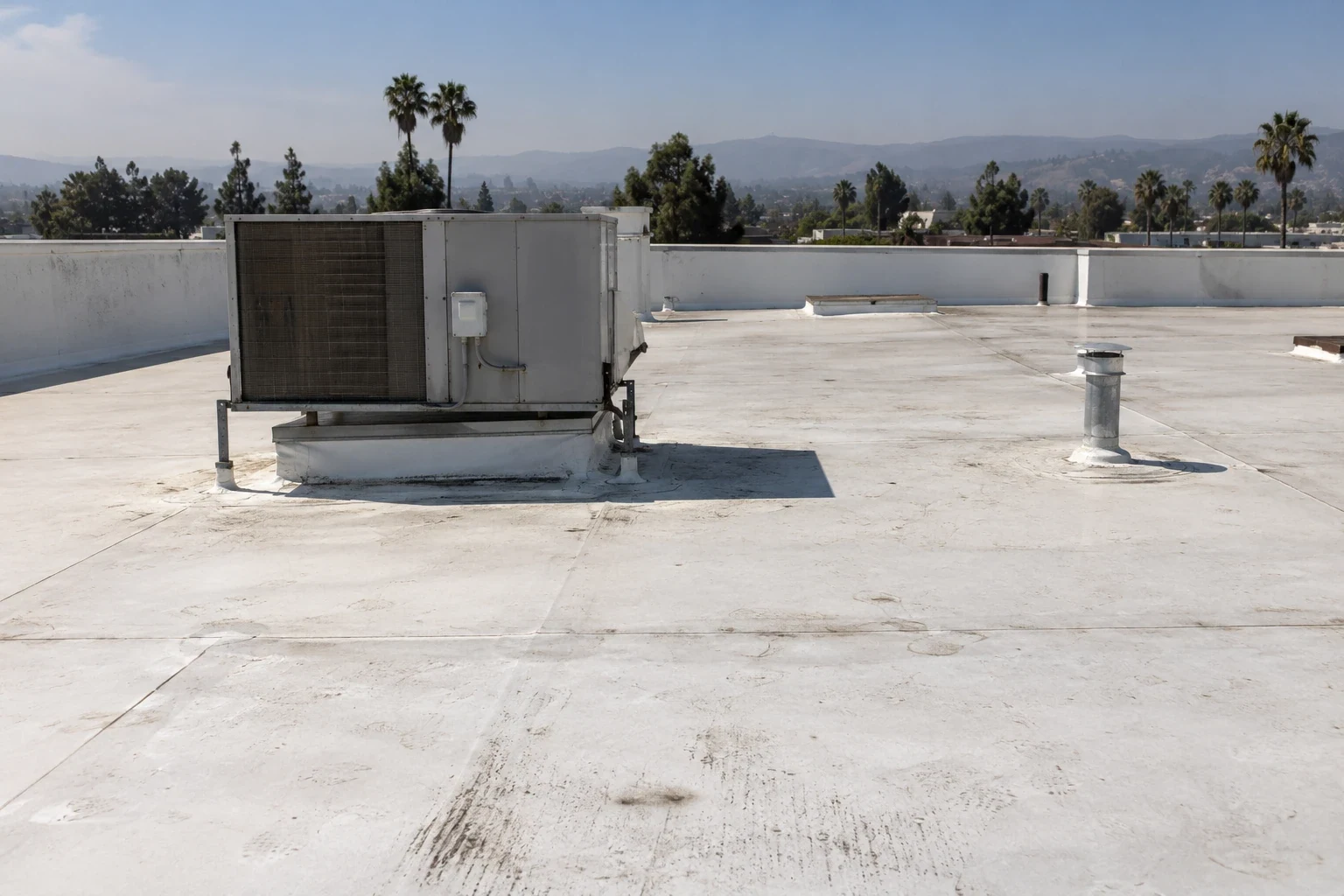
Industrial roof decisions in Simi Valley, CA start with the assembly in front of the facility manager: the membrane field, its edges, rooftop equipment, and the path water takes to a drain. In the West End Specific Plan area, the city identifies most industrial development around State Route 118 and Easy Street, with light industrial, office, research, and business-park uses in the wider area. That is useful context for arranging roof access and work around active operations, but it does not identify any individual roof system. We inspect the surface and transitions before recommending a repair, recovery, or replacement. A written condition record marks the area reviewed, the evidence found, and the next decision. The commercial roof inspection can establish that boundary before material is opened.
Start at the roof zone
A leak report gives us a starting point, not the perimeter of the repair. Water can move beneath a membrane, along a seam, or through insulation before appearing inside. We compare the reported location with seams, penetrations, curbs, drains, and changes in elevation. Photos keep those observations tied to a roof zone, while moisture checks help distinguish a surface defect from a wider wet assembly. If the opening is not clear, we mark what was observed and what remains untested rather than extending the scope by assumption.
For a warehouse or light-industrial building, equipment placement and service routes can determine where a crew can safely inspect. We note obstructions, fragile surfaces, and occupied areas before proposing a test cut or repair. The City describes the West End as a broad planning area adjacent to State Route 118 between First Street and Oak Park, with Easy Street and Los Angeles Avenue along part of its southern edge. Those boundaries describe the district, not a building's access plan. A warehouse roof scope still begins with the actual assembly, drainage path, and operating limits at that property.
Account for heat and movement
Repeated heat exposure can affect how a roof assembly moves through the day. The inspection looks for open seams, stressed flashing, loose edge metal, brittle sealant, and changes around penetrations. We compare the condition across more than one point so a local split is not confused with a system-wide pattern. The Simi Valley General Plan projects average maximum and minimum temperatures rising three to five degrees Fahrenheit by mid-century and more days above 97.2 degrees. That is planning context for exposed roof surfaces, not a prediction about a specific membrane. The recorded condition governs the scope.
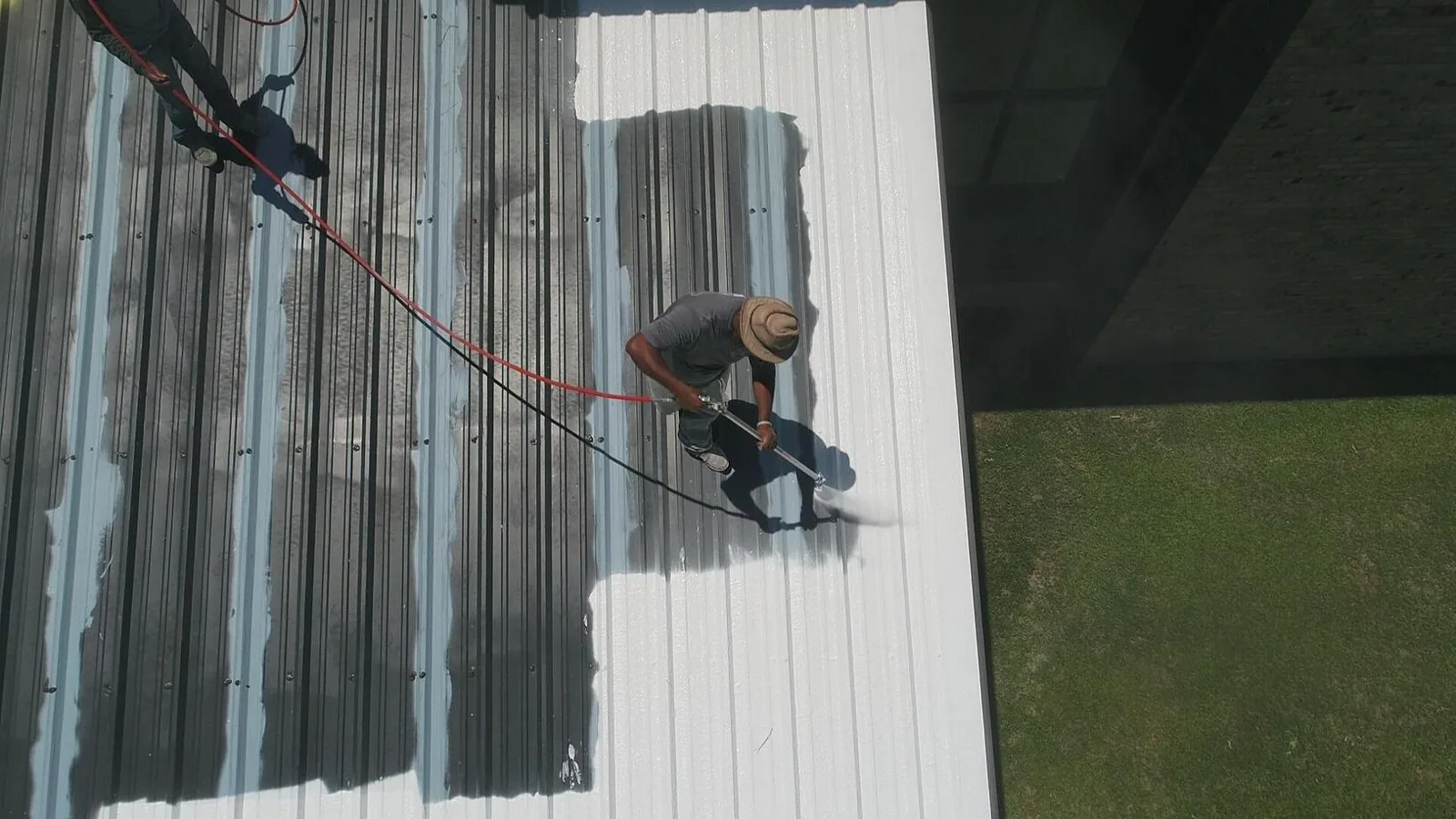
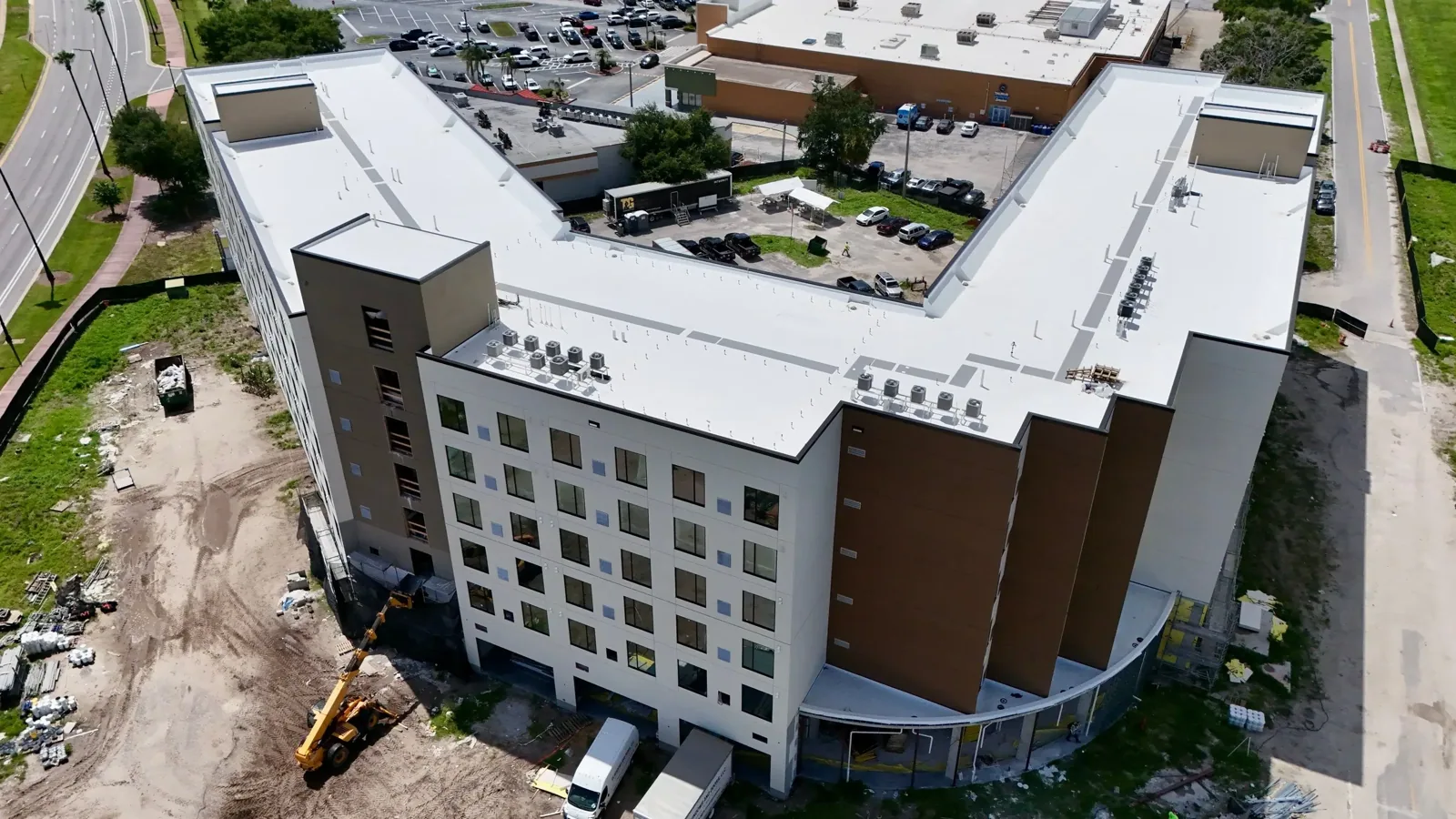
Material choice also matters when repairs meet an older or different system. A patch must be compatible with the existing membrane and prepared substrate, and coatings require a sound surface with suitable adhesion. We identify the existing assembly where it can be established, then set out repair, restoration, or replacement options without assuming that a coating fits every roof. A TPO roof assembly has different seams and details from a standing-seam metal roof, so the inspection records which condition is present before a method is selected. That distinction keeps the proposal tied to the roof instead of a generic product label.