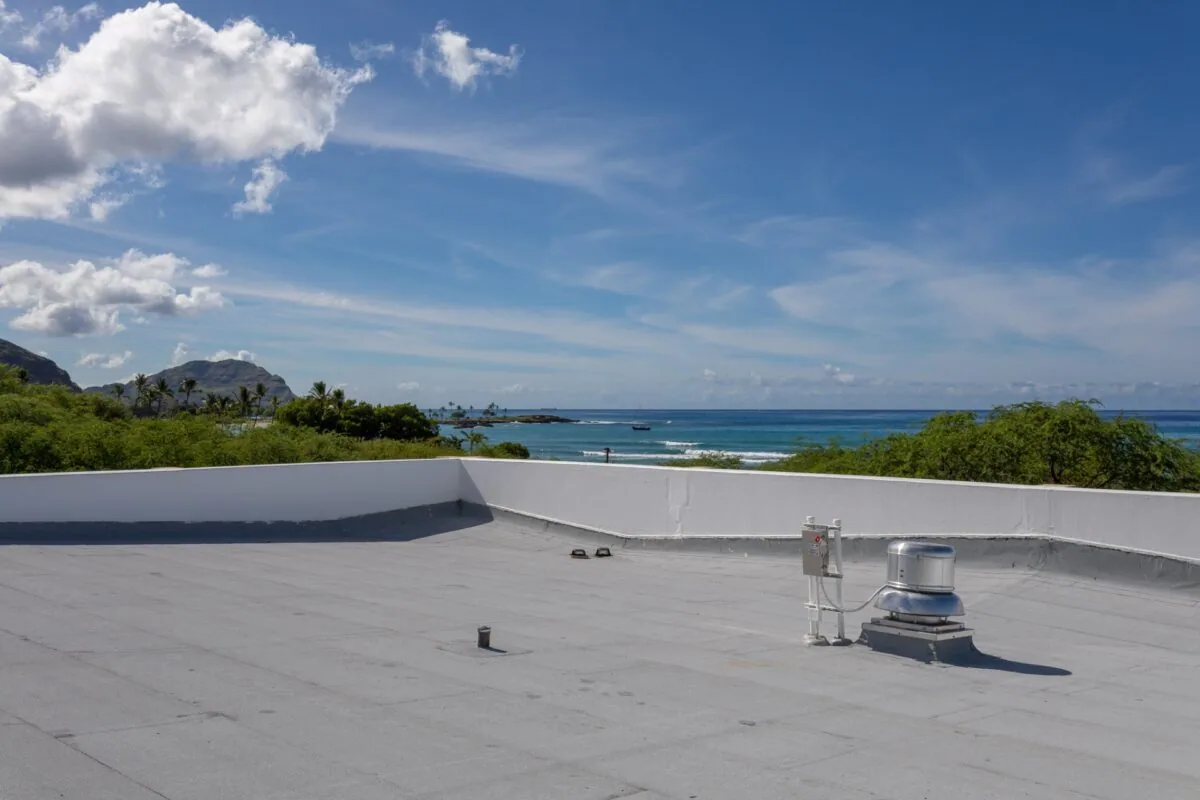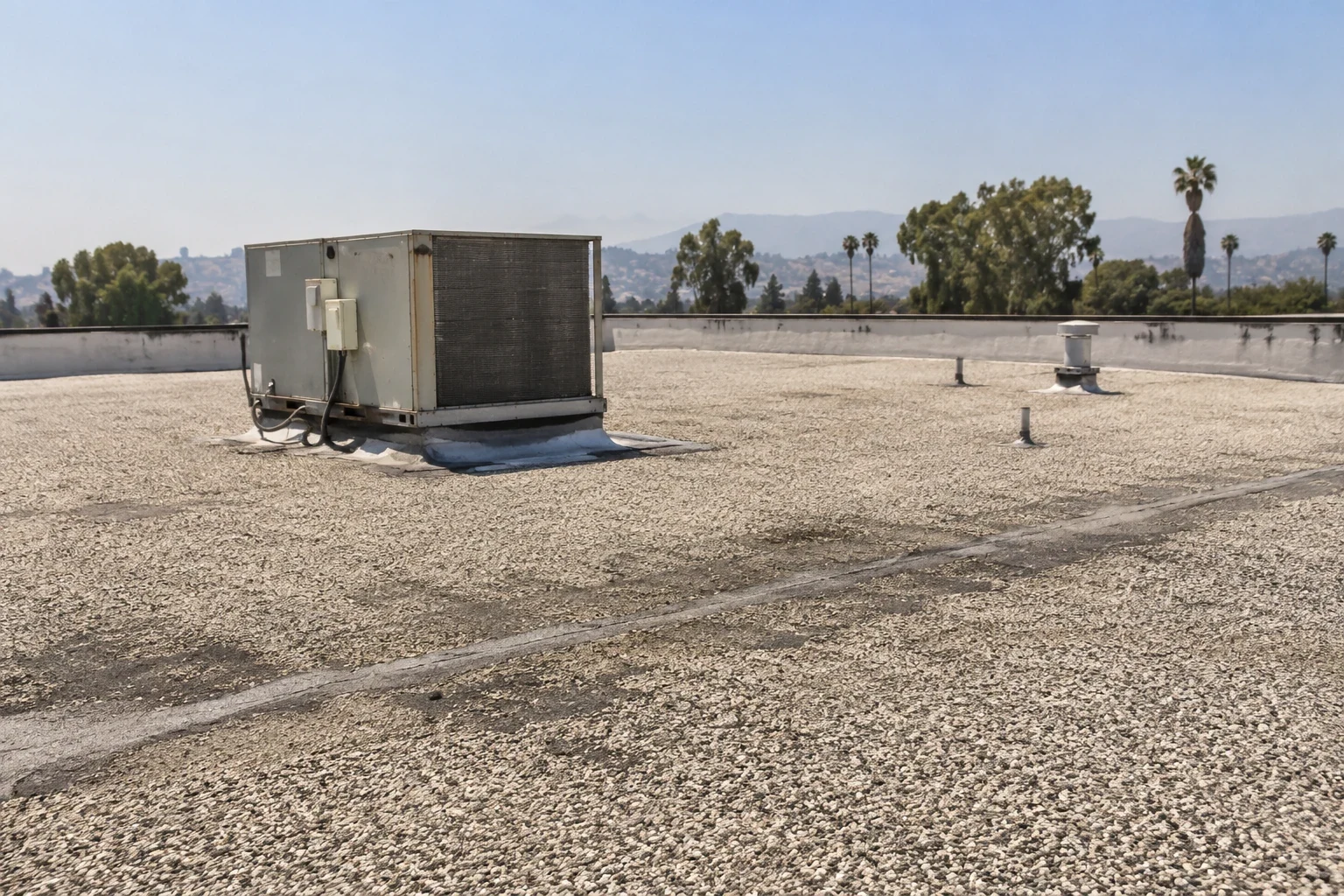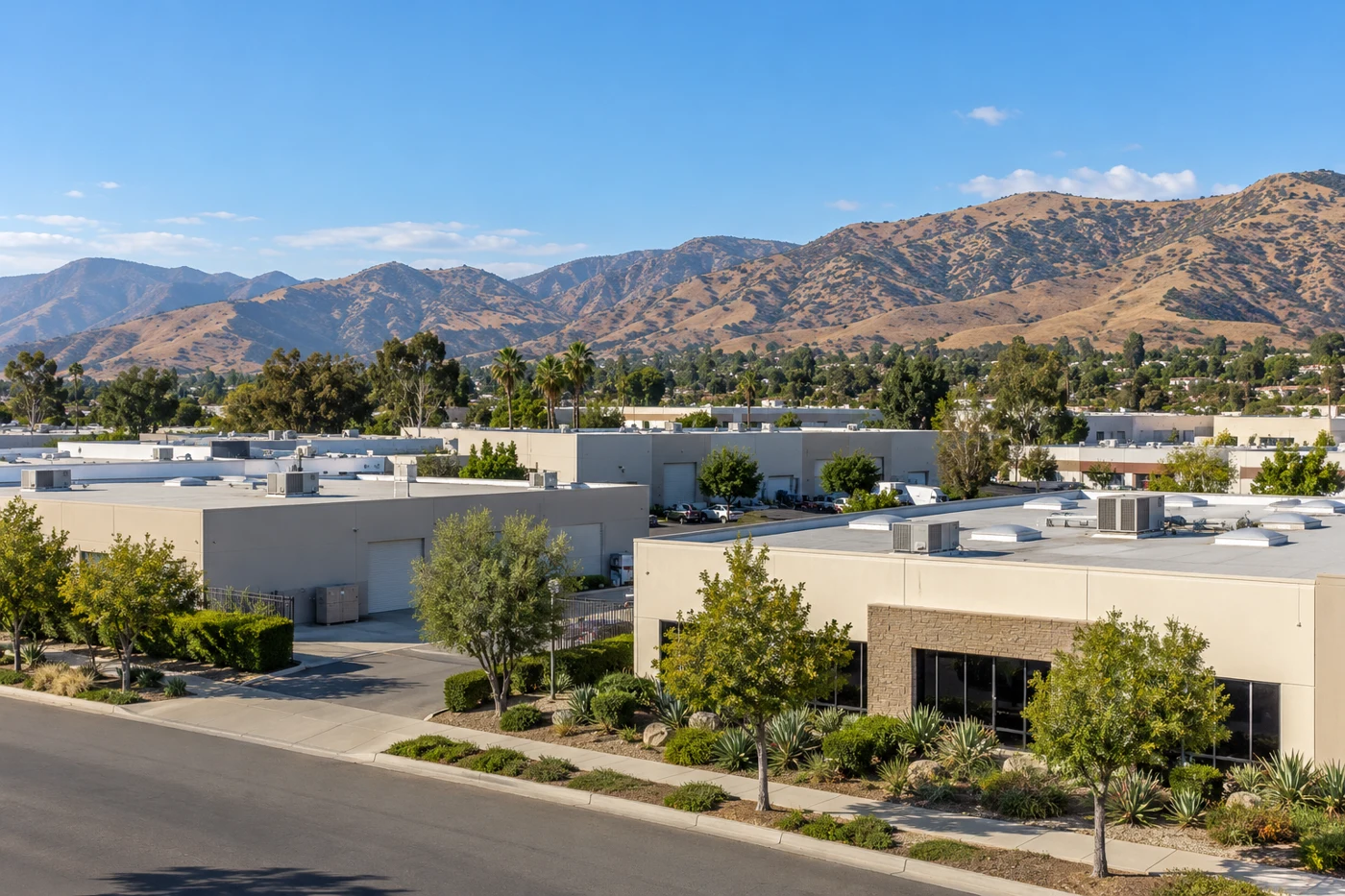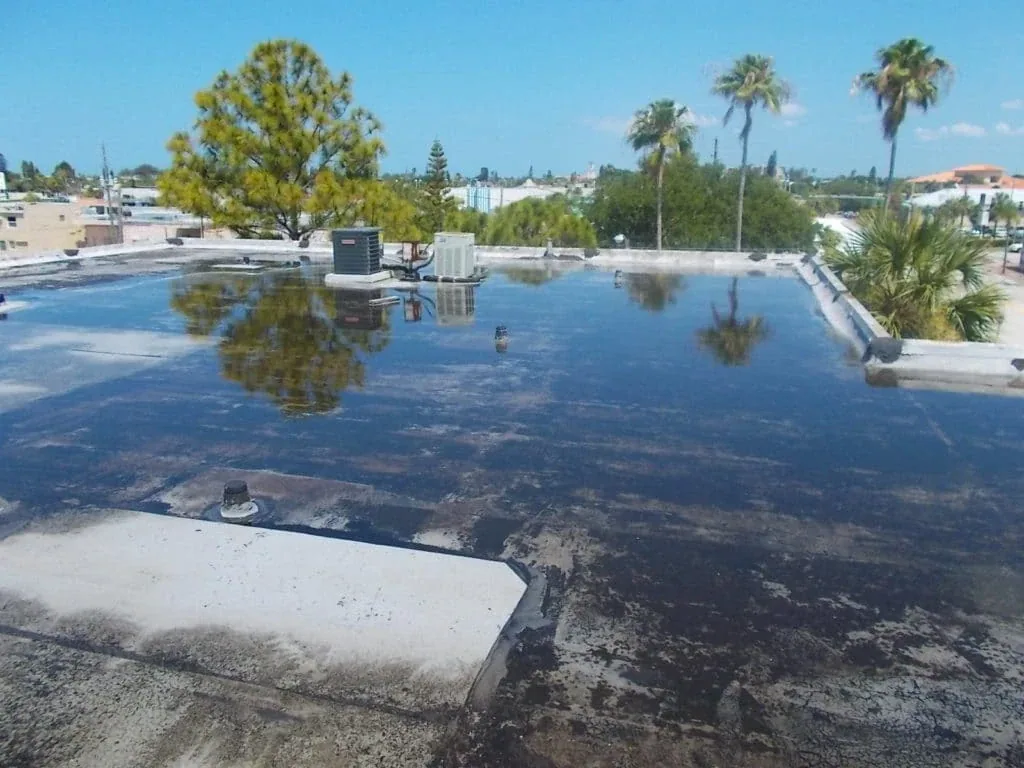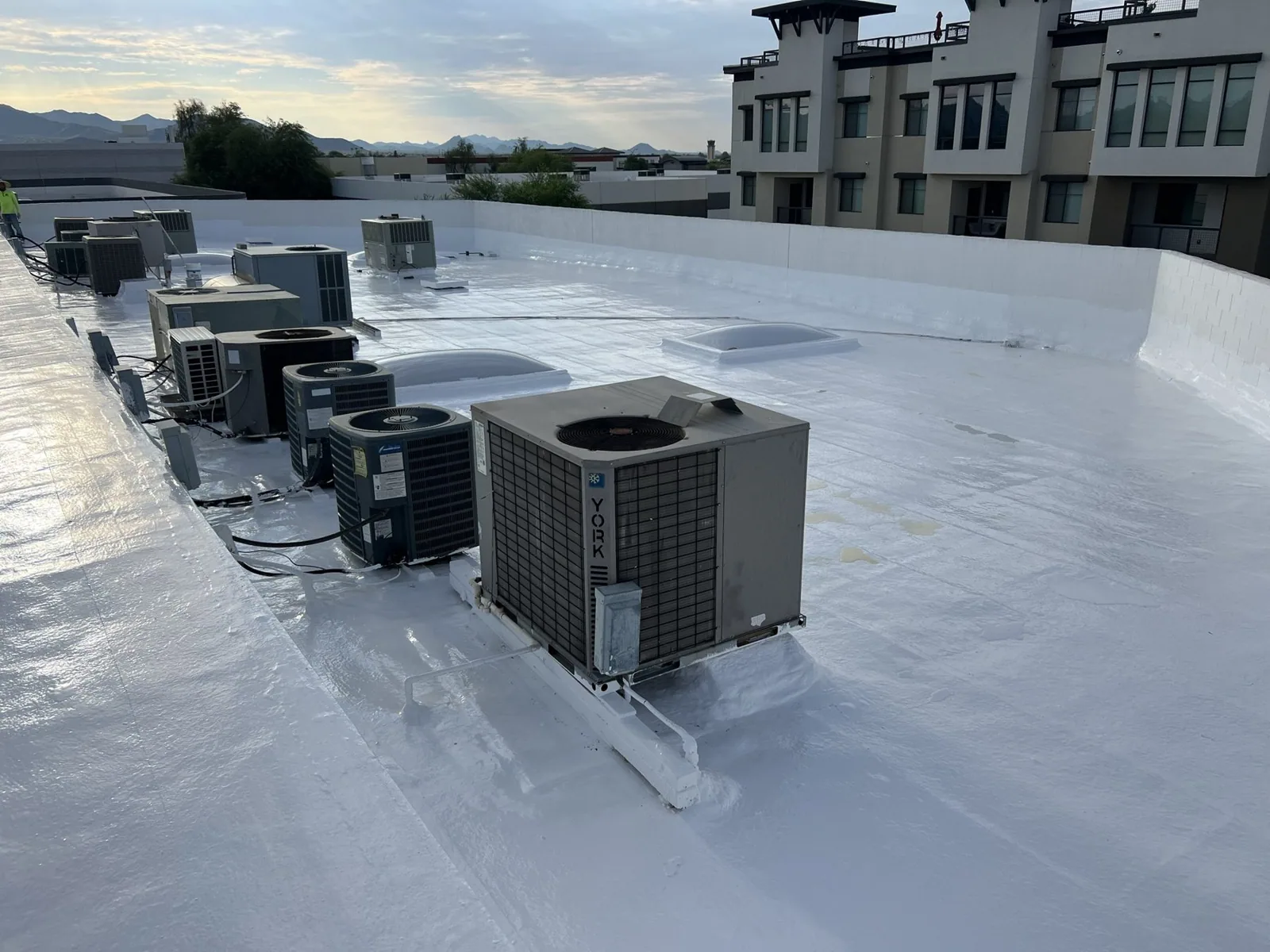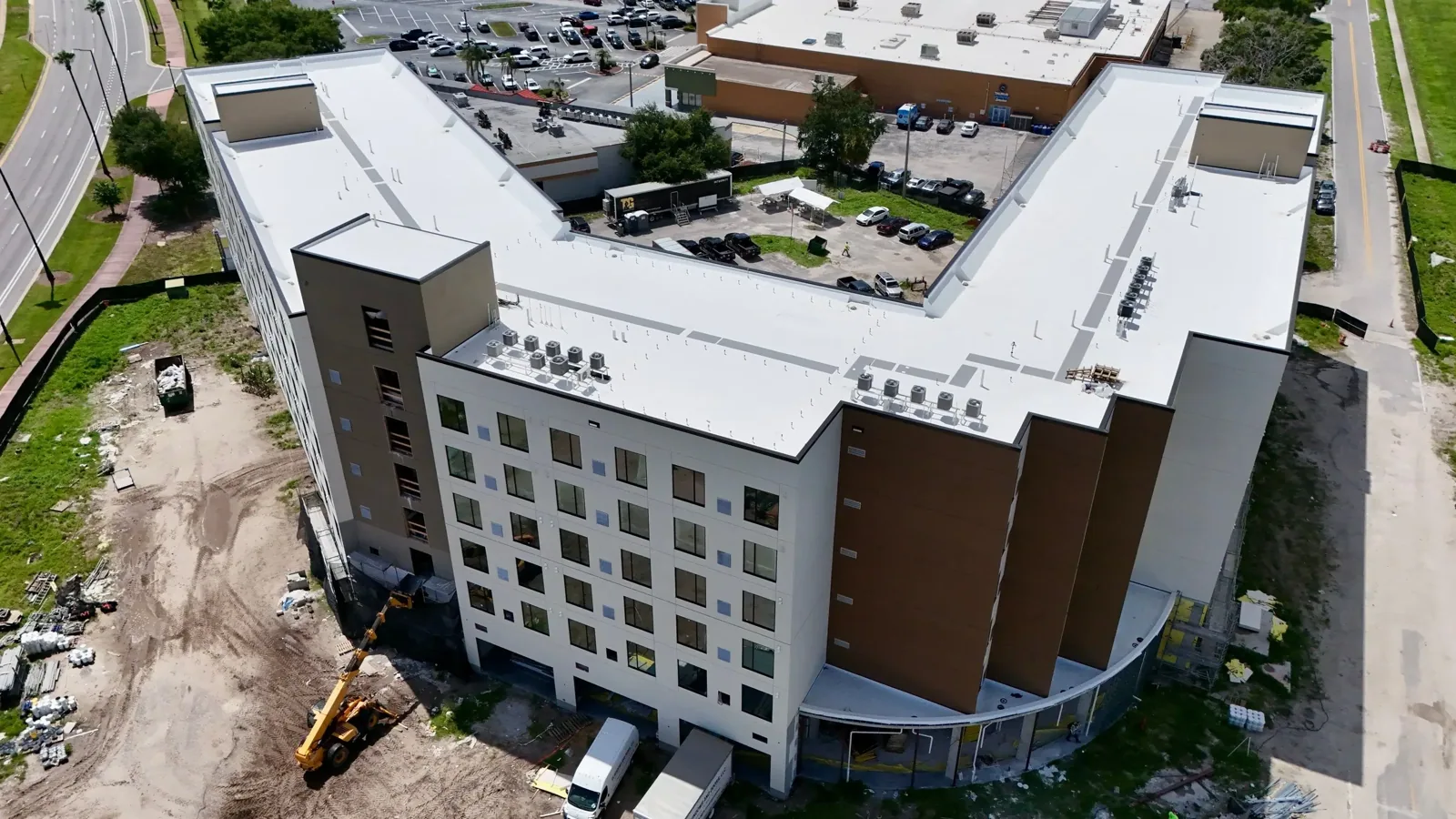
A lifted edge at a lap tells us where to begin, not how far the failure runs. On a modified bitumen roof in Simi Valley, we identify the sheet type, cap surface, attachment, and layer count before calling a repair complete. The City projects hotter summers, so heat exposure belongs in the inspection record, while the installed roof remains the evidence for a specific building. At Tapo Canyon Business Park, the City describes medium- to large-scale office or high-technology industrial buildings; in the West End, its plan covers a broad commercial and industrial district. Those settings make access and dry-in planning concrete, but neither tells us what membrane is on an individual roof. We photograph the lap, check nearby drainage and flashing, then define the next decision. An assembly-level roof inspection can establish that starting point before a patch or larger scope is selected.
Read the plies before the surface
Modified bitumen uses asphalt-based sheets with reinforcing fabric, installed in one or more plies and finished with a cap sheet or protective surfacing. The visible granules or coating may hide the membrane condition beneath. We check seams, end laps, flashing turns, patches, and exposed reinforcement against available roof records. An older patch may be sound, brittle, poorly bonded, or covering a different condition; appearance alone does not settle the question. We also note whether the roof is adhered, mechanically attached, or over another layer when the field inspection can establish that safely. At Tapo Canyon Business Park, the City describes medium- to large-scale office or high-technology industrial buildings. That context makes zone-by-zone records useful, but each roof still has to be confirmed. We compare the observed assembly with a built-up roof system only when records or exposed edges support that distinction. The inspection should show where evidence was visible and where testing remains necessary.
Follow the lap past the wrinkle
A wrinkle may reflect movement, installation, or a local bond problem. Water entry is more likely where a lap has opened, flashing has lost continuity, or a penetration interrupts the membrane. We probe where the surface permits it, document the seam direction, and trace the likely path toward a drain or edge. A repair should reach material that can accept a sound tie-in, not stop at the interior stain. The West End Specific Plan area lies beside State Route 118, but its boundary does not identify a roof assembly. We confirm each building's layers and details. If moisture may sit below the sheet, infrared patterns or a controlled test can distinguish a surface defect from a larger wet area before removal is approved.