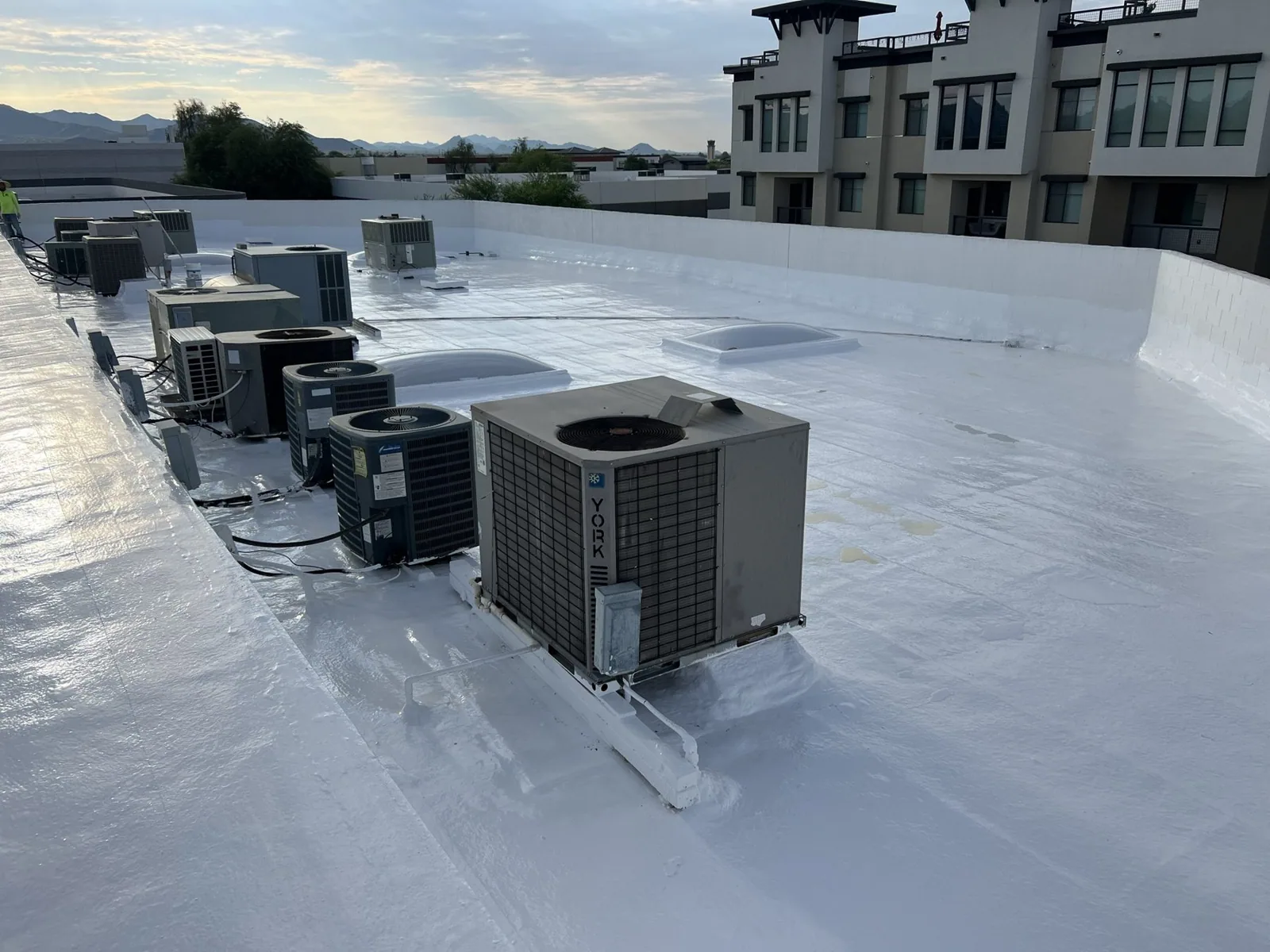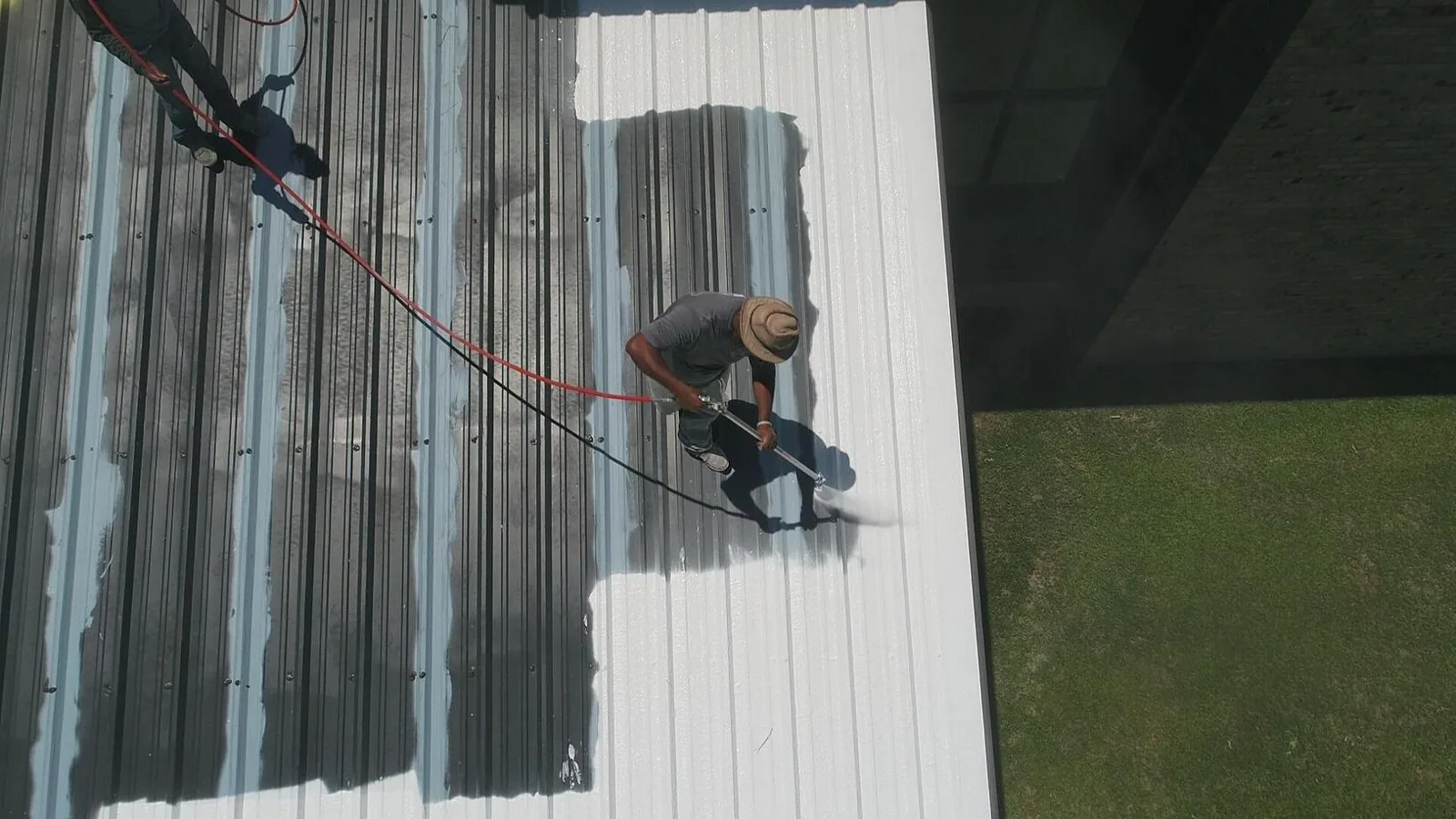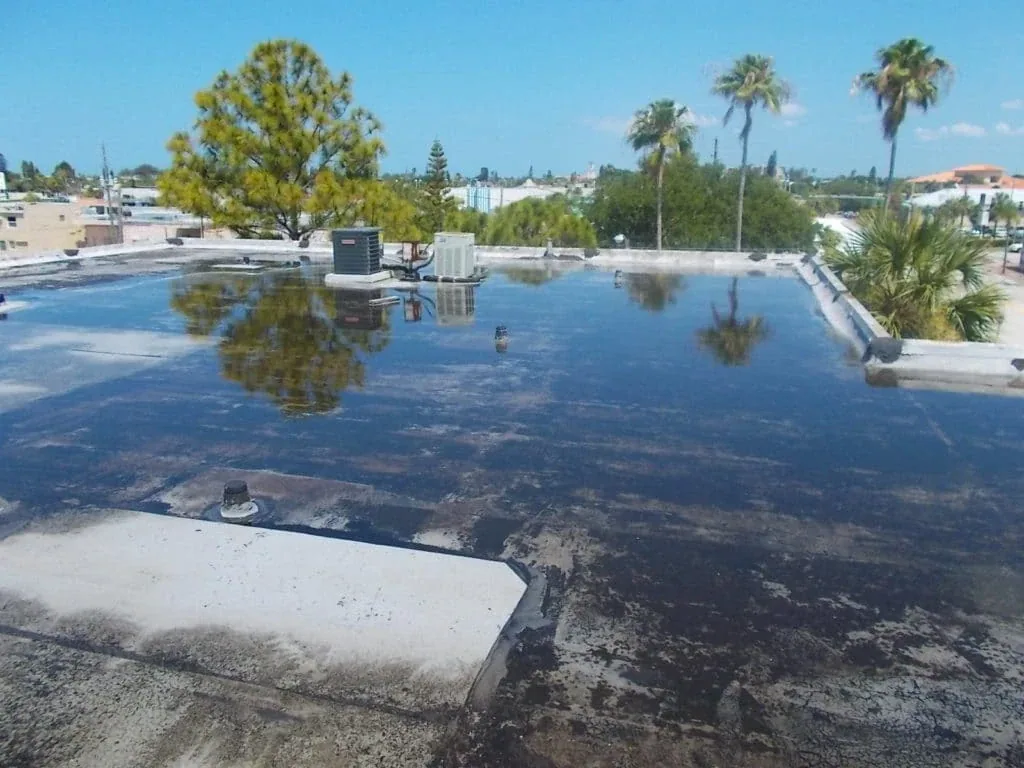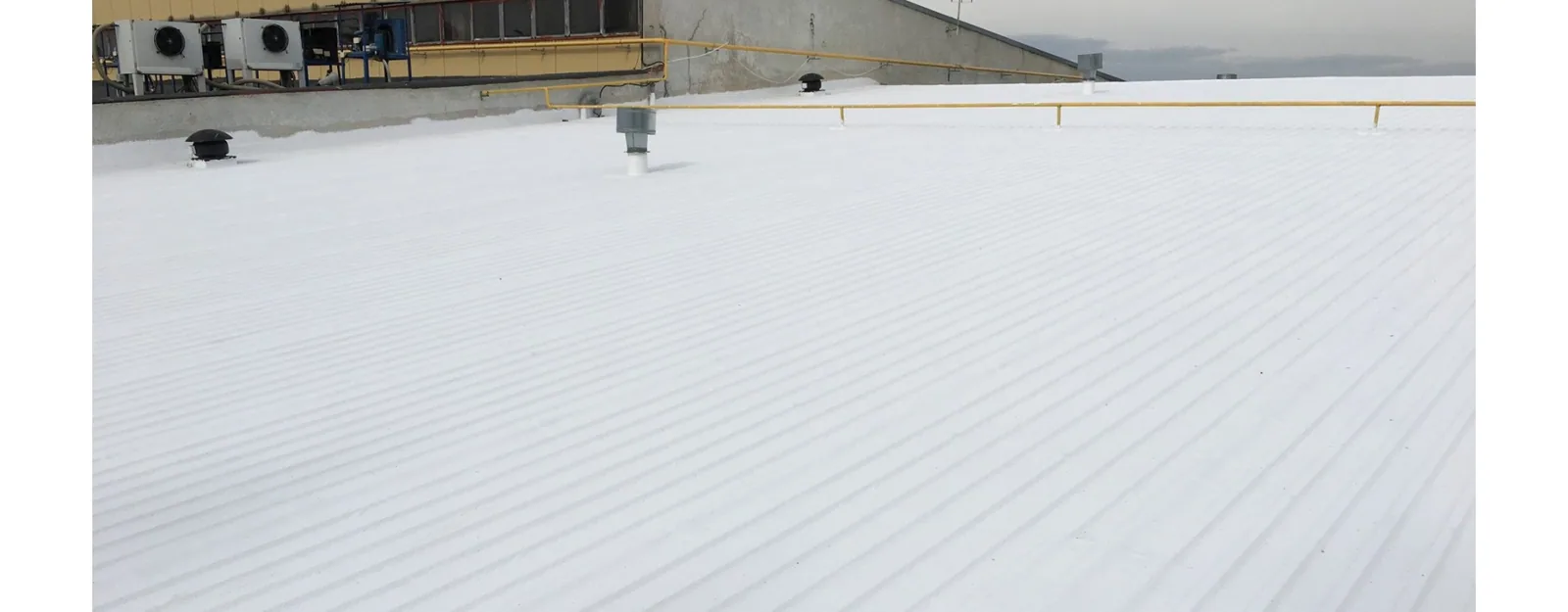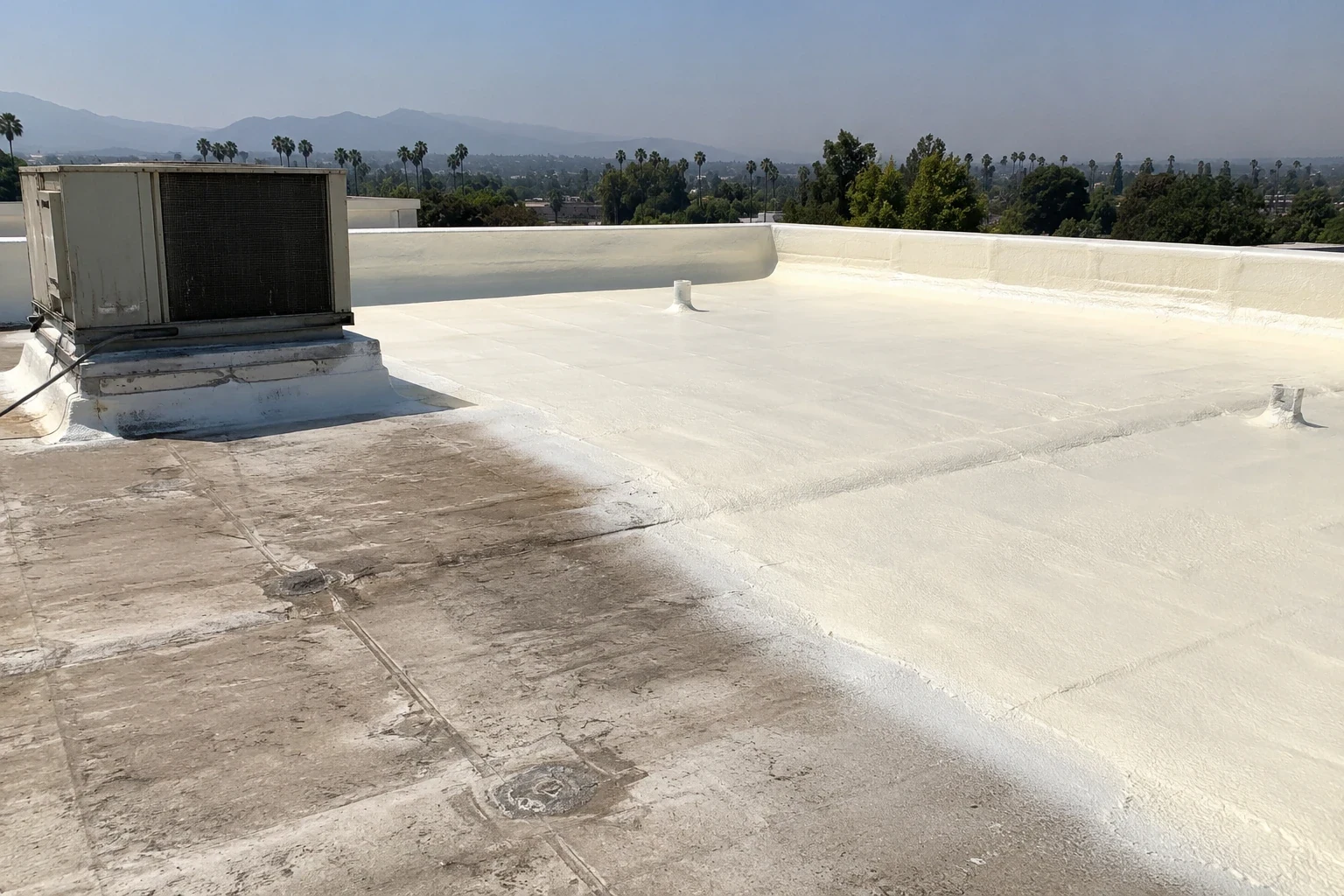
A silicone coating that pulls away at a drain bowl needs a bond check before another layer is added. On a commercial roof in Simi Valley, we inspect the existing finish, membrane, insulation, and outlet detail before recommending restoration. A coating can tolerate prolonged water exposure when the system and substrate are suitable. It cannot correct wet insulation, an open seam, or a drain that leaves water at the same low point.
The City's General Plan projects hotter summer conditions and more days above 97.2 degrees by mid-century. We keep that projection in the exposure discussion, then base the scope on the roof. We check adhesion, moisture, and transitions and prepare a coating restoration evaluation that gives the facility manager a repair boundary and next decision.
Test the coating bond line
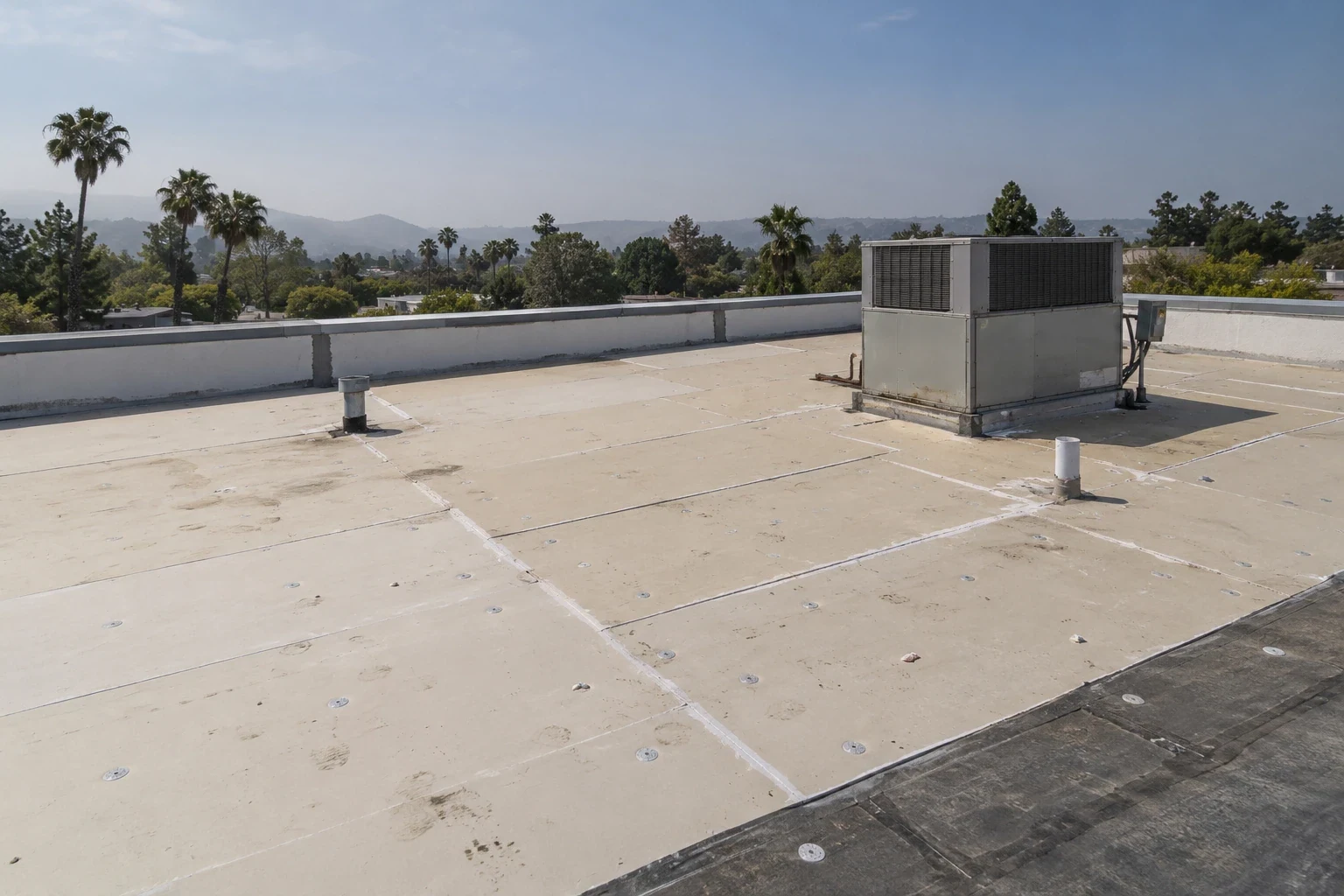
A peeling edge may point to contamination, incompatible coating, poor preparation, or movement at the substrate. We inspect the transition around the separation and compare it with other roof zones. A hand pull at one location does not establish the adhesion condition across the whole field. Representative testing should include the existing membrane, prior coating layers, and areas where repairs or service traffic changed the surface.
Cleaning removes dirt and residue, but it does not make loose coating sound. We identify what must be removed, whether a primer is specified, and which repair materials can meet the existing finish. A trial area can confirm the proposed preparation and bond before broader application. The written scope records test locations and acceptance criteria. If the result varies by zone, those areas receive separate limits instead of one roof-wide assumption.
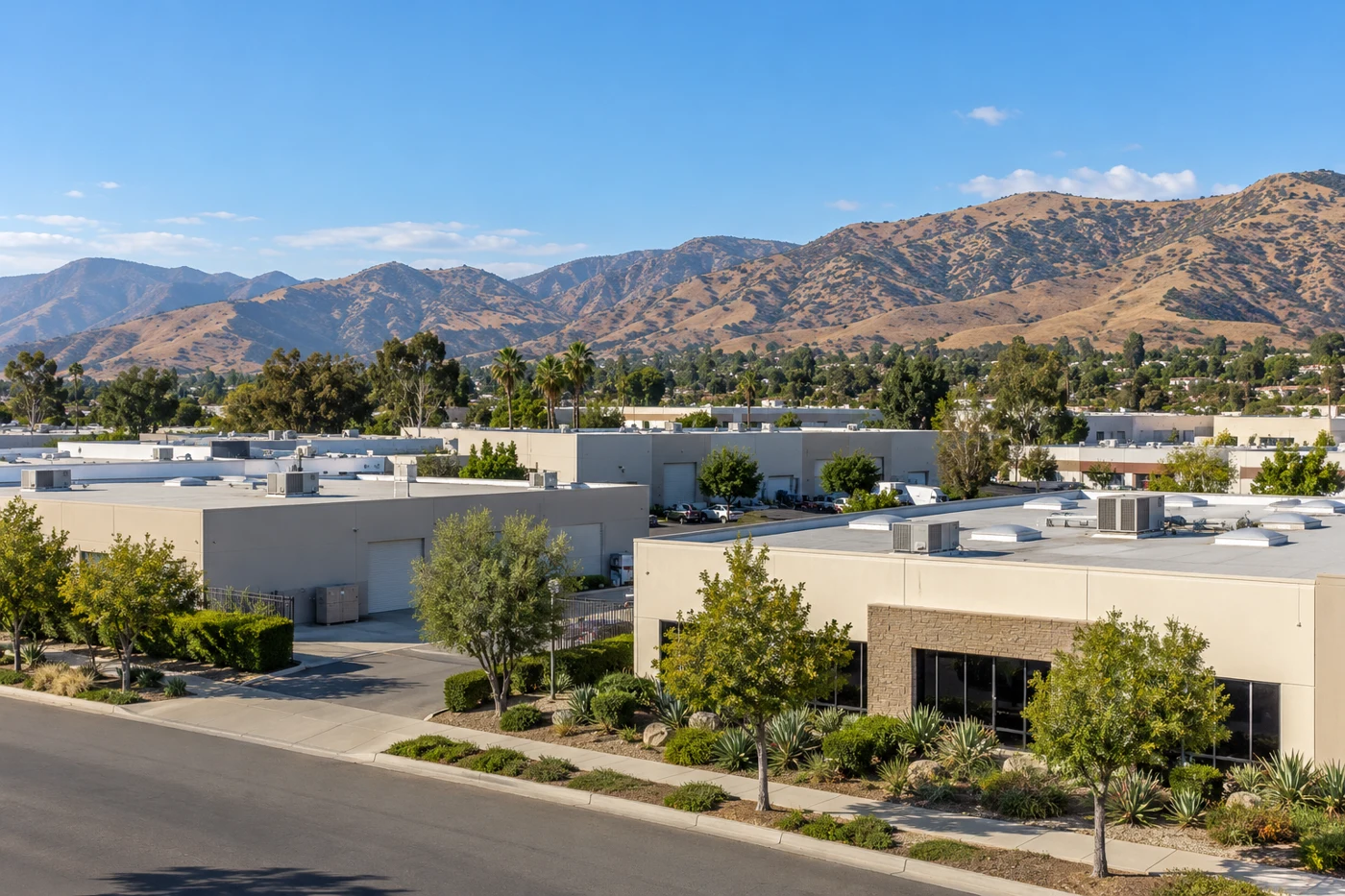
Simi Valley planning documents place much of the city's light-industrial development in the West End Specific Plan area. For a facility in that district, we map access to roof zones and equipment routes before selecting test points. The West End area roof review is built from each roof's observed layers, not a general planning label.
Confirm the layers below
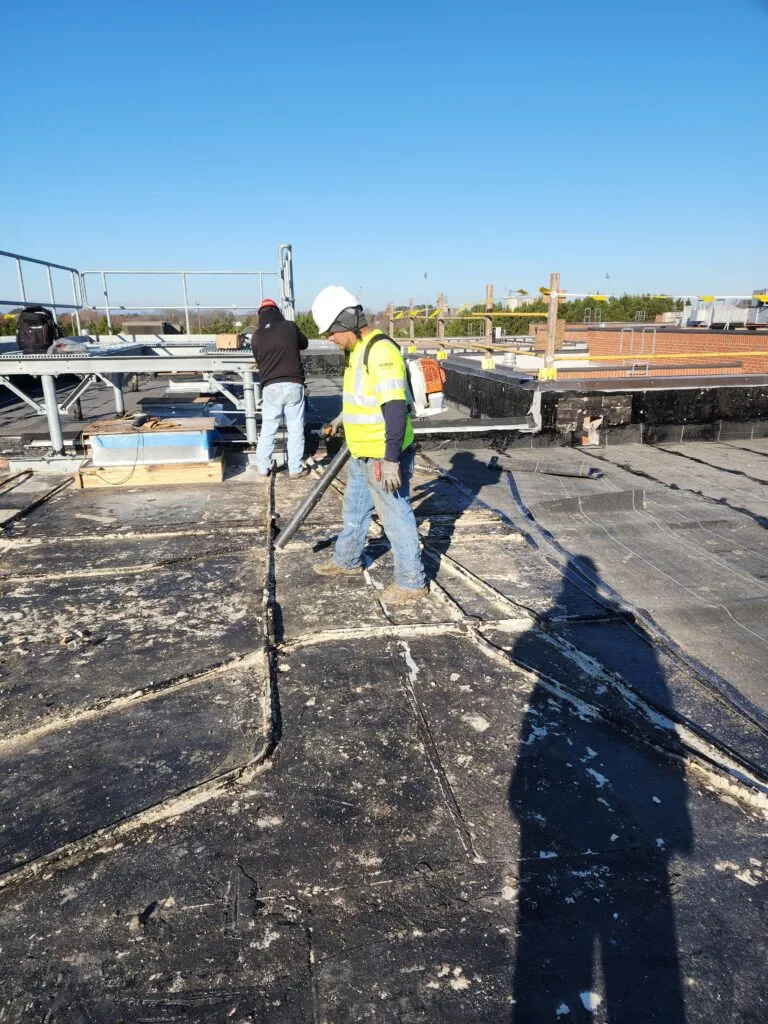
A coating can make a surface look uniform while moisture remains below it. We inspect interior reports, roof slopes, drains, laps, and penetrations to trace a water path. Where the decision depends on insulation condition, we select a controlled test opening and plan its dry-in before cutting. Exposed layers show whether the insulation is dry, whether the membrane is attached, and where removal should stop.
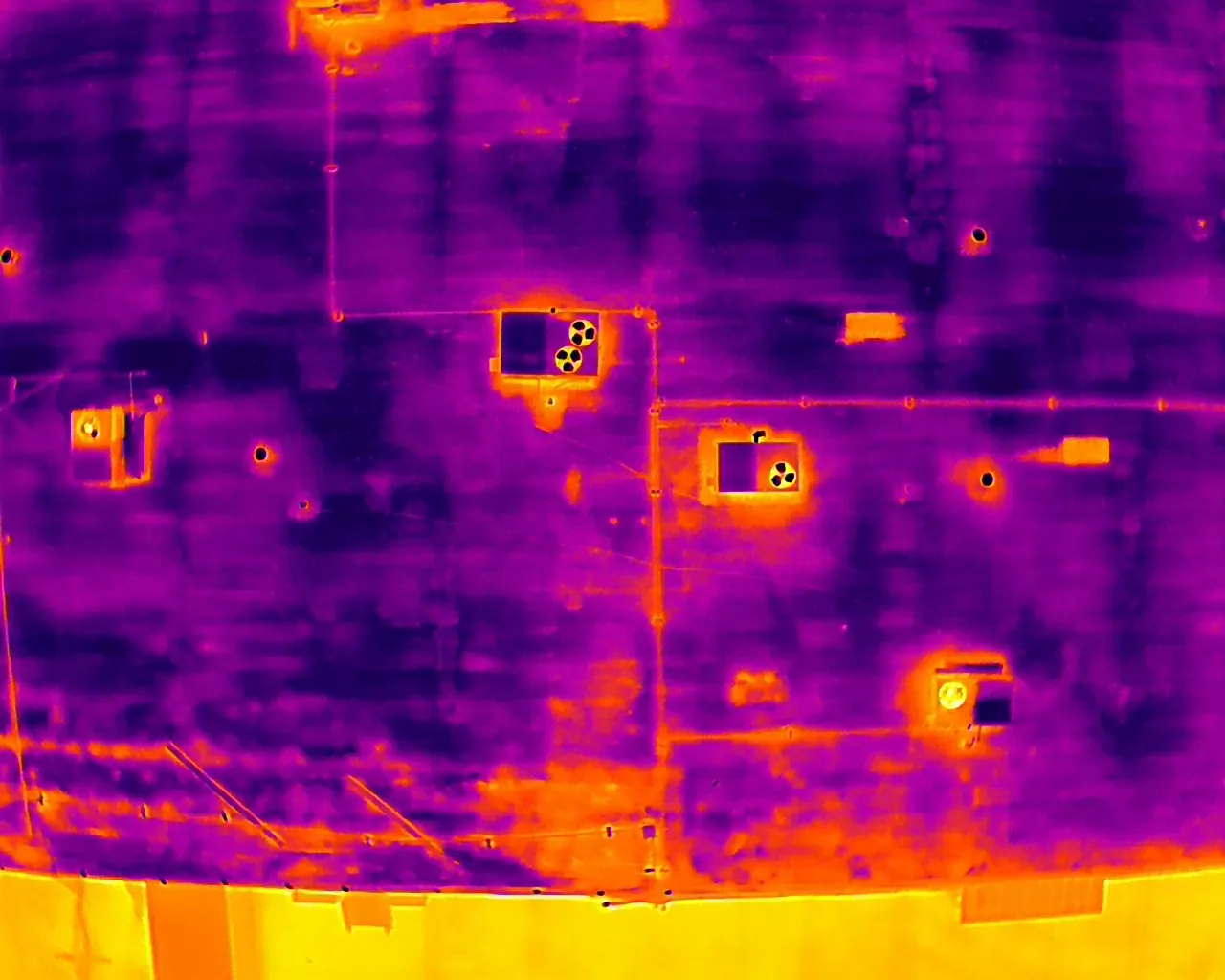
Infrared readings can help identify temperature differences under suitable conditions. They do not identify wet material by themselves. We compare survey patterns with roof construction and confirm suspect areas directly when needed. If the insulation is wet, coating over it closes the evidence beneath a new layer. We state the removal area, replacement layers, and approval point before expanding the opening.
Los Angeles Avenue and Tapo Street have both received city-reported facade improvement work across multiple properties. That corridor record gives a broad commercial setting, not the layout of an individual roof. We locate equipment, service paths, and exhaust discharge during inspection before selecting coating tests. A moisture survey can guide test locations, while the test opening confirms the layers.