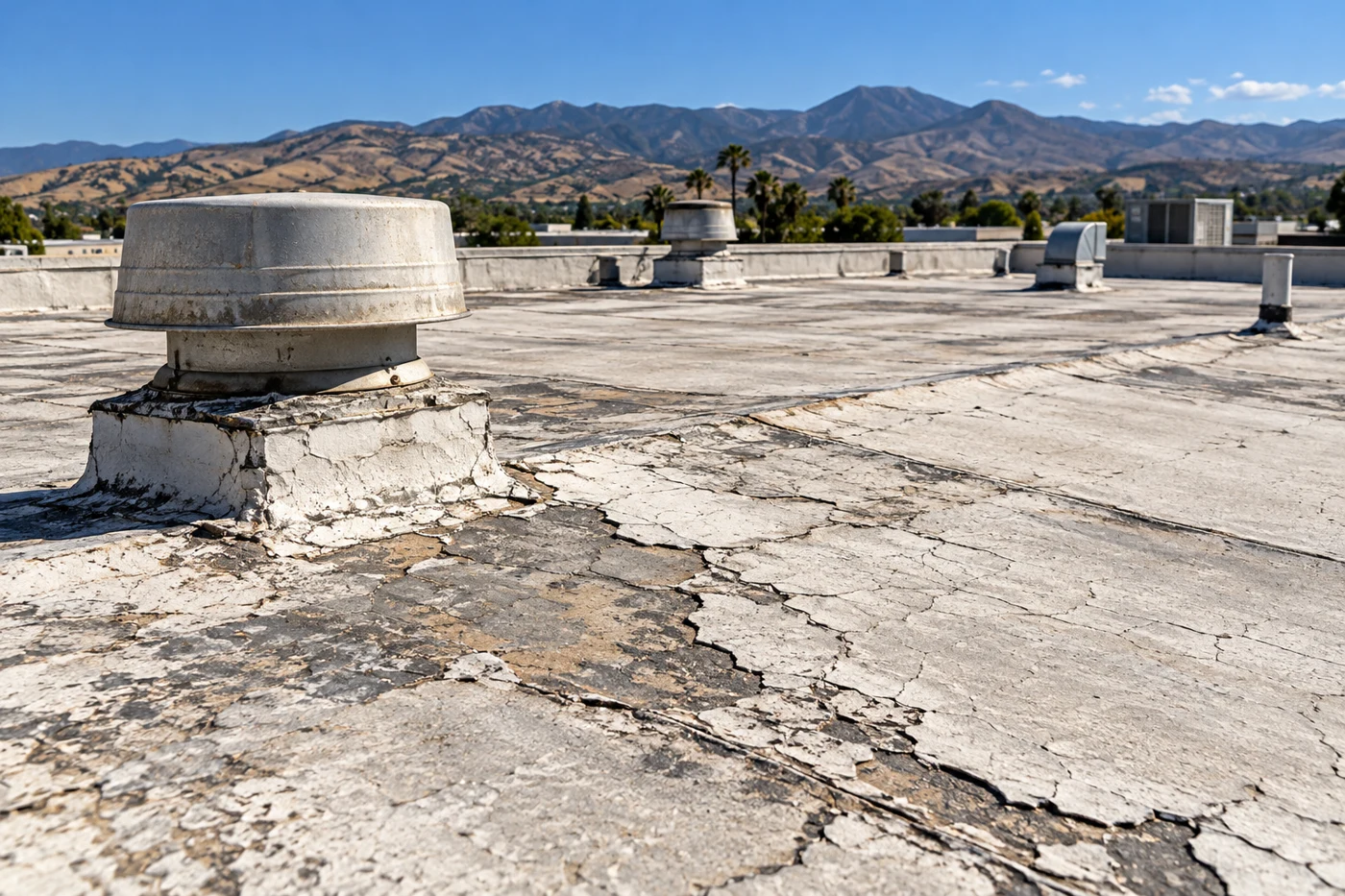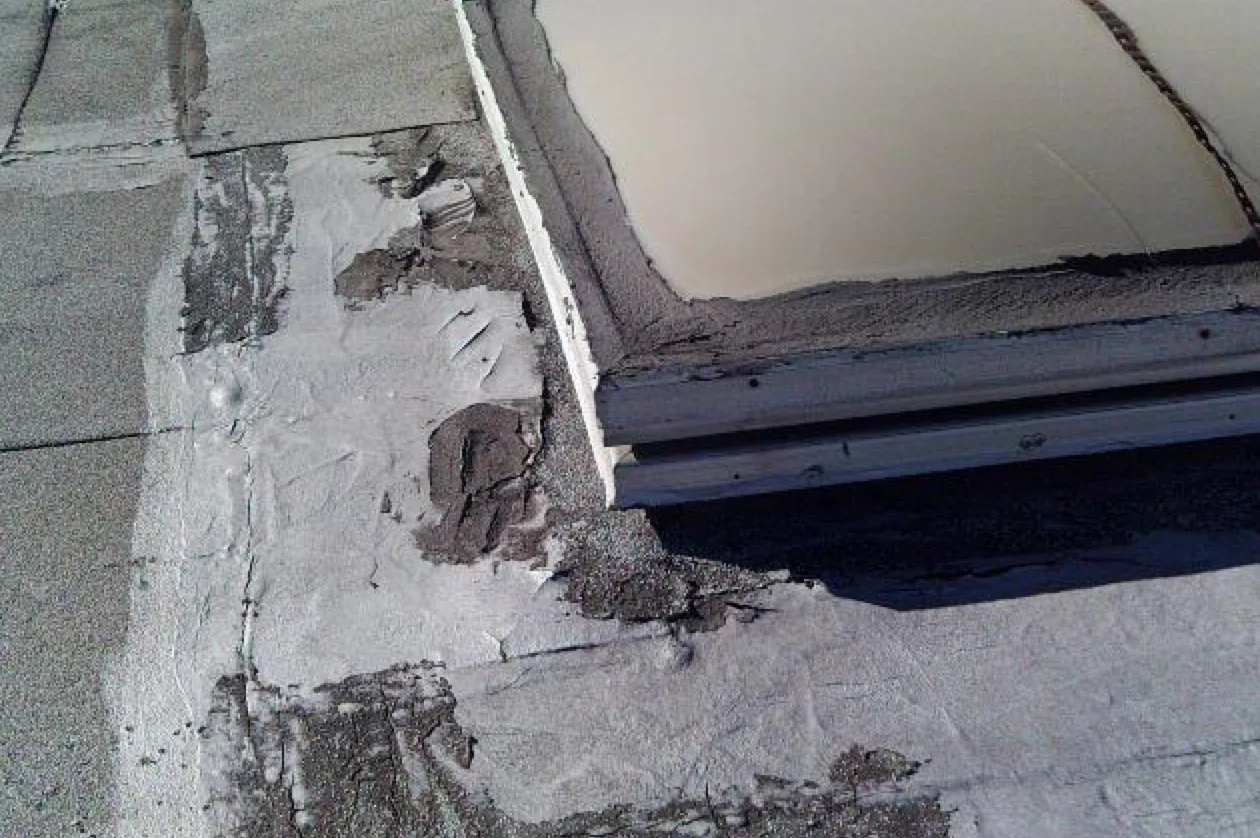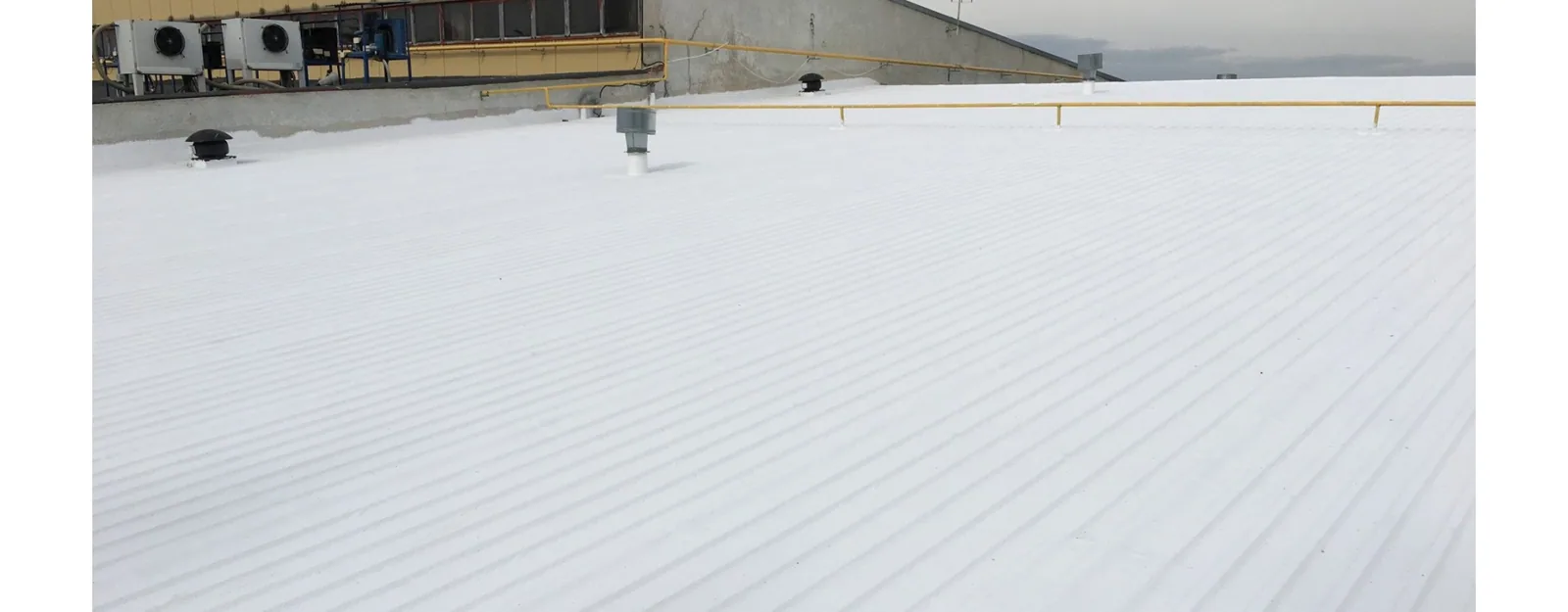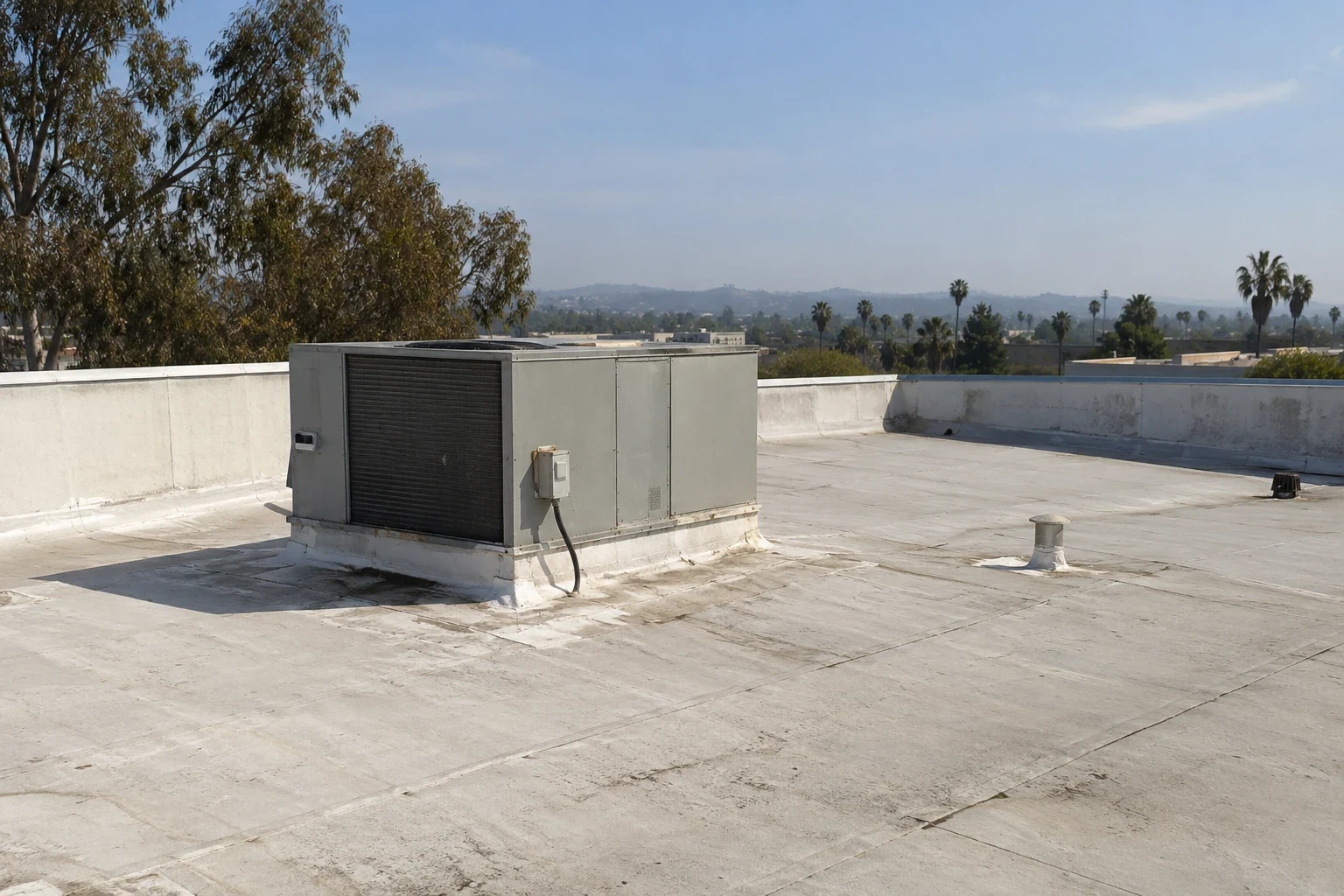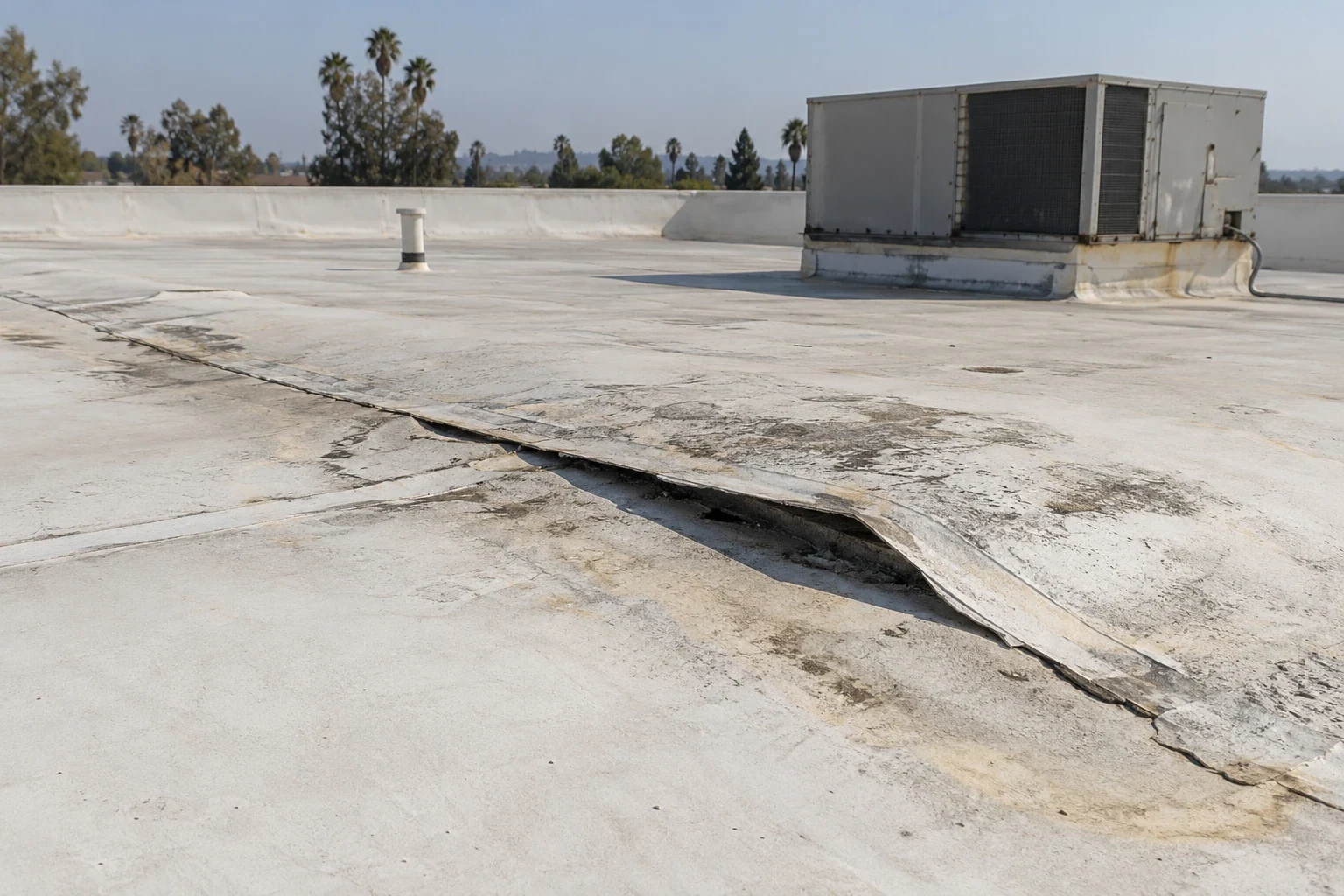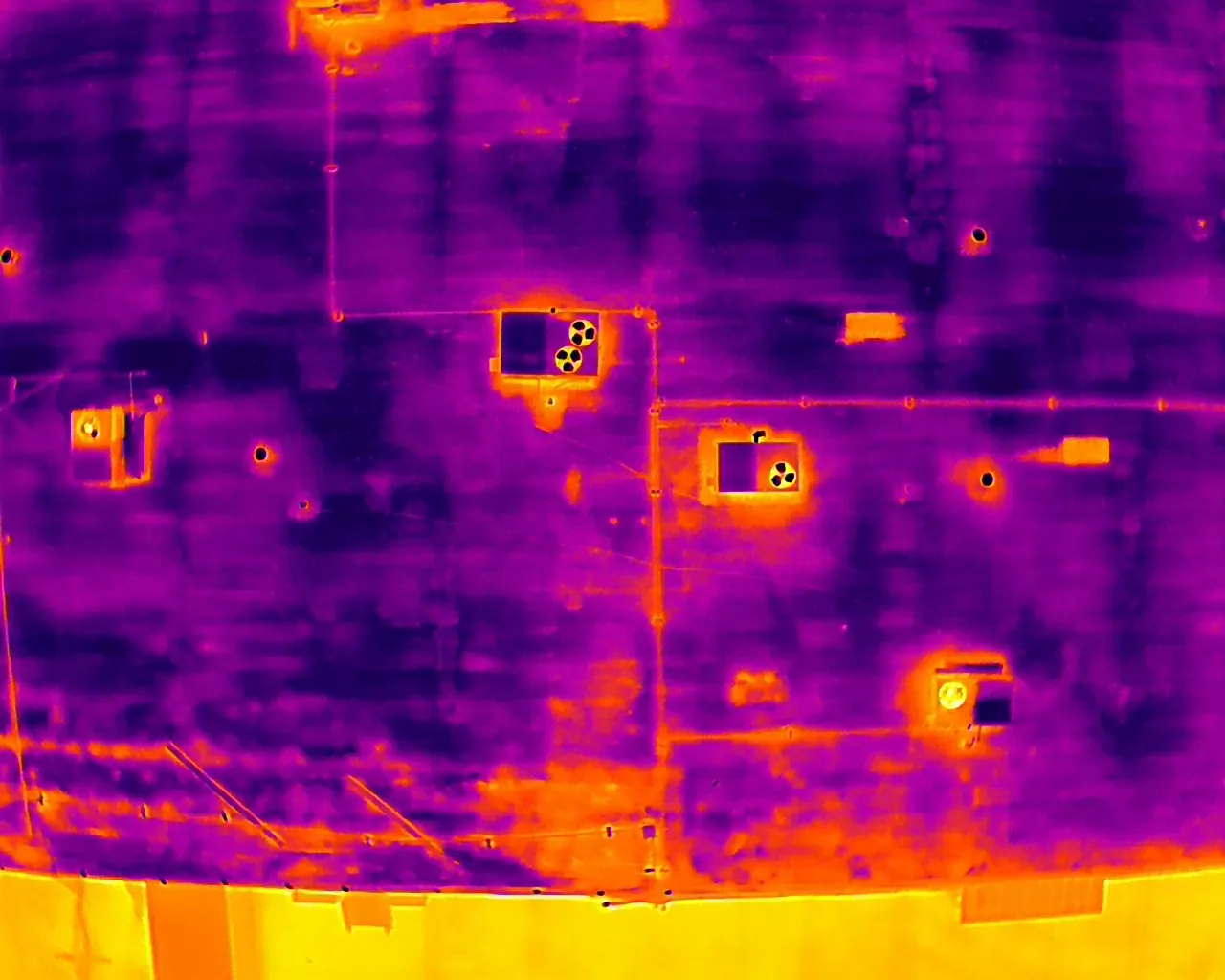
A dry, exposed membrane can show surface chalking, shrinkage, open laps, or brittle flashing, but those signs do not all call for the same repair. Simi Valley planning scenarios anticipate hotter summer conditions, including additional days above 97.2 degrees and average highs and lows several degrees above current levels by mid-century. That planning projection is useful climate context, not a measurement of one roof or a forecast of its failure. We compare exposed and protected areas, then record next steps. A roof condition inspection starts with the membrane field and its transitions.
Read the surface without assuming the layer below
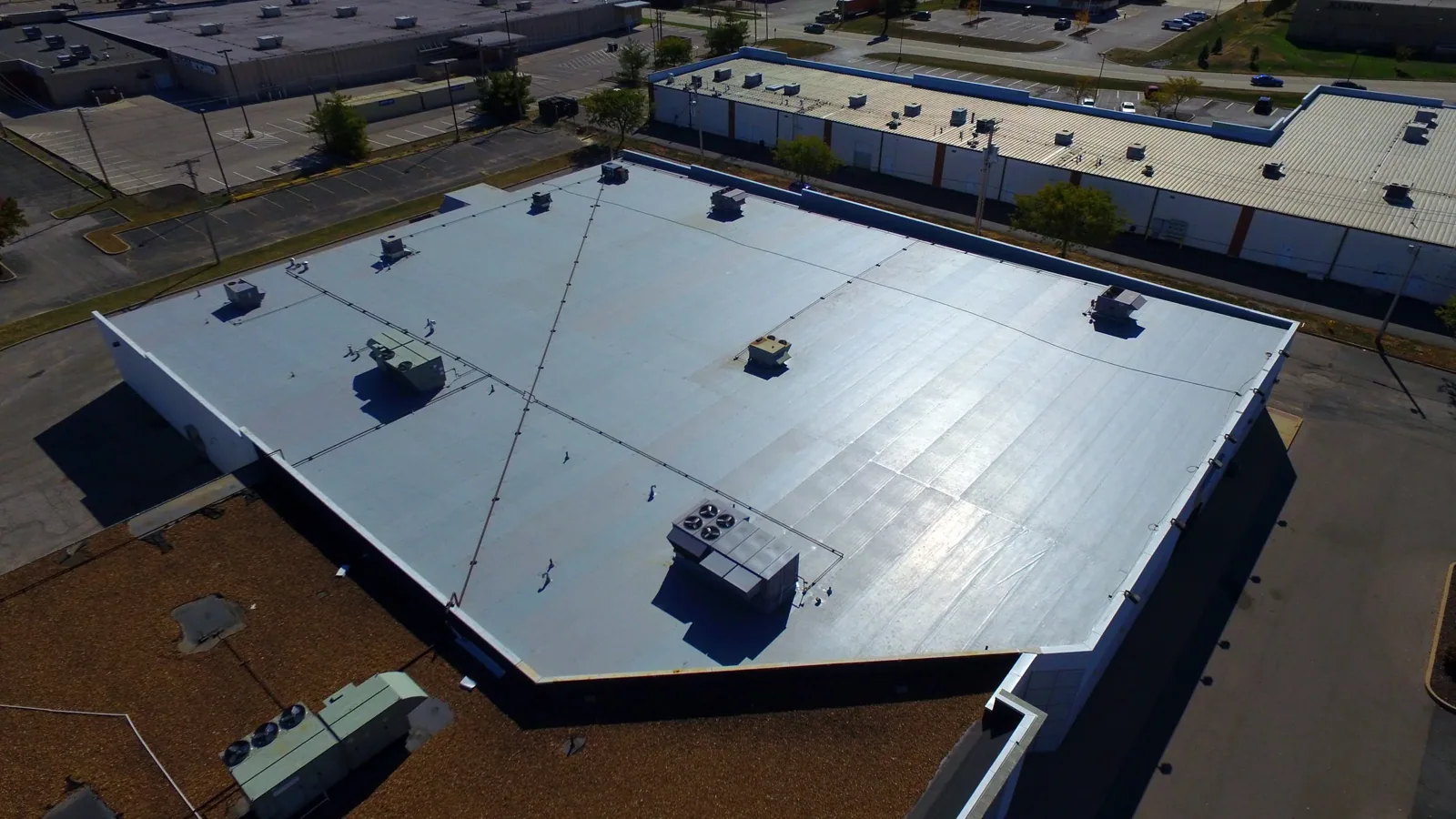
Sun exposure can change the surface appearance of a roof membrane. We look for checking, loss of granules or coating, cracks, blisters, seams that have moved, and flashing that has hardened or pulled away. We compare those observations with protected areas near curbs or equipment, while recognizing that shade alone does not establish the condition below the sheet. The roof plan labels each zone, and photos keep the surface, seam, and nearby detail together for review.
Material type, attachment, drainage, patches, and history matter. The assembly determines whether a patch can tie into sound material or needs more testing. An inspection of a TPO field differs from an EPDM surface and seam review, and we confirm what is installed before describing repair options.
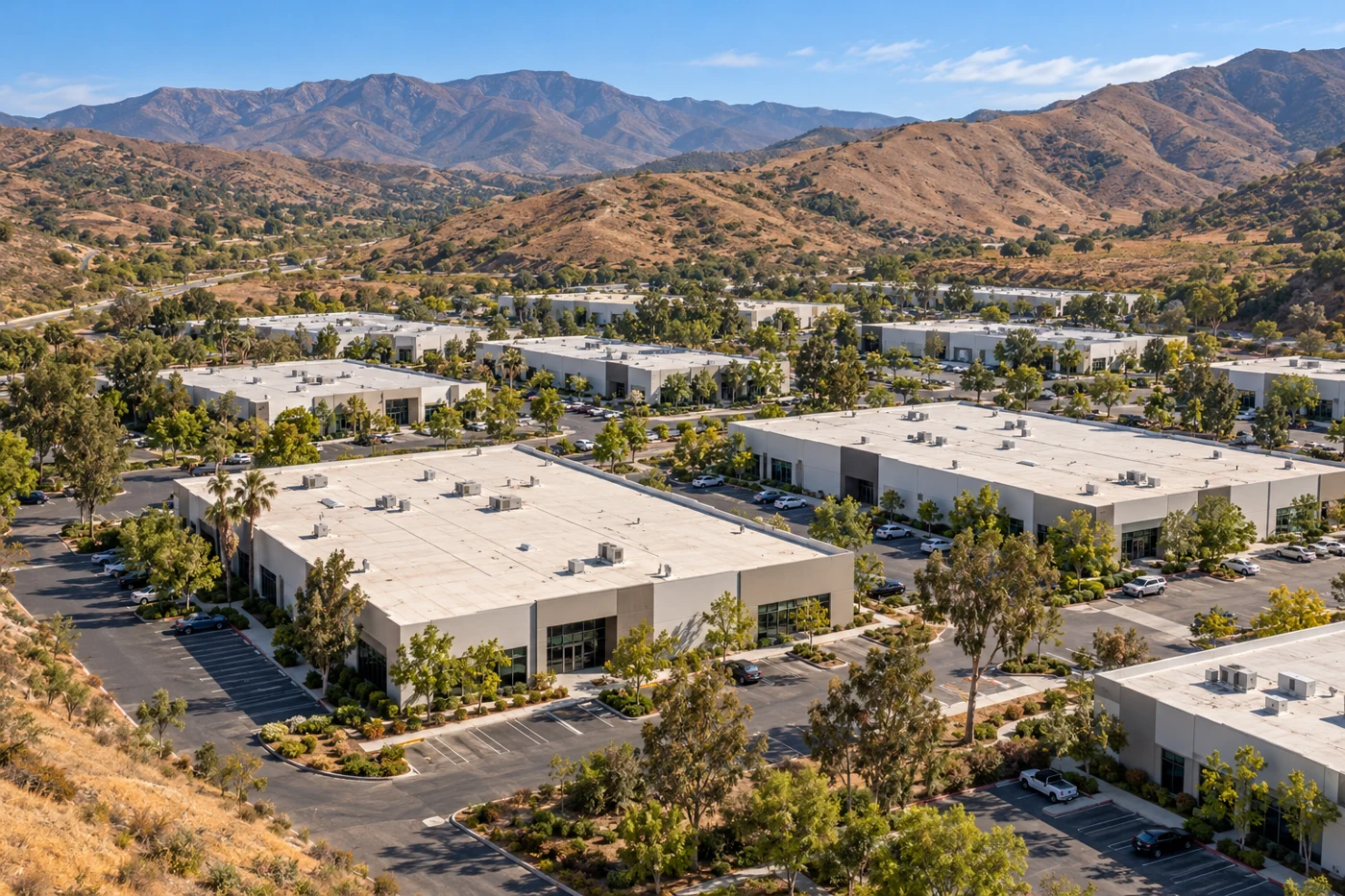
At Tapo Canyon, the City describes business parks as medium- to large-scale building groups that may accommodate office and high-technology industrial uses. That context can help a facility manager identify service routes and equipment constraints. It does not imply how any roof is built. The Tapo Canyon business area is a geographic reference; each property receives its own roof-zone map.
Check seams, edges, and penetrations
Heat-related movement is easiest to evaluate at the places where the membrane changes direction or meets another material. We inspect field seams, perimeter terminations, curb wraps, wall flashing, skylights, and expansion joints. A seam may be open while the surrounding membrane remains serviceable; a brittle edge may need a different detail than the field. We record the length and location of each defect, test the bond where appropriate, and note whether service equipment blocks access.
A City beautification record lists project work on Tapo Street and Los Angeles Avenue’s business blocks. They help orient dispatch within Simi Valley but do not identify which properties have heat damage. For a building near those streets, we still confirm its roof system, equipment location, hatch, and operating requirements with the facility contact. A seam failure assessment follows an open lap, while a flashing repair review checks the wall, curb, or penetration turn.
If a leak has been reported, we trace the interior symptom toward drains, seams, and roof openings rather than assuming the most weathered surface is the entry point. A leak investigation can establish whether water has reached insulation or deck. Where access or operations limit testing, we mark that boundary and identify the evidence still needed.