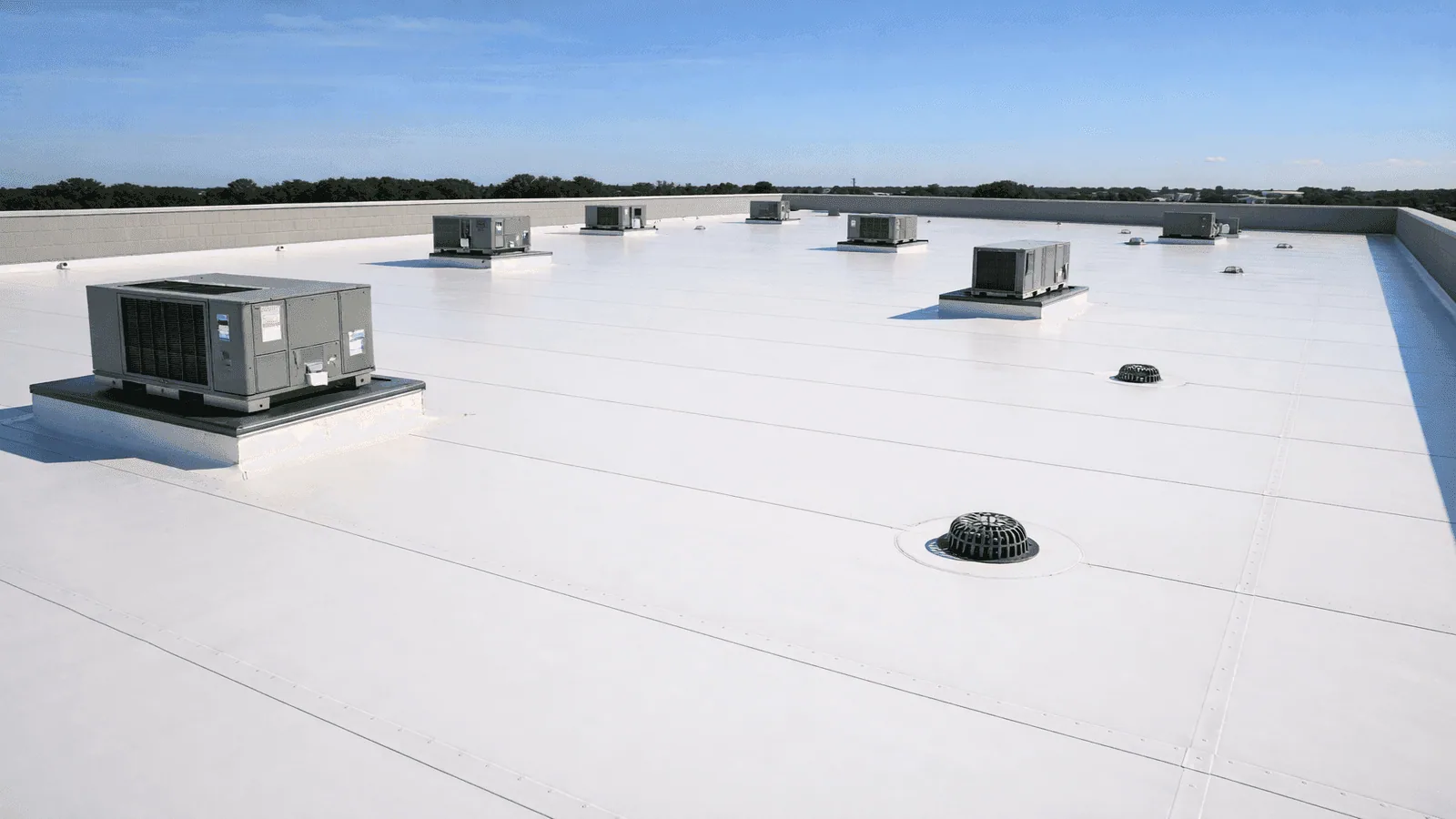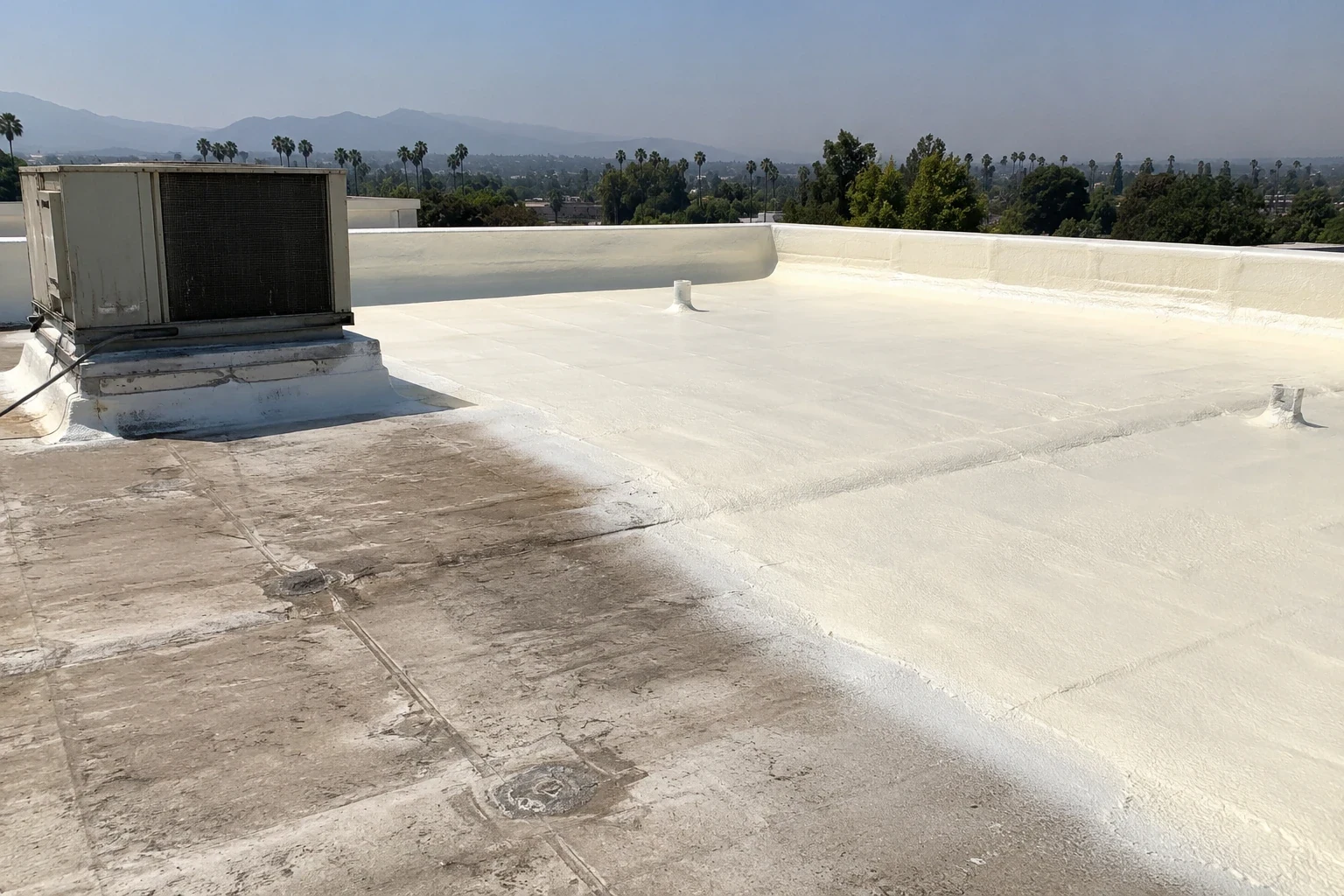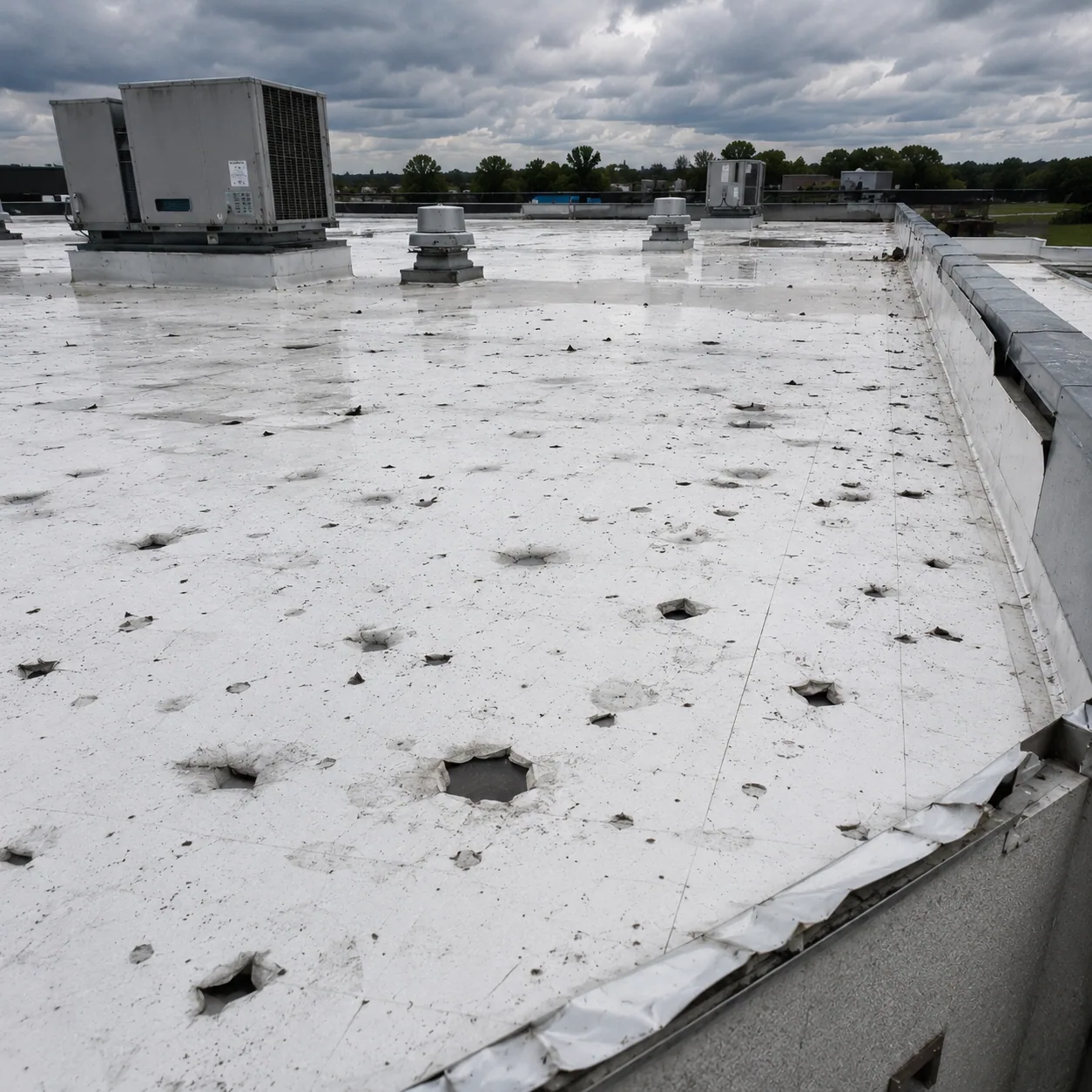
A small cut beside a service walkway can expose more than the visible opening. We mark the puncture, examine the membrane around it, and check whether foot traffic or equipment contact affected nearby seams. The City’s business resource page lists aerospace and defense manufacturing, warehouse and distribution, and general manufacturing among Simi Valley sectors. Those operations can involve roof-mounted equipment and service access, but they do not prove why a particular membrane was damaged. We establish the cause only from evidence at the roof. A commercial repair inspection records the hole, nearby traffic path, and proposed patch boundary.
Mark the breach and nearby traffic
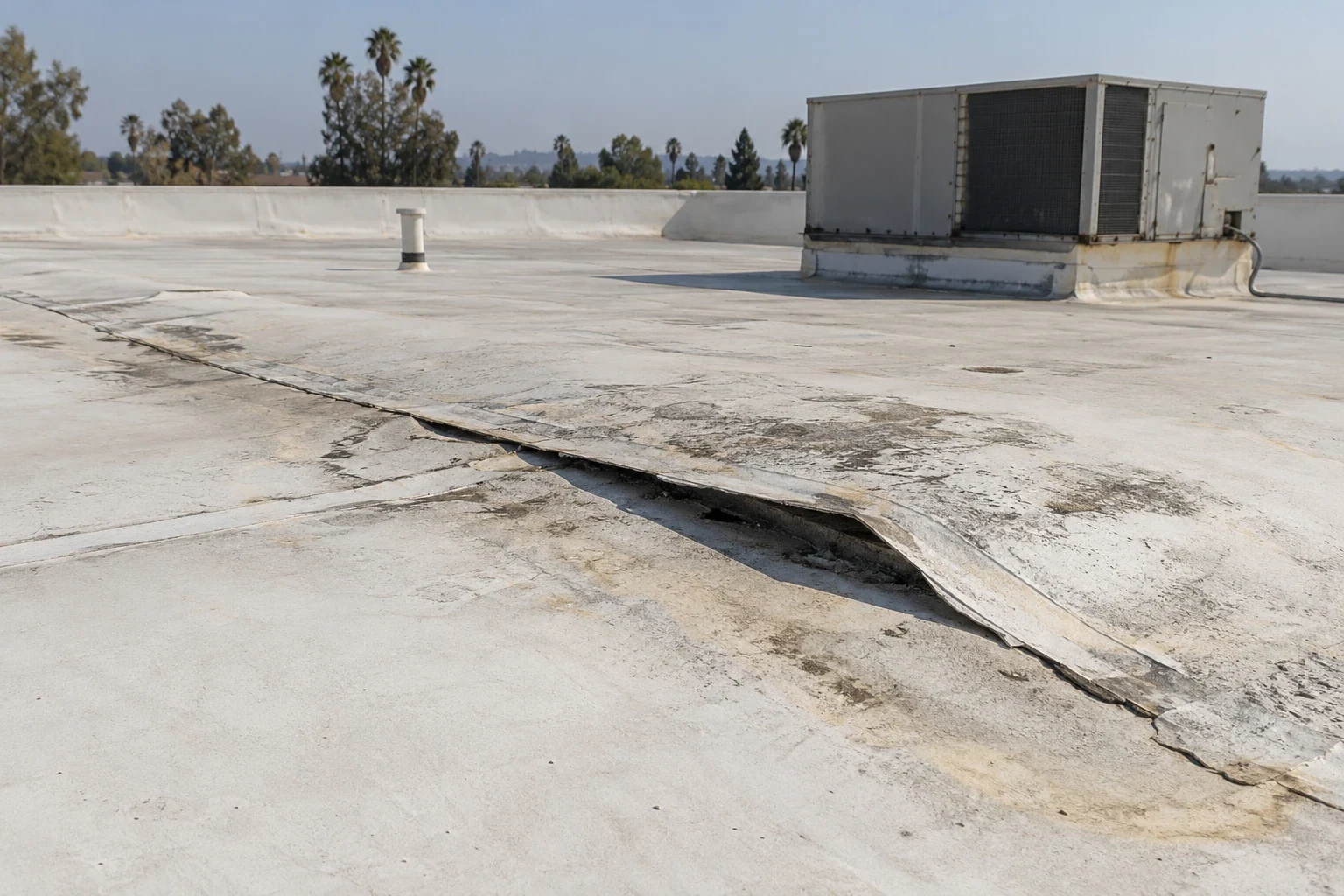
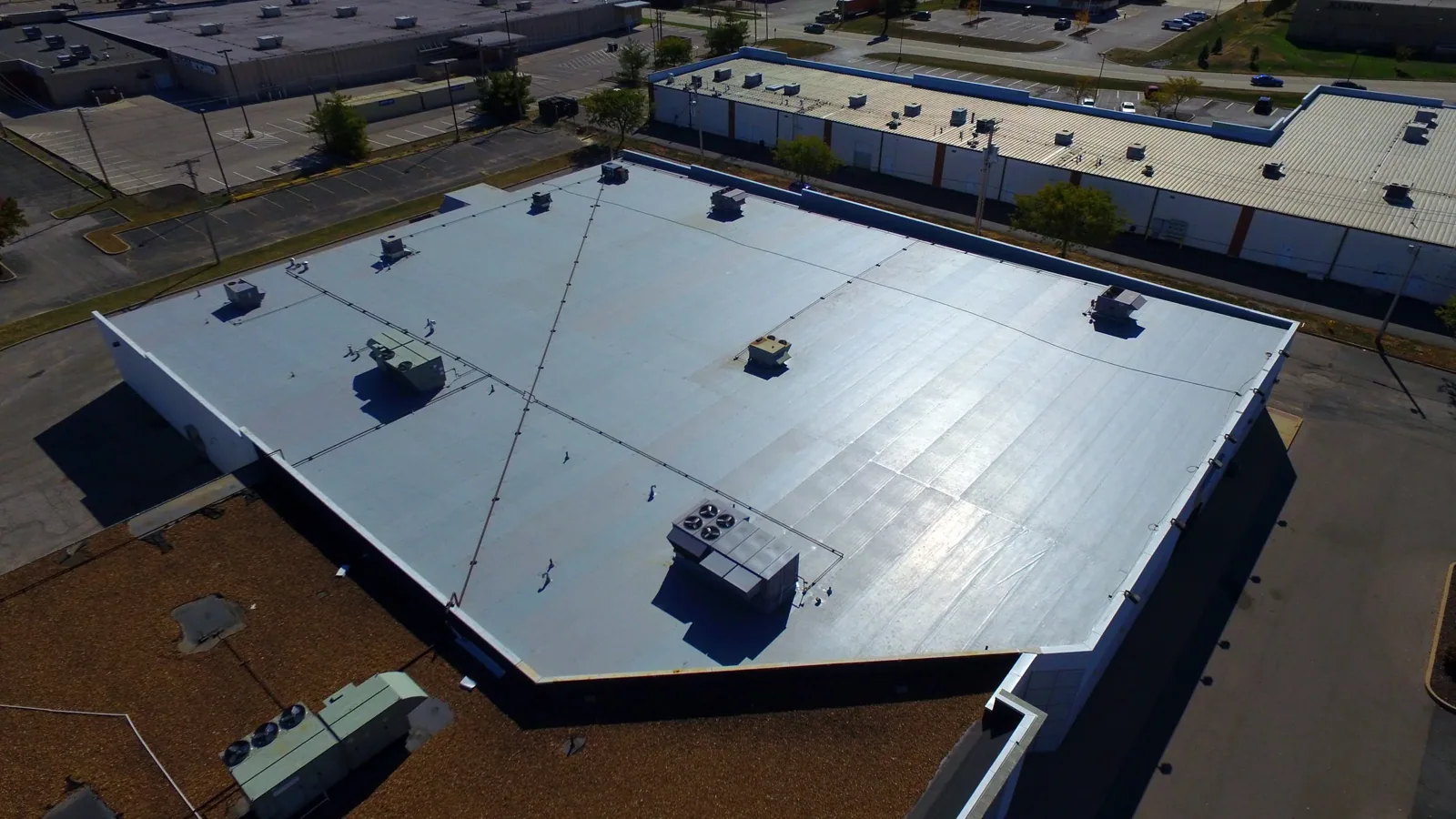
We photograph the opening with a location view, then examine the surrounding membrane for scuffs, cuts, crushed insulation, displaced protection, and prior patches. A puncture may come from dropped material, a sharp tool, an unprotected equipment leg, or repeated foot traffic, but the scope does not assign a cause without evidence. We note the size and shape of the breach, whether the substrate moves, and whether water or debris has entered the assembly. Nearby walk pads and service routes are mapped so the repair does not leave the same exposure in place.
Traffic often follows the shortest path between a roof hatch and a unit. The City identifies Tapo Canyon Road and Los Angeles Avenue among major arterial routes, but the route to each rooftop unit comes from the building. We ask which equipment is serviced, where technicians need clearance, and whether a safer walk path or protection can reduce contact with the membrane. A curb and equipment review can identify how service access affects the roof detail. The Tapo Canyon business park is a citywide location reference, not a description of any one roof or its equipment.
We also check seams, drains, and penetrations within the likely water path. A cut that sits beside a lap may have affected both components, so a seam inspection or flashing assessment remains a separate finding until confirmed.
Determine what lies below the membrane
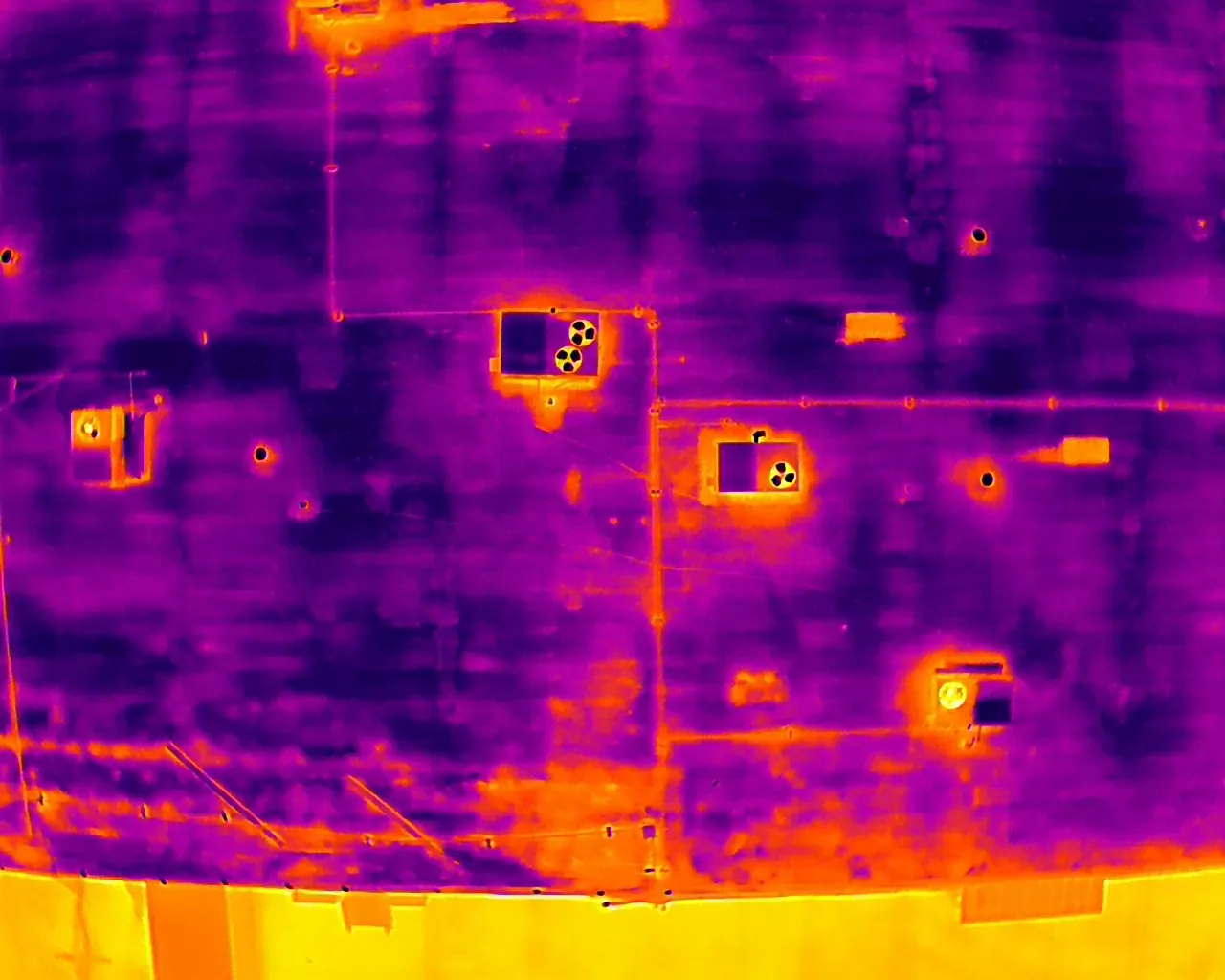
A puncture can admit water into cover board or insulation, where moisture may spread beyond the cut. We compare the opening with interior reports, deck direction, roof slope, and nearby drains. Infrared patterns can help select a test point under the right conditions, while a controlled opening verifies the assembly directly. Before opening, we set protection below and define how the exposed layers will be dried in at the end of the shift. The test boundary is recorded independently of the visible puncture size.
Simi Valley’s General Plan projects hotter summer temperatures, including more days above 97.2 degrees. That is a city-level planning projection, not a reading of a particular roof’s surface. It makes membrane exposure and work-window timing useful inspection topics. We record the actual material, surface condition, and whether the surrounding field remains flexible and bonded. A moisture survey may help identify candidate areas; it does not replace a direct inspection when the repair decision turns on wet insulation.
When the substrate is dry and sound, work may remain local. If wet material extends under a walk path or curb, we document where removal should stop and which layers need replacement. A leak repair assessment follows the confirmed water path. The closeout map shows both the puncture repair and any separate moisture boundary.