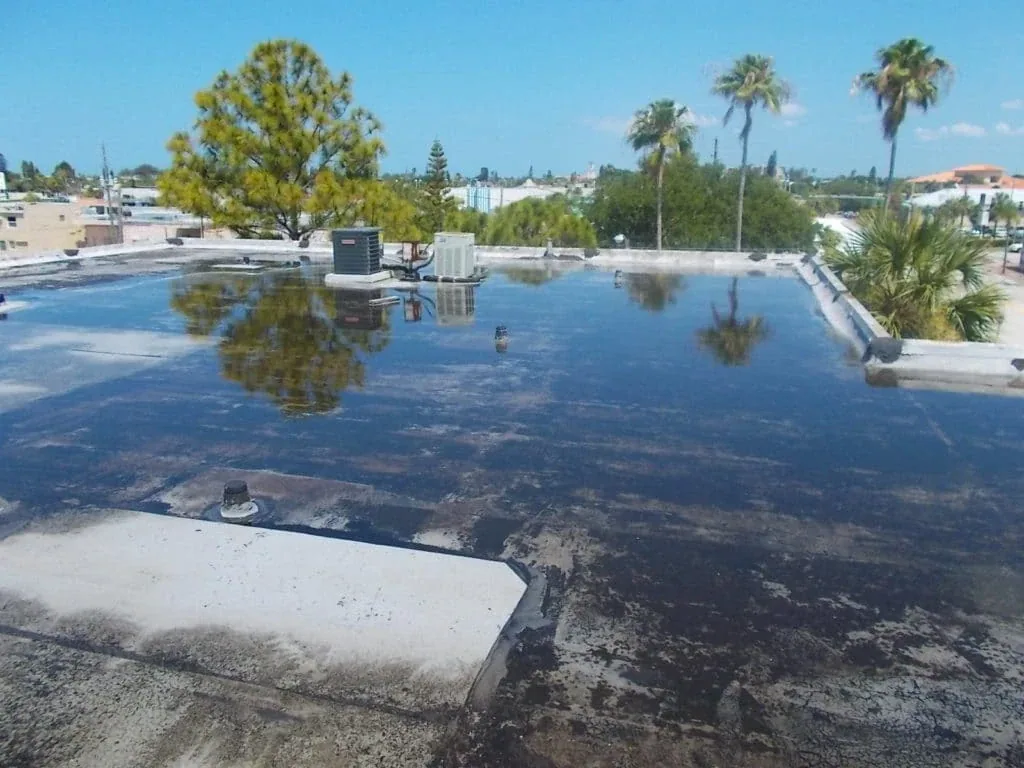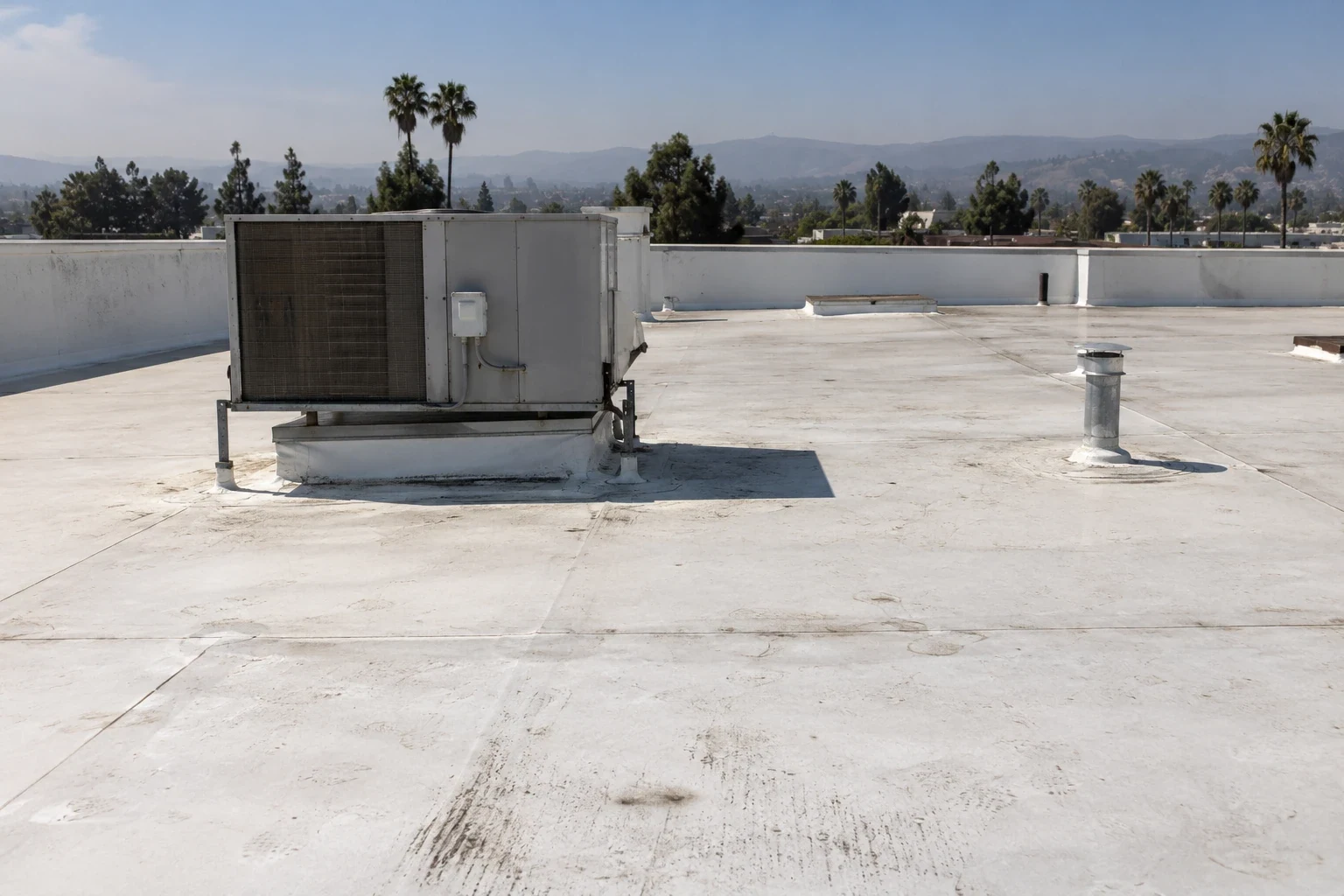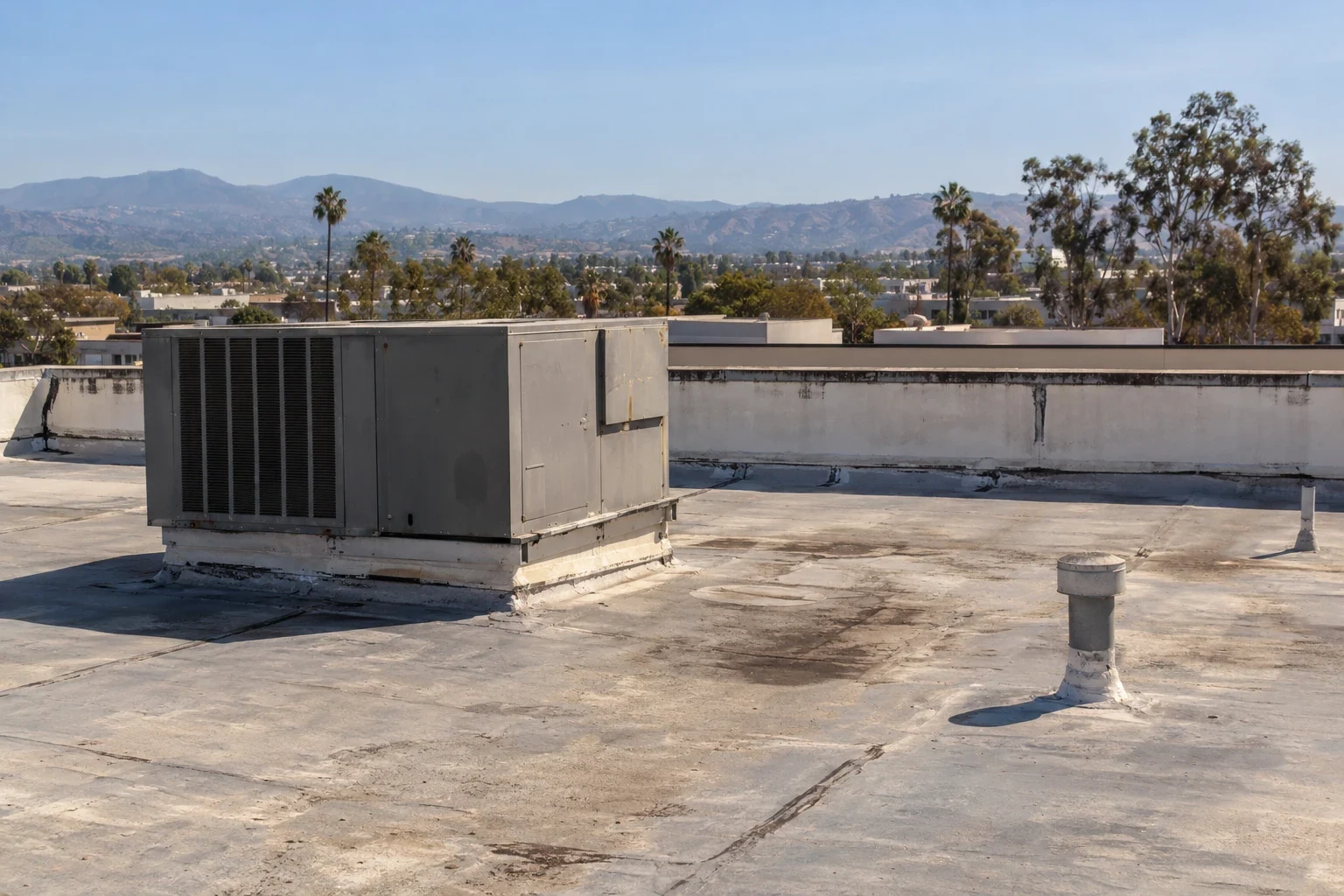
A dark line at the roof edge can hide several layers, each with its own attachment and condition. Before proposing an overlay, we check how many systems are present, whether insulation is wet, and whether the perimeter can accept added height. Simi Valley's hotter future summer projections make seam movement and exposed transitions useful inspection topics, while the actual assembly determines whether recovery is appropriate. The first decision is what the existing roof can support.
Count layers before adding another
Recovery leaves some existing material in place, so layer count and condition matter. We review prior project records, inspect visible cut edges, and compare roof elevations at drains, curbs, parapets, and equipment bases. Where those details do not show the full build-up, a test opening can verify the layers and substrate. The report notes which roof zones were sampled and whether other areas may differ because of past repairs or phased work.
Code or project requirements can limit how many layers remain, and structural or manufacturer specifications may also govern the assembly. We use the applicable design and records provided for the project instead of assuming an overlay is permitted. The inspection record identifies open questions before pricing. If a roof area contains a newer system beside older construction, we map that interface so the proposed recovery does not treat the building as one uniform field. Separate elevations may have different repair histories, so layer counts should be logged by zone rather than averaged across the property. Record each opening location, the materials observed, and the condition at its perimeter. If access limits prevent sampling part of the roof, identify that area as unverified and carry the uncertainty into the comparison.
Find wet insulation and weak attachment
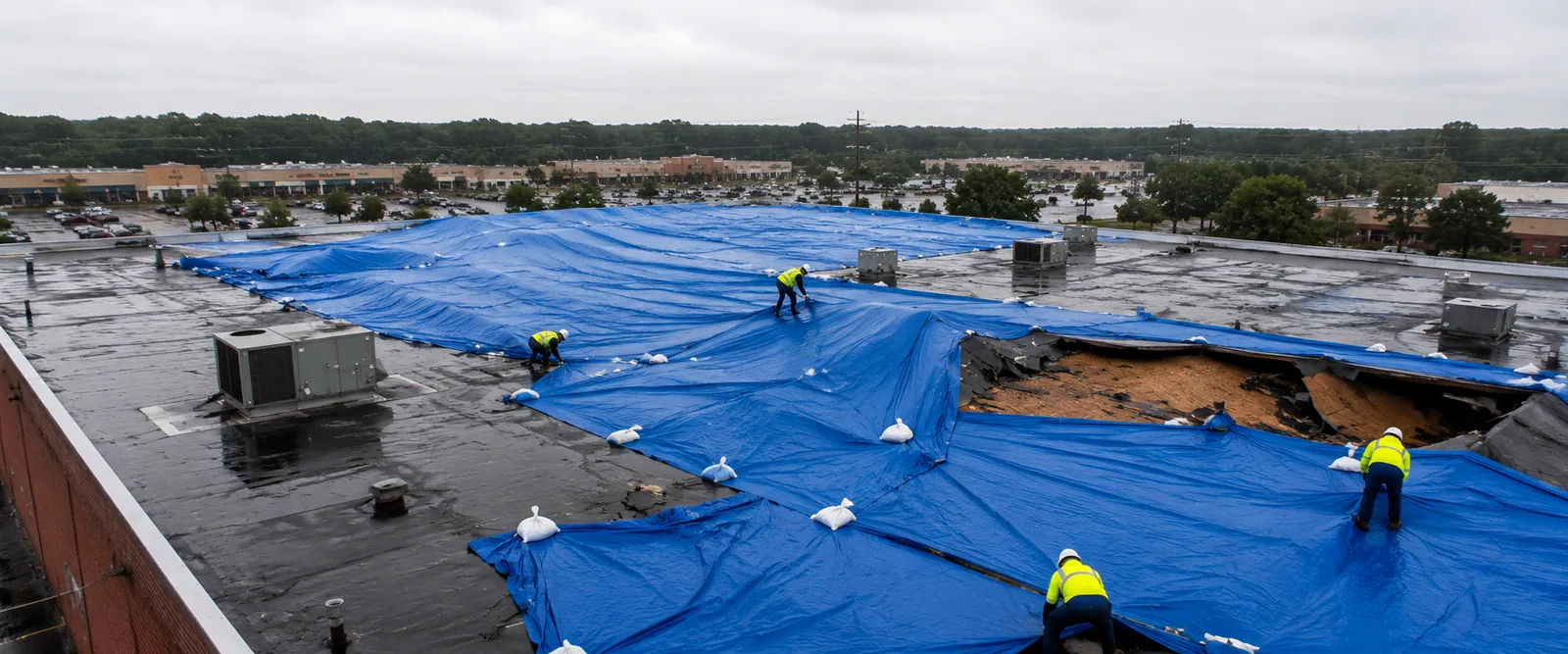
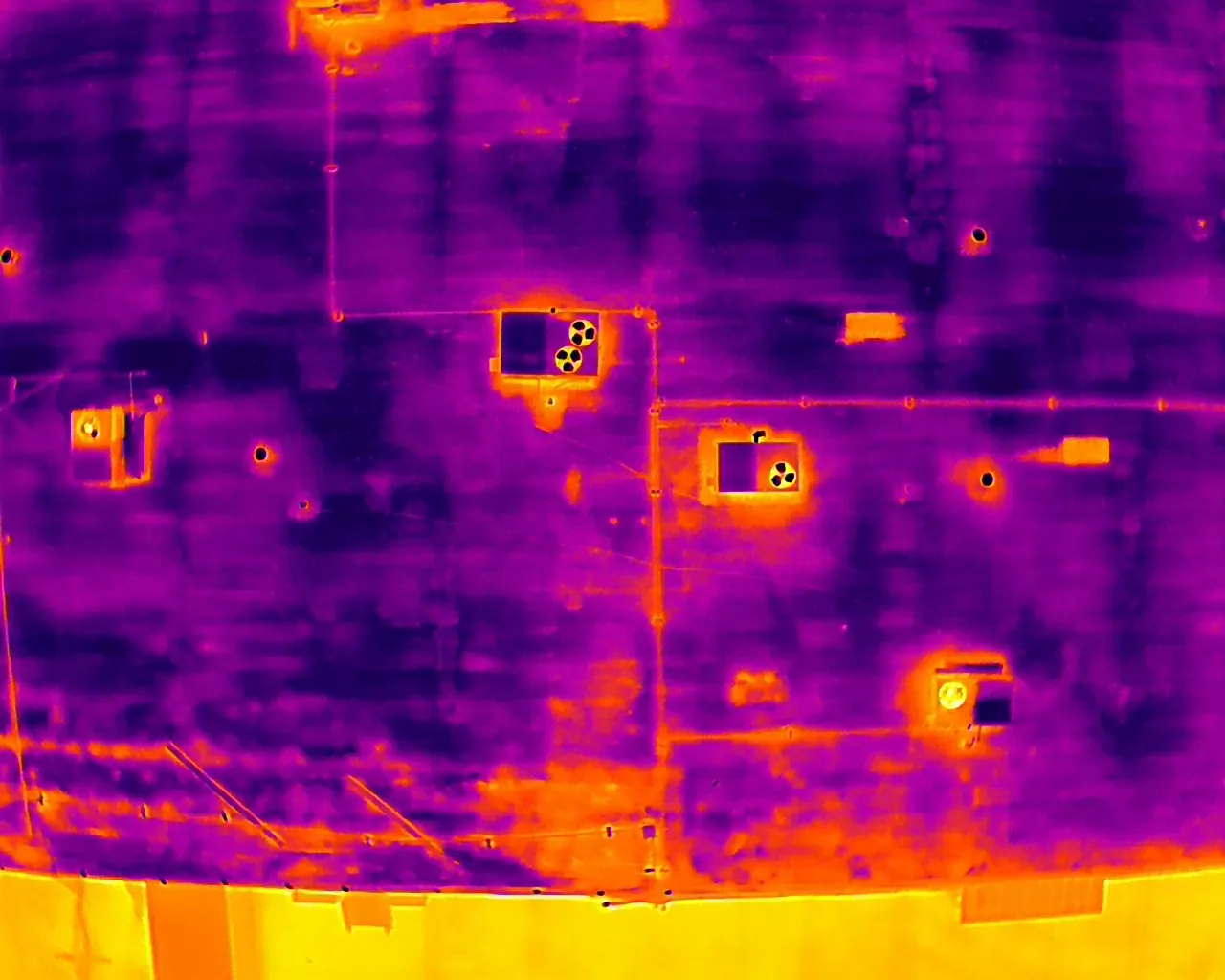
Wet insulation can reduce support beneath a new assembly and retain moisture below the surface. We inspect for visible damage, use moisture readings where useful, and make controlled openings when the recovery decision requires confirmation. Readings define areas for follow-up; they do not show every concealed layer. If testing finds wet material, we mark the removal area and define who can approve an expanded perimeter after the roof is opened.
Attachment also needs verification. Loose, corroded, or inconsistent fastening can affect the substrate that will receive new work. We check exposed edges, fastener patterns where visible, and signs of movement before selecting a method. An infrared moisture survey may help target review areas, while a Tapo Canyon Business Park remains tied to layer count, moisture, and attachment. We do not carry an untested assumption into the proposal as a confirmed roof condition. A roof in Simi Commerce Center still needs field verification; its area label does not establish layer count or condition.