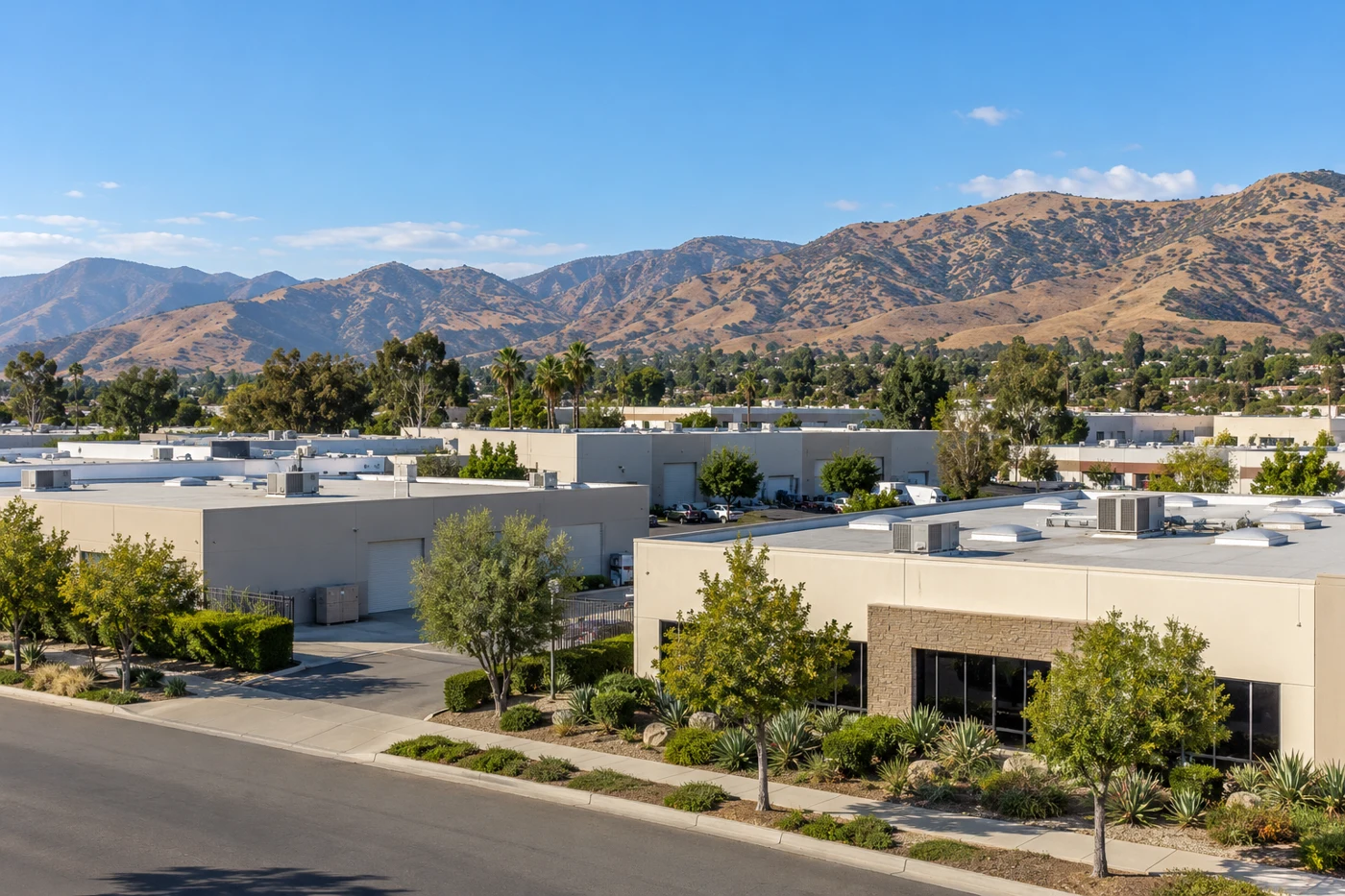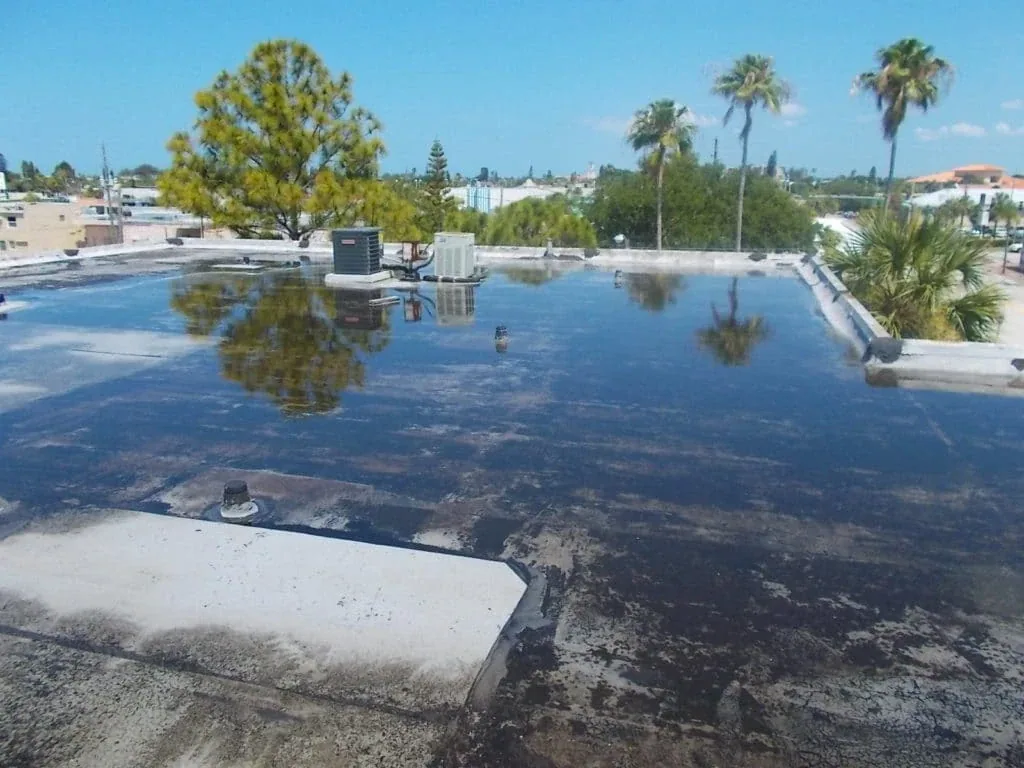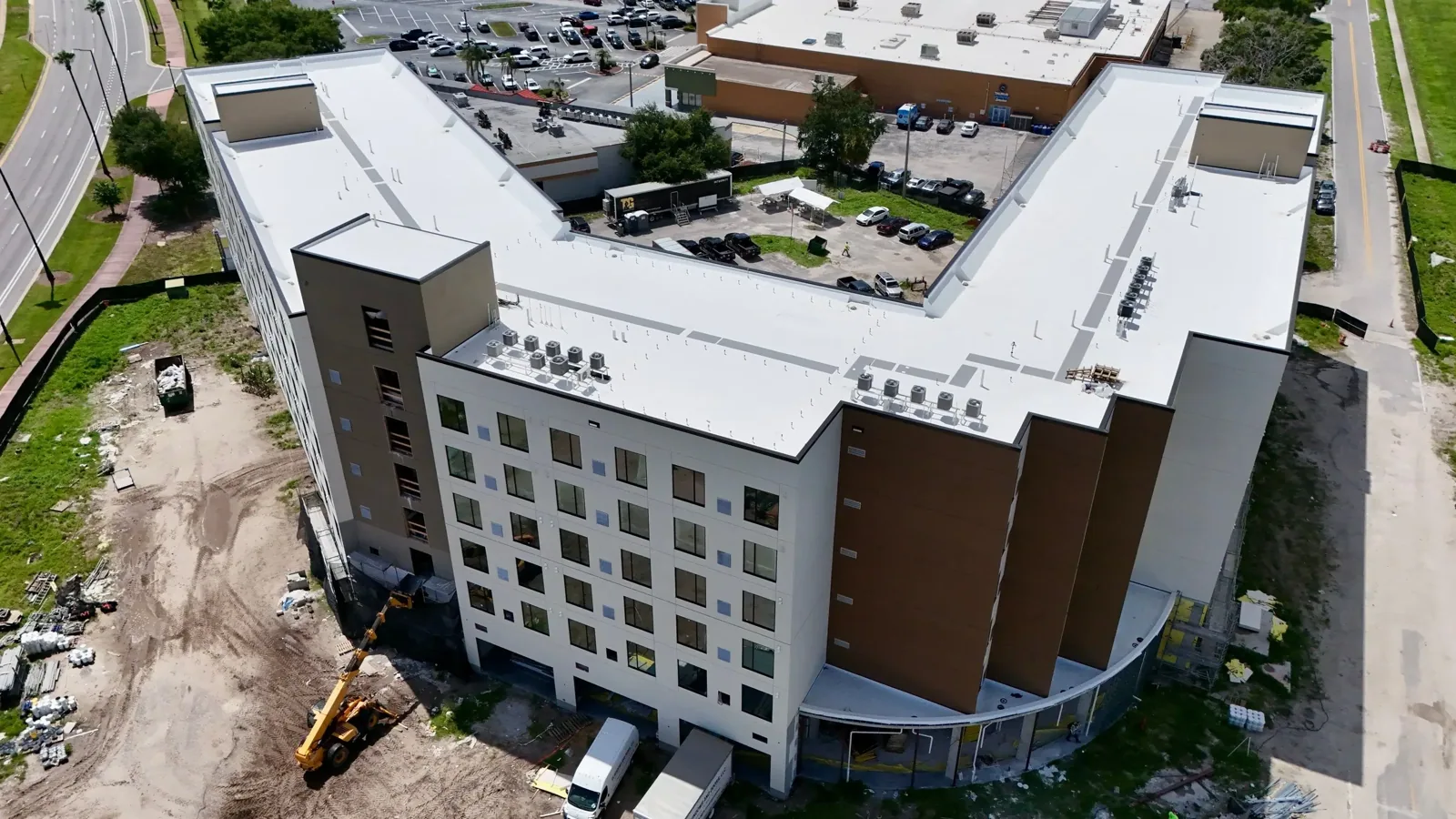
A water alarm near a cooling unit gives the roof team a location, not a failure boundary. For a data-center building in Simi Valley, we identify the reported zone, roof drains, equipment curbs, and penetrations before recommending an opening. A data hall can depend on rooftop cooling and electrical systems that cannot be moved casually. The inspection records those constraints while tracing the moisture path through the roof assembly. We compare any available as-built plan with the equipment and penetrations visible today. Additions can change drainage, service clearance, and the safe inspection route, so a current walkdown remains necessary before a repair boundary is priced.
Simi Valley's climate analysis anticipates higher average temperatures and additional days above 97.2 degrees by mid-century. We note exposed seams and equipment transitions where heat acts on the inspected roof; the operator sets access controls and the repair decision. roof condition review sets the next step from observed layers.
Map cooling equipment and roof zones
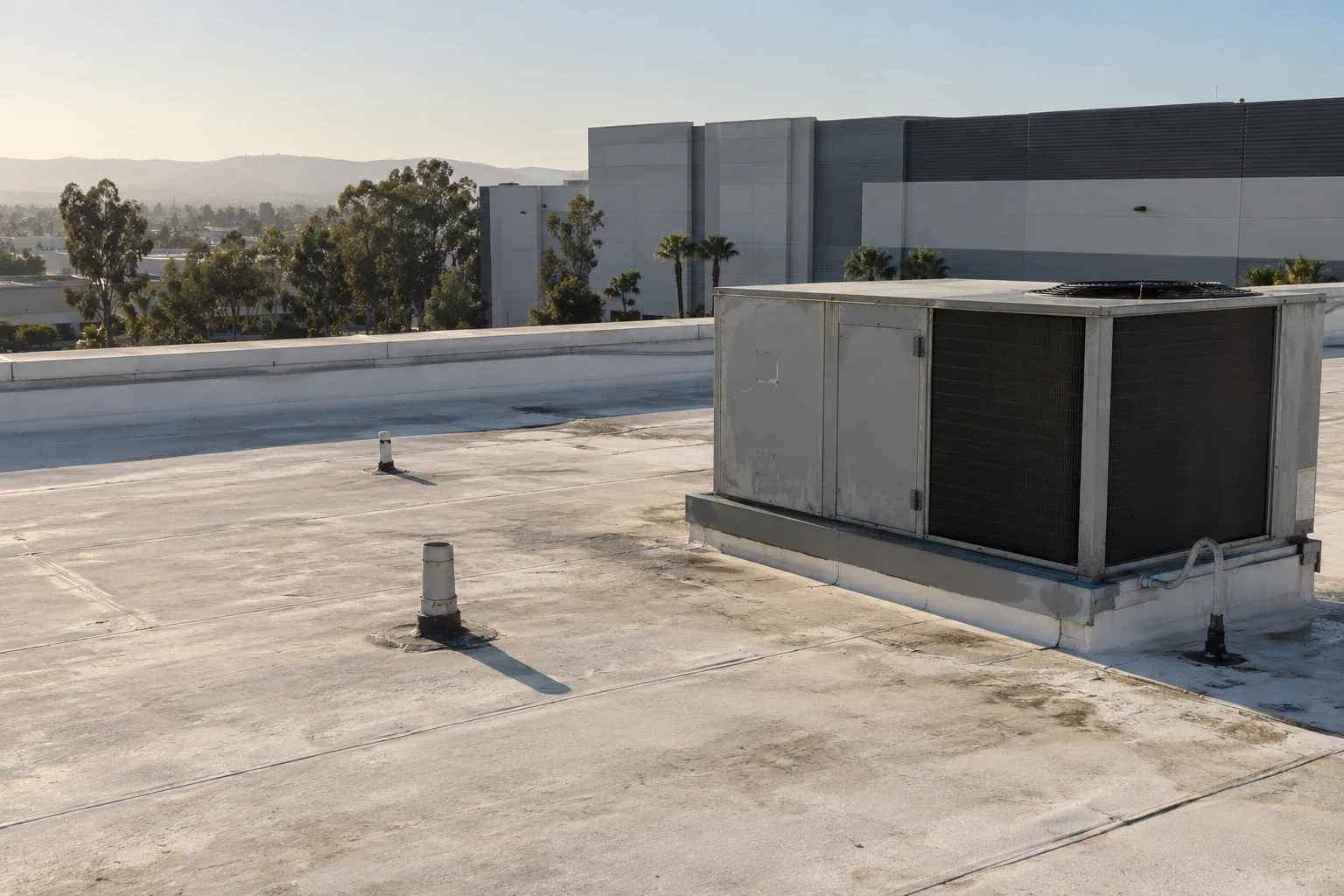
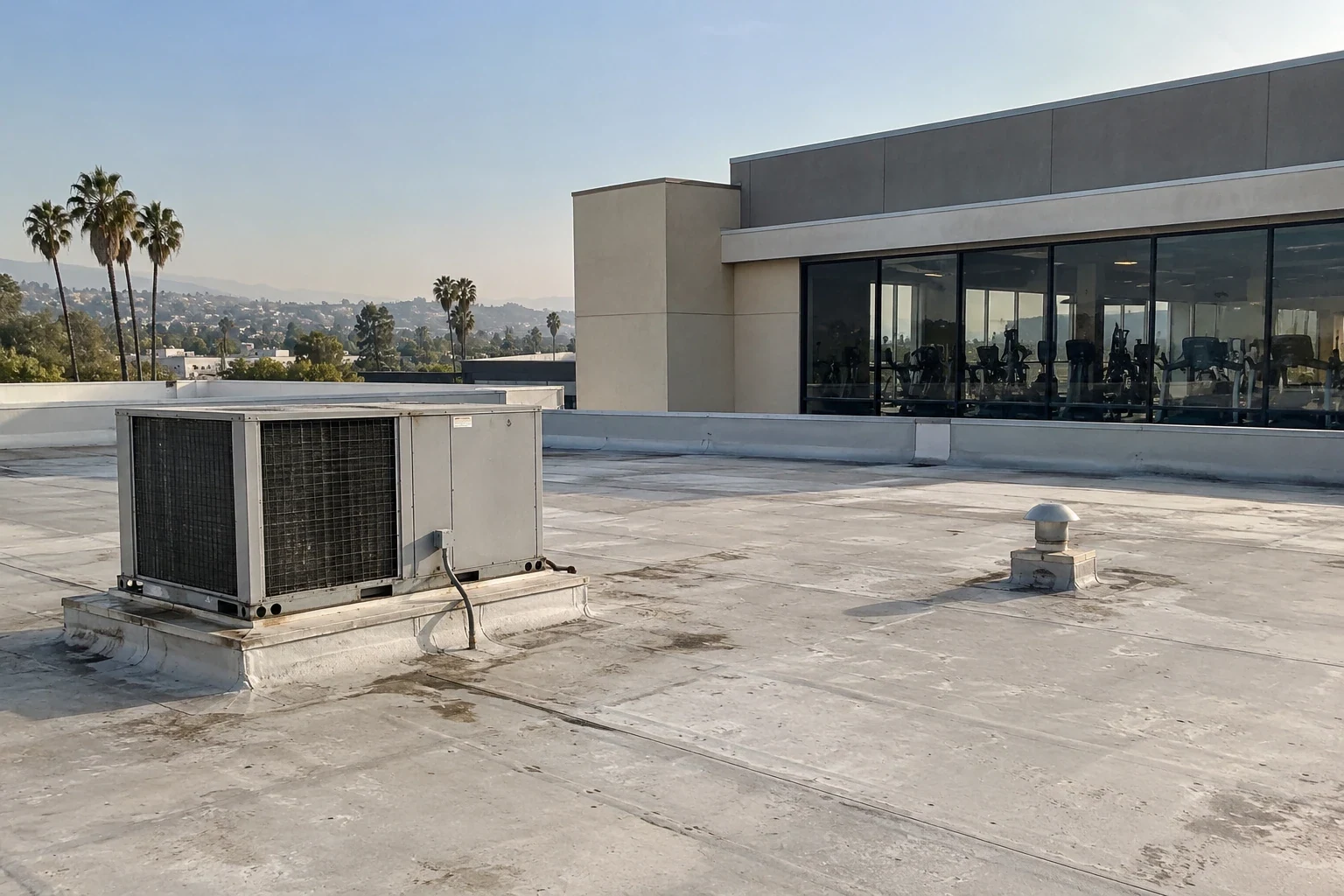
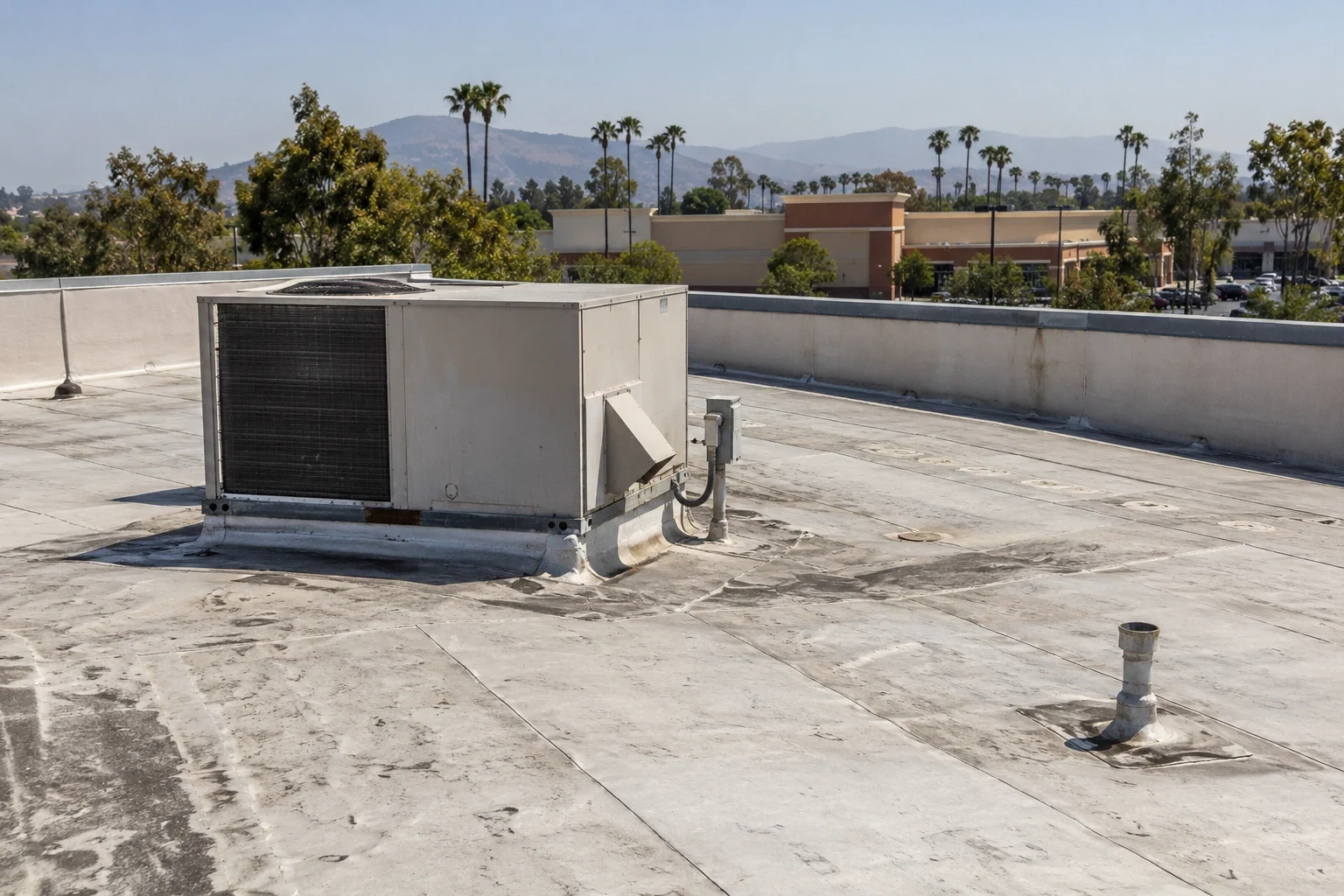
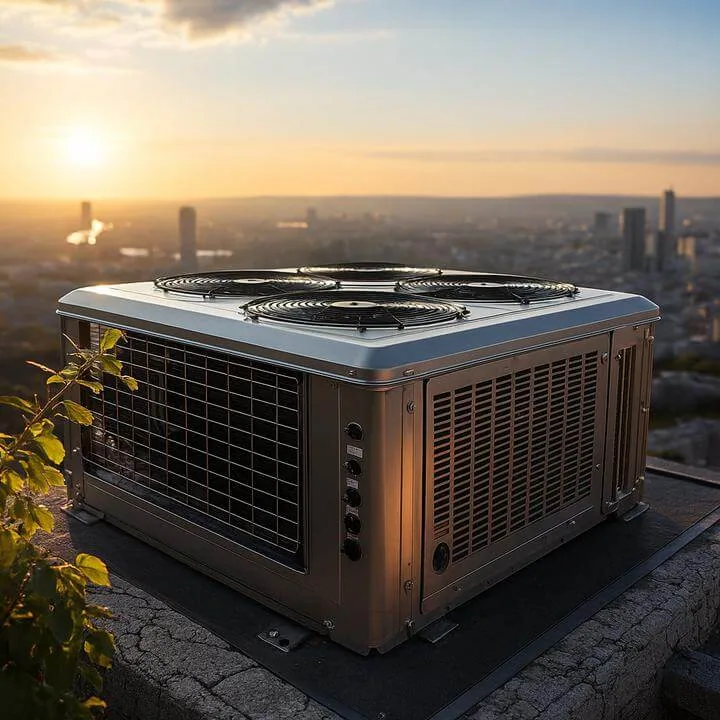
Cooling units, exhausts, electrical conduits, and service platforms interrupt the roof field. We mark each curb and support, identify the service clearance, and check flashing around its base. A leak near an air-handling unit may start at a membrane transition or may relate to condensate management outside the roofing scope. We record the roof connection separately and identify which equipment contact should review a mechanical condition.
We divide the roof into zones that reflect drainage, membrane type, and equipment layout. A single interior report can correspond to more than one detail. The map places alarm or ceiling observations against seams, drains, curb corners, and edge transitions. If the roof cannot be safely entered near live equipment, we arrange a permitted access path before inspection rather than disturb a restricted area.
The City identifies industrial development in Simi Valley, with much of it in the West End Specific Plan area. That broad district can orient service planning, but the data-center operator sets the actual access and security requirements. A West End roof inspection is planned around the site contact and the specific roof zone.
Confirm moisture before opening
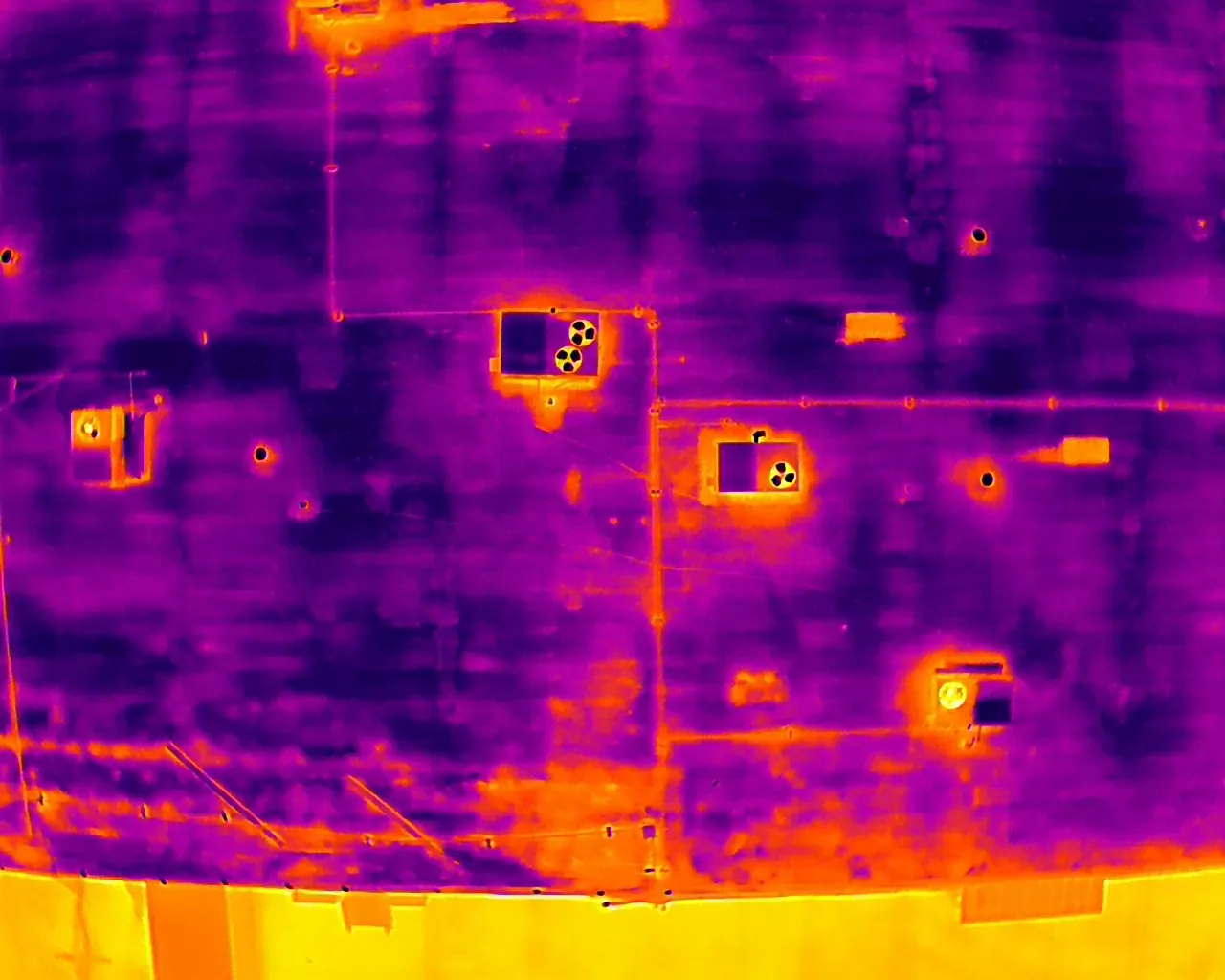
Moisture below a roof can affect insulation, cover board, and the deck. We compare alarms and interior observations with roof details and available assembly records. Infrared patterns may help locate suspect zones if conditions support a meaningful scan. They do not verify water content or identify the layer involved. The manager needs direct evidence before approving removal near sensitive equipment.
A controlled test opening can show the membrane underside, insulation, vapor retarder where present, and deck. We choose the location with the facility contact and plan protection, access, and a same-day dry-in boundary. The operator marks sensitive cables and air intakes that the opening must avoid. If the opening exposes a larger wet area, we stop at the pre-set approval point and document the additional limit. The crew does not extend across a critical roof zone without direction.
A moisture survey can guide the test location, while the opening establishes the layers. Our written condition record states which evidence came from the scan and what was confirmed in the assembly. That separation helps the operator decide whether to repair one detail or investigate a larger area.