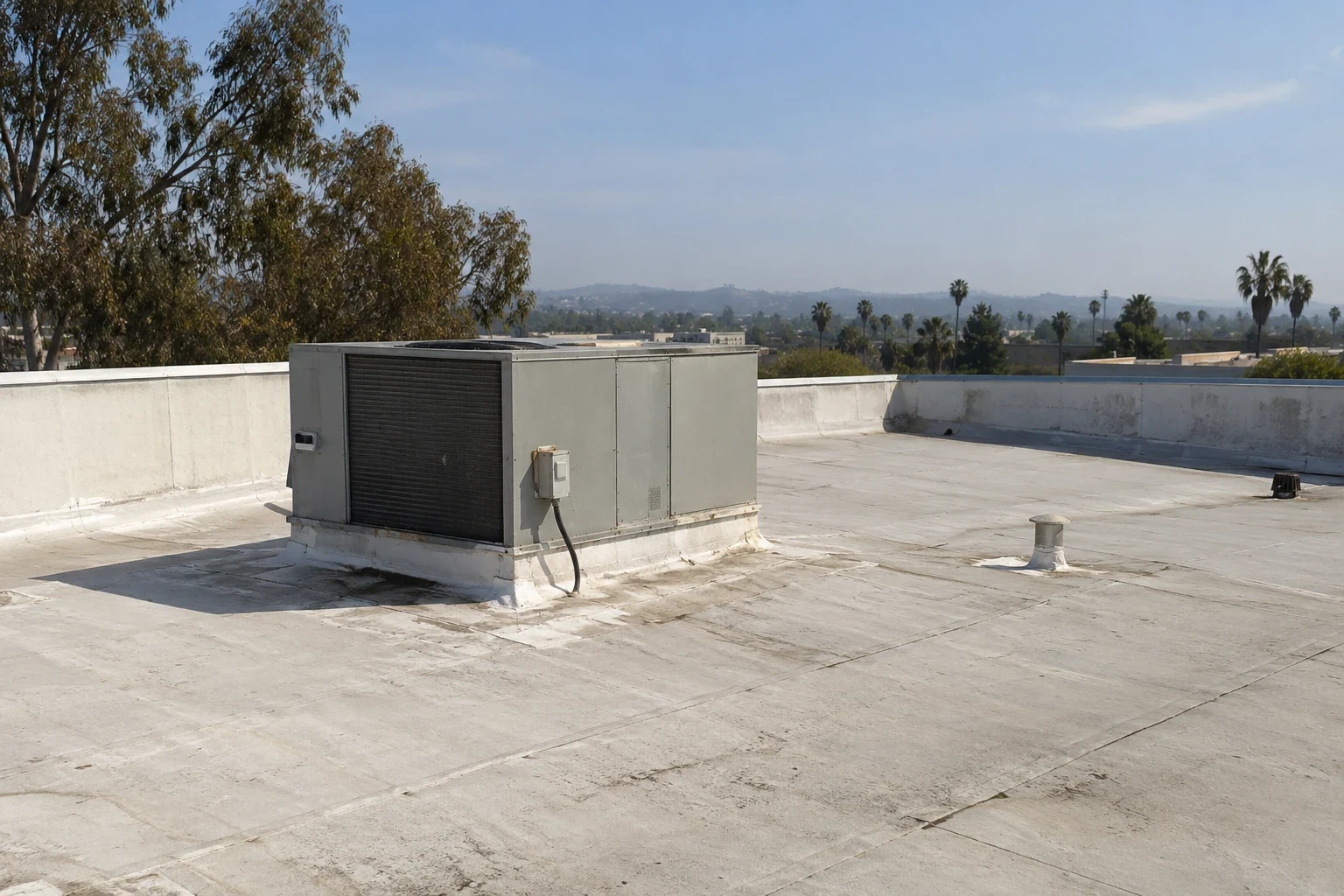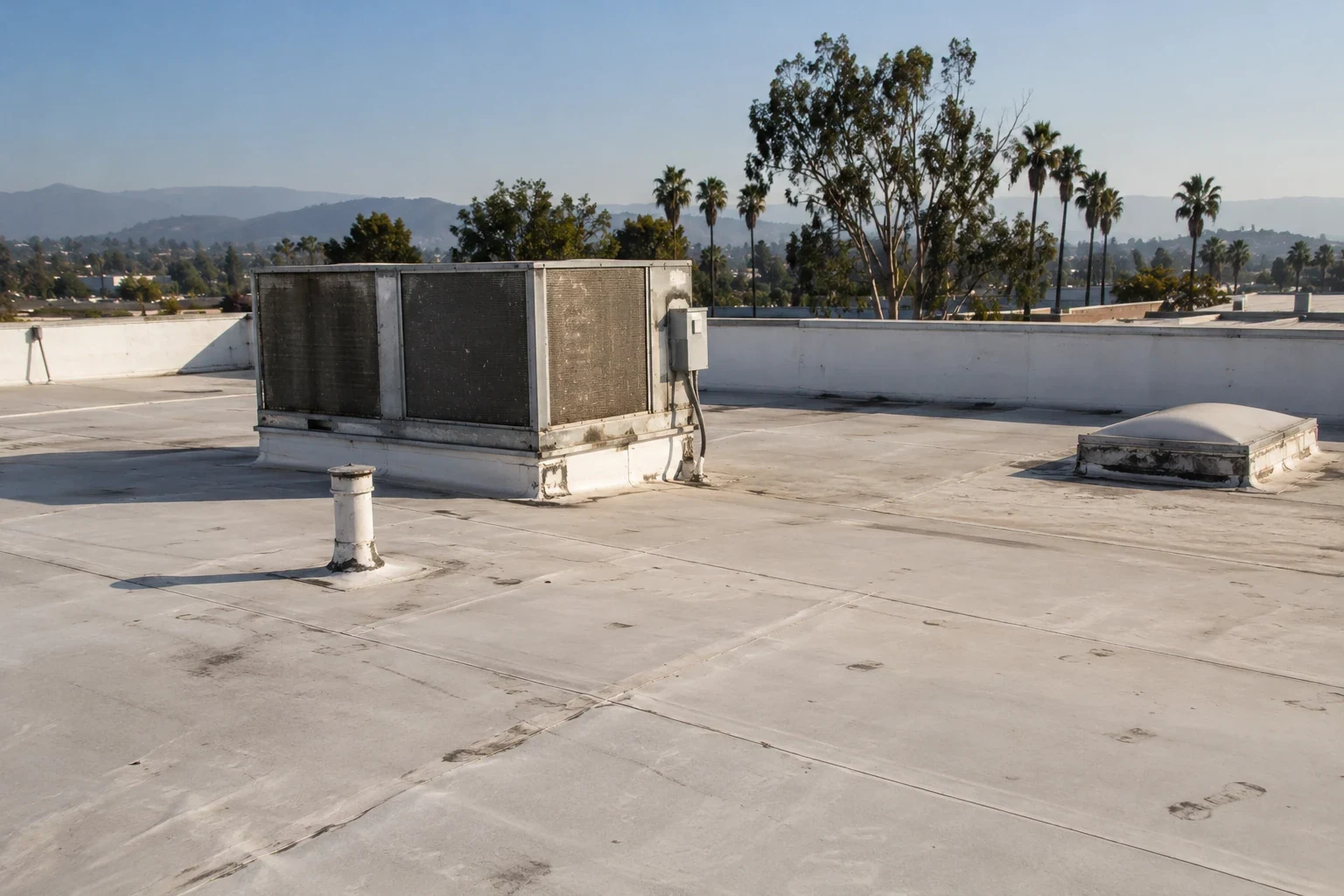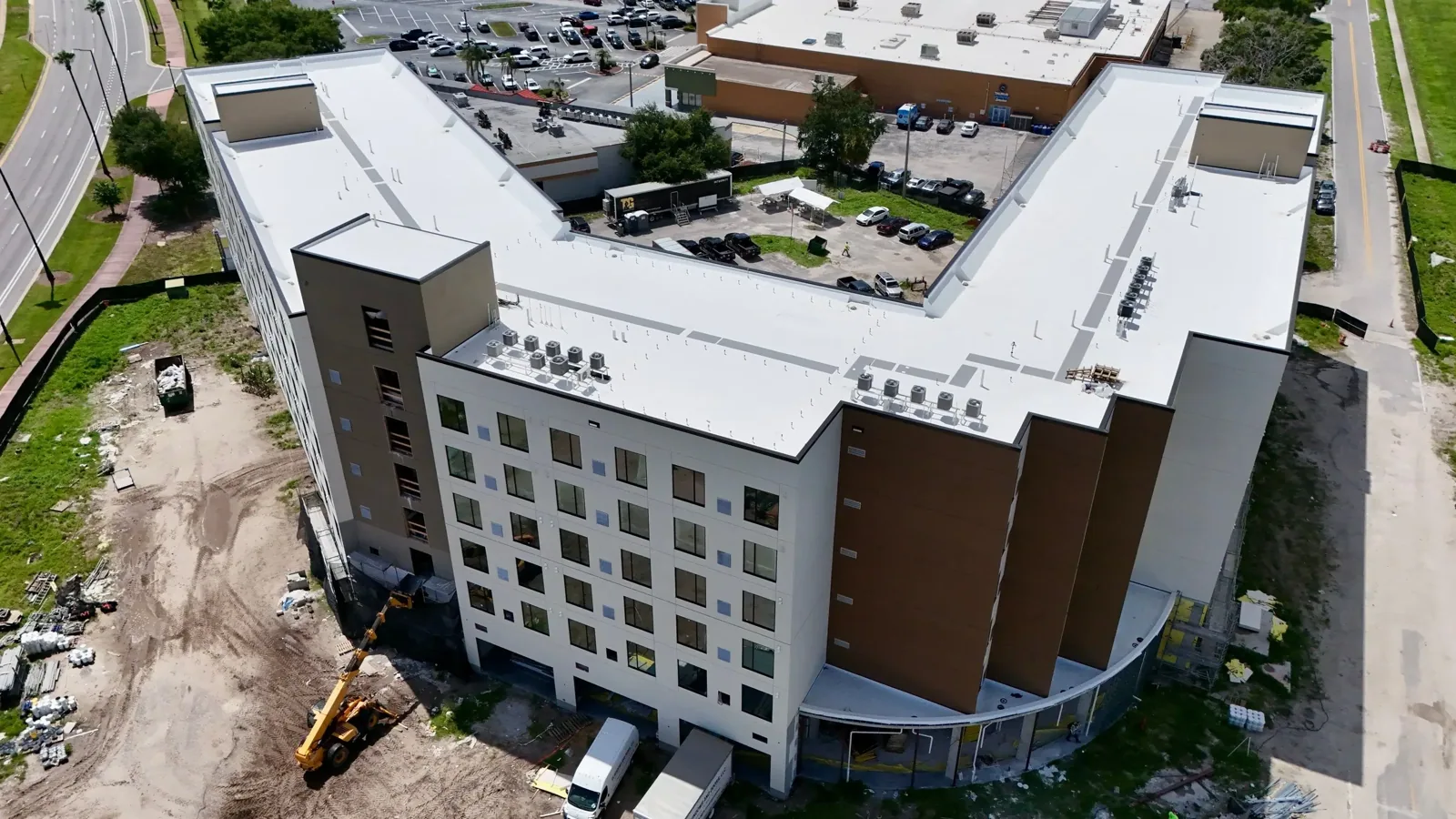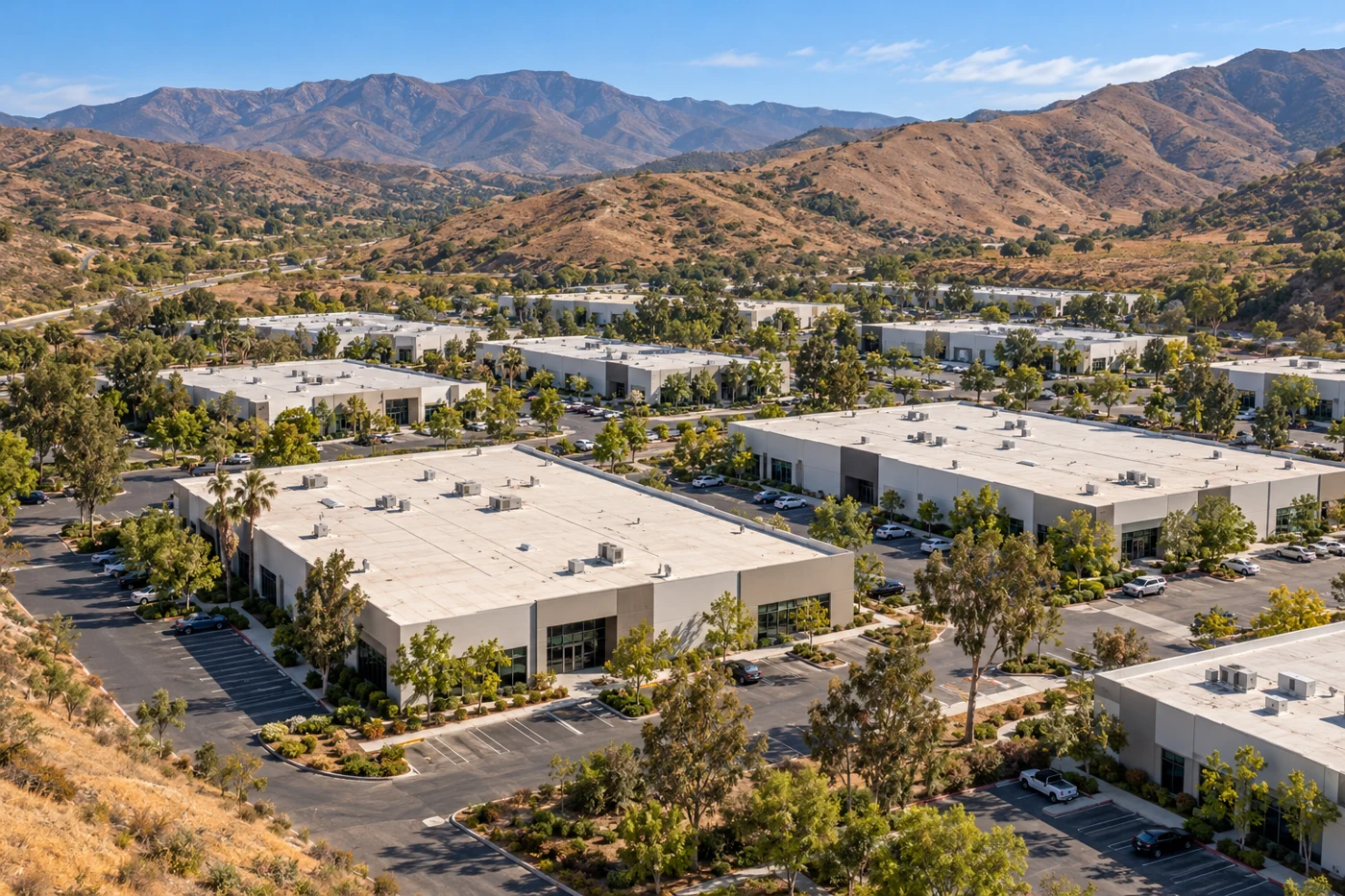
A KEE membrane still depends on a clean weld and a stable curb transition. The formulation may help address demanding roof exposures, but product selection must match the actual substance, contact, and system requirements. In Simi Valley, we inspect the field, seams, flashing, and substrate before recommending a repair or new assembly. The City’s hotter-summer planning outlook makes exposed material condition worth recording, not guessing. Tapo Canyon Business Park and Simi Commerce Center provide useful local reference points, while each property’s roof plan sets the scope. A roof inspection marks the condition and the next decision.
Identify the membrane before repair
KEE refers to ketone ethylene ester, an additive used in some PVC roofing formulations. The installed product may have a specific membrane construction and reinforcement, so we verify the system from records and visible markings where available. We do not infer a product from color or thickness. That identification matters because primers, cleaners, flashing sheets, weld settings, and repair details must be compatible with the membrane. If the building file is incomplete, we record what is known and identify the test or product submittal needed before work.
KEE and standard PVC share a thermoplastic seam approach, but they are not interchangeable by default. Compare the product data, intended exposure, membrane thickness, reinforcement, and manufacturer detail requirements before selecting a repair sheet. A PVC membrane review can make that comparison using the same substrate and drainage conditions. The scope should state the exact repair material and preparation so a later technician can recognize what was installed.
Test the weld at its working edge
Heat-welded KEE seams need proper temperature, speed, pressure, and a prepared surface. We inspect the lap for contamination, incomplete fusion, folds, punctures, and patches that stop short of sound sheet. A probe can reveal a loose section at a suspect edge, but a single test does not represent every roof zone. We map each finding, check adjacent transitions, and note whether the seam is exposed to foot traffic or equipment service. If the sheet has changed color or surface character, the material record helps decide what testing is appropriate.
A repair should extend into sound membrane, preserve the weld geometry, and finish without a raised edge that catches runoff. We document the removed material, preparation, compatible patch, and final seam check. A localized membrane repair can correct a bounded cut or opening; repeated weld separation or broader delamination may require a larger review. The repair report distinguishes the area completed from nearby zones left for observation.