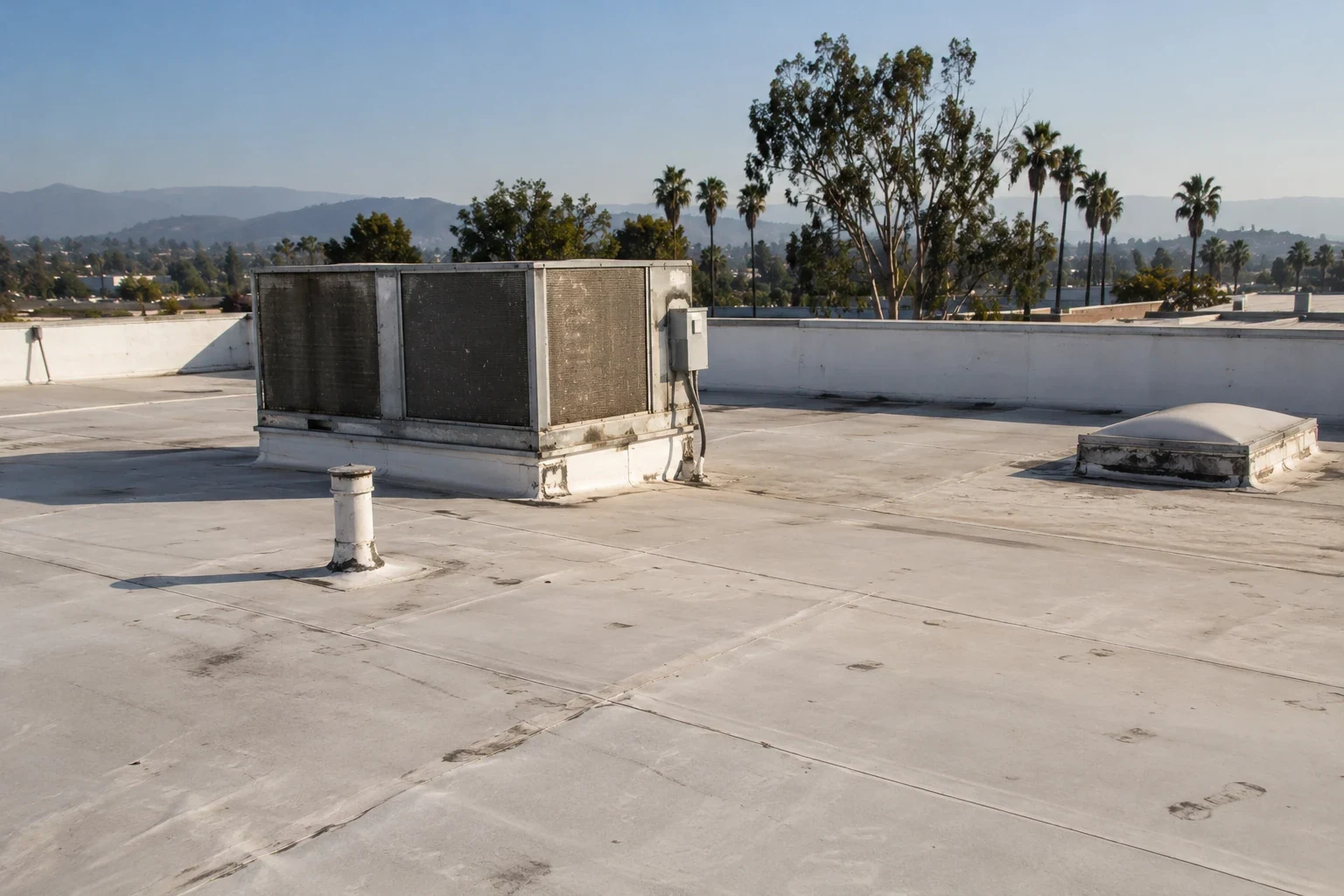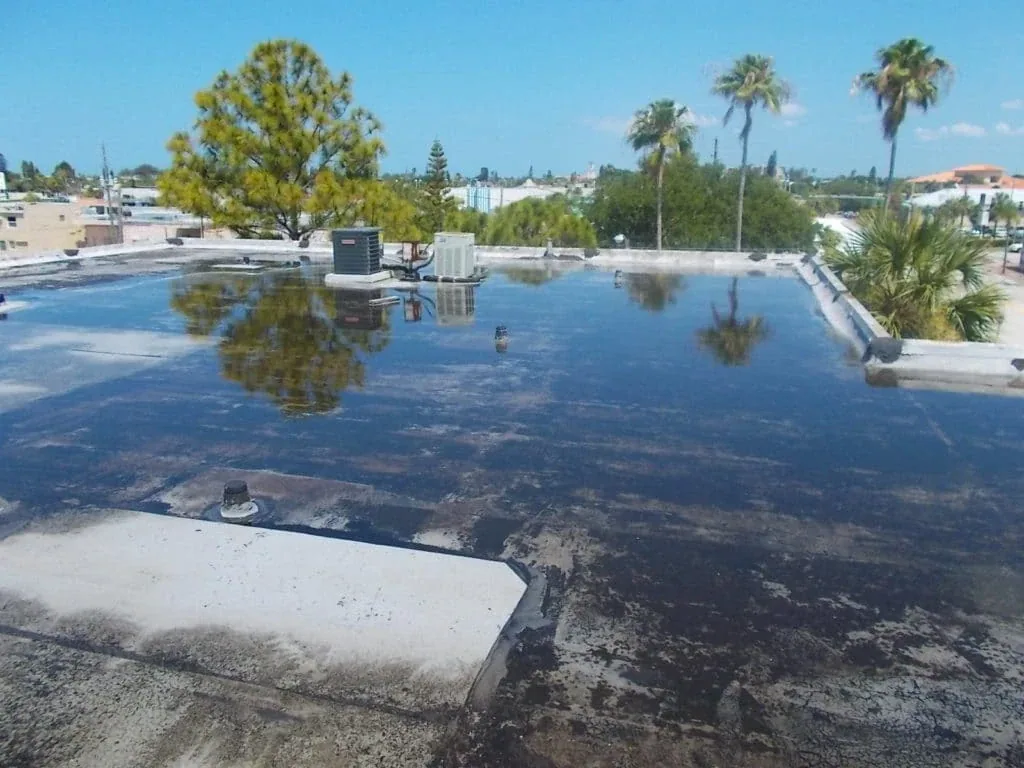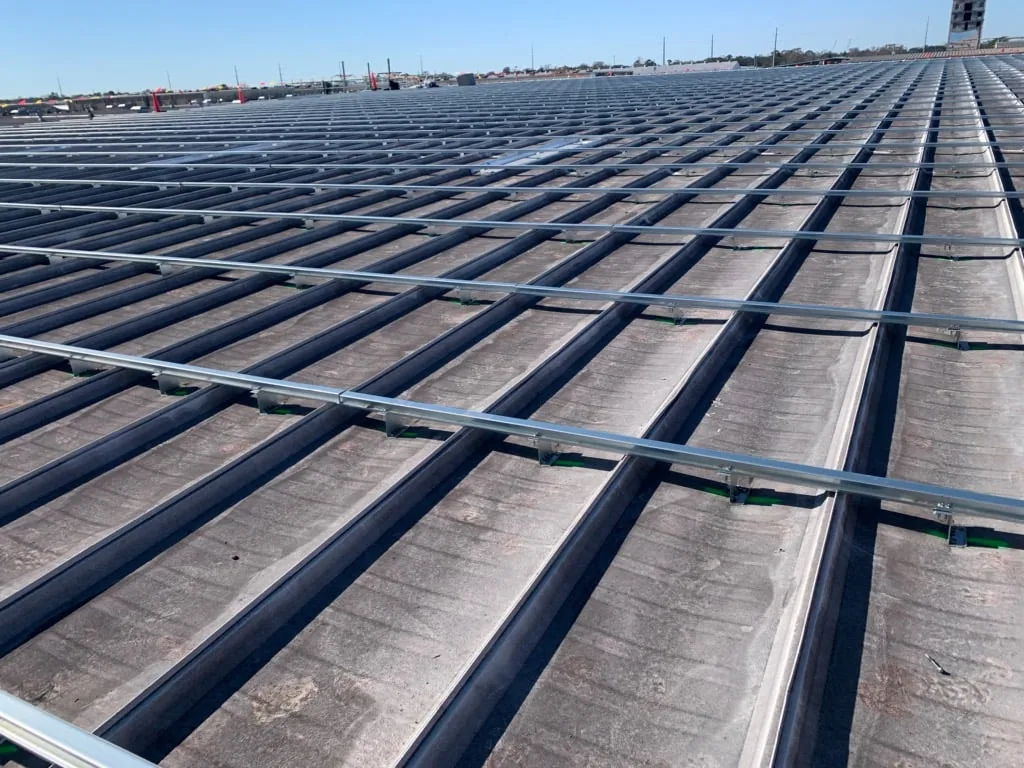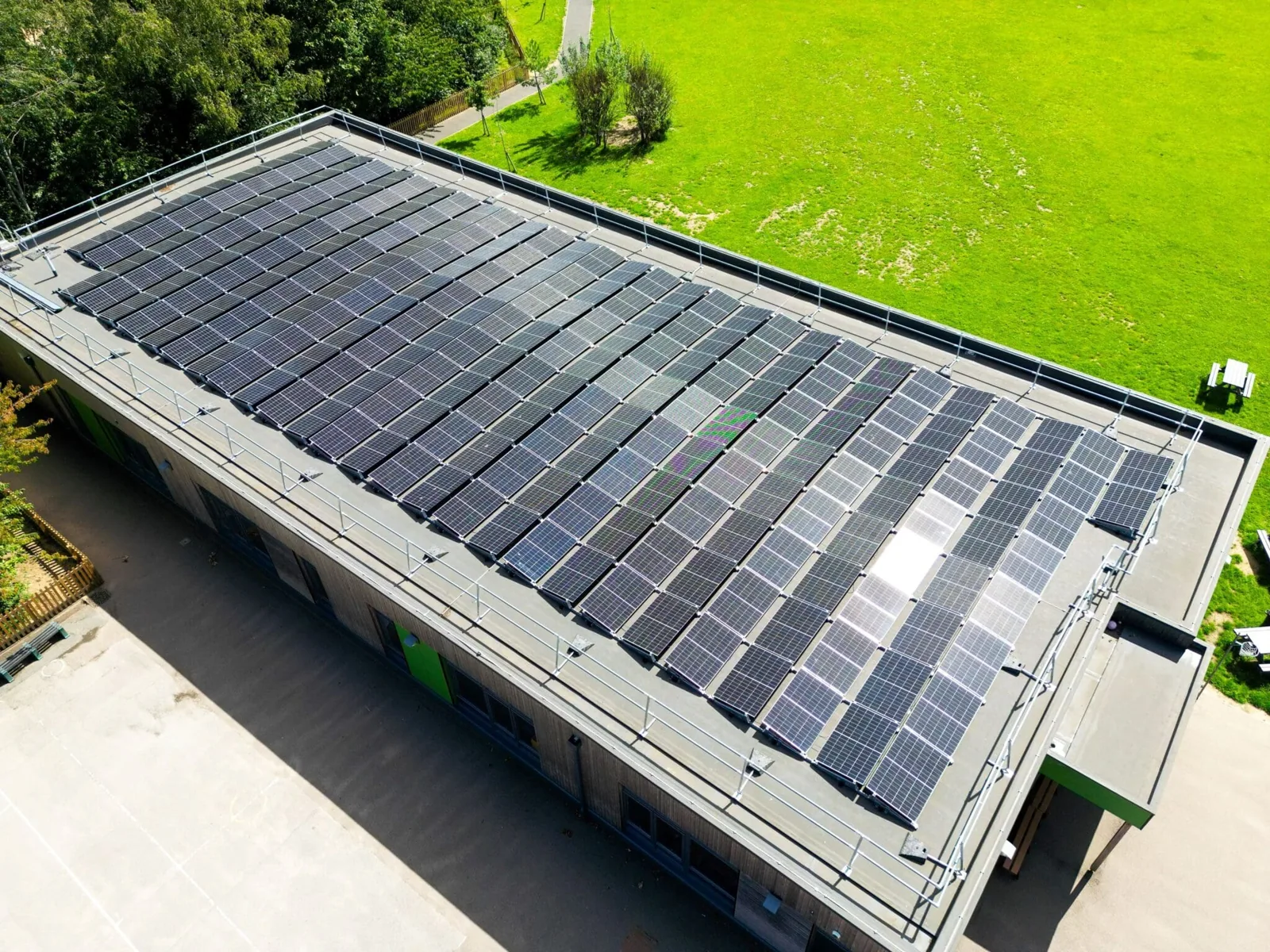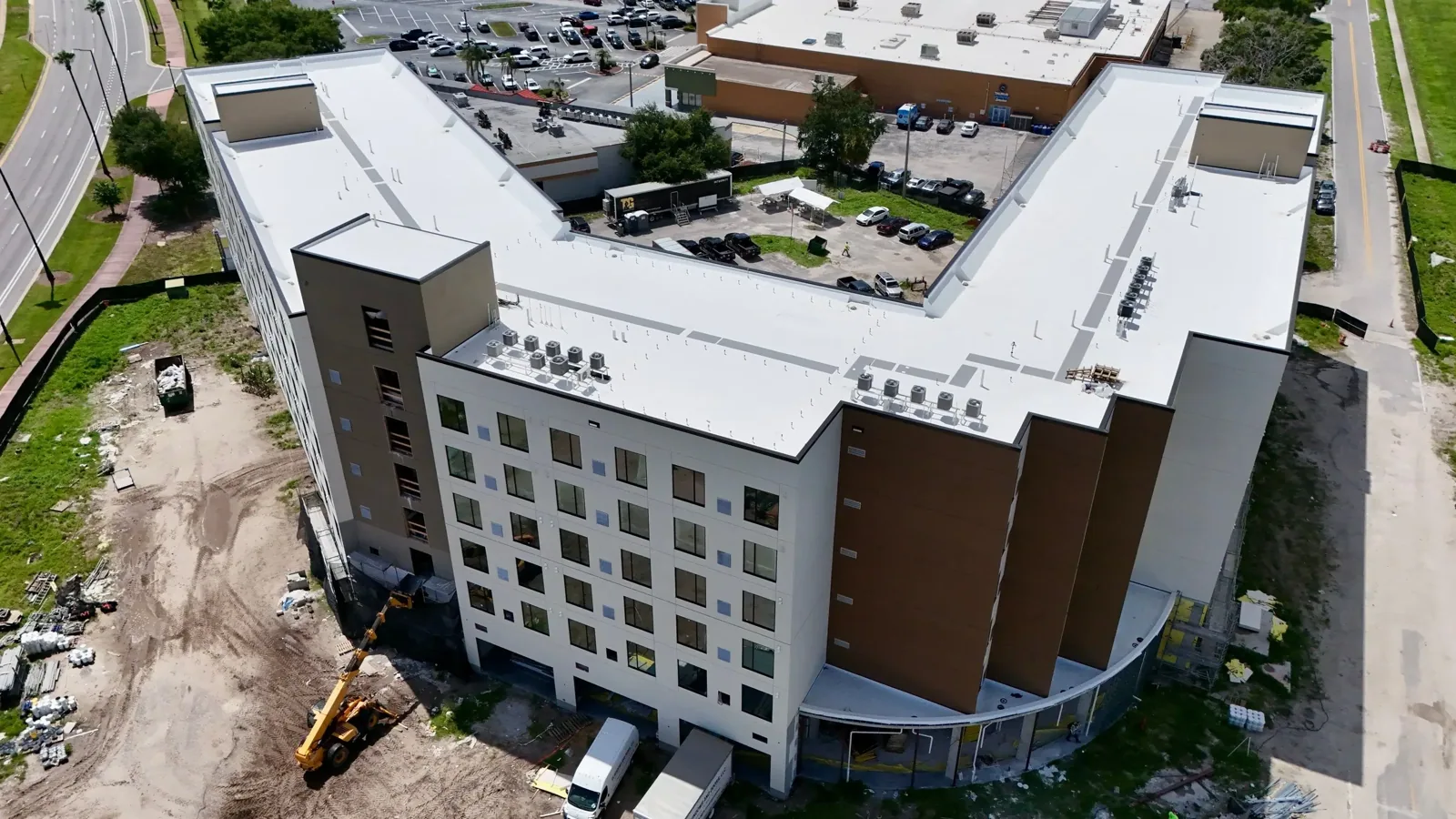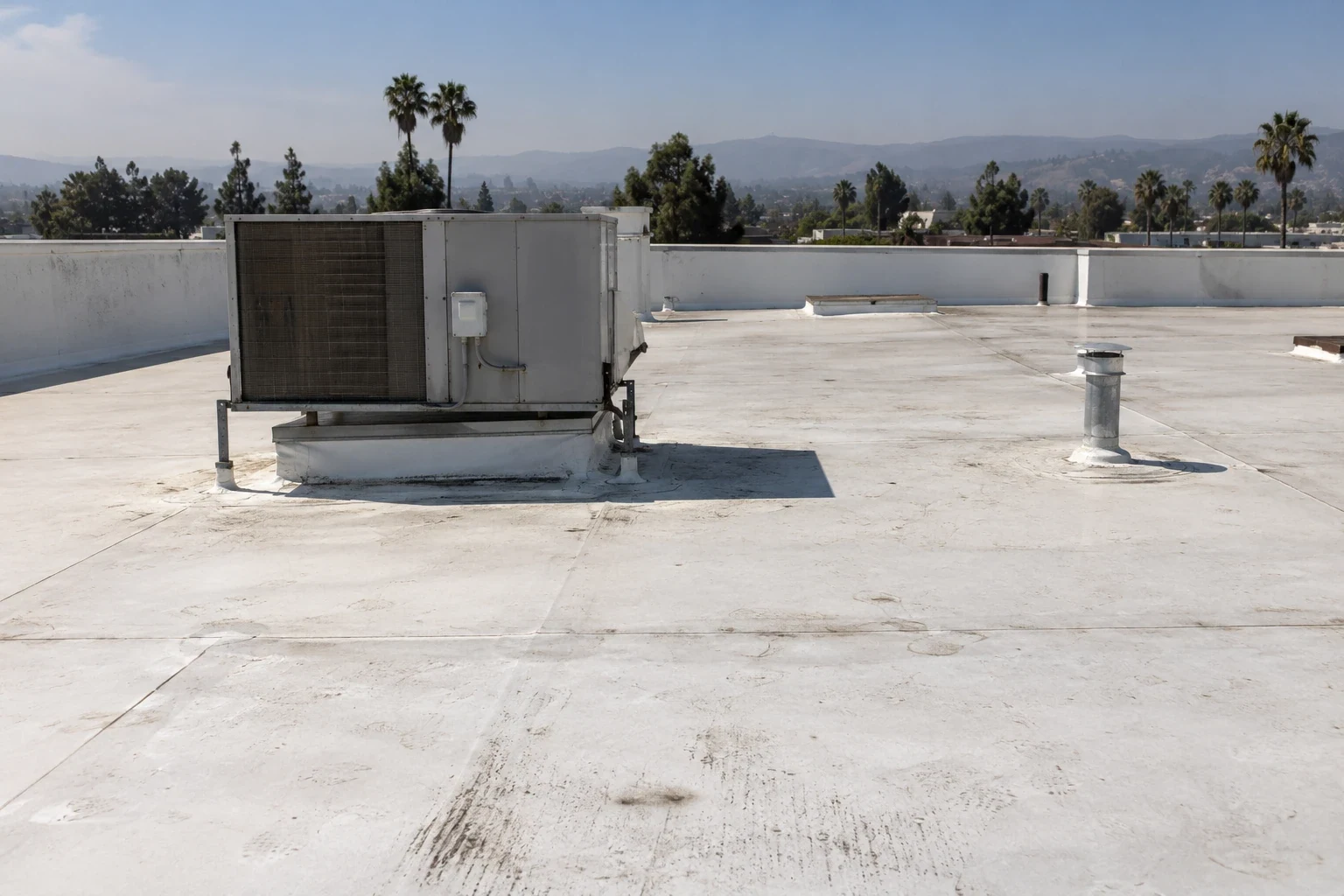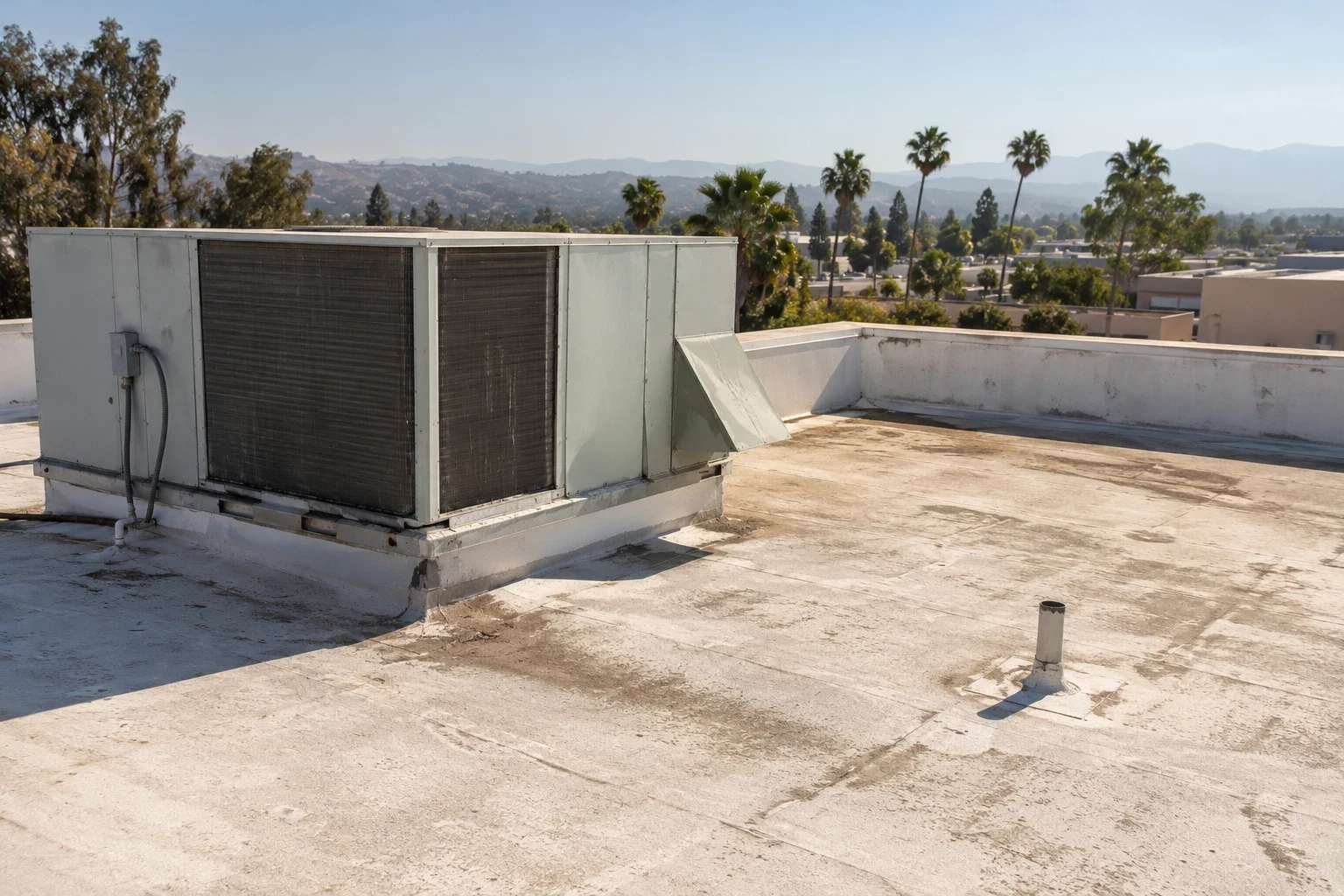
Grease around a rooftop exhaust can change the inspection of the membrane beside it. PVC roofing is a thermoplastic sheet with heat-welded seams, and its fit depends on the exposure, substrate, attachment, and flashing details on the actual building. In Simi Valley, we check the sheet near exhaust, drains, curbs, and prior patches rather than selecting a system from the material name alone. The City’s commercial corridors include varied property uses, but a corridor label does not tell us what the roof is carrying. A roof inspection records the assembly and the conditions that matter to the next decision.
Map the exposure before selecting PVC
PVC is often considered where the roof may encounter grease or certain chemicals, but compatibility still depends on the product, concentration, contact time, and maintenance conditions. We locate exhaust discharge, service routes, rooftop equipment, and any areas with residue or softened material. Then we check the membrane surface, laps, and nearby flashing for visible changes. An observed stain is a clue to investigate, not proof that the sheet has lost integrity. The scope should identify any additional product information needed before a repair or installation is approved.
On Los Angeles Avenue, city records describe a commercial corridor with several property owners and a street-project segment. That local context makes deliveries, service access, and equipment placement worth confirming, but it does not establish a building’s operations. A visit along Los Angeles Avenue begins with the facility’s own roof plan, exhaust locations, and access limits. We mark the affected zone and distinguish a roofing condition from an equipment issue that belongs with another trade.
Inspect welds and sheet condition
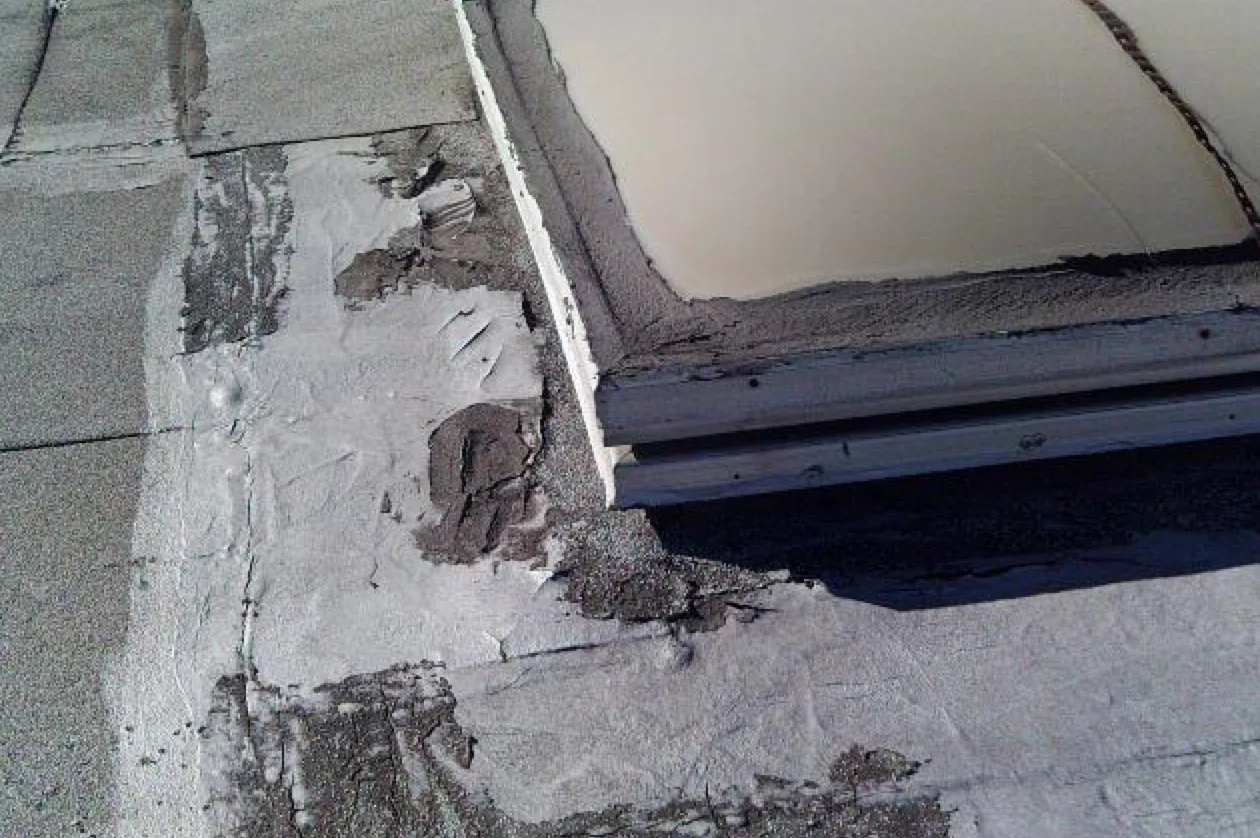
PVC seams are fused with heat. A weak weld can result from contamination, inconsistent heat, poor surface preparation, or material movement at a detail. We inspect lap edges, corners, patches, and flashing transitions, then probe suspect locations where the system instructions allow it. The report ties each finding to a roof zone and records whether the issue appears localized or continues along a seam. A repair must return to sound membrane and use compatible sheet and flashing rather than rely on a surface bead.
Where the roof has older PVC, a repair decision should account for the condition of the existing sheet and whether the proposed material can be joined reliably. We identify any test area, surface preparation, and seam inspection required before repeating a detail. A repair scope names the weld length, patch shape, edge treatment, and exclusions. If several seams show similar separation or there is evidence of a deeper assembly issue, the owner may need a broader condition review before approving repeated patches.