A loose cap-sheet edge shows the top of a built-up roof, not the condition of every ply below it. In Simi Valley, we identify the surfacing, asphalt layers, flashing turns, and attachment before choosing a repair boundary. The assembly can include several reinforcing plies beneath a cap sheet or gravel surface. Each exposed edge offers evidence, but a patch over the surface alone does not tell us whether water reached the insulation.
The City projects hotter summer conditions ahead, with average maximum and minimum temperatures rising by three to five degrees Fahrenheit by mid-century. That projection belongs in the inspection discussion for asphaltic materials and their transitions. It does not diagnose an individual roof. We document the membrane field, check drains and edges, and prepare a roof inspection that identifies the next decision.
Read the exposed plies
A cut edge or existing repair may show the number and condition of the plies. We examine whether the reinforcing fabric remains embedded, whether asphalt has separated, and whether the exposed surface can accept a tie-in. Blisters, splits, ridges, and displaced gravel have different causes. We map them by roof zone instead of treating every surface irregularity as a leak. A test opening may be needed where records and visible edges do not establish the layer condition.
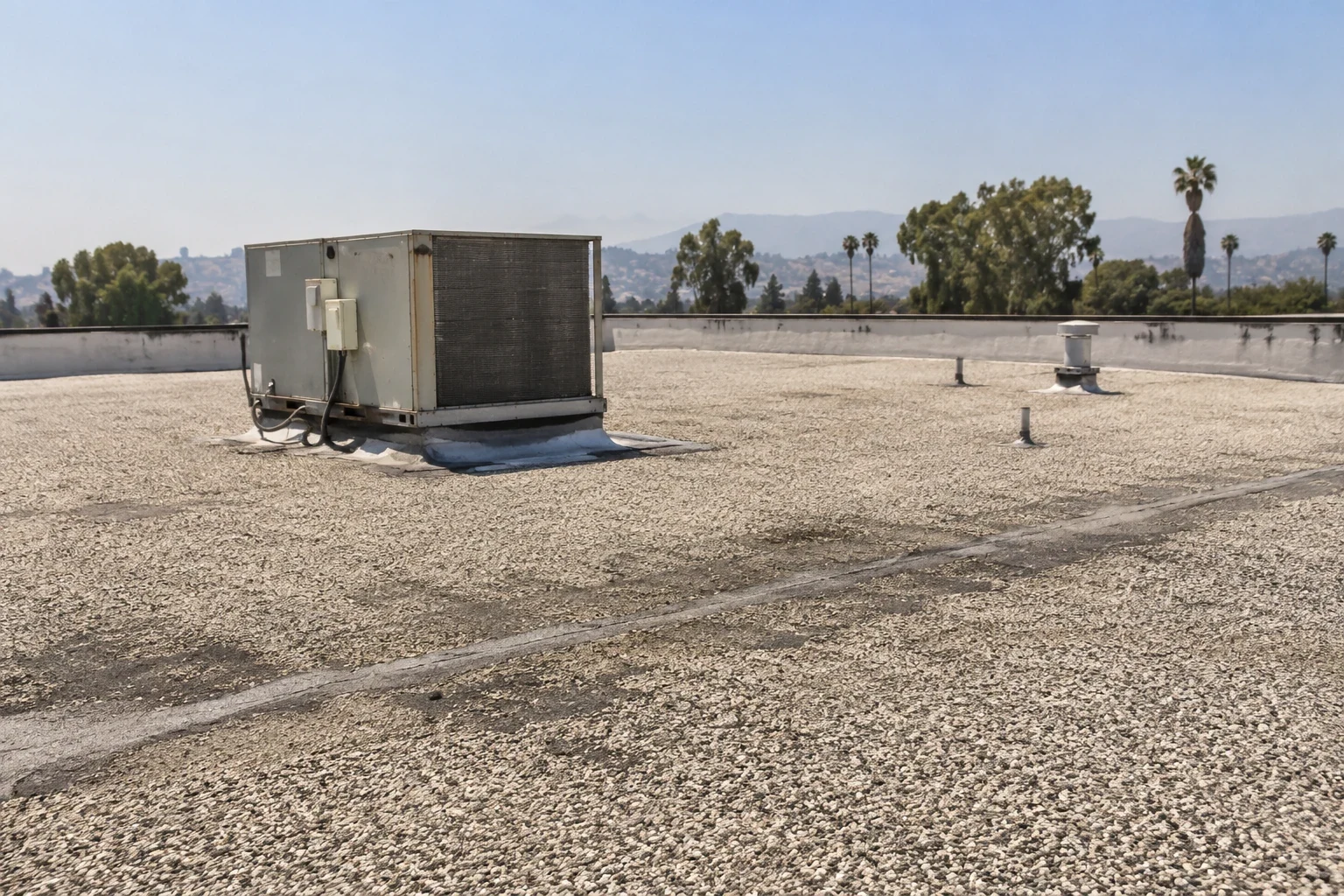
Gravel surfacing protects the asphalt from direct exposure and traffic, but it can obscure a split or a prior patch. We move surfacing only where the inspection requires it, then record what appears beneath. A smooth-surfaced cap sheet has different exposed evidence. Both types need a repair material that is compatible with the existing roof and a prepared bond line. A modified bitumen assembly may also use asphalt-based sheets, but its sheet reinforcement and installation details differ from a built-up system.
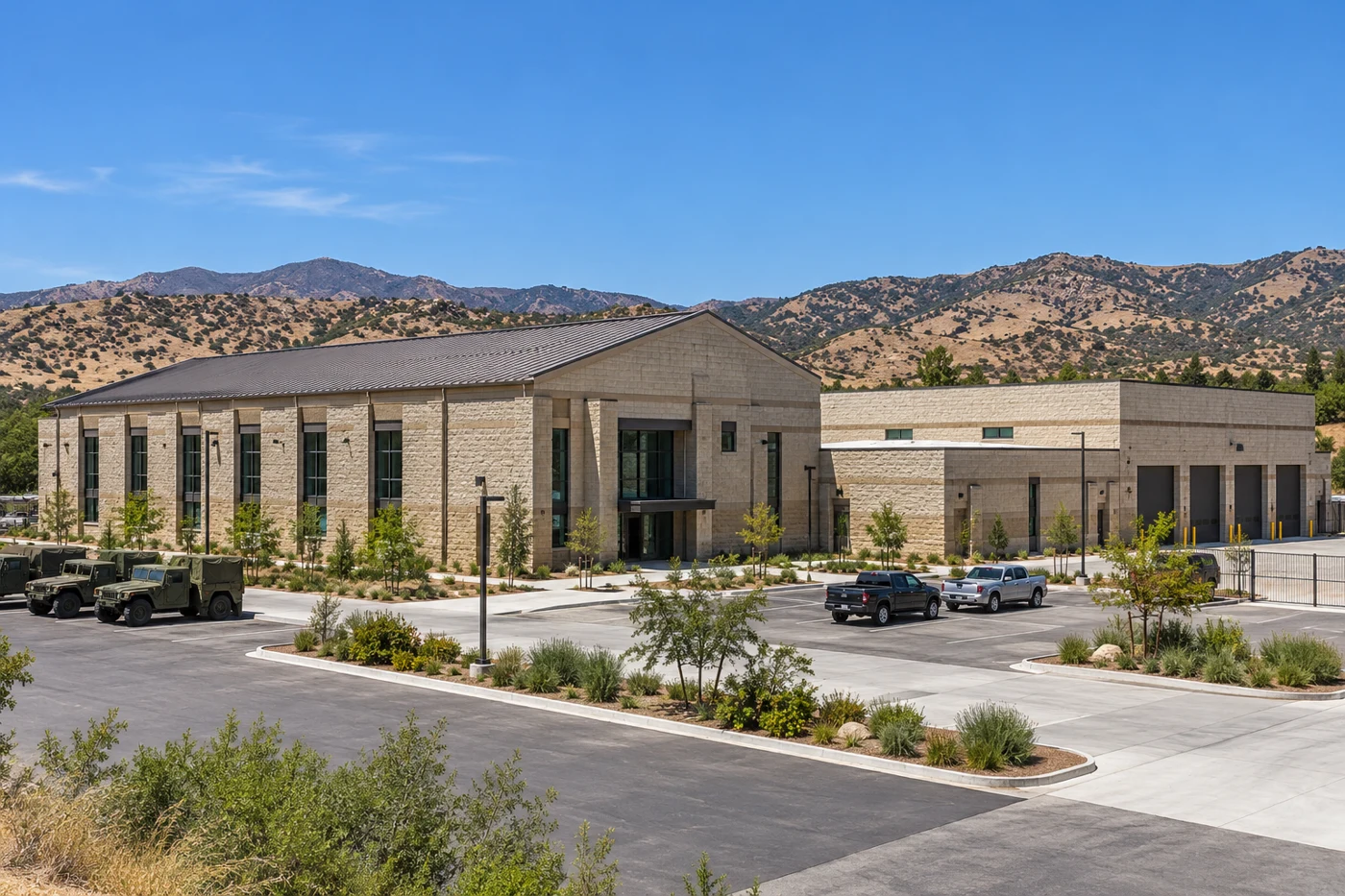
Simi Valley planning records describe primarily light-industrial development and place much of it in the West End Specific Plan area. That district includes office and industrial land uses. Roof access, equipment, and work sequencing can differ across those buildings, so we record the actual assembly instead of inferring it from the district. A nearby West End roof inspection starts with the field and exposed layers on the property.
Trace water through the surfacing
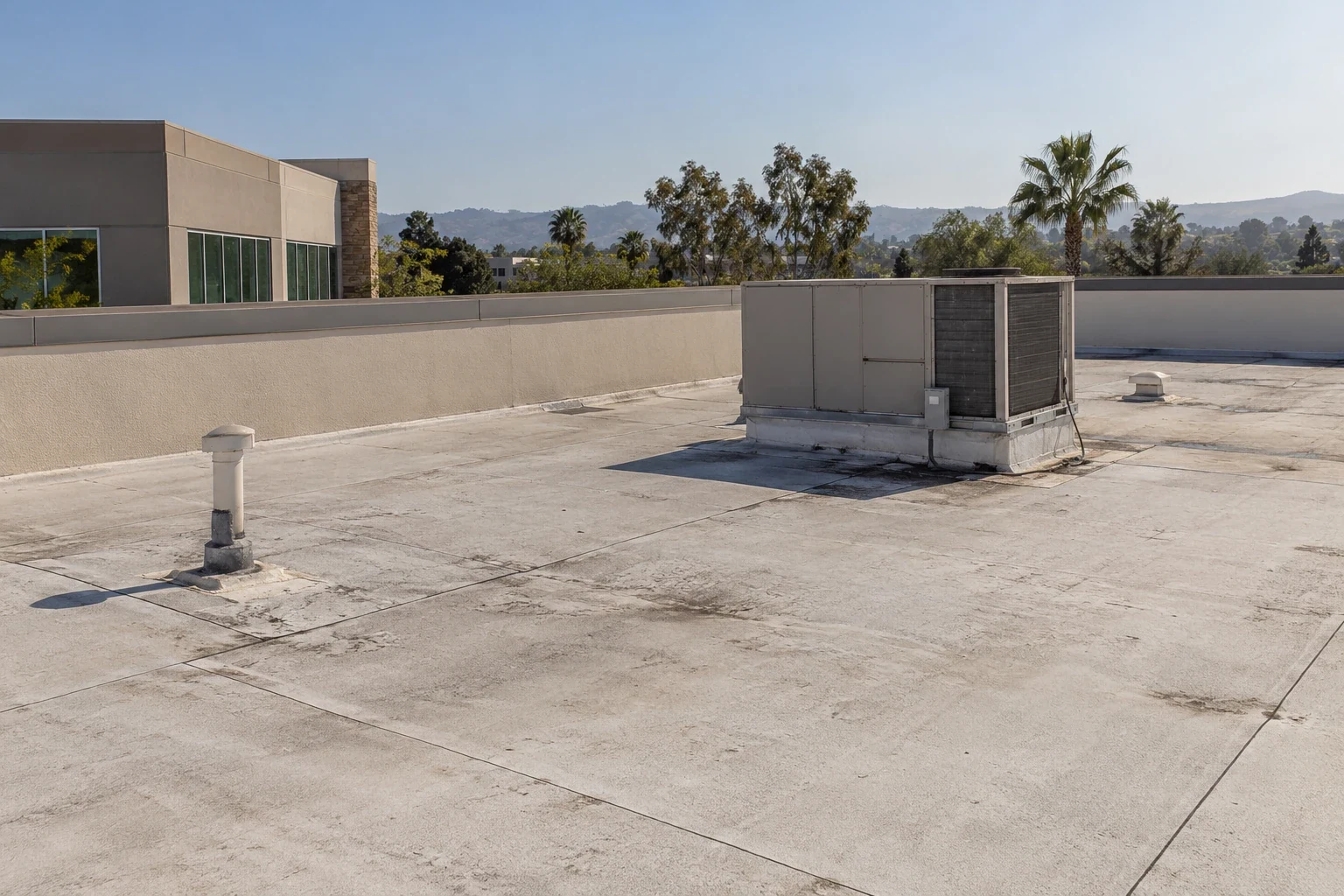
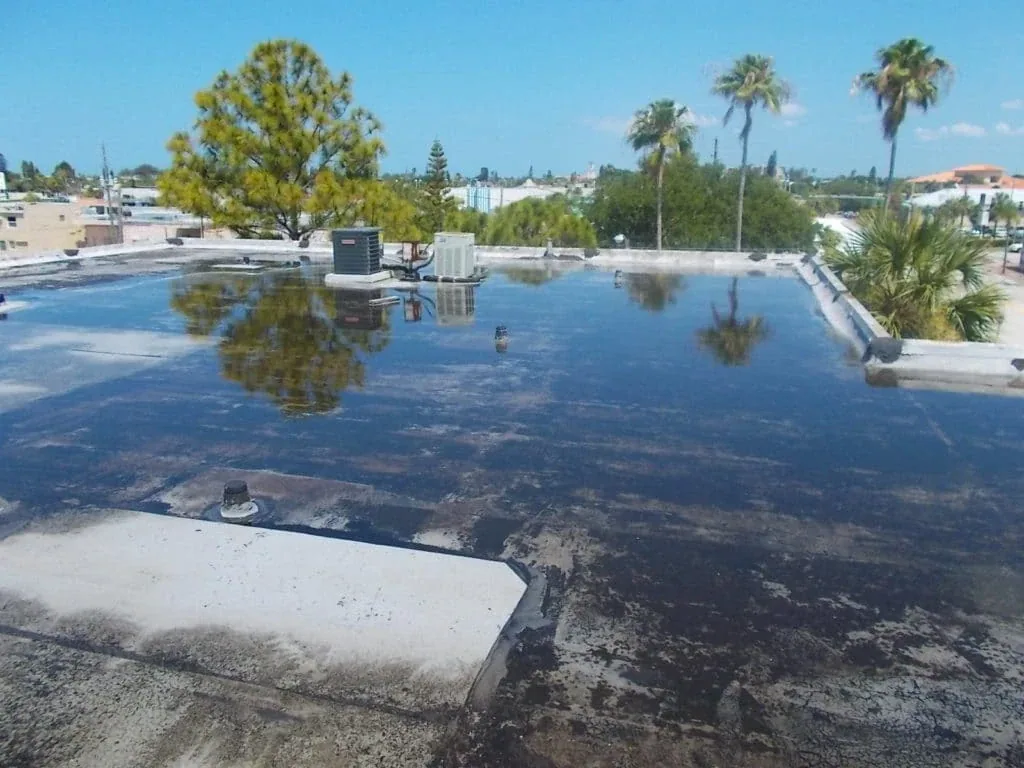
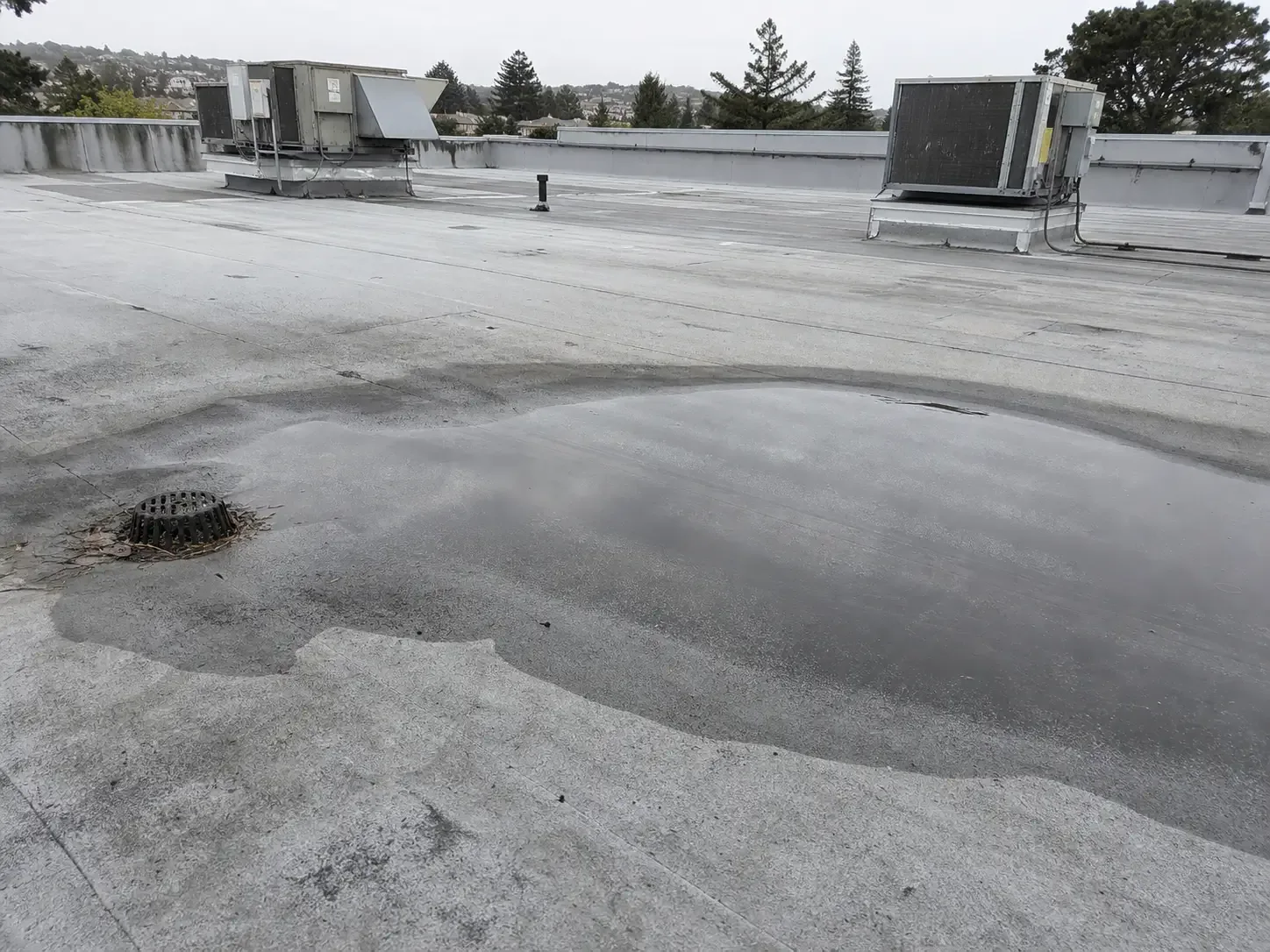
A darkened area can mark retained moisture, displaced surfacing, or a past repair. We trace the condition toward laps, penetrations, drains, and low points. Ponding is relevant when water remains at a depression, but a roof photograph taken after rainfall does not establish how long it persisted. We compare the visible pattern with slope, outlet condition, interior reports, and the history of prior work. The next test should answer a specific question about the assembly.
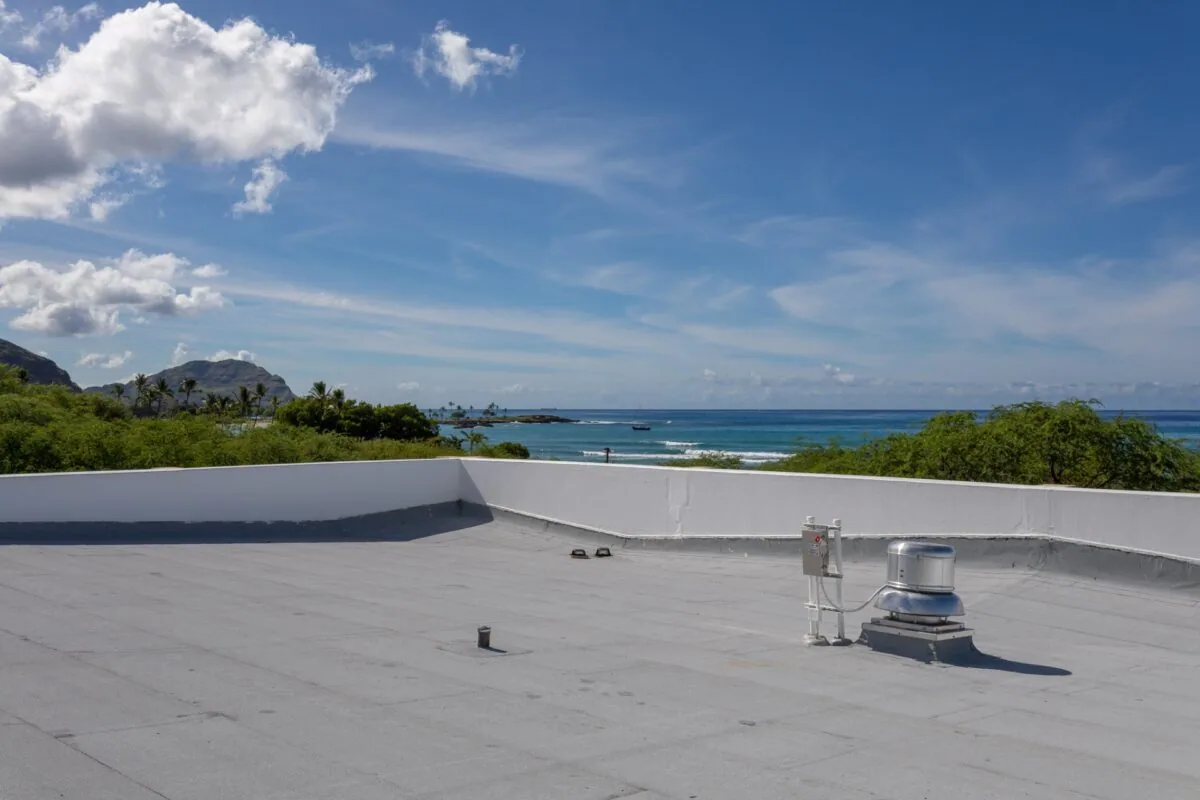
At a drain, the built-up plies need to terminate in a secure and watertight connection. We inspect the bowl, clamping ring, flashing, and debris line. A drain can be clear at the opening while the nearby surface holds water. If wet insulation appears in a controlled test opening, the scope should remove it to a defensible limit and close the roof at a planned dry-in point. Drain and scupper work can address the outlet detail when that is where the condition starts.
A ponding-water repair should distinguish drainage correction from membrane repair. We record both conditions and show where each stops. That separation keeps a surface patch from being treated as a slope correction and keeps a drain adjustment from concealing wet layers.