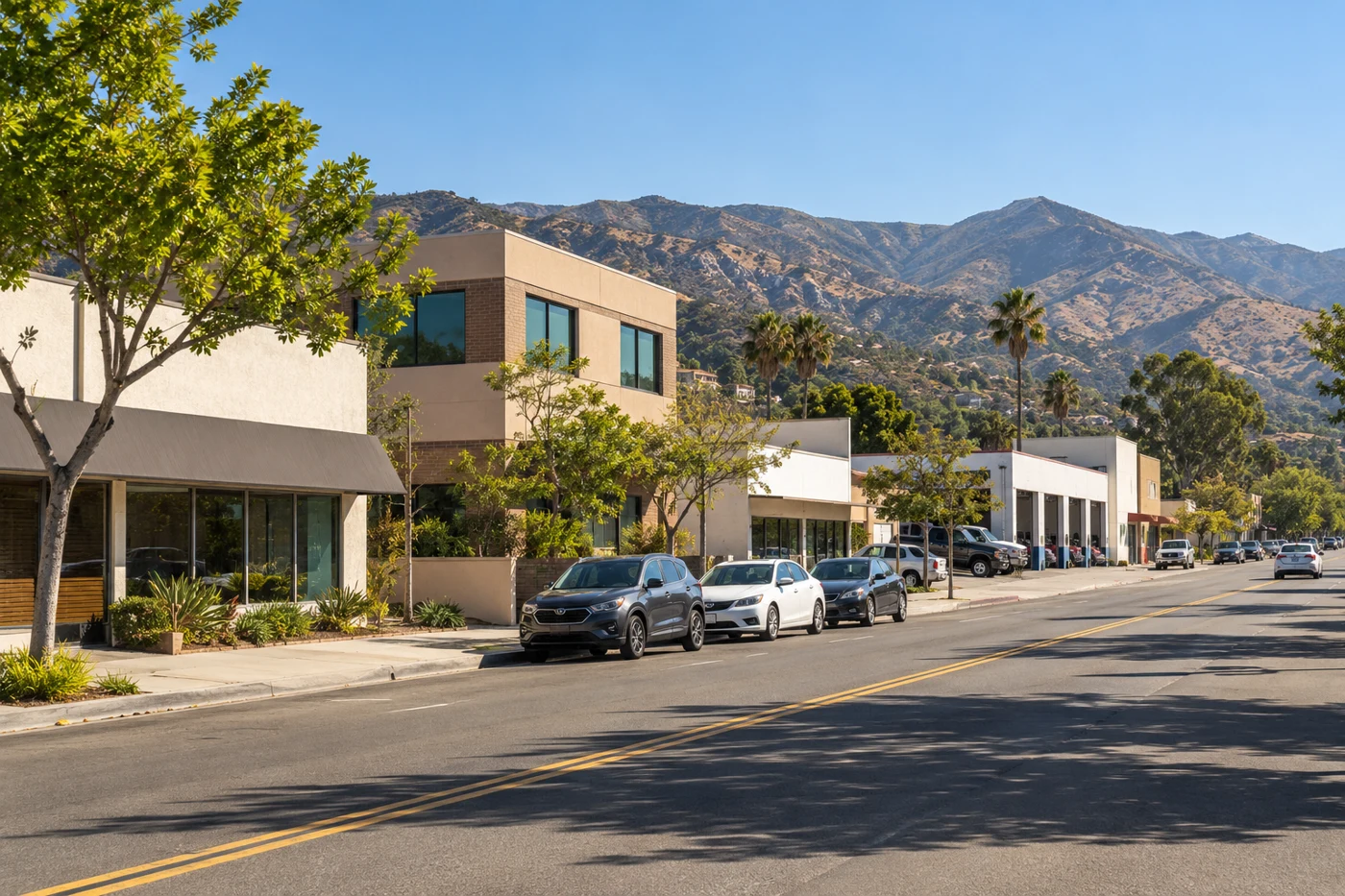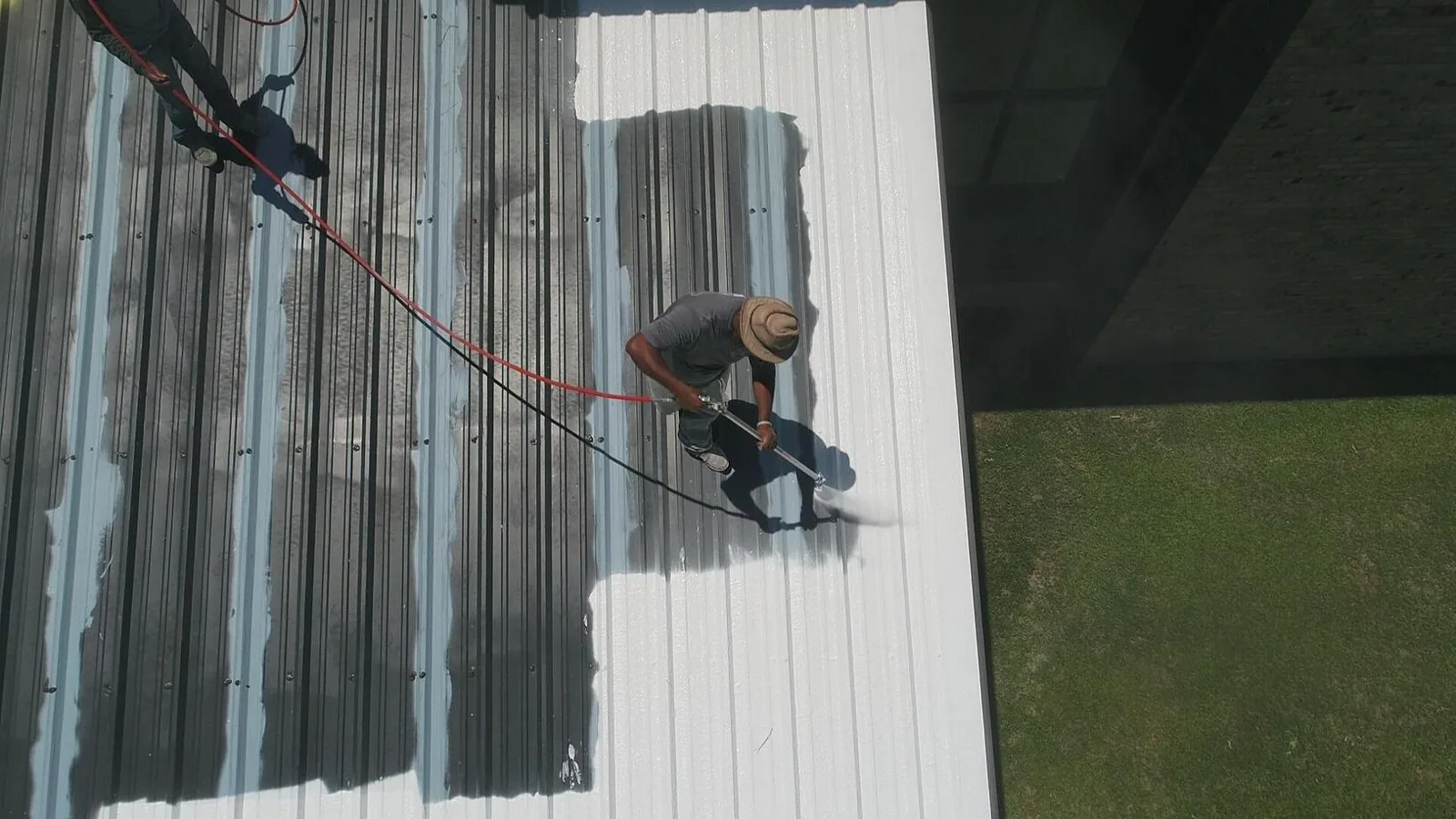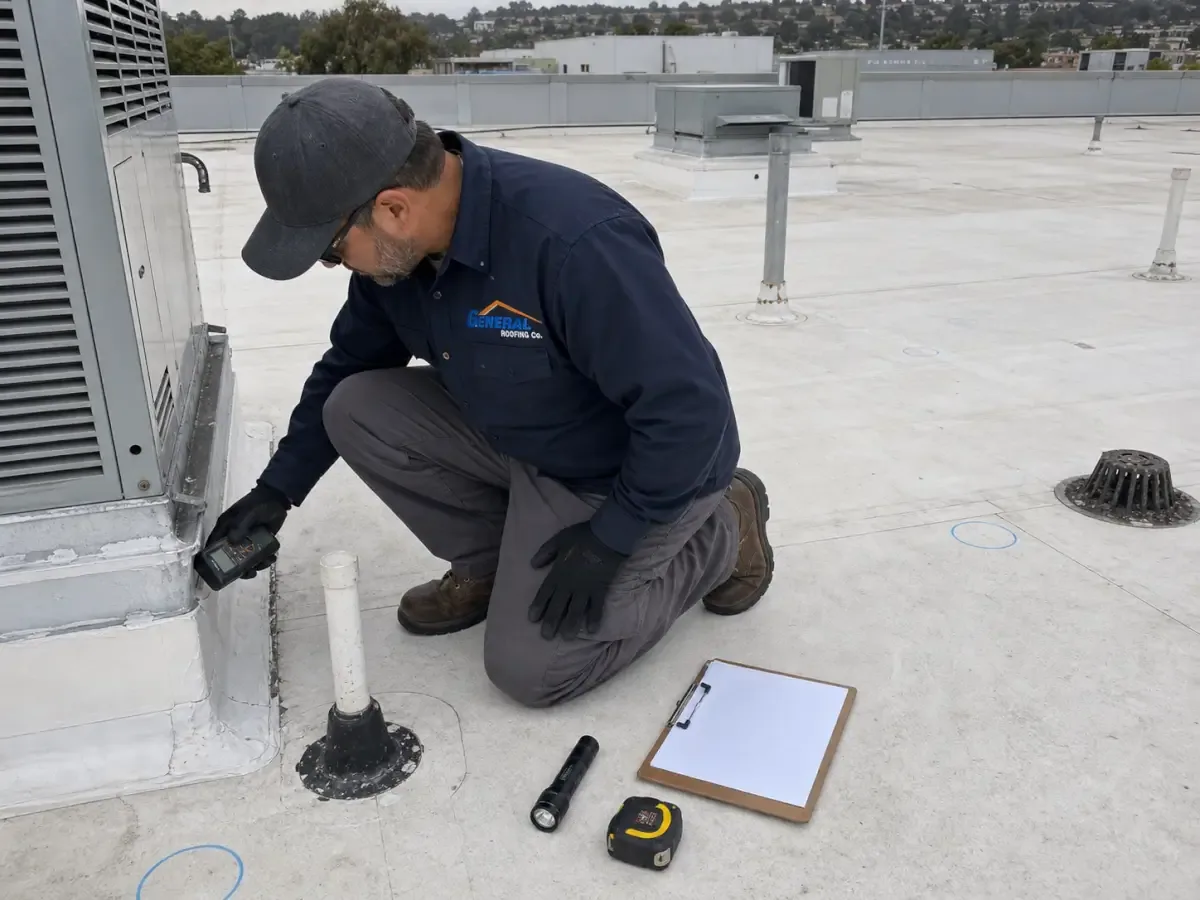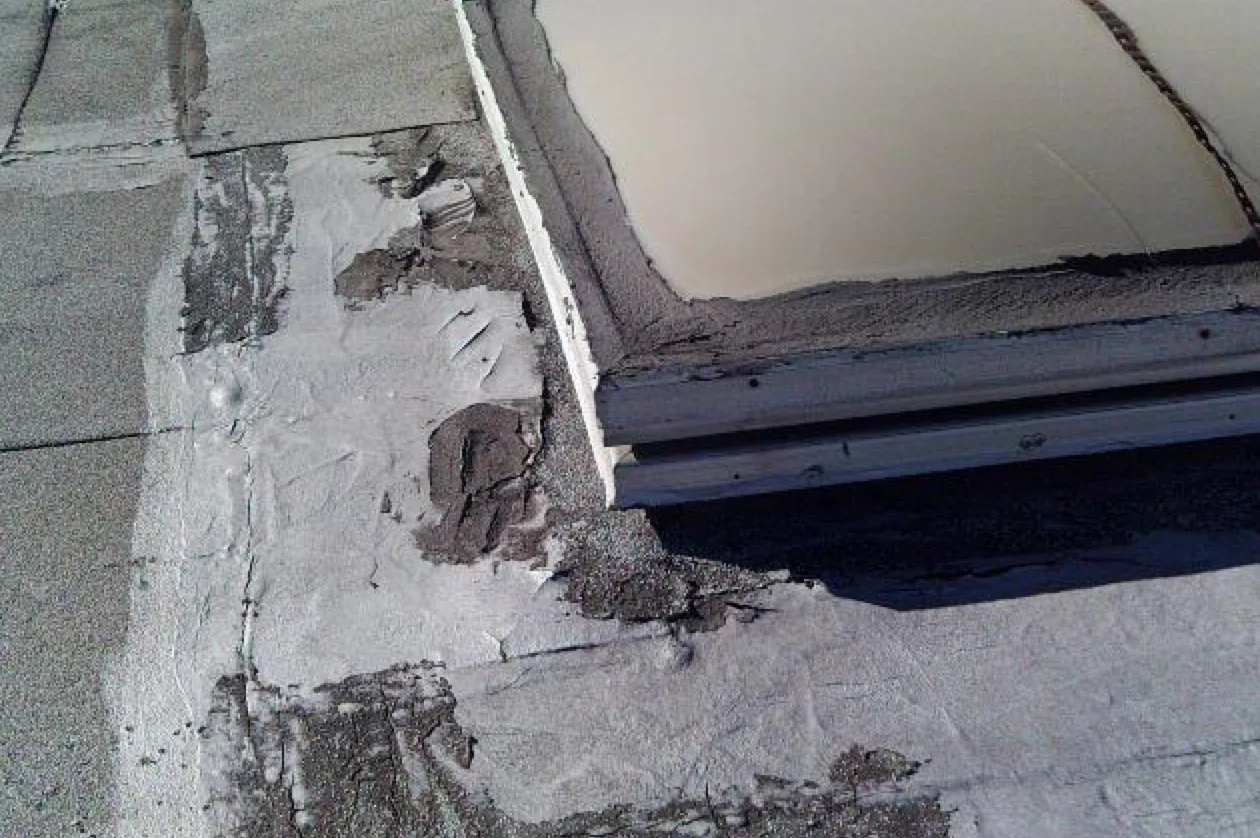
The Tapo Street commercial corridor in Simi Valley, CA has a documented record of storefront and streetscape improvements, but those projects do not establish the condition of any commercial roof. Roof work begins with the building in front of us: membrane seams, curb transitions, edge metal, drains, and the path water follows. We identify the reported leak zone, check nearby details, and photograph the conditions that support a repair or broader survey. The City also identifies the Tapo Area Planning Overlay as a recognized planning district. That boundary helps orient the location, while each property still needs its own access and roof review. A commercial roof inspection records the assembly and the next decision without turning streetscape history into a roof claim.
Separate roof work from frontage work
A corridor improvement can affect how an owner schedules exterior work, yet a façade scope and a roof scope are different. The City says its Tapo Street Façade Renovation Program supported more than two dozen property-improvement projects along the corridor. That statement is about property improvements, not roof replacement or roof performance. When the owner has storefront, sign, or exterior work underway, we coordinate the roof inspection and protection details with the schedule supplied by the site contact. We do not assume a contractor, tenant, or opening based on the program record.
At the roof edge, a new sign, wall finish, or canopy can meet flashing and membrane in a way that deserves inspection. We look at the termination, counterflashing, sealant, and attachment without treating the adjacent façade as proof of a leak. Photos show the transition before repairs begin, and a marked scope defines what will be removed or reset. If the roof detail is sound, the record says so. If the assembly is open, the repair plan shows the tie-in and dry-in point. A perimeter and edge review can address metal terminations and drainage as distinct items.
Check how the roof sheds water
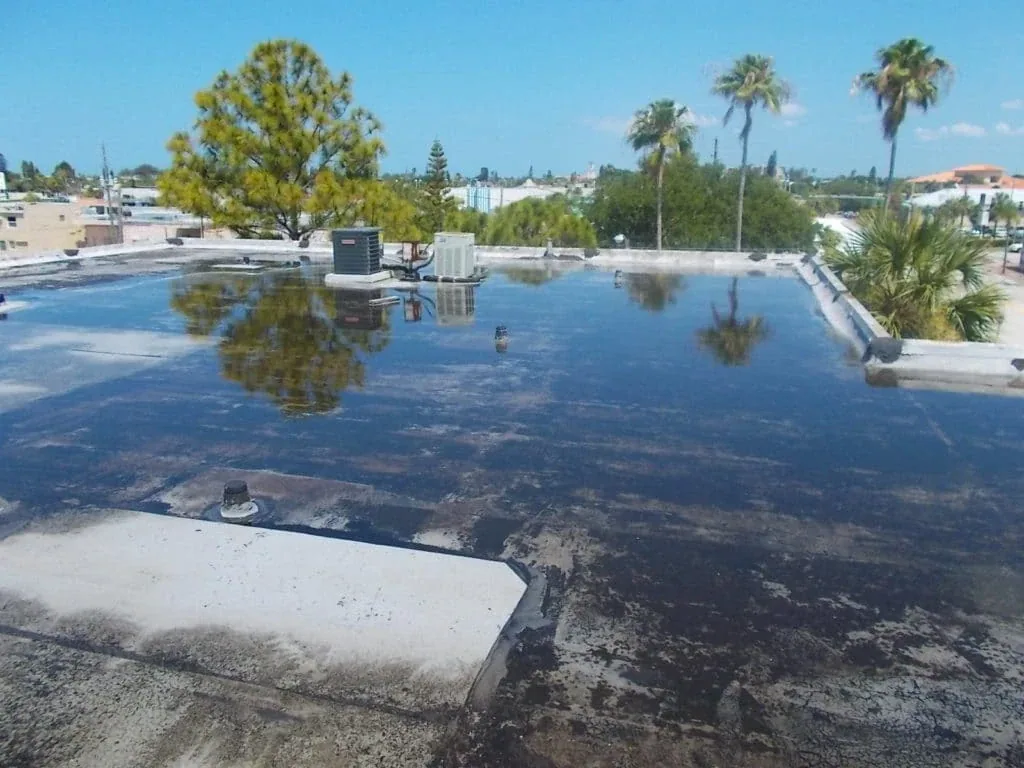
Commercial streets often contain different roof shapes and drainage layouts, even where buildings sit within the same planning district. We trace water from the membrane field to drains, scuppers, gutters, and downspouts, looking for a blocked strainer, loose clamp, failed seal, or low area. The report ties the observation to a roof zone and notes whether the drain was accessible. A moisture survey may help show whether insulation is wet below the surface, which can change a localized repair into a larger scope.
The City says the Tapo Street Revitalization phase included street lighting, sidewalks, median, landscaping, and pavement improvements. Those are streetscape projects; they do not establish how a private property drains from its roof or where runoff is discharged. If a repair involves an outlet or scupper, the drain repair scope identifies the membrane connection and any related metal work. A moisture survey can help define the area that needs further review before wet material is priced for removal.