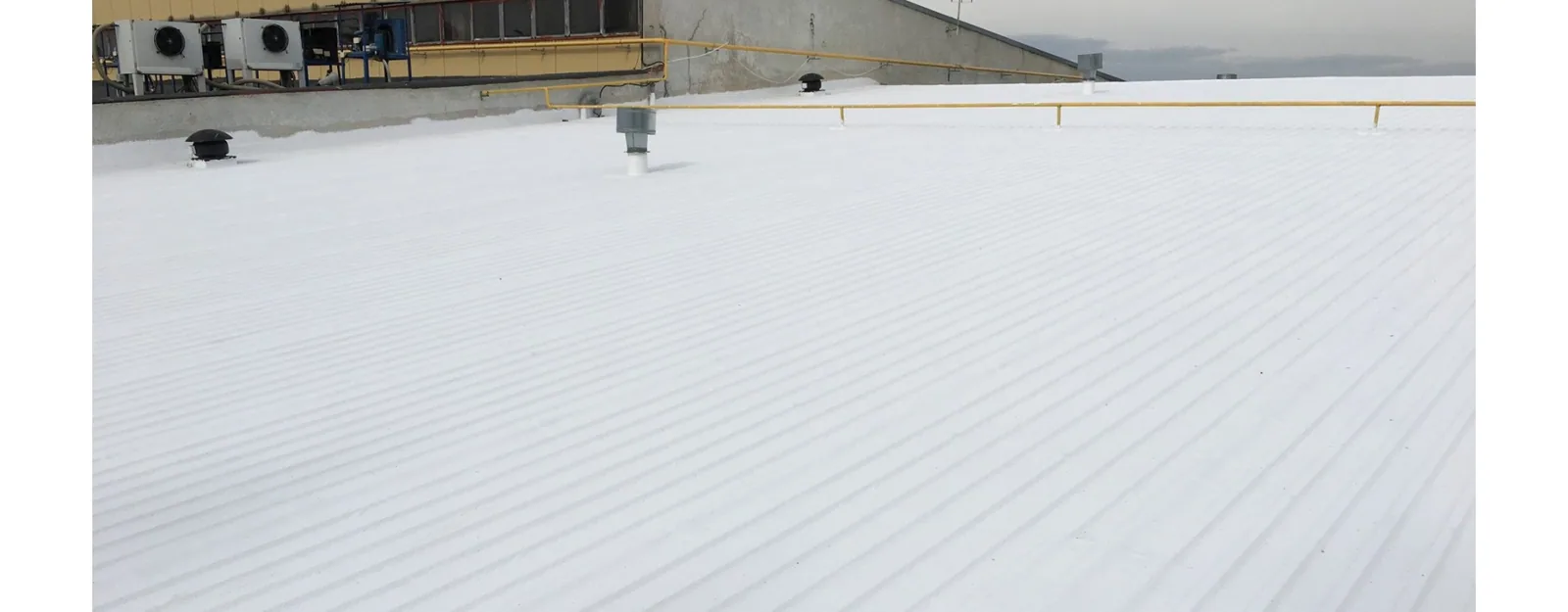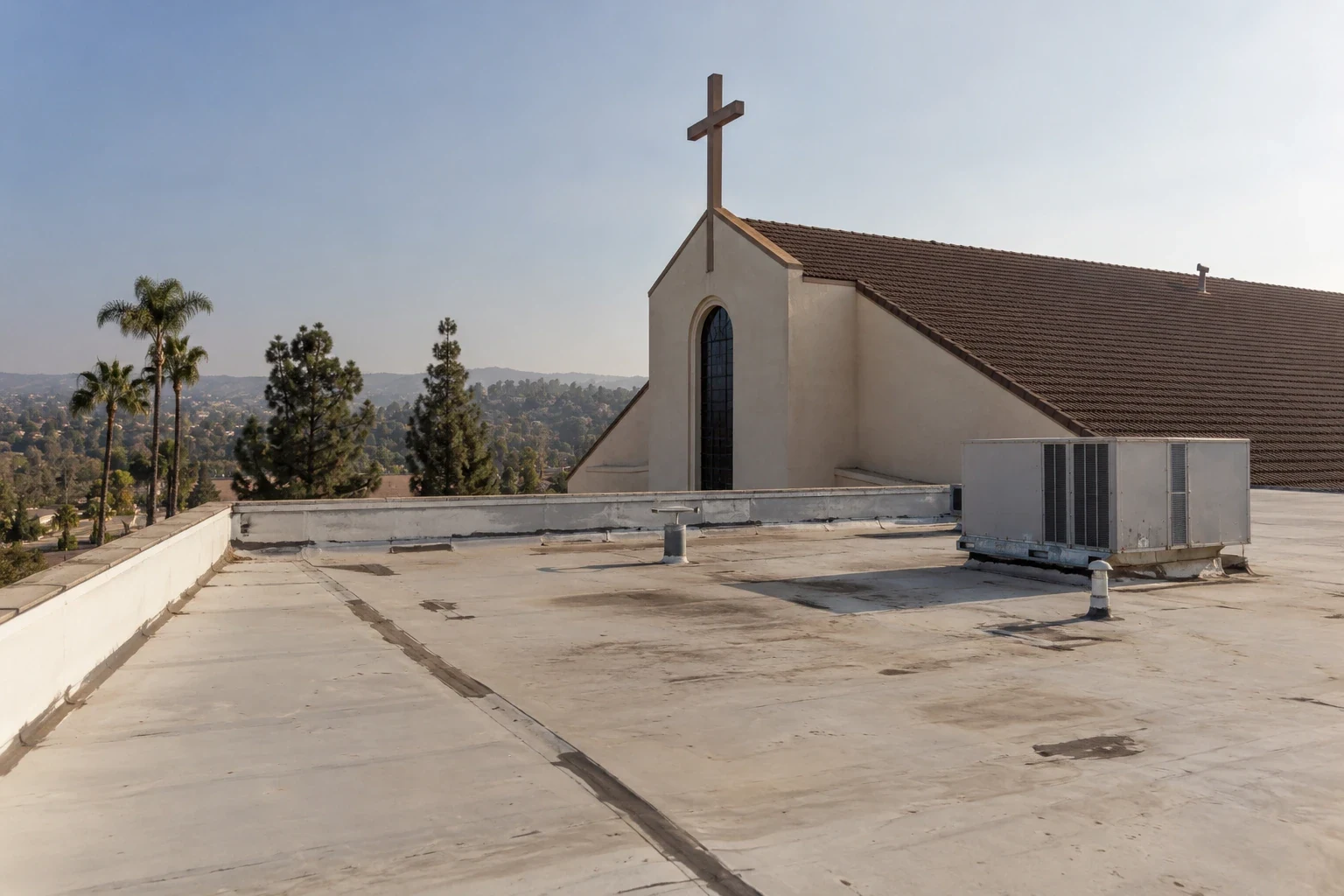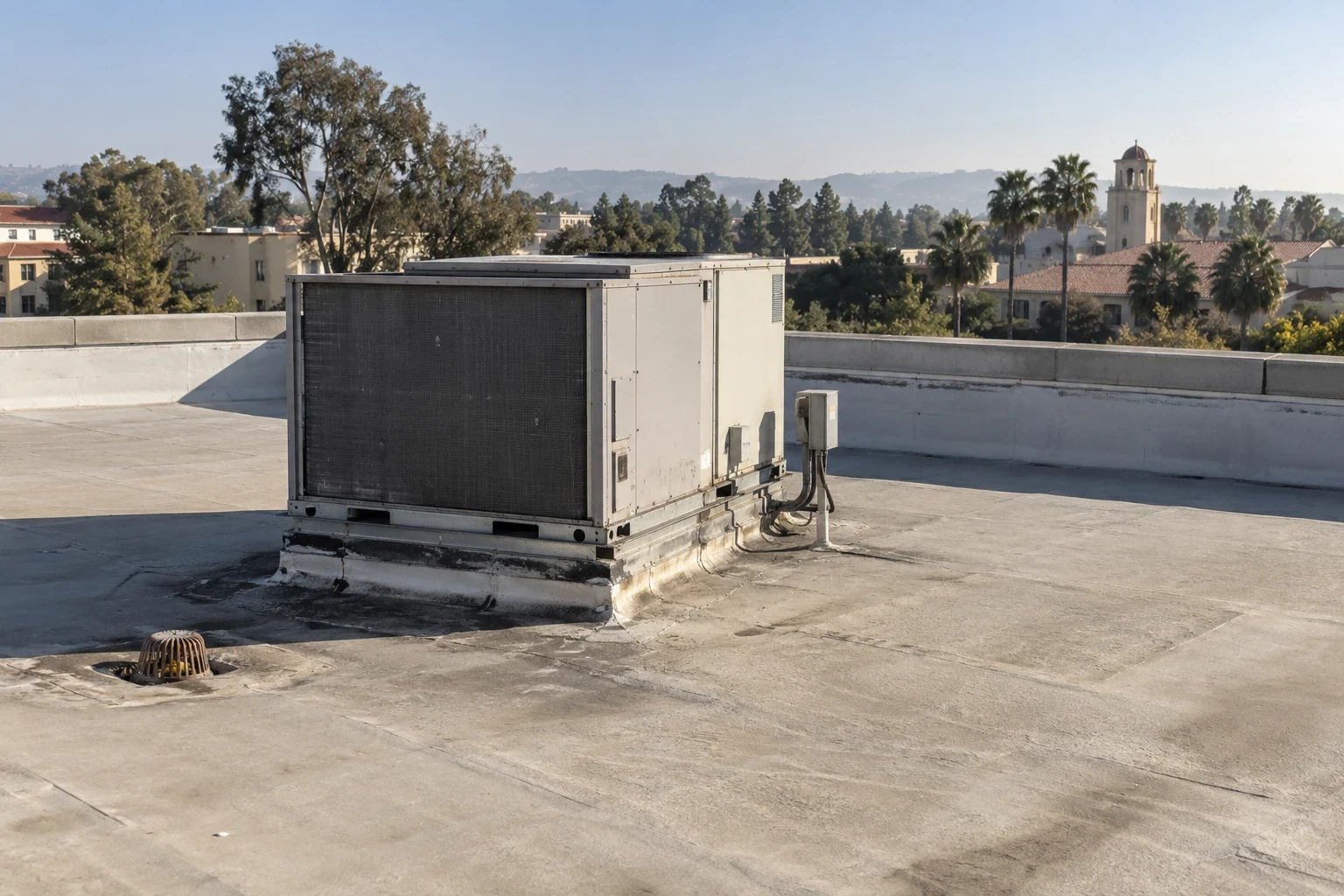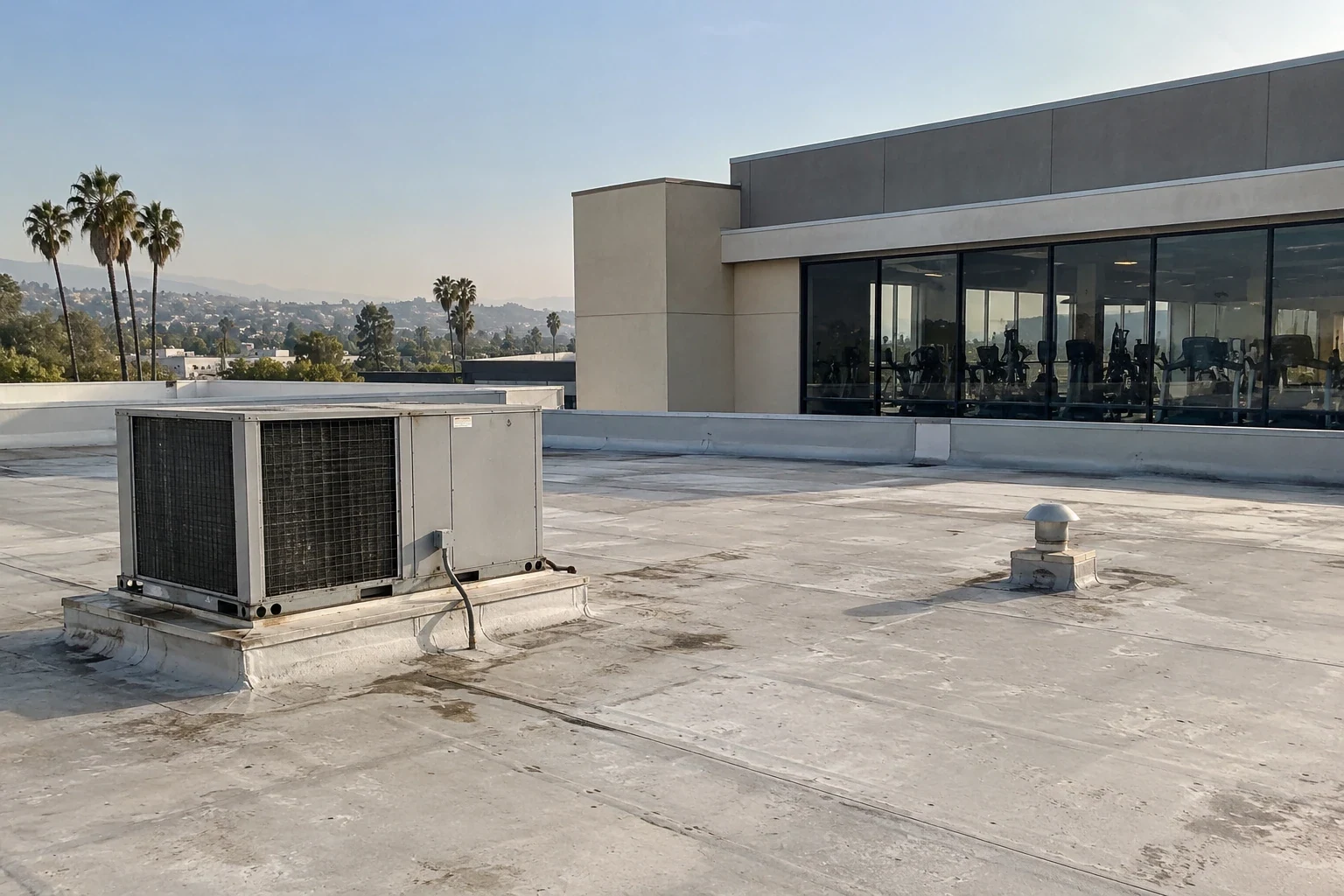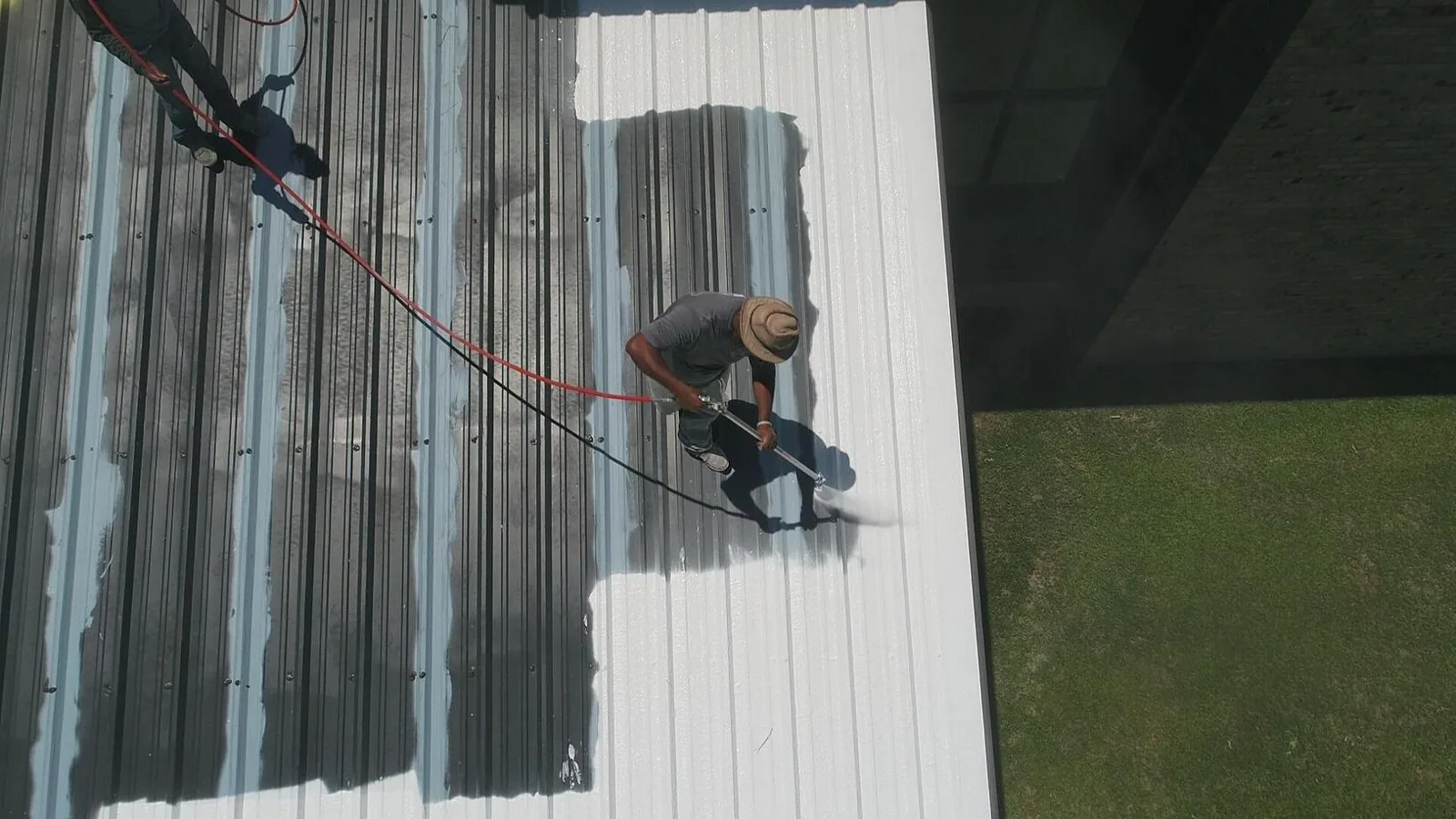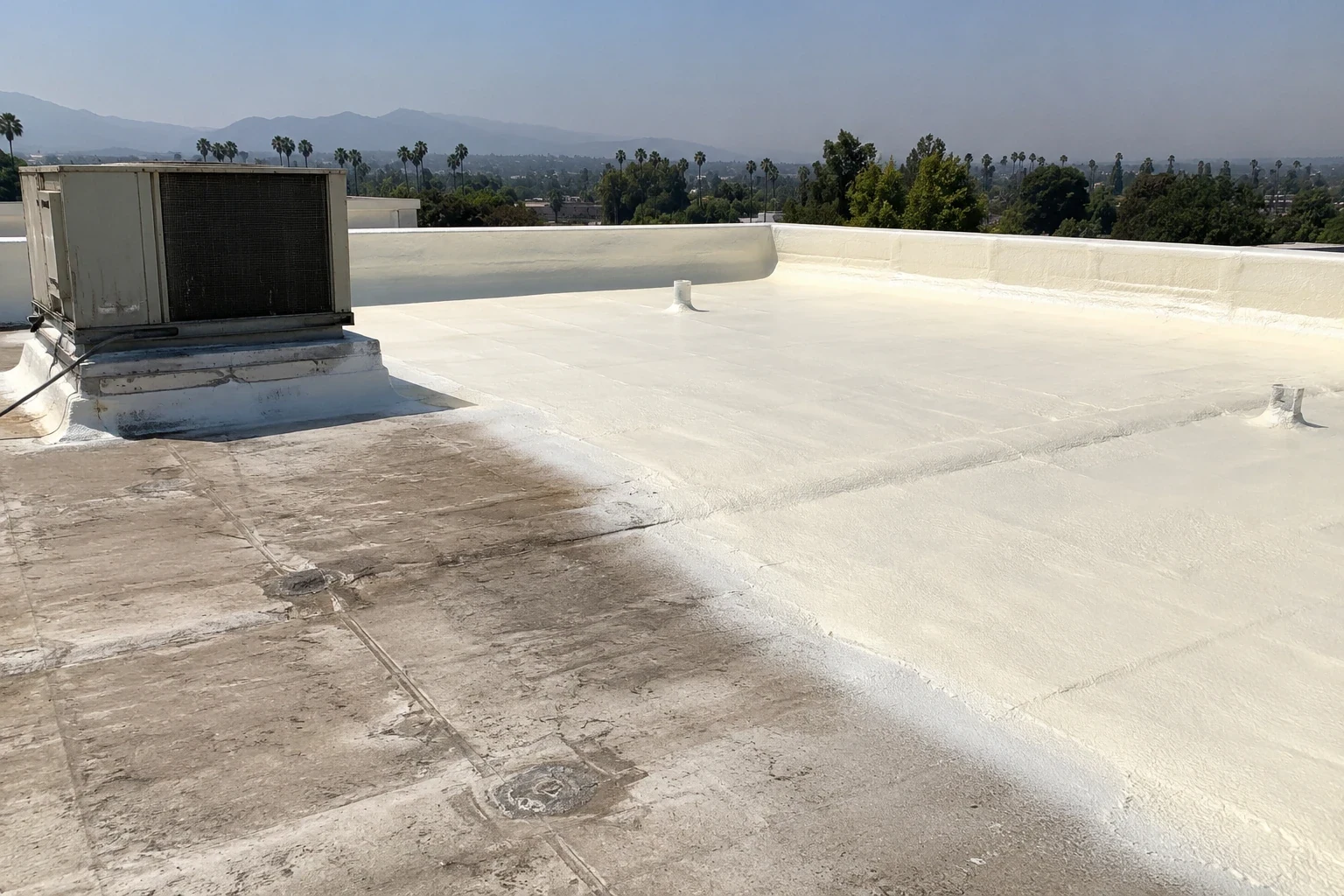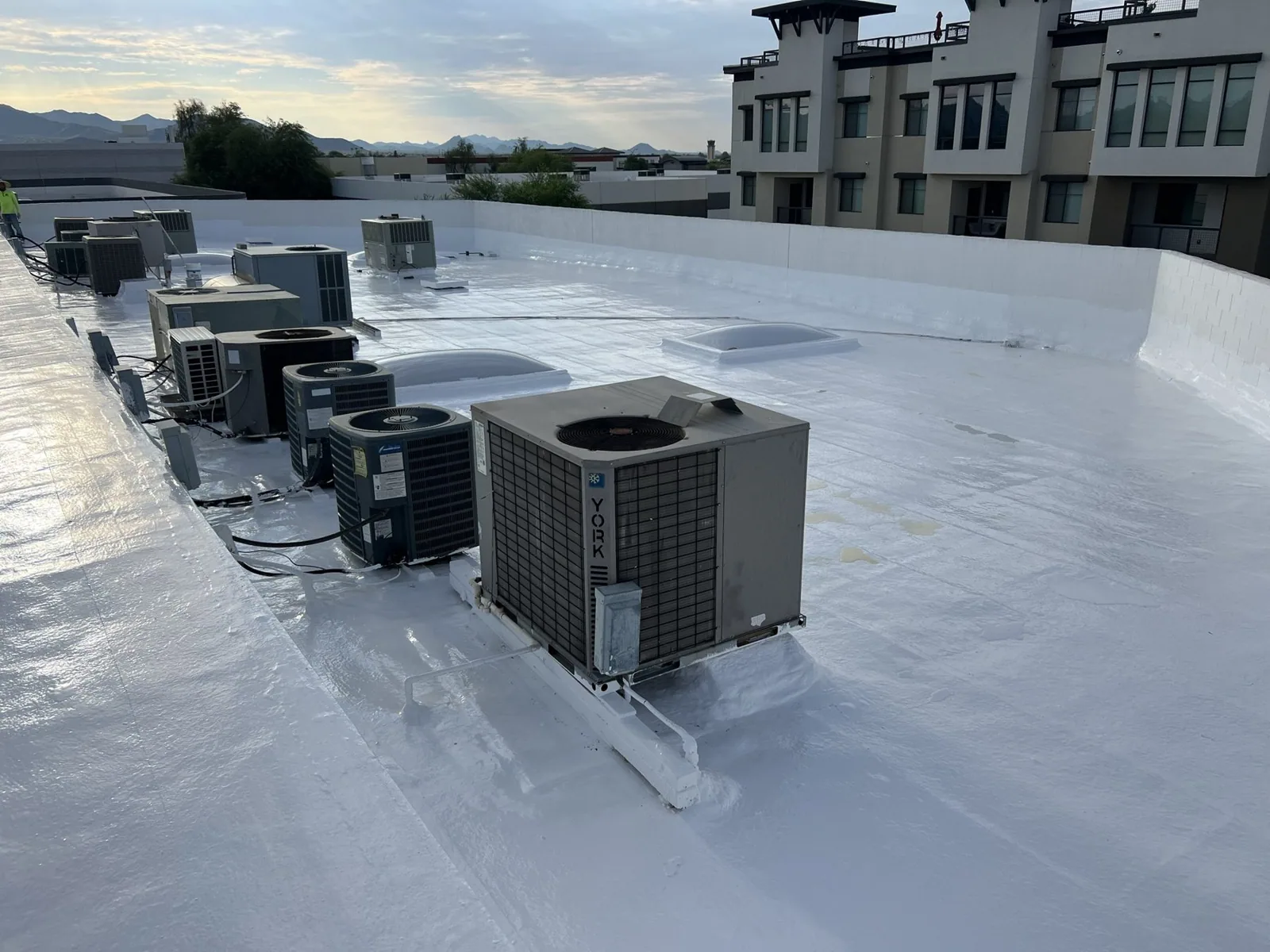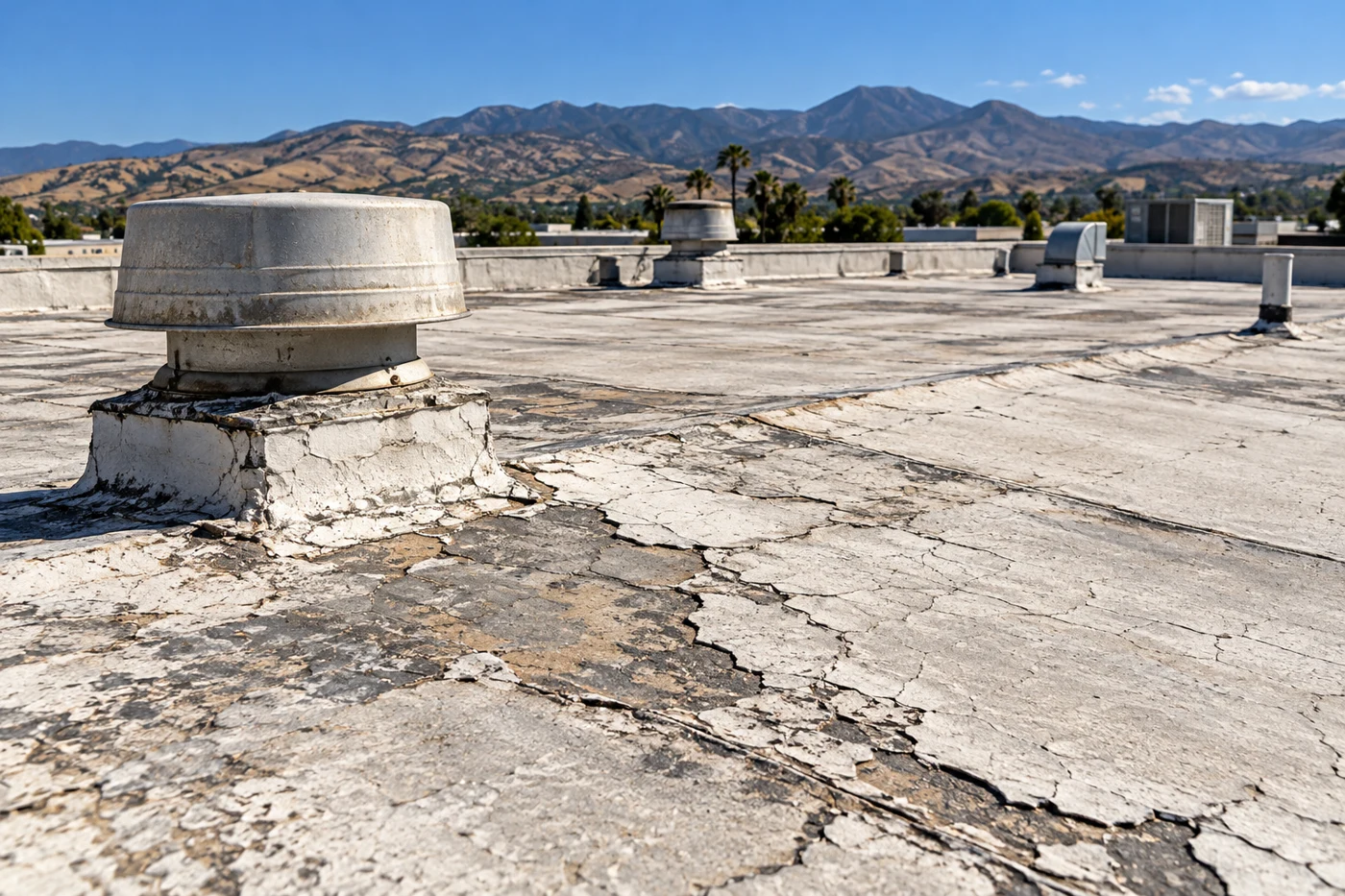
A coating edge that peels beside a drain tells us more than the color of the roof. For an acrylic coating in Simi Valley, we inspect the bond line, water path, existing membrane, and detail work before recommending restoration. Acrylic coatings need suitable preparation and application conditions. A surface that holds standing water, has wet insulation, or carries loose coating may need correction before a new layer can perform as specified.
The City's planning projection shows hotter summer conditions ahead, including more days above 97.2 degrees. That exposure makes the roof finish and transition details part of the condition review. It does not establish whether a coating is suitable for a particular assembly. We inspect the roof and prepare a restoration scope that identifies the next decision.
Test the surface that will receive coating
An acrylic layer depends on the existing roof surface for adhesion. We identify membrane type, prior coatings, repair compounds, and contamination before selecting preparation. Chalking, oil, dust, loose granules, and aged sealant can affect the bond. Cleaning is one step, but it does not correct a detached coating or an unstable membrane. We mark test areas across representative roof zones, including any patchwork and transitions that will be coated.
Adhesion testing should follow the selected system's instructions. A small trial can show whether the preparation and primer create the specified connection. If the result varies across the field, we separate those areas and define removal or repair limits. The scope lists the material to be removed, surface preparation, primer where required, and the coating tie-in. A broad application should not proceed on the strength of a single test where roof conditions visibly change.
The City reports multiple property-improvement projects along Los Angeles Avenue, an established commercial corridor. That planning context says nothing about a specific roof surface. We examine each property and note traffic, equipment, and access constraints that could affect preparation. A Los Angeles Avenue corridor inspection still needs the installed assembly and its bond line documented.
Check drainage before specifying acrylic
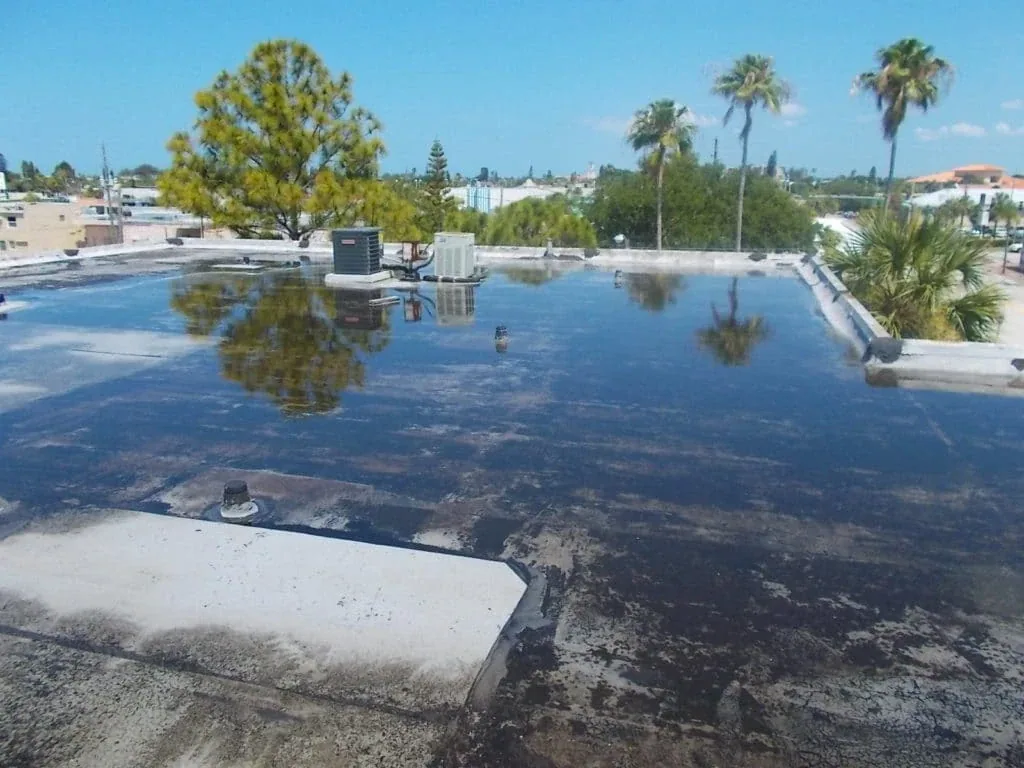
Acrylic coating is not a correction for a low area that holds water. We inspect drain bowls, scuppers, slope changes, and coating edges to see where water collects and how it leaves the roof. Persistent exposure may shorten the service life of a system that is not intended for that condition. We identify the amount and location of ponding, then compare drain correction, profile work, and another coating system only if the roof supports it.
At the drain, the new finish must connect to a compatible flashing detail and stop at the specified termination. We examine clamping rings, old sealant, metal, and membrane around the bowl. A coating that bridges debris or a loose edge leaves an unreliable bond. If water entry has affected insulation, a controlled opening is needed to set the removal limit before coating work closes the surface.
Simi Valley's planning records identify Tapo Canyon Road among the city's major arterial routes and describe nearby business parks with medium- to large-scale buildings. This local context informs access planning, not the drainage design of any one property. A drain and scupper review identifies the outlet condition separately from coating suitability.