Retail and restaurant operators often need a roof decision that fits store hours, deliveries, food-service equipment, and customer access. A ceiling stain near a dining area or sales floor may prompt a quick response, but the repair still needs a confirmed roof boundary. We map the reported area to roof zones, inspect likely seams and penetrations, and note any part of the assembly hidden from view. That gives a chain’s facilities team a property-specific scope without assuming that every location uses the same roof system.
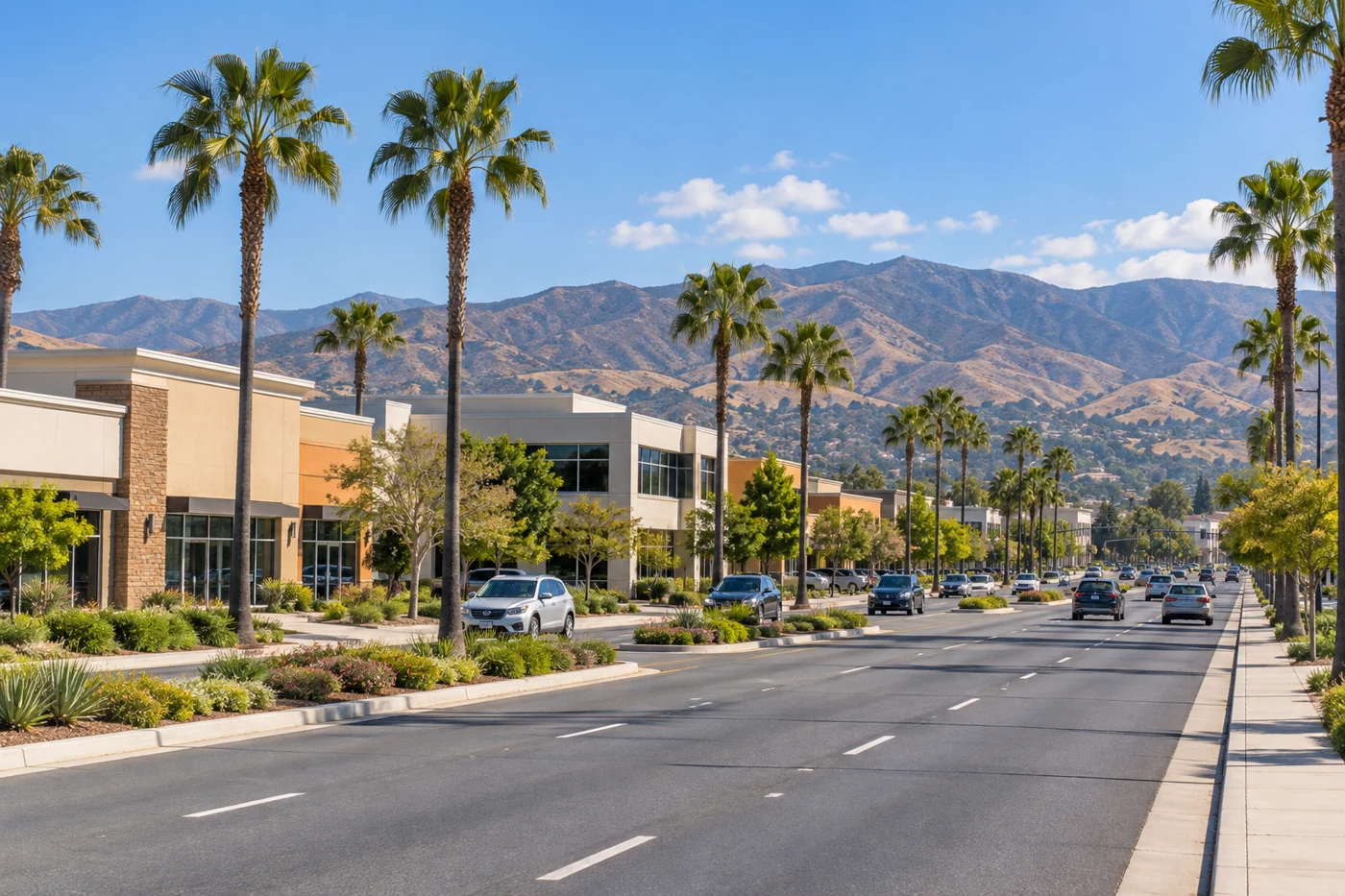
Simi Valley has established commercial streets along Los Angeles Avenue and Tapo Street. Those corridors help locate a portfolio on a map; the actual storefront entrance, delivery path, and roof access still have to be confirmed for each building. A commercial roof inspection begins with the address, service-hour limits, access contact, and the reported condition.
Use one intake format, not one assumed roof
A chain can standardize the information it collects: site address, roof plan, system description, repair history, leak location, operating hours, access contact, and warranty records. Standard fields make it easier to route reports and compare work. They should not force a shared diagnosis onto locations with different assemblies, previous repairs, drainage, rooftop equipment, or tenant arrangements.
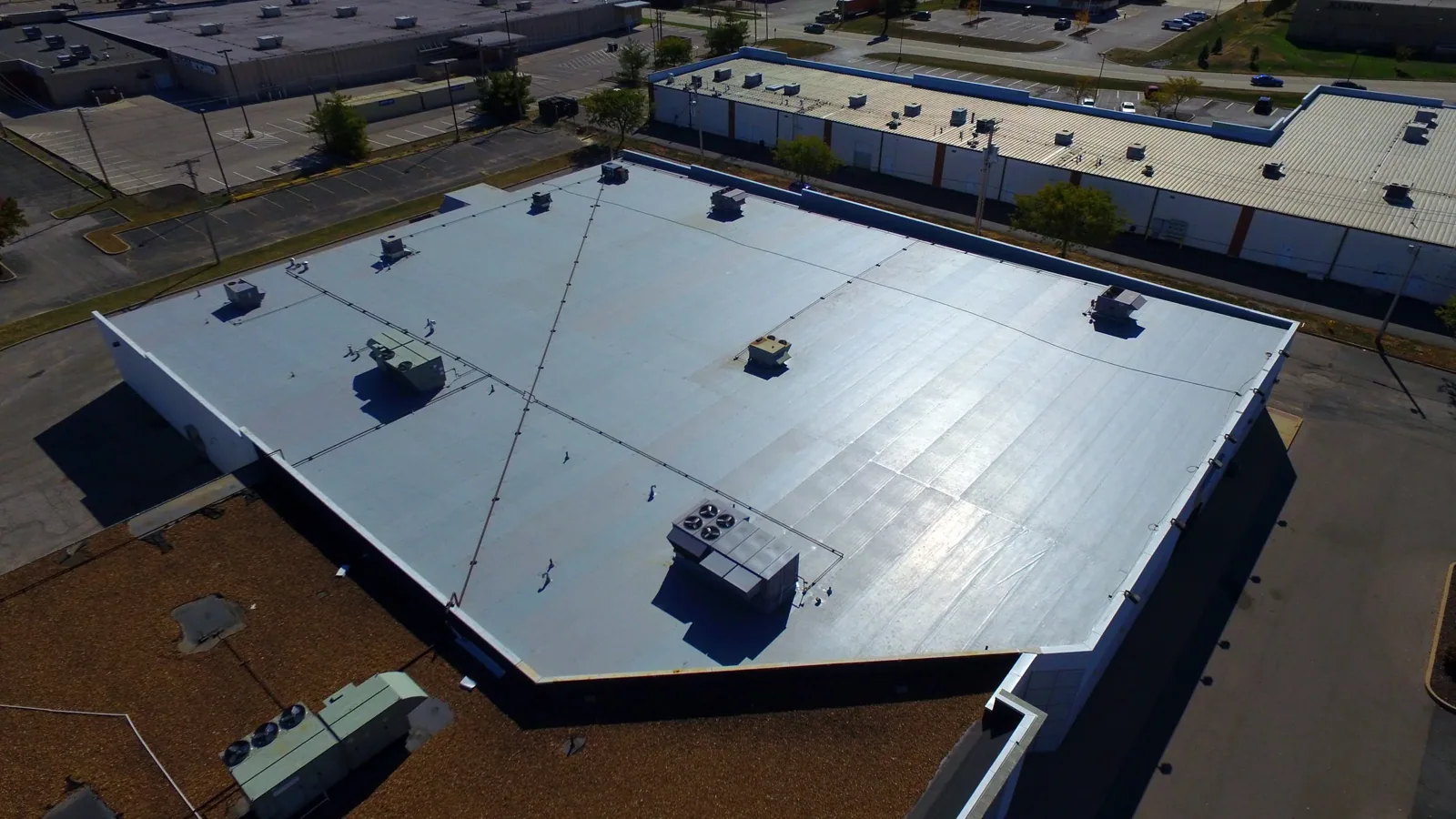
For the first visit, identify the zone above the report and photograph the nearest plausible details: seams, curbs, wall transitions, drains, skylights, exhausts, and prior patches. Mark what was visible and what remained inaccessible. If ceiling or kitchen access is needed, the store manager or facilities contact decides when staff can enter and whether an area should be closed. A property-level roof record can preserve those details while a corporate team sees the status across locations.
For a mixed portfolio, keep each scope tied to its building, not its brand or store type. The same menu or signage does not prove that two roofs are the same age, material, or condition. Record the site-specific facts and use a consistent vocabulary so a later reviewer can compare like with like.
Inspect exhaust and service penetrations
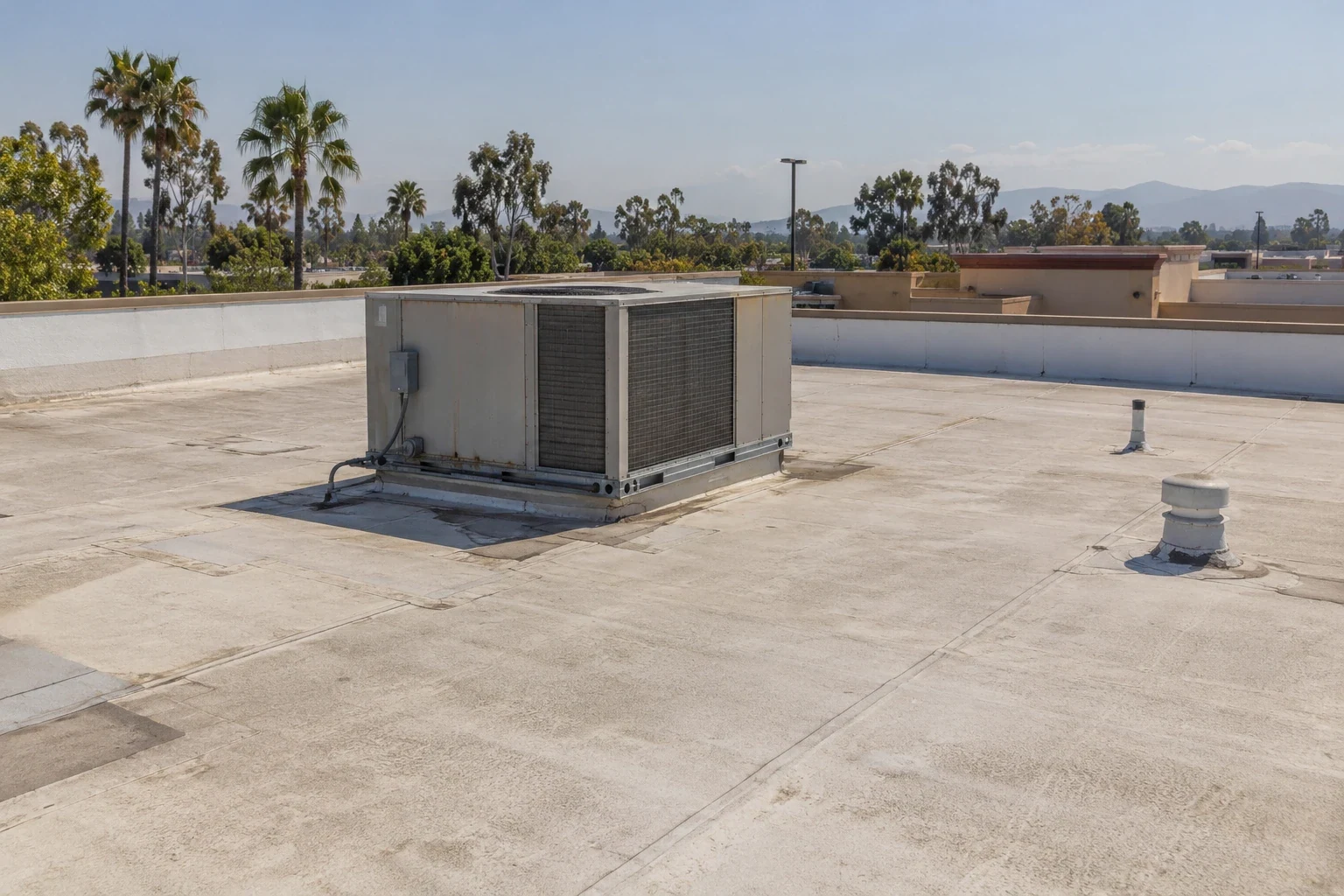
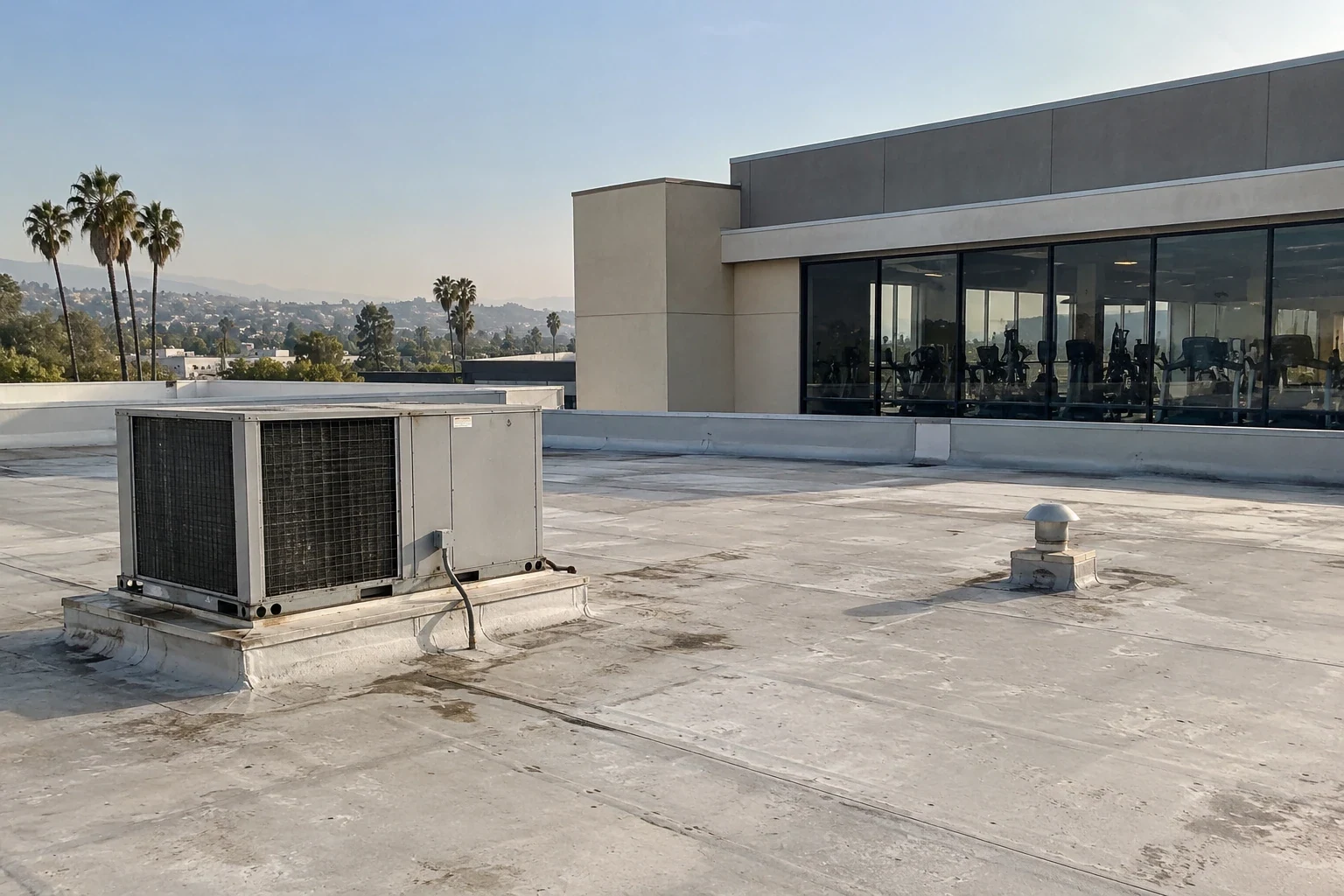
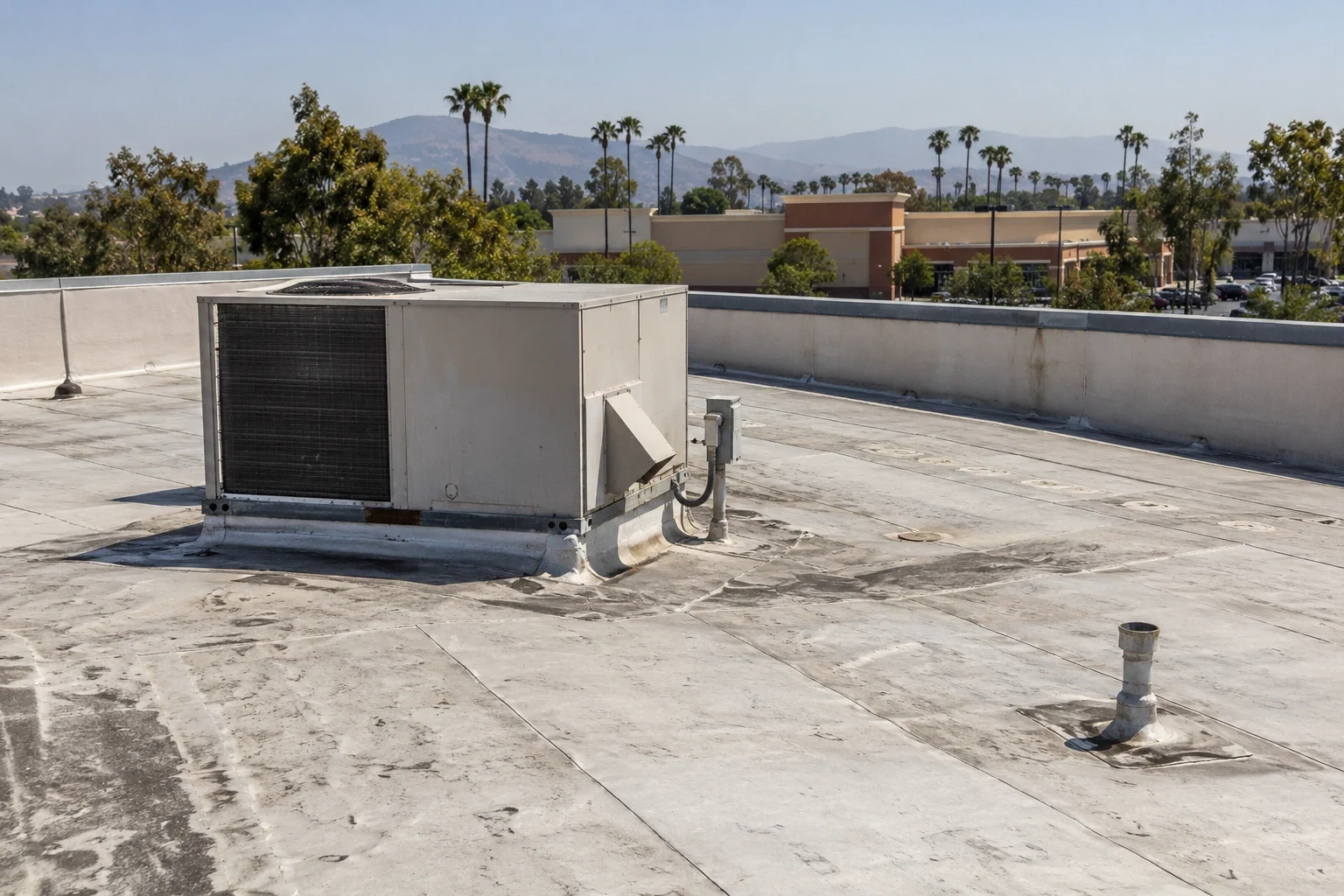
Food-service roofs may have exhaust hoods, fan curbs, makeup-air units, refrigeration lines, electrical conduit, and other penetrations. Their locations can complicate a leak investigation because water may travel before appearing indoors. Start with the report time, affected room, recent weather, and the roof zone above it. Check the relevant flashing, seam, curb, and drain path rather than naming the nearest penetration as the cause.
Where grease or residue is present, note the visible condition and follow the operator’s cleaning and service procedures; the roofing crew should not alter kitchen equipment or ventilation settings. Confirm clearances, shutdown authority, and any hot-work restriction with the facility contact. If a curb needs lifting or a line needs isolation, list the responsible trade and approval before pricing that step.
A commercial leak repair should state the confirmed opening, preparation, flashing detail, tie-in boundary, and interior protection. If a roof surface is coated or has several layers, verify the assembly and compatibility before proposing a repair or recover.