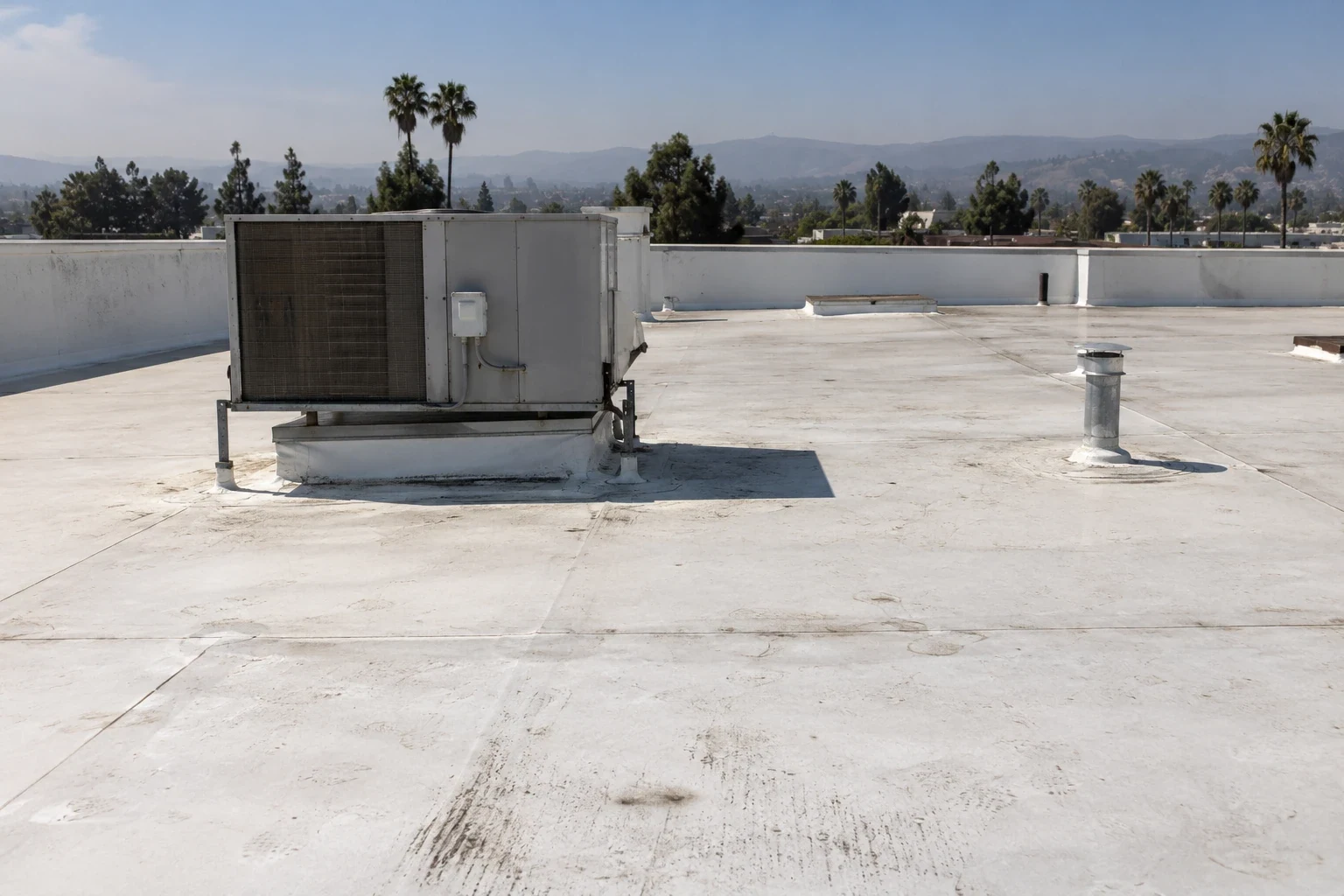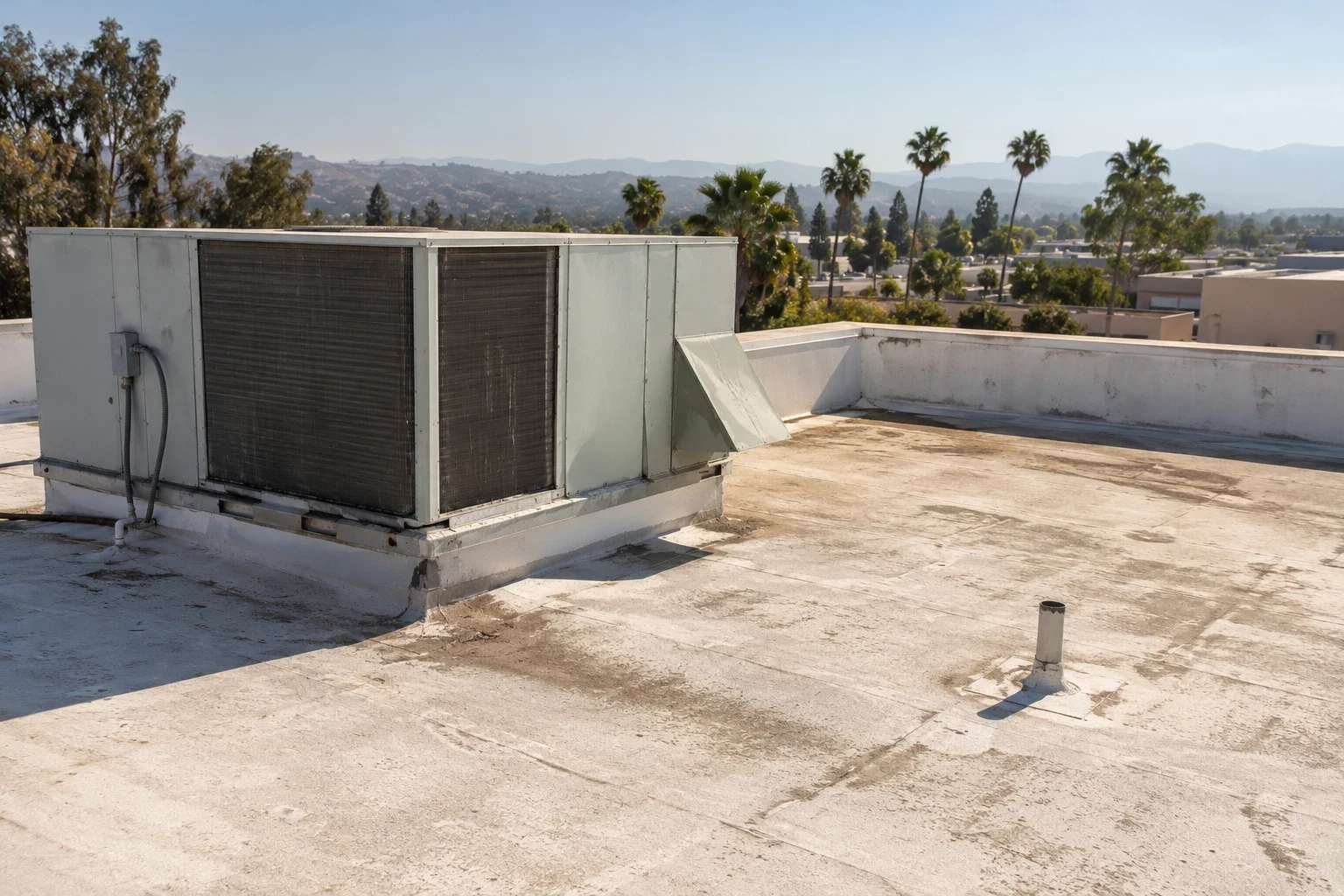
A reflective surface changes how the roof absorbs solar energy, but it does not correct wet insulation, an open seam, or a blocked drain. For a Simi Valley facility, a cool-roof decision begins with the installed assembly and its condition. The City projects hotter summer conditions over time, which makes surface exposure a planning consideration; it does not tell us how a particular roof will perform. We document the membrane, insulation, drainage, and rooftop equipment before comparing a coating, recover, or replacement. A condition inspection makes that comparison specific to the building.
Start with the existing roof surface
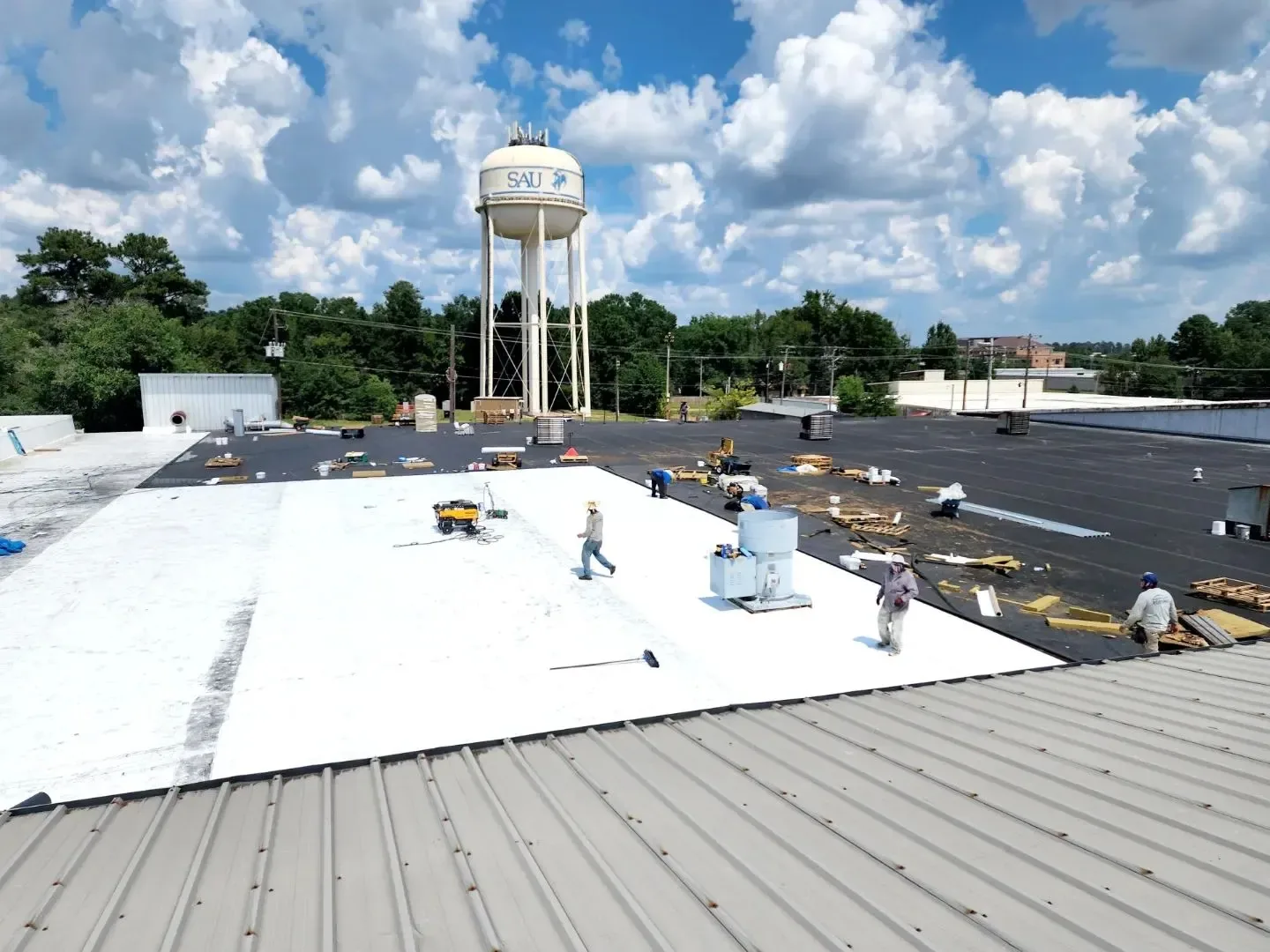
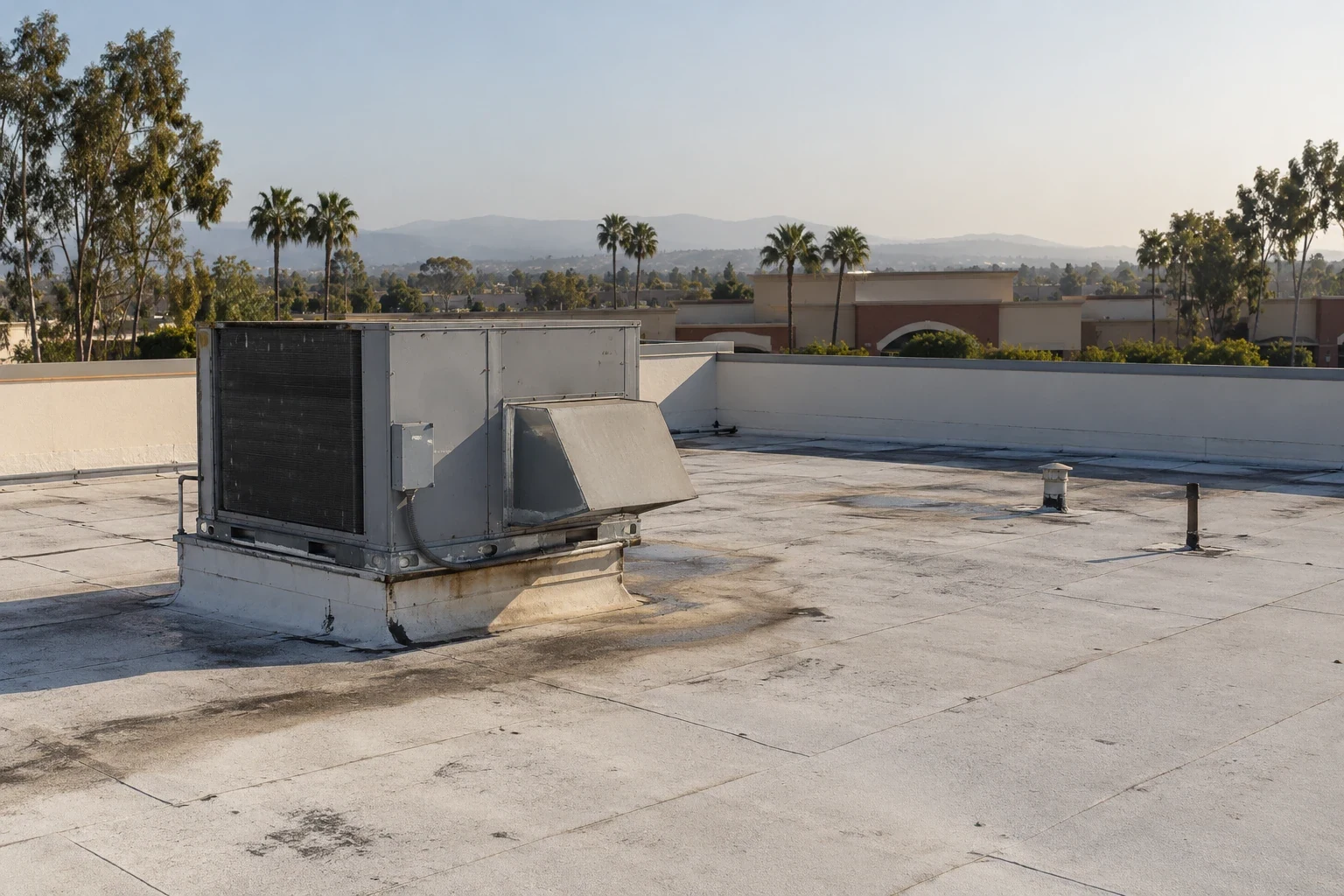
A cool roof may use a reflective membrane, a compatible coating, or another designed assembly. Each option has a different substrate, seam, attachment, and flashing requirement. We identify the roof system where records and visible details agree, then map areas with chalking, loss of granules, open laps, blisters, or previous repairs. A coating evaluation needs a clean, sound surface and a test area where compatibility is uncertain. A new membrane needs a plan for insulation, perimeter securement, penetrations, and tear-off or recover limits.
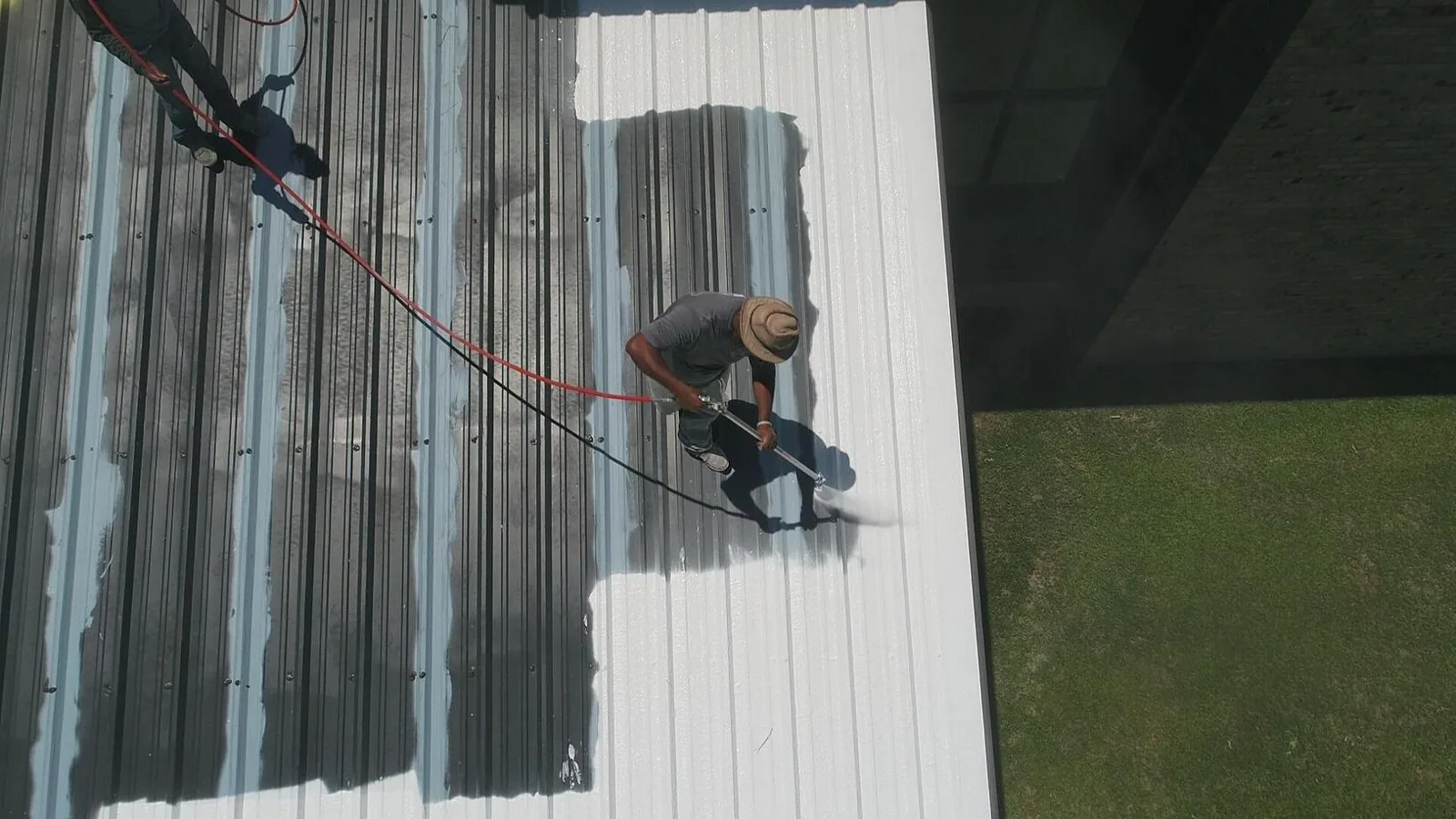
Our coating restoration review can identify whether the roof is suitable for a liquid-applied system. If the existing assembly cannot support that path, the report explains which condition changes the recommendation. That record matters in Simi Valley because city projections note more very hot days in the future. We treat the projection as a reason to examine exposure and material condition, not as a promise of energy savings or a forecast for a single property.
Compare complete assemblies
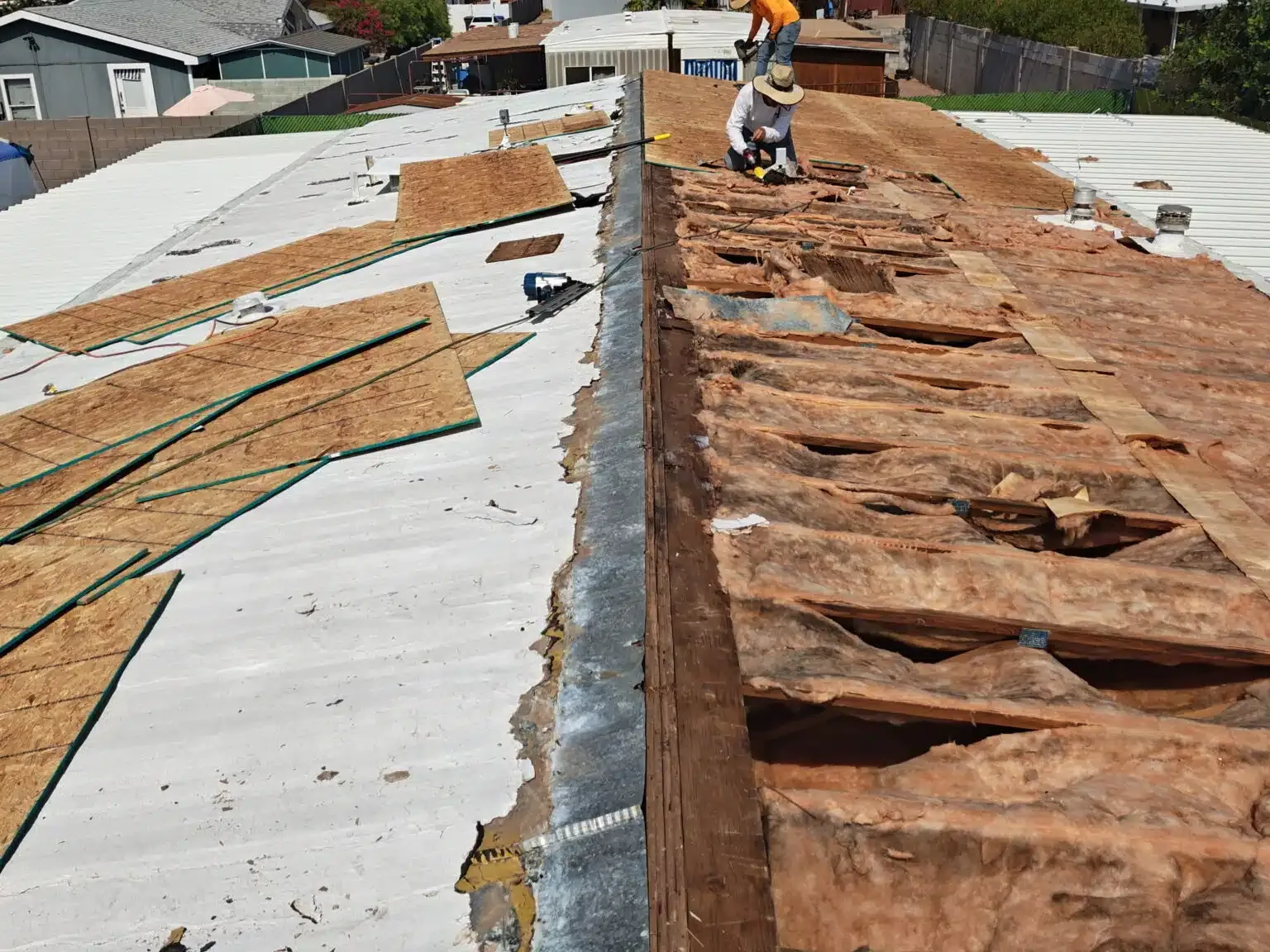
Reflectance is only one specification. The full assembly includes the membrane or coating, insulation, cover board, attachment, edge details, drains, curbs, and flashing. A lighter finish will not compensate for water held below the surface or a weak substrate. We compare candidate systems against the existing roof, documented moisture, wind-uplift requirements, building use, and manufacturer details. A TPO membrane option may fit a project when the substrate and design conditions support it; system selection follows the documented scope rather than color alone.
For a coated assembly, specify preparation, repairs, primer if required, reinforcement, application conditions, and how transitions will be finished. For a replacement, state what is removed and what remains. A replacement scope should identify how concealed wet material or deck issues are handled once exposed. We record the decision inputs and excluded areas so a facility manager can compare proposals on the work included, not just a reflective product description.