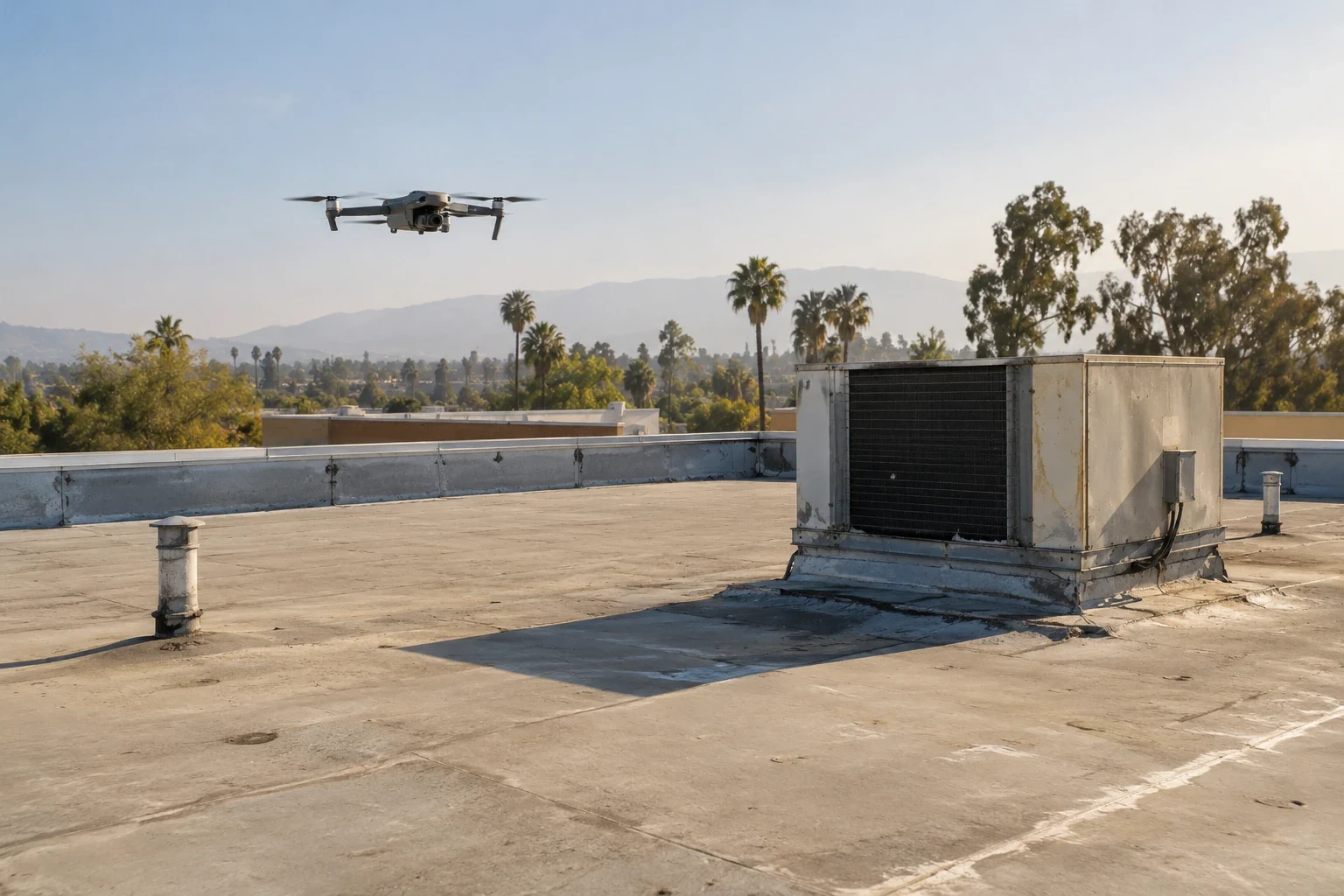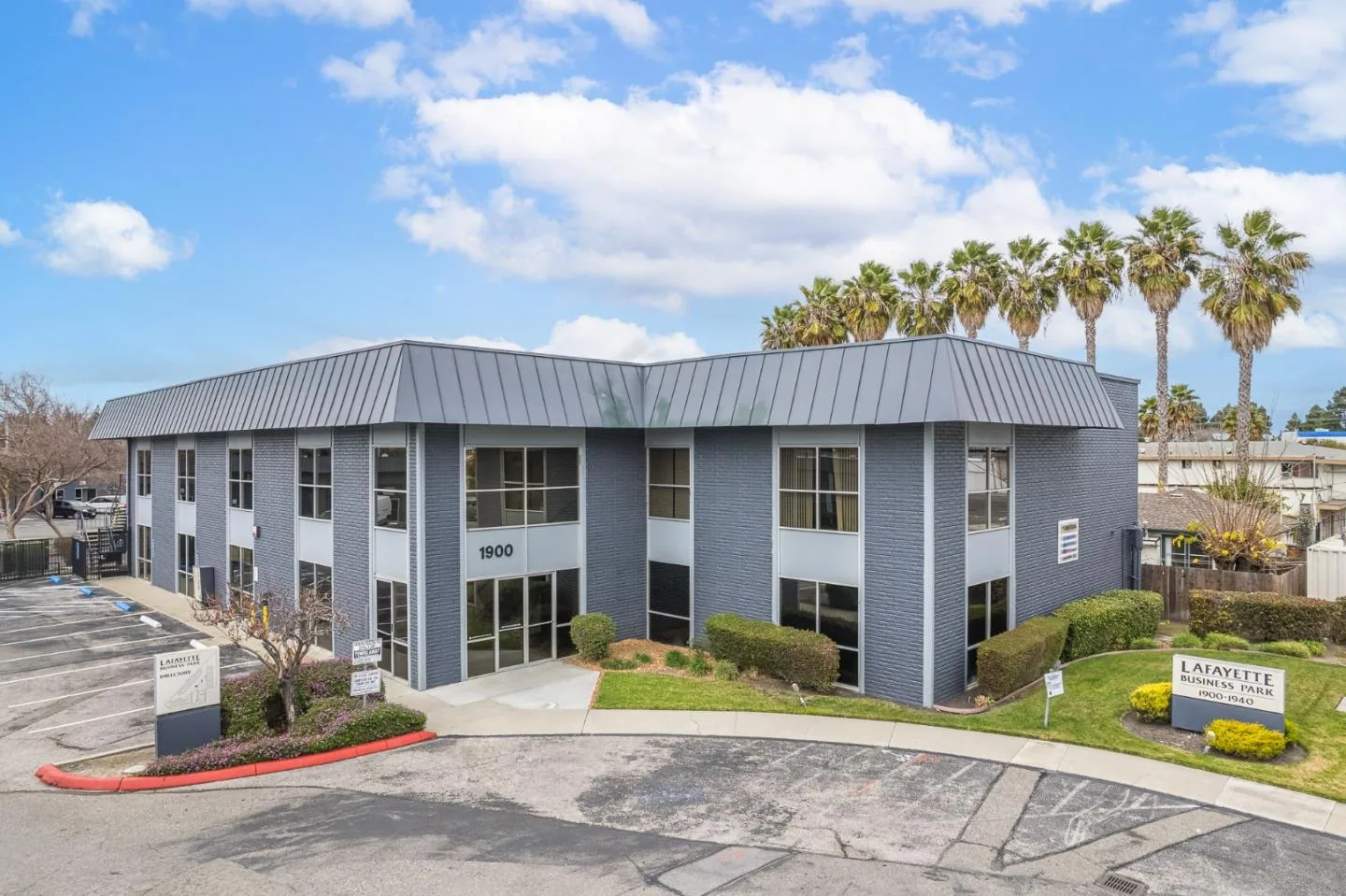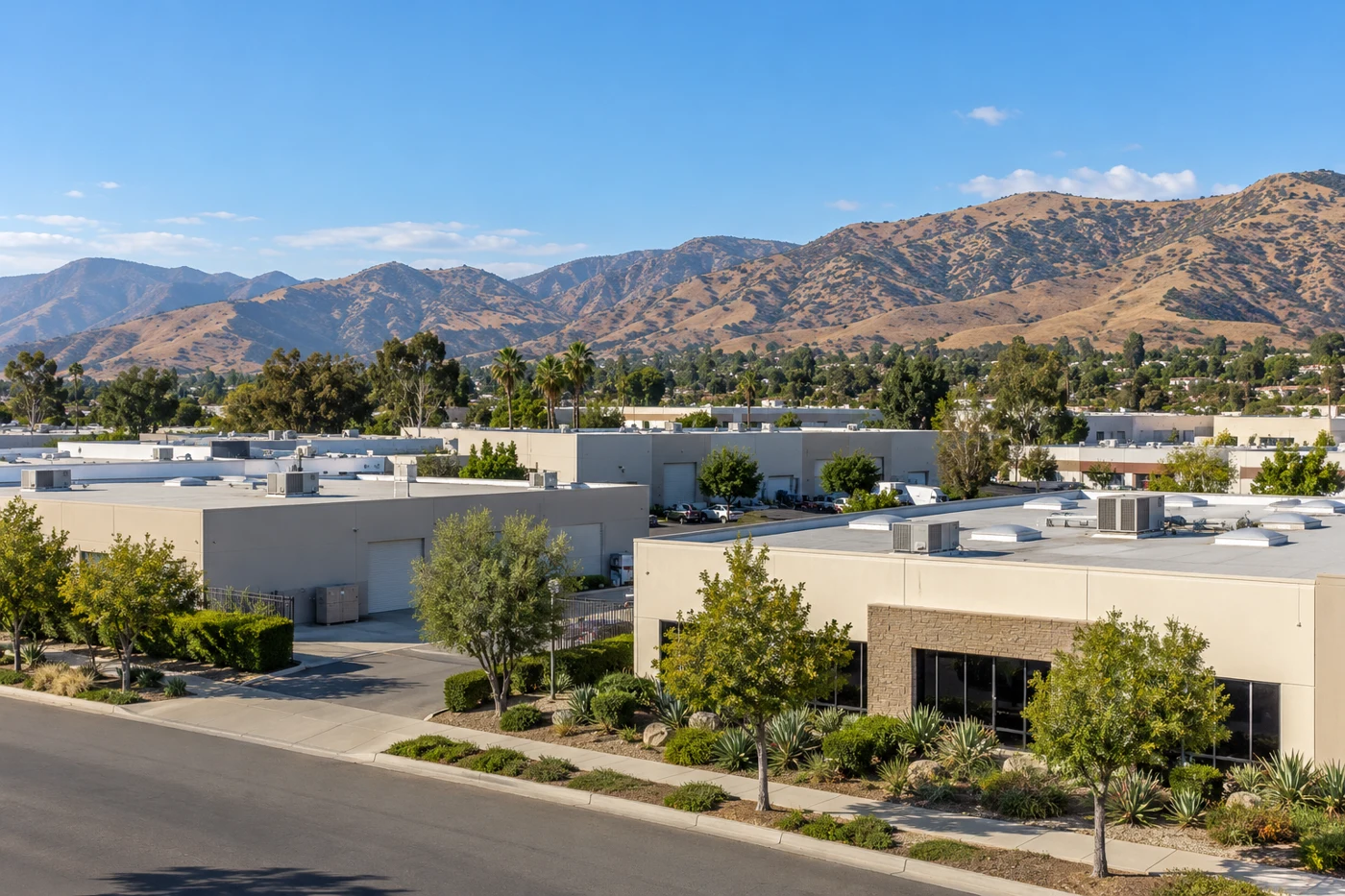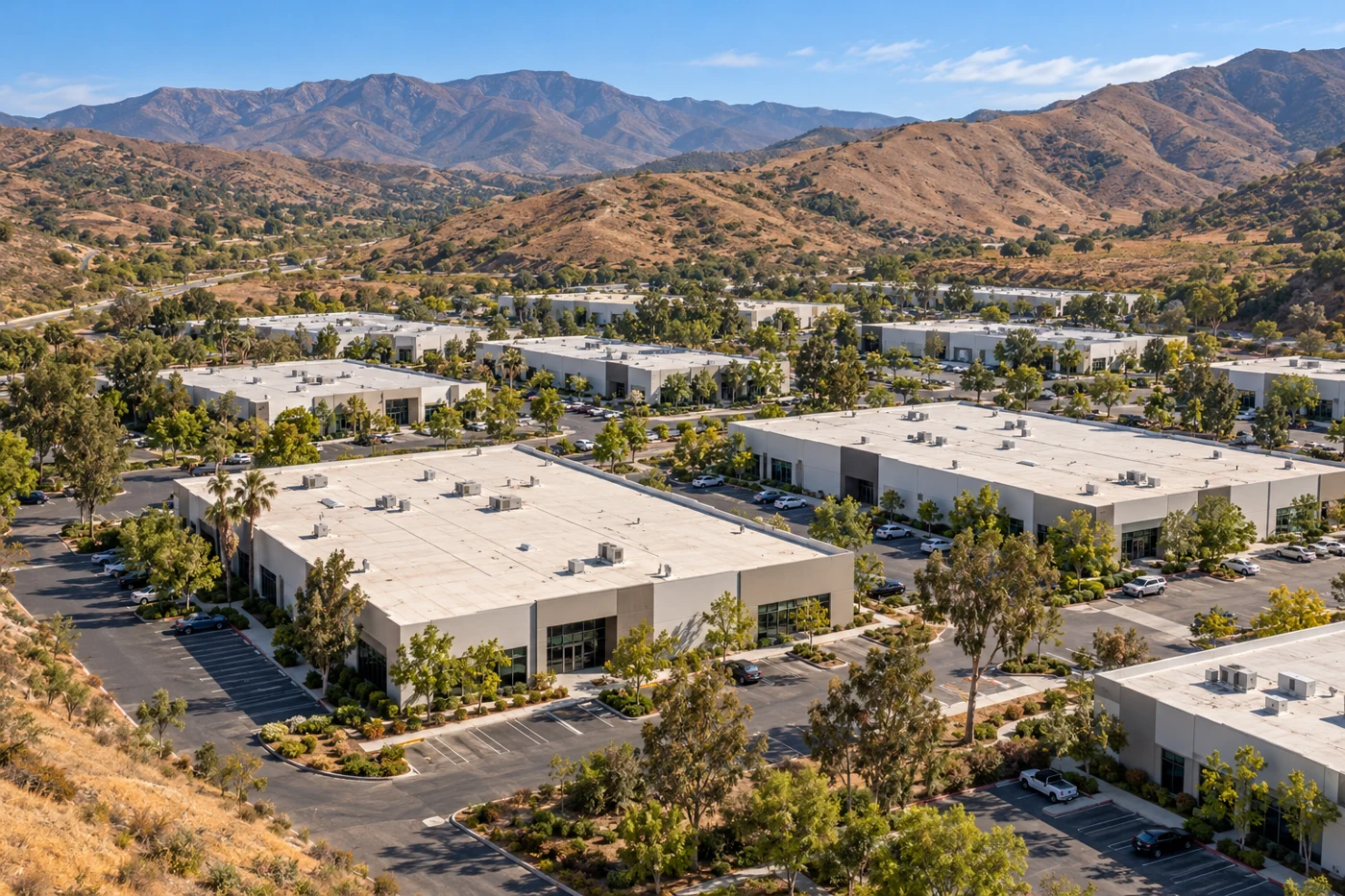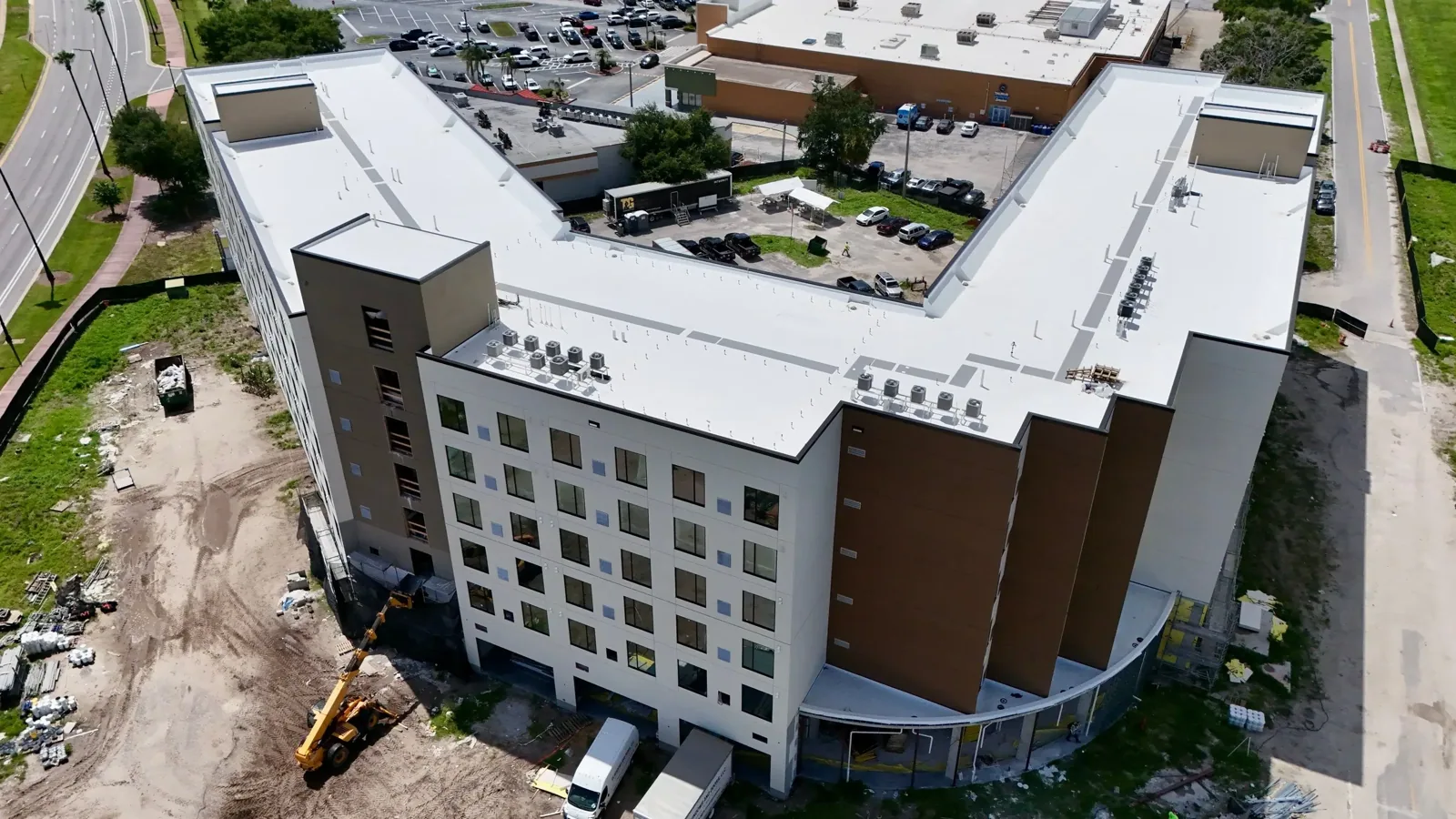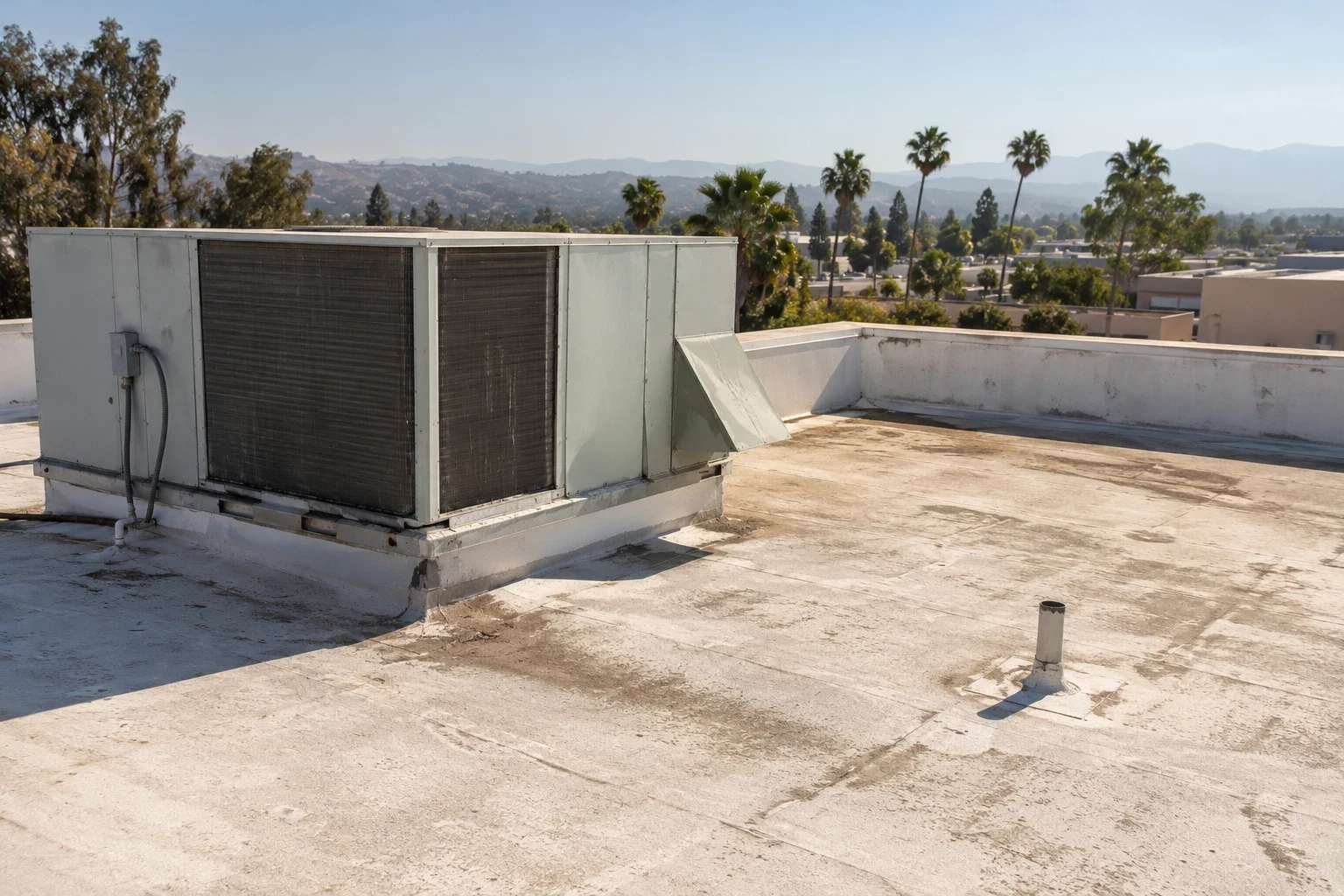
An overhead view can show how roof zones, equipment, drains, and access routes relate across a large building. It cannot tell whether a seam weld is sound or whether insulation below a membrane is wet. Across a large office or production roof, an overhead map can help plan a safe inspection sequence before a crew crosses the surface. We use drone imagery when the site, airspace, weather, and operating conditions permit, then tie the images to close observations and the owner’s repair decision. The output is a labeled view of the roof, not a condition verdict without supporting inspection.
Use the aerial view for orientation
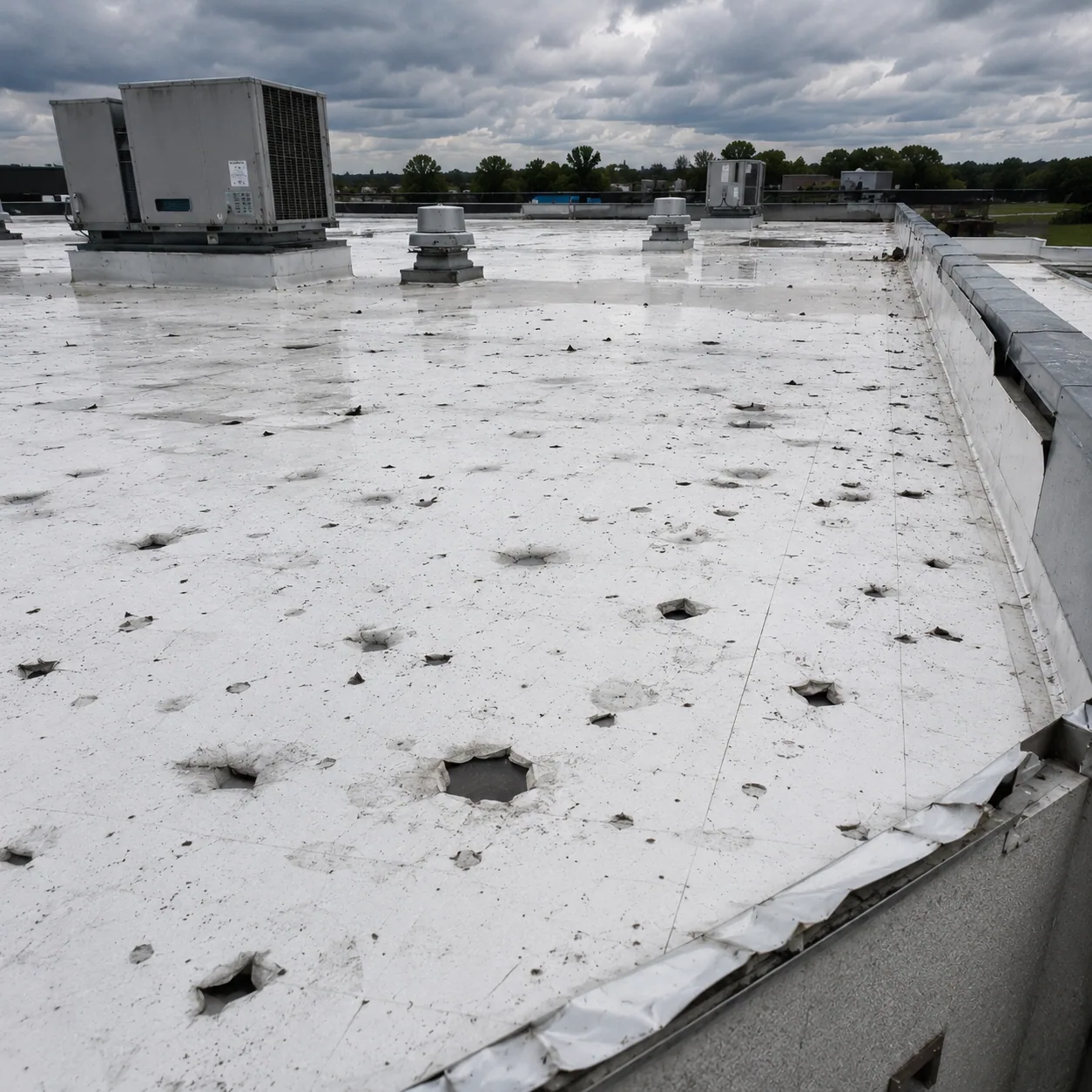
The drone can help an inspector see roof geometry, equipment clusters, parapets, drainage paths, and potential access obstacles before moving across the surface. This is useful where the property has several wings or long membrane runs. A hands-on roof inspection still confirms the conditions that matter at a seam, drain, penetration, or edge. The imagery should be tied to a roof plan and labeled by zone so a facility manager can match the view to the building. It may help compare visible ponding or debris between locations, but a single image cannot establish depth, moisture below the surface, attachment, or repair history. The record explains what the camera shows and which detail needs a closer look.
Confirm the flight and site plan
Before flight, the operator confirms site permission, applicable airspace and operating rules, weather, launch area, and people or equipment moving below. A drone should not be flown through active production, near sensitive operations, or into a restricted area without the required coordination. The facility contact identifies access controls, emergency procedures, and any privacy or security limits. Wind, heat, glare, and changing conditions may reduce image quality or make flight inappropriate. If the flight cannot be completed safely, the inspection can use a ground review, approved access, or alternate imagery plan. The visit notes the method used so a later reviewer understands which roof areas were visible and which remained outside the survey.