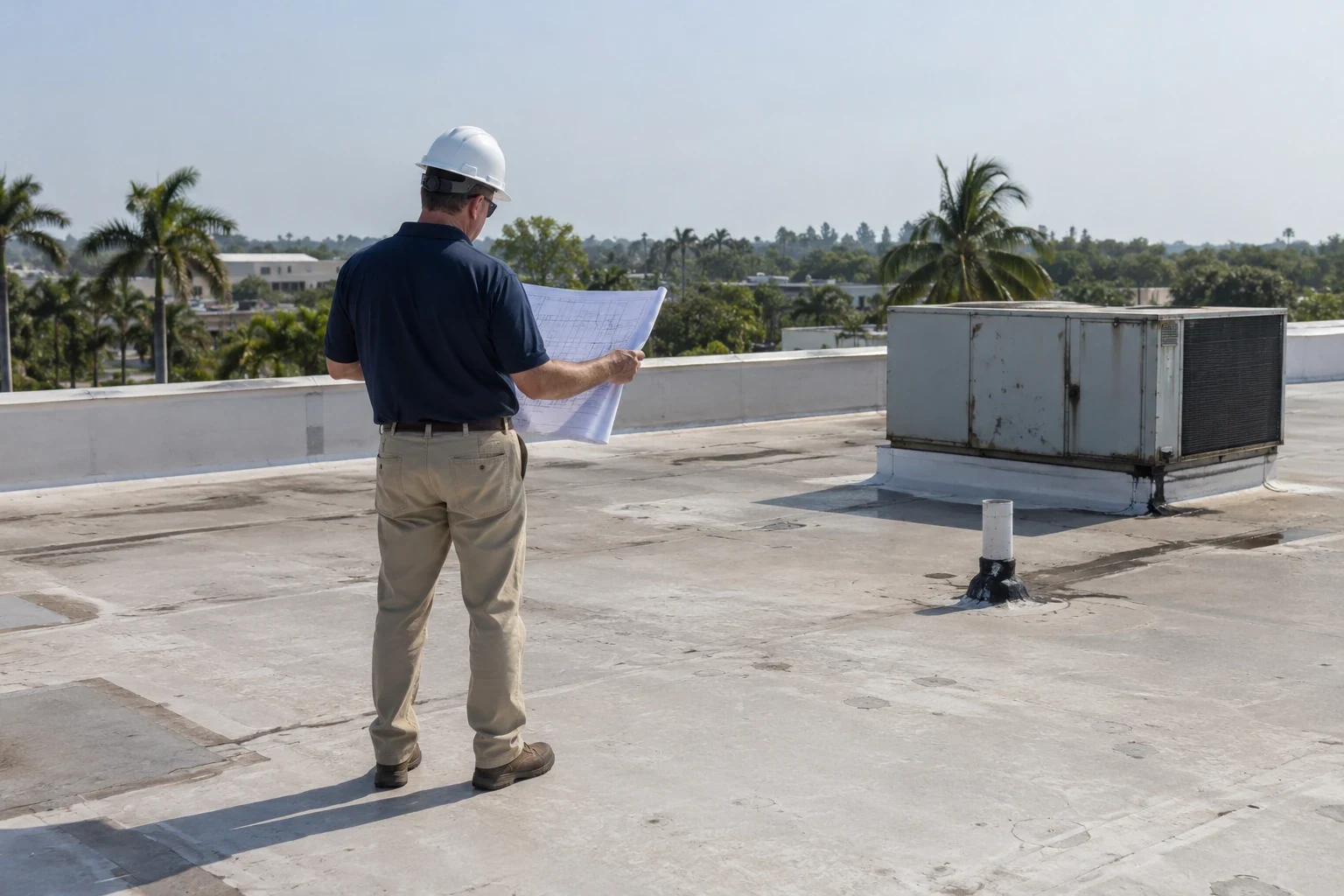
A public building roof project needs a scope that can be reviewed, priced, scheduled, and handed back without hiding assumptions in a broad line item. Facilities staff may coordinate several buildings, purchasing teams may need a defined work boundary, and occupants still rely on clear access plans. We inspect the agreed roof zones, record visible conditions, and separate confirmed repairs from areas that need additional access or testing. The result is a decision file that lets the agency compare the same work limits across bids.
Simi Valley’s West End Specific Plan area is a broad local district, and the City identifies State Route 118 and Los Angeles Avenue among its major arterial routes. These details can orient a facilities map but do not establish an individual building’s roof condition or entrance. A roof condition report should name the site, inspection date, accessible zones, limitations, and next action.
Define what the solicitation includes
Before requesting prices, identify the building, roof sections, known system, reported leak locations, and the services expected. Decide whether the assignment is an inspection, a repair, a maintenance visit, or a replacement comparison. If the agency wants alternatives, ask each bidder to price them separately and state the assumptions for preparation, removal, tie-in, access, and disposal. This helps reviewers compare defined work rather than relying on a single total with different inclusions.
Include access hours, escort requirements, security check-in, roof-hatch restrictions, staging limits, delivery routes, and any occupied areas that need protection. If a public event or scheduled use may affect work, identify the date range and person who can approve a change. An agency representative, not the roofer, determines room access, facility closure, and occupant notifications. During a walk-through, mark the roof zones covered by the request and record what bidders may photograph or measure. Use the same access window and clarification process for each vendor. If a question changes quantity, materials, or sequencing, distribute the answer through the agency’s procurement contact so each proposal rests on the same scope assumption.
A school district roof plan may share some procurement fields, yet every public building still needs its own use and access notes. A property-level record can help track keys and prior repairs, but it does not replace the formal scope and authorization path for the agency project.
Separate observations from assumptions
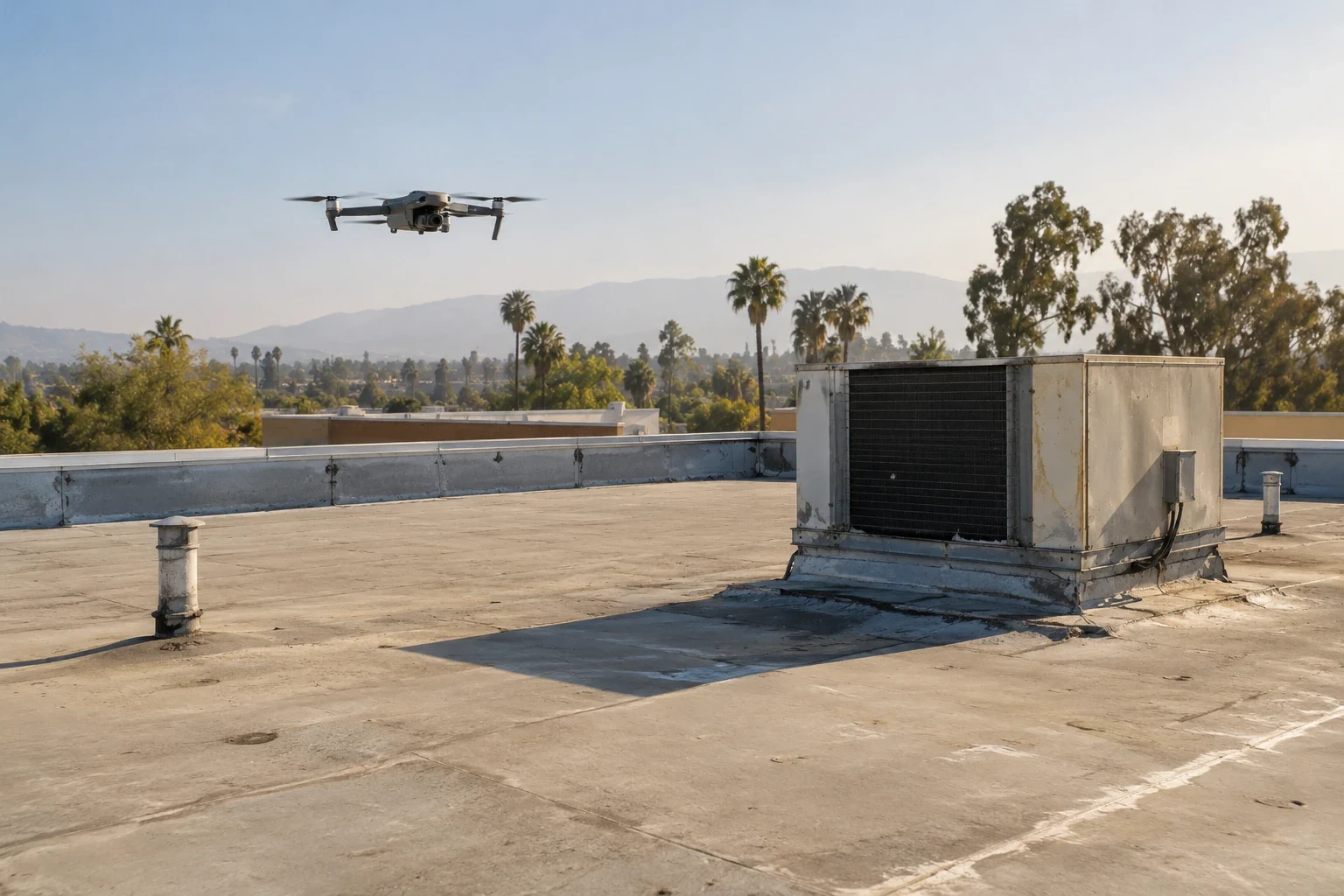
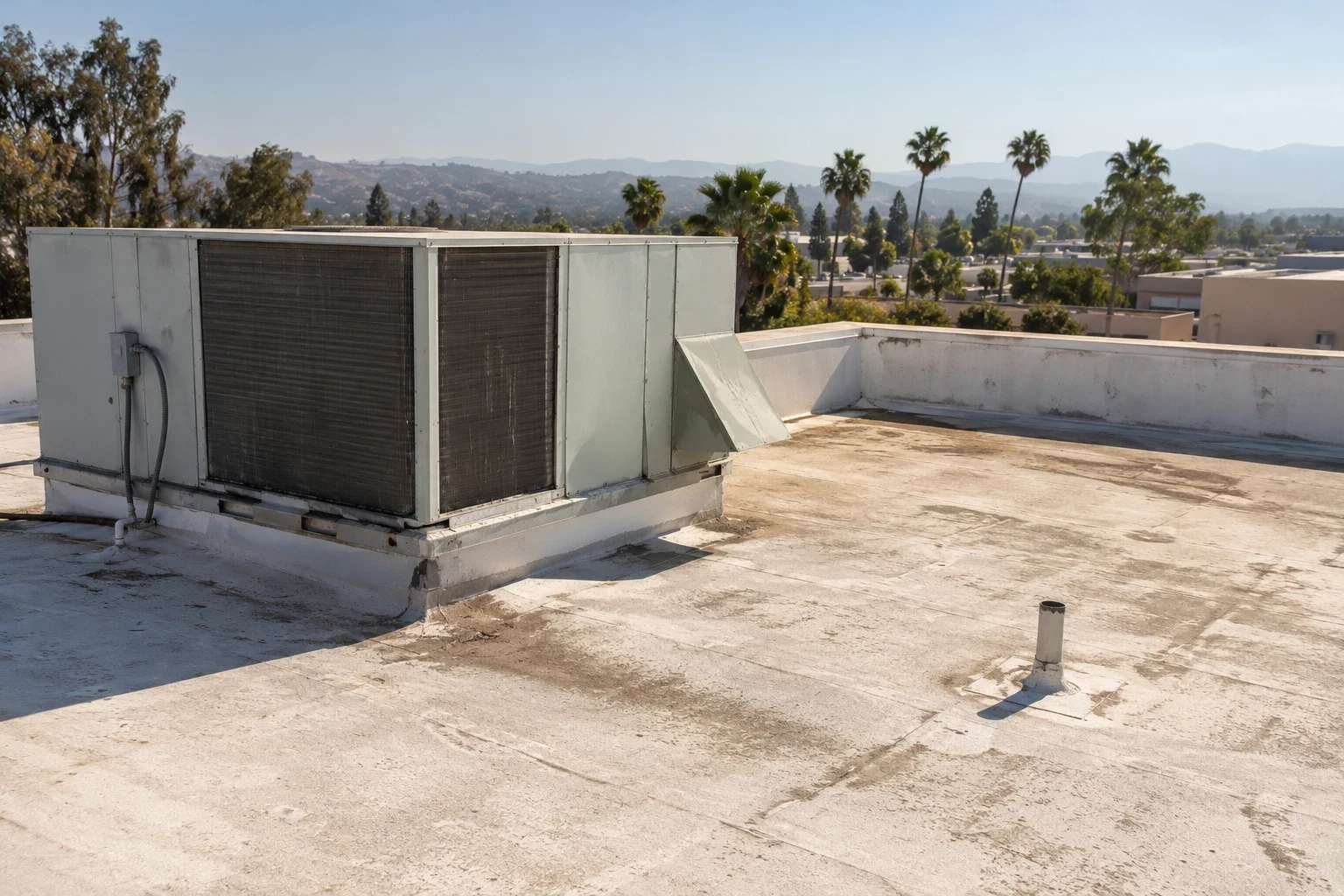
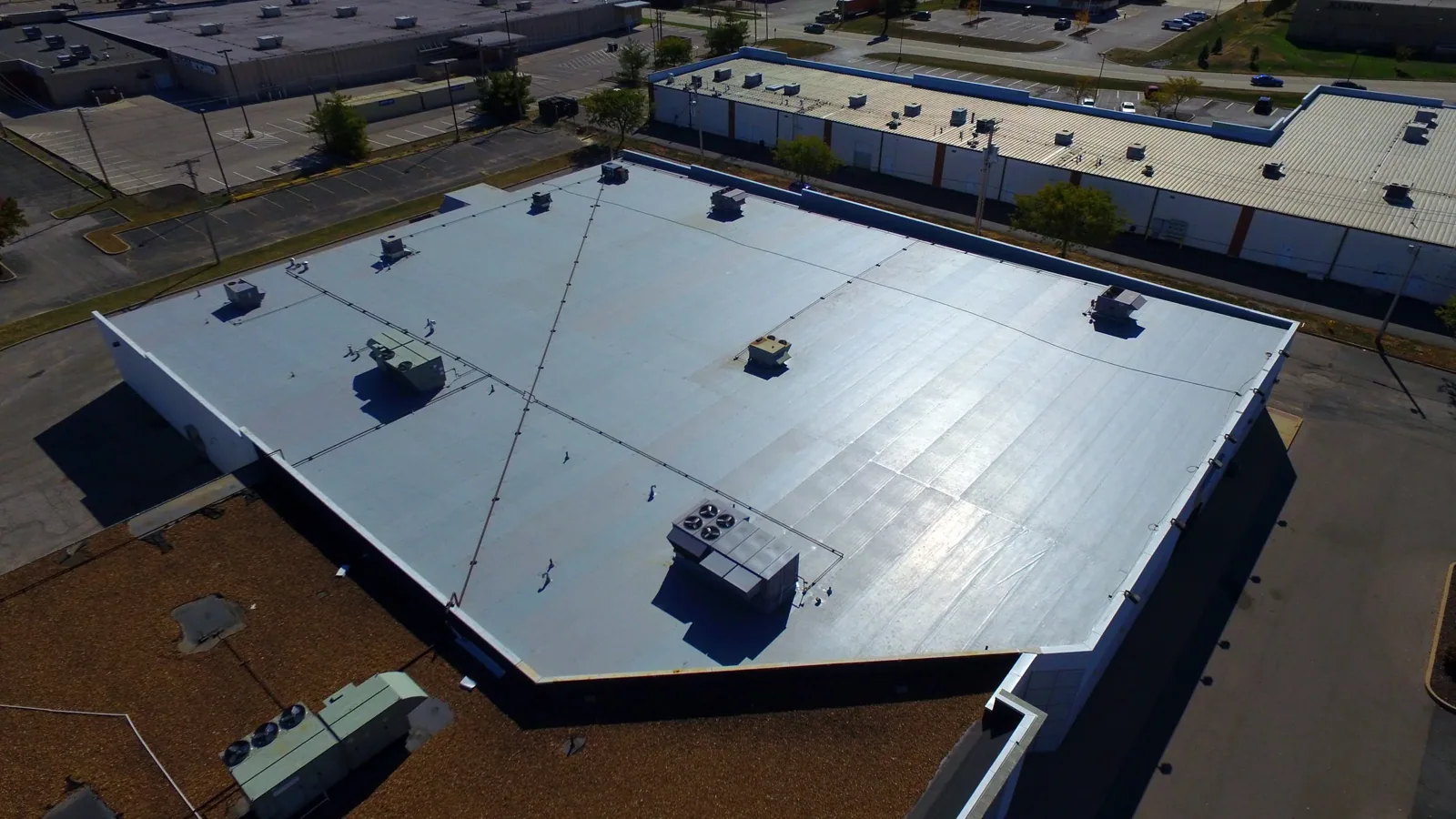
At the roof, map each observation to a zone and photograph the relevant detail. Record seams, flashings, curbs, penetrations, drains, edge conditions, prior patches, and any area that could not be reached. If a roof view is blocked by equipment or a secure enclosure, state that limit. Do not infer that a concealed area is sound because no interior report is open, or that a stain proves the nearest roof detail is the source.
When the path of a leak remains uncertain, list what was observed and what test or additional access could change the repair boundary. If the scope includes a moisture scan, test opening, or interior review, say who approves it and what closeout will follow. Keep an allowance for hidden insulation or deck conditions separate from confirmed quantities, with a clear condition that triggers added work.
A commercial roof inspection gives the agency a dated condition record; a leak repair proposal should then show the confirmed defect, material compatibility, tie-in limits, and protection. Do not combine the inspection fee and emergency stabilization into one undefined task.