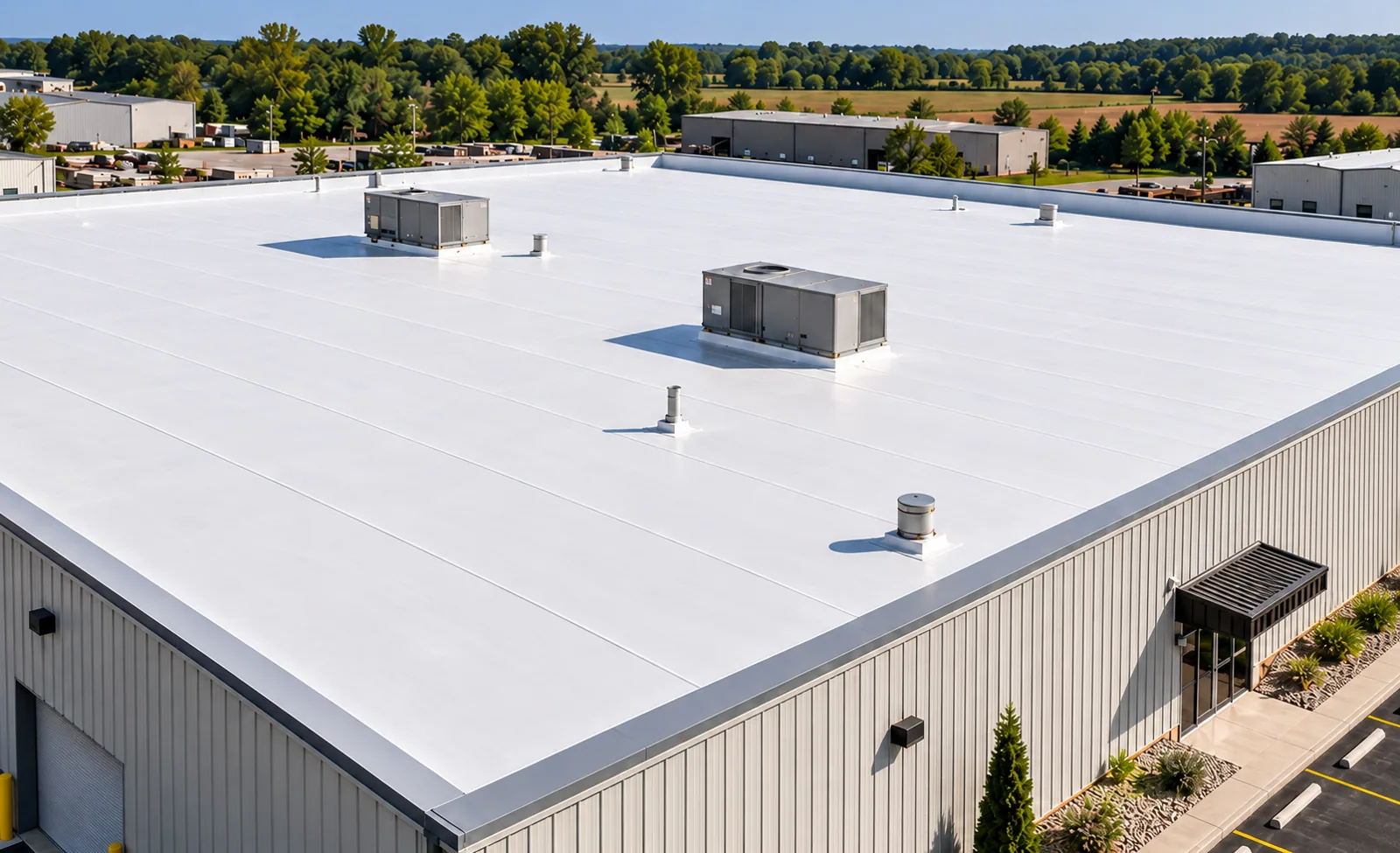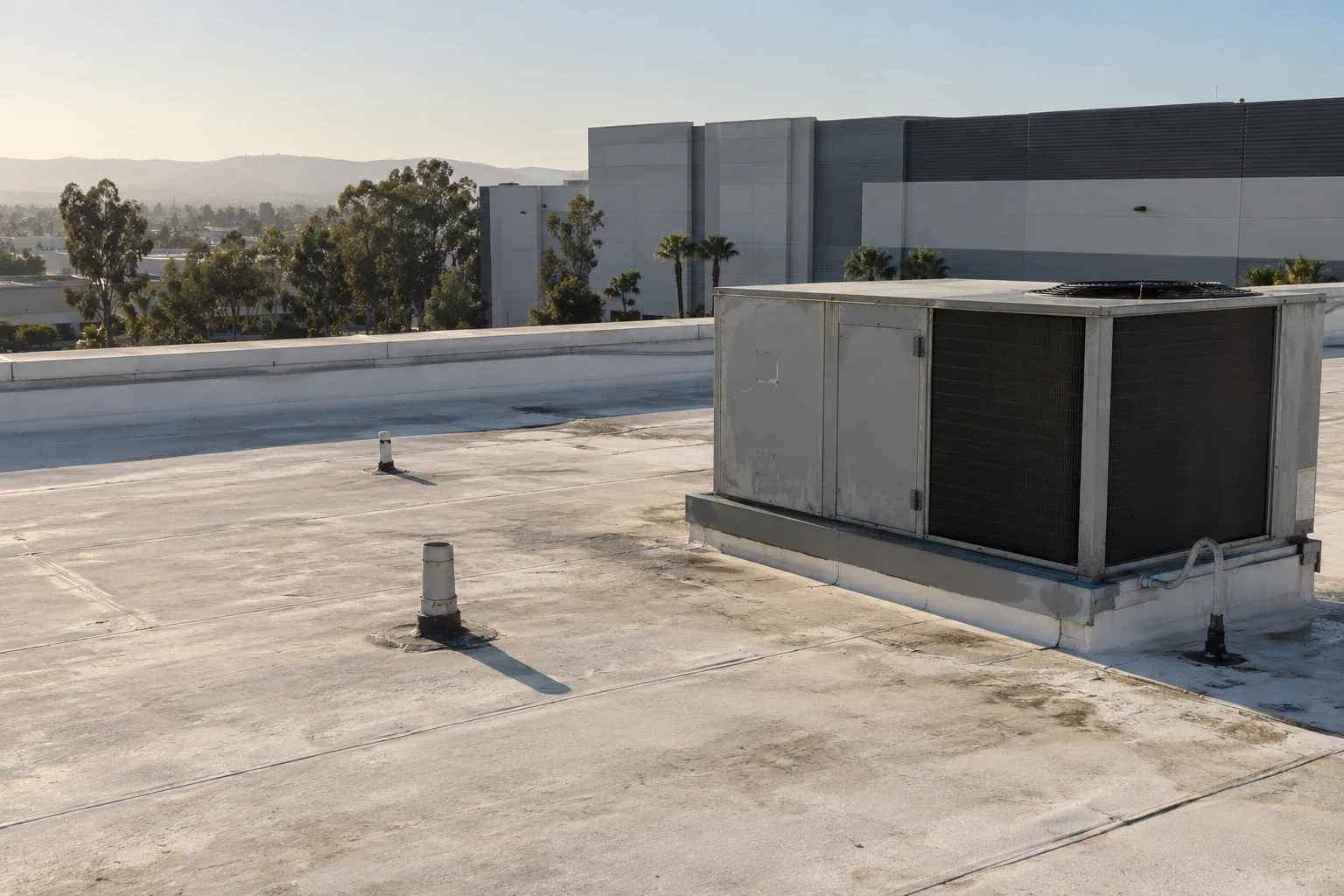
A material name narrows the question; it does not answer whether the roof can be repaired. Carlisle SynTec’s Sure-Weld is a reinforced heat-weldable TPO membrane, so a field review begins at the weld, then follows the sheet into flashing, edge, and drain details. Simi Valley’s hotter-summer planning projection makes exposure and movement useful context for the inspection. The observed roof condition, not the forecast, sets the repair boundary.
Follow each sheet into its termination
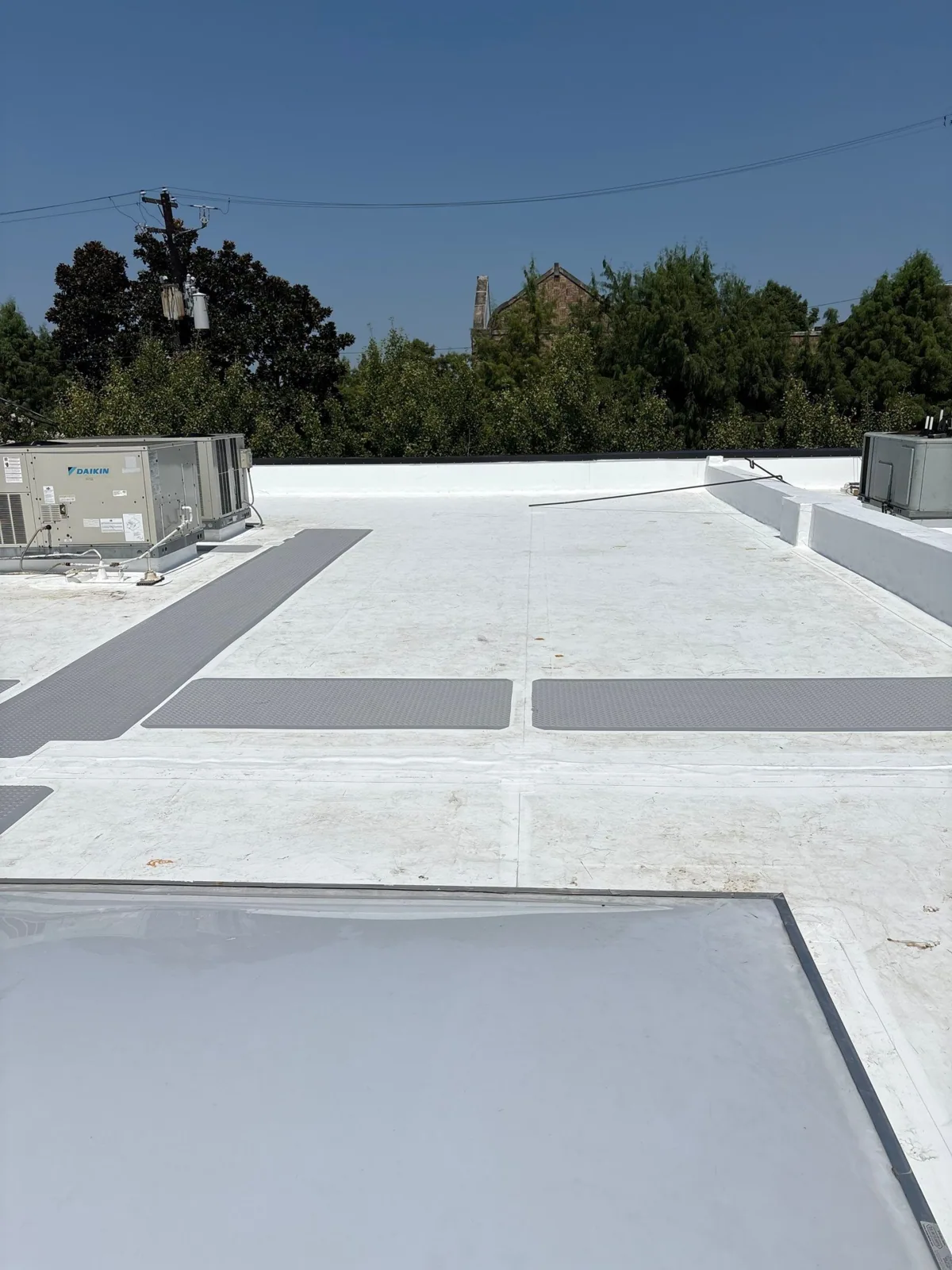
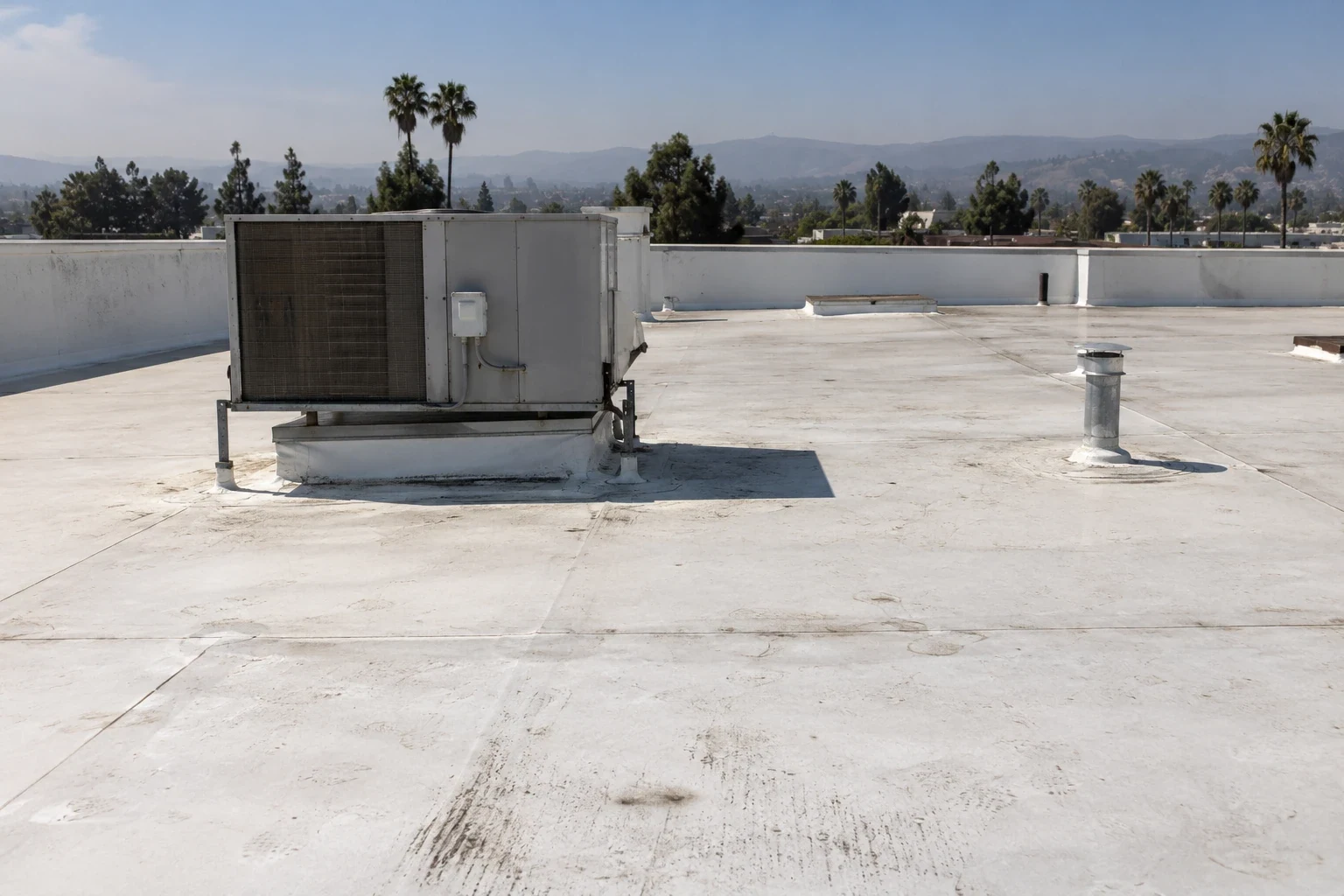
At an edge, a membrane can remain sound across the open field while the termination has loosened or the metal joint has opened. We trace the sheet to the perimeter, note the substrate and fastening pattern where accessible, and inspect changes at parapets, curbs, and expansion joints. A roof map helps identify whether the same detail appears across multiple elevations or only at one isolated transition.
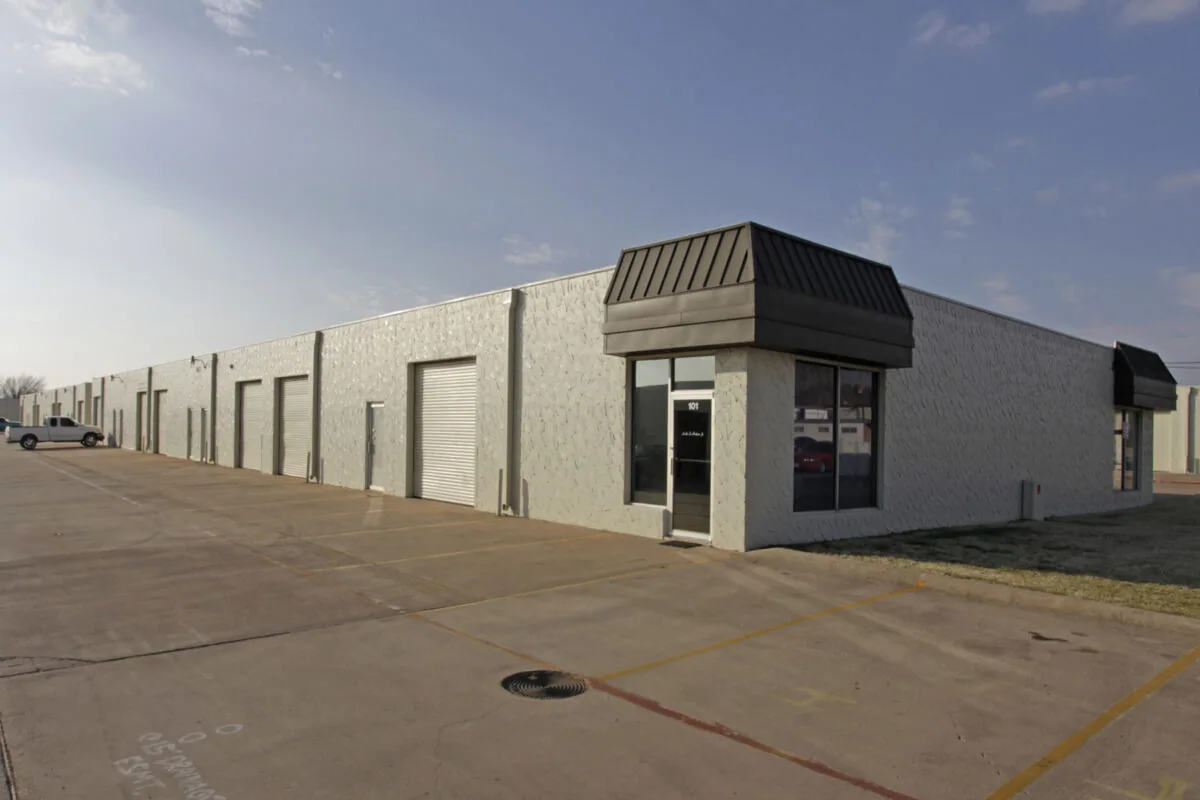
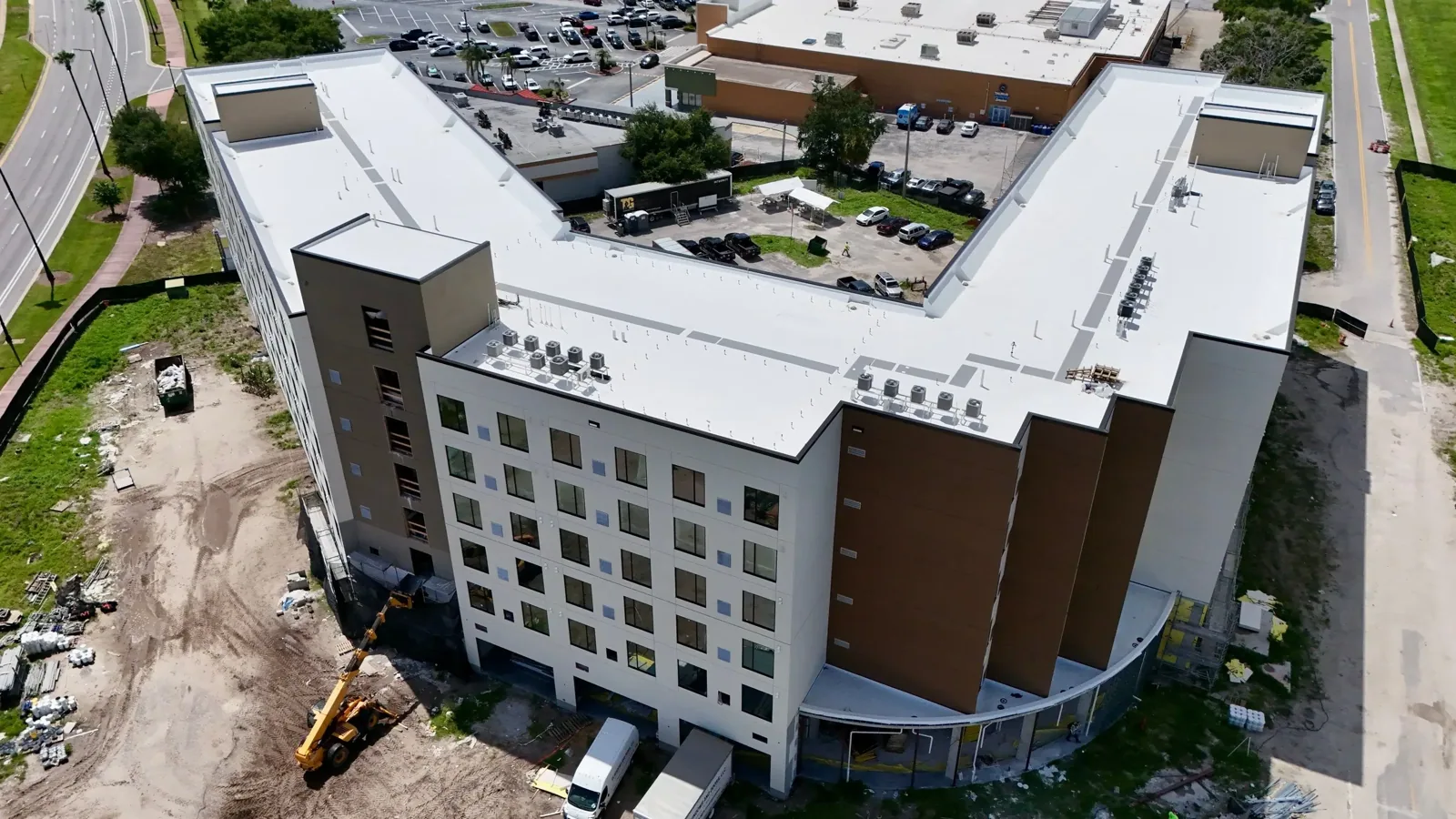
Simi Valley’s planning inventory concentrates its industrial footprint in the West End Specific Plan boundary and also recognizes office and research uses. On a reroof, that mix makes it useful to separate zones by occupancy and construction phase before choosing a sequence. Where a building has been expanded, we compare seam layout and edge details across each construction phase before calling the assembly uniform.
Before a repair is specified, we identify the visible product family and compare the proposed patch with current Carlisle details. If records indicate Sure-Weld, that is a useful starting point, not permission to assume the same sheet, thickness, or attachment across every addition. We mark each roof zone and note where the membrane changes at a wall, curb, metal edge, or tie-in. A comparison with GAF commercial membrane choices or Holcim Elevate TPO assemblies can inform a replacement discussion, but field evidence remains the controlling input.
Use the weld as a test point
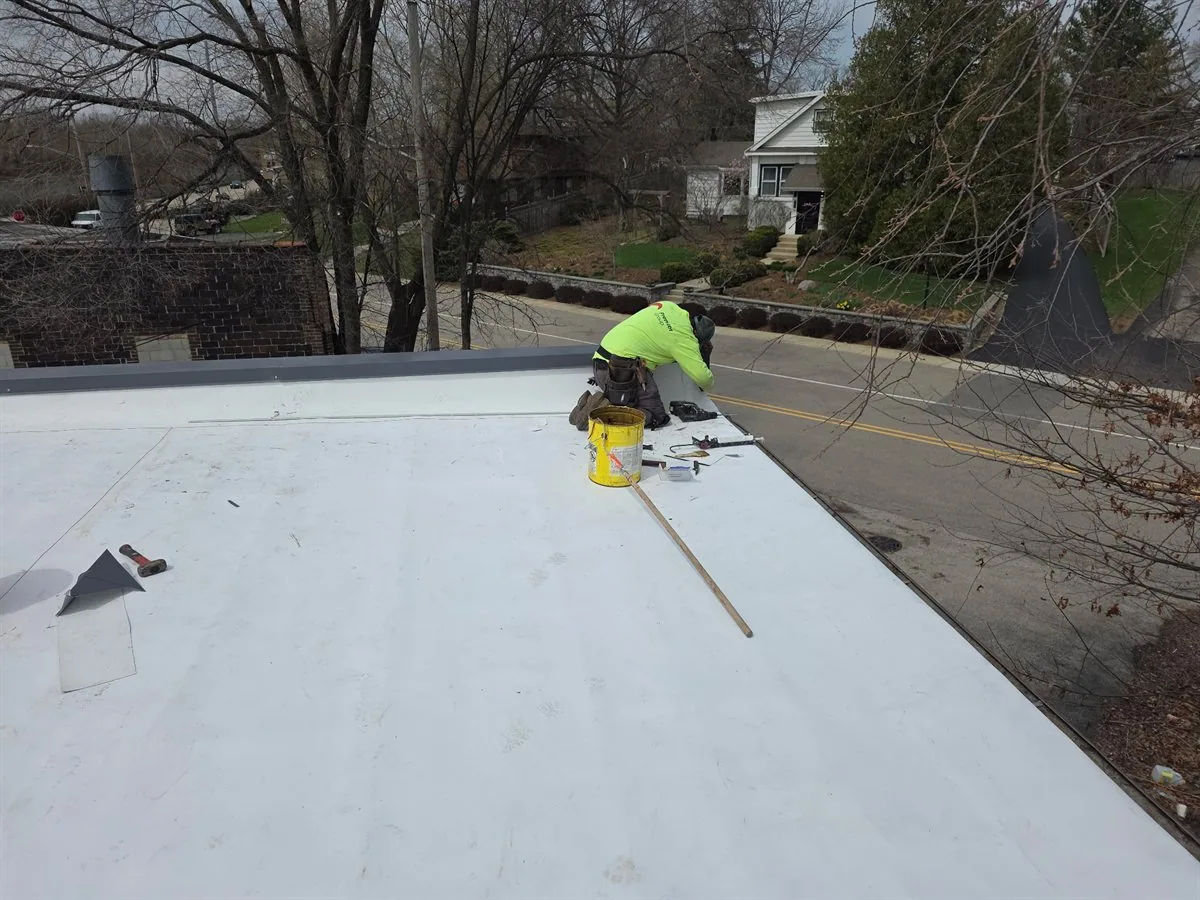
Heat-welded TPO seams require clean, consistent fusion. We check for contamination, narrow welds, edge lift, patch intersections, and abrupt transitions that can concentrate movement. A probe follows the seam without cutting into a sound sheet. When a test opening is necessary, its location and repair method are recorded so the owner can see what the sample established and what remains unknown.
For Carlisle materials, the repair detail must suit the membrane actually present and the current product instructions. A patch made with an incompatible sheet or an unprepared surface can create another boundary to monitor. Our inspection record marks the test locations and nearby penetrations, then distinguishes a seam defect from water that may have traveled below the membrane.