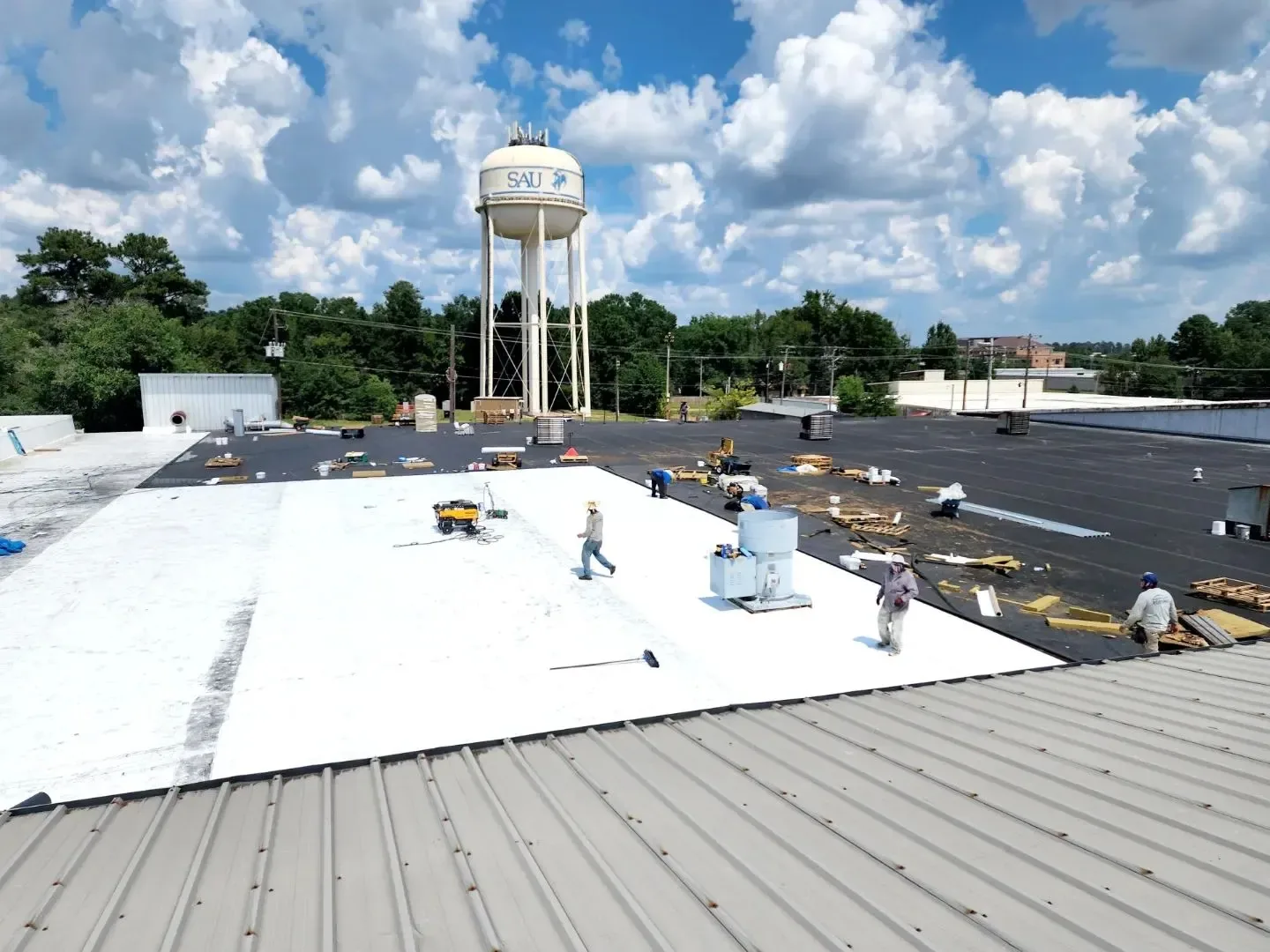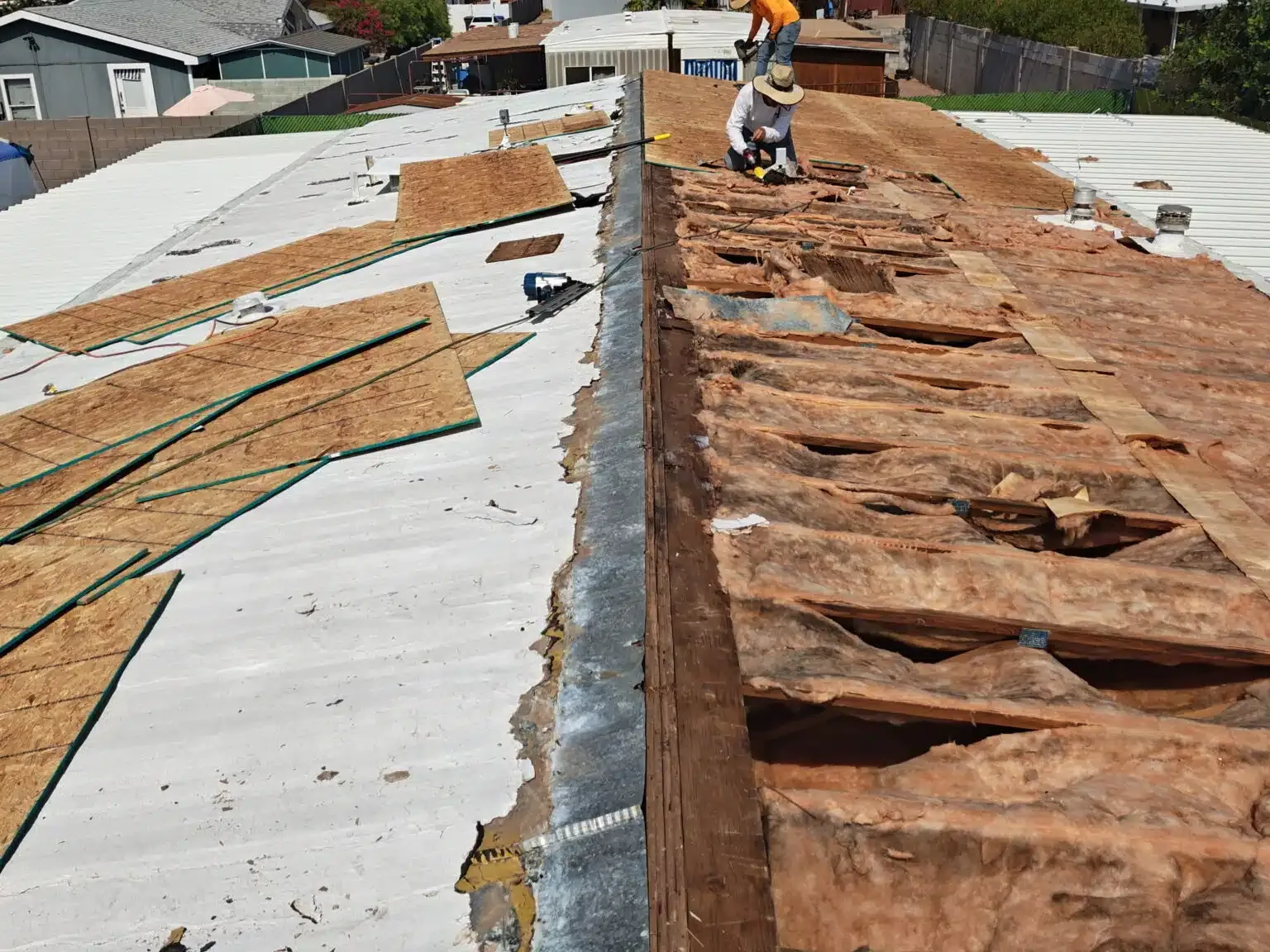
A leak over one tenant can start beyond that suite's roof line. In a Simi Valley shopping center, we trace the report through the membrane, parapets, drains, curbs, and adjoining roof sections before assigning a repair boundary. That map matters when several businesses share a roof but keep different hours. We record which space is affected, what access the tenant can provide, and whether the water appears tied to one detail or a larger wet area.
The City has supported improvements along the Tapo Street commercial corridor, including more than two dozen property-improvement projects. That is useful context for a working retail district, not a finding about any center's roof. The roof still needs its own inspection. Simi Valley's warm, dry conditions and periodic Santa Ana winds make exposed edges, sealants, and rooftop equipment worth checking before a seasonal storm tests them. A focused commercial roof inspection lets the owner separate visible damage from the water path that needs repair.
Connect each suite to a roof zone
We start with the tenant's reported room, the roof access point, and the drains or equipment serving that area. Water can travel under a membrane or along a deck before it reaches a ceiling, so a stain does not set the repair boundary. We compare roof plans, prior work orders, and any temporary patch with conditions on the surface. Photos should show the suspected entry point, nearby seams, and the transition to the next roof zone.
In a multi-tenant center, the map should also identify who can authorize access, which suite needs protection below, and when a ladder or service route can be used. A manager may need one contractor visit to inspect several reports without confusing one suite's symptoms with another. An infrared survey can help locate patterns under the right conditions, but we confirm suspect areas before opening the roof. For a leak near a wall or curb, our flashing repair work begins with that transition and follows the water path outward.
Inspect the details around tenants
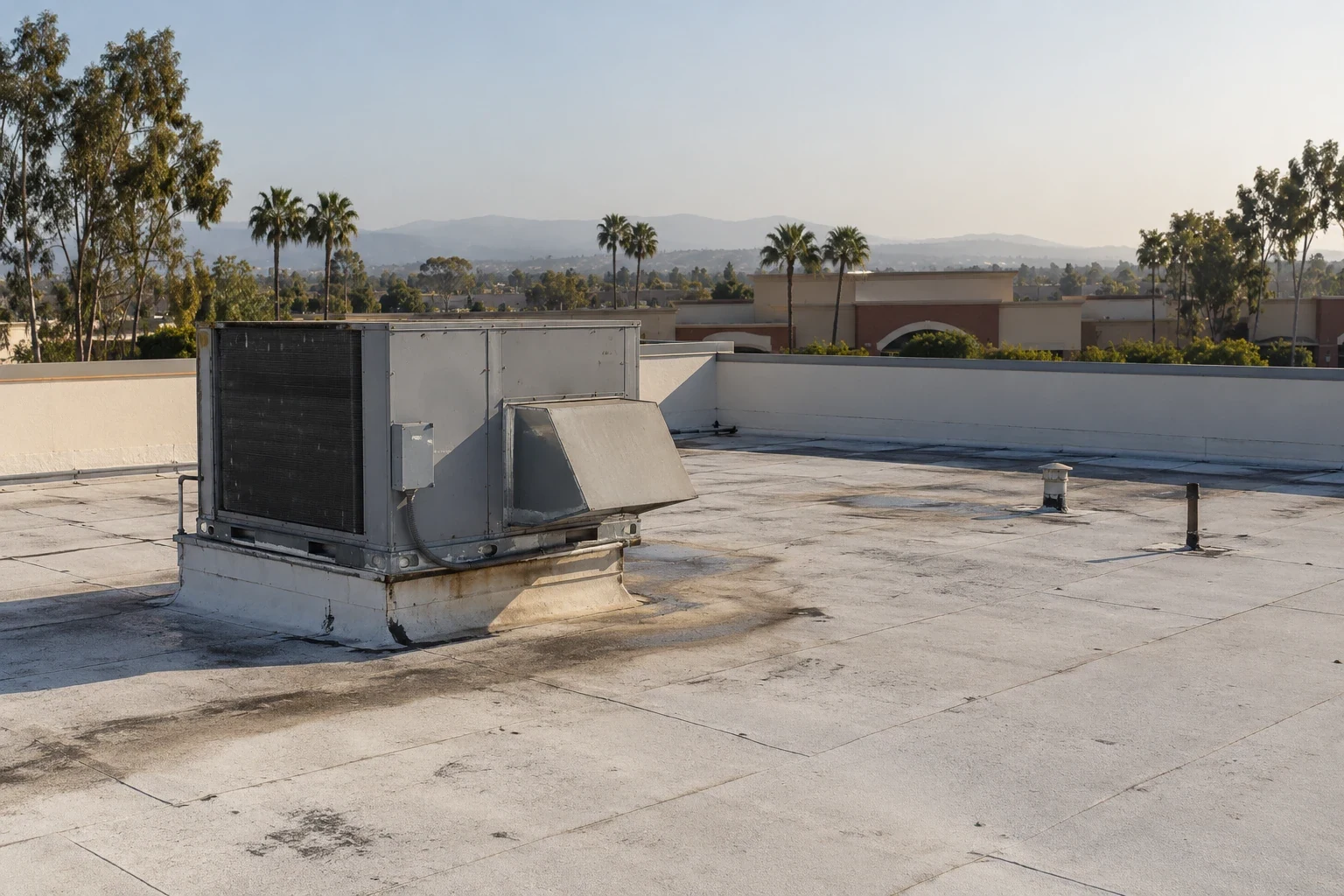
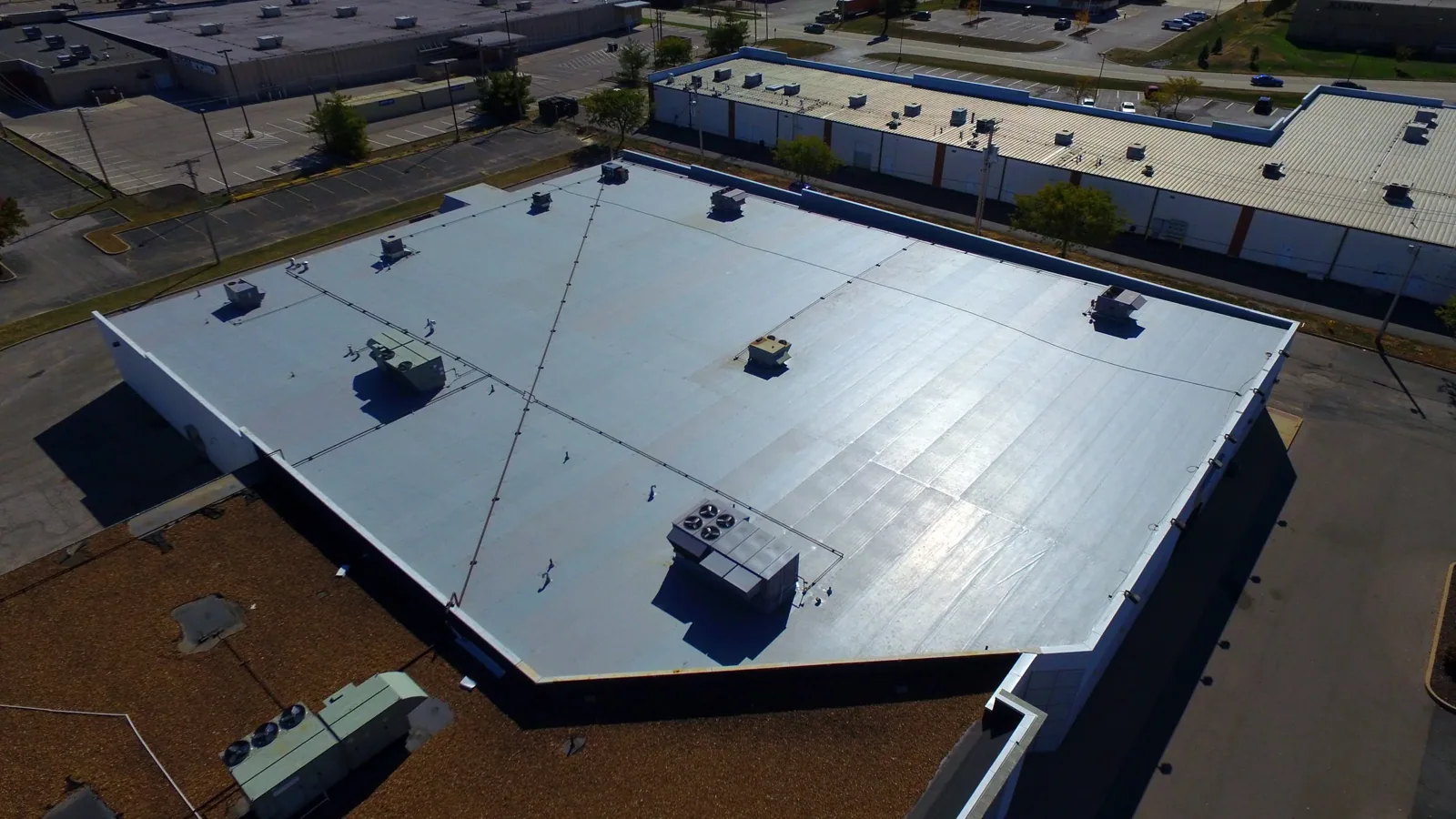
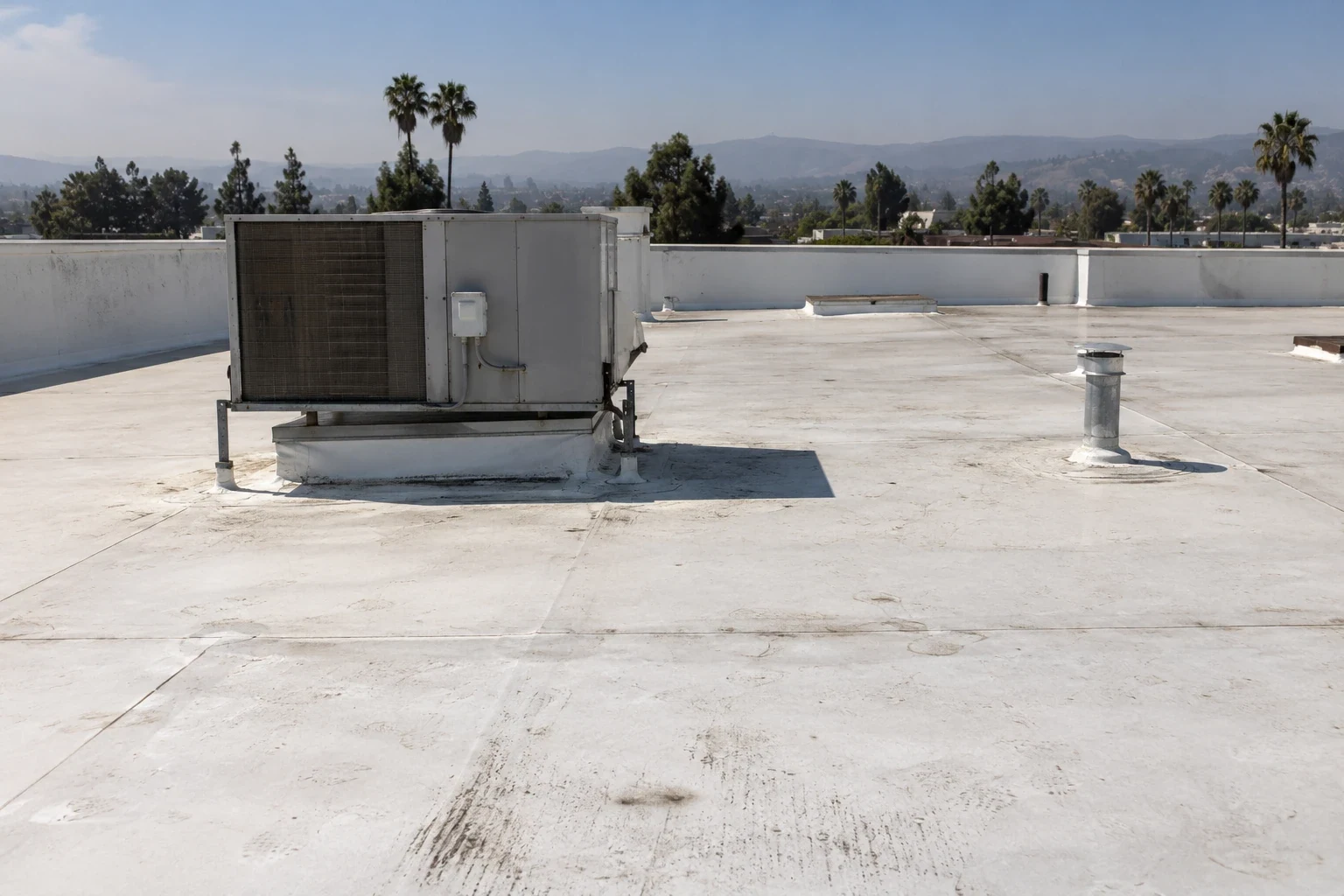
Retail roofs often share membrane fields with rooftop units, exhausts, plumbing vents, sign supports, and parapet edges. We check the seams around those interruptions, the metal at walls, the drain bowls, and any patch that has lifted or split. A kitchen report may call for checking nearby exhaust curbs and the membrane around them. A ceiling mark in another suite may point to a drain or wall transition instead. Those are different conditions, so the work record should keep their photos and test results separate.
Heat and ultraviolet exposure can age exposed materials, but a regional climate fact does not establish the condition of one roof. The City projects more days above 97.2 degrees in Simi Valley, making a dry-season review of sealants and surface transitions useful. The City also recognizes Tapo Street as a commercial corridor and records past façade-renovation activity there. For an owner managing properties around the Los Angeles Avenue and Tapo Street corridors, that street context can inform access planning; it cannot substitute for a roof walk. A written condition report with photos gives leasing and facilities staff the same repair map.