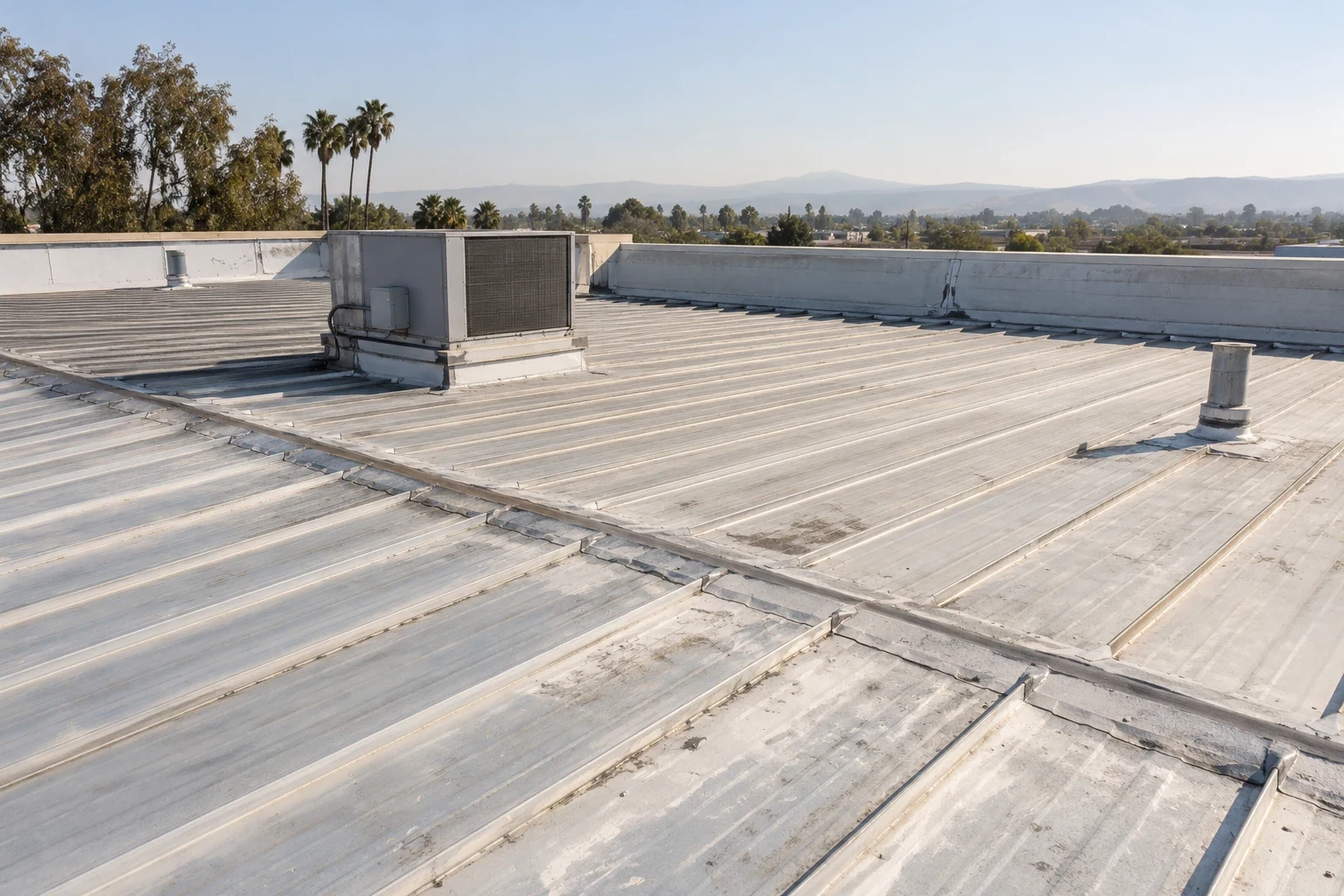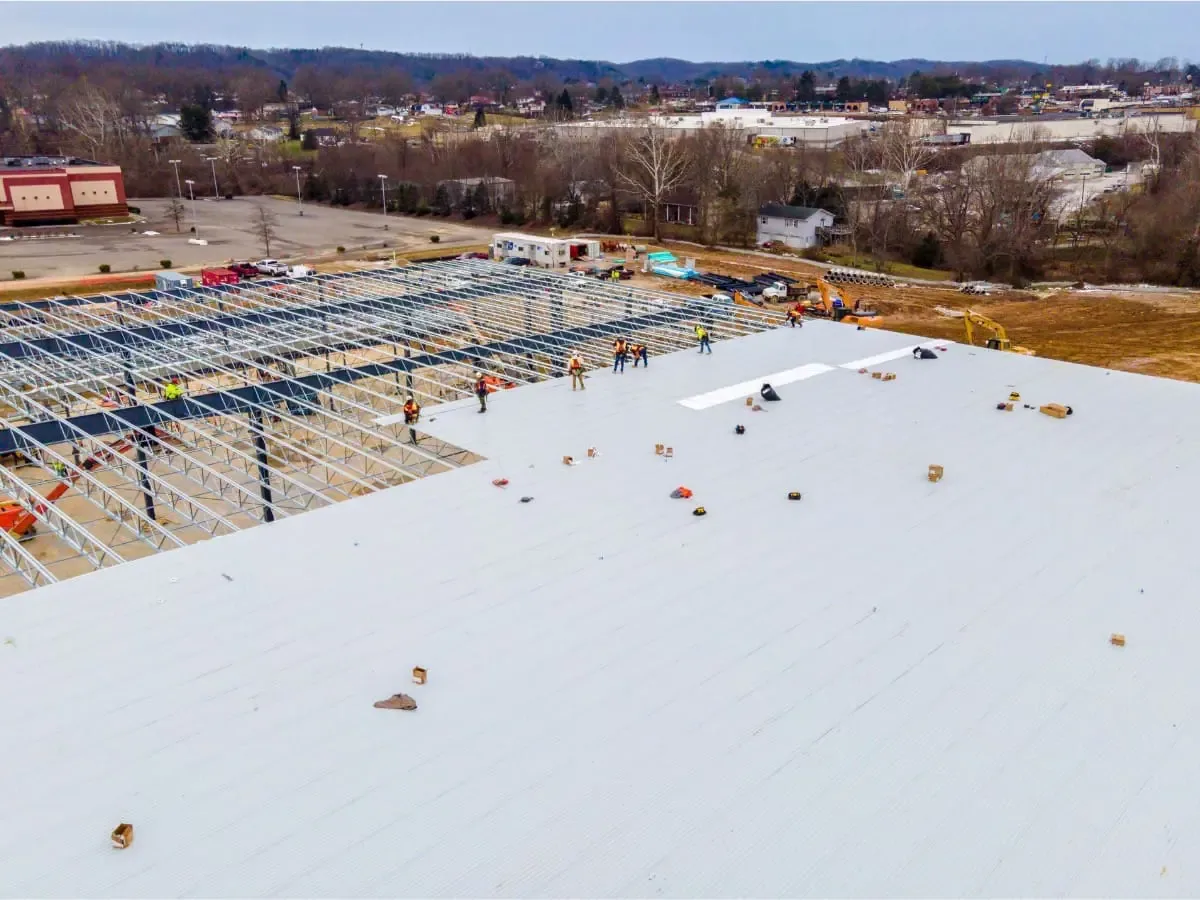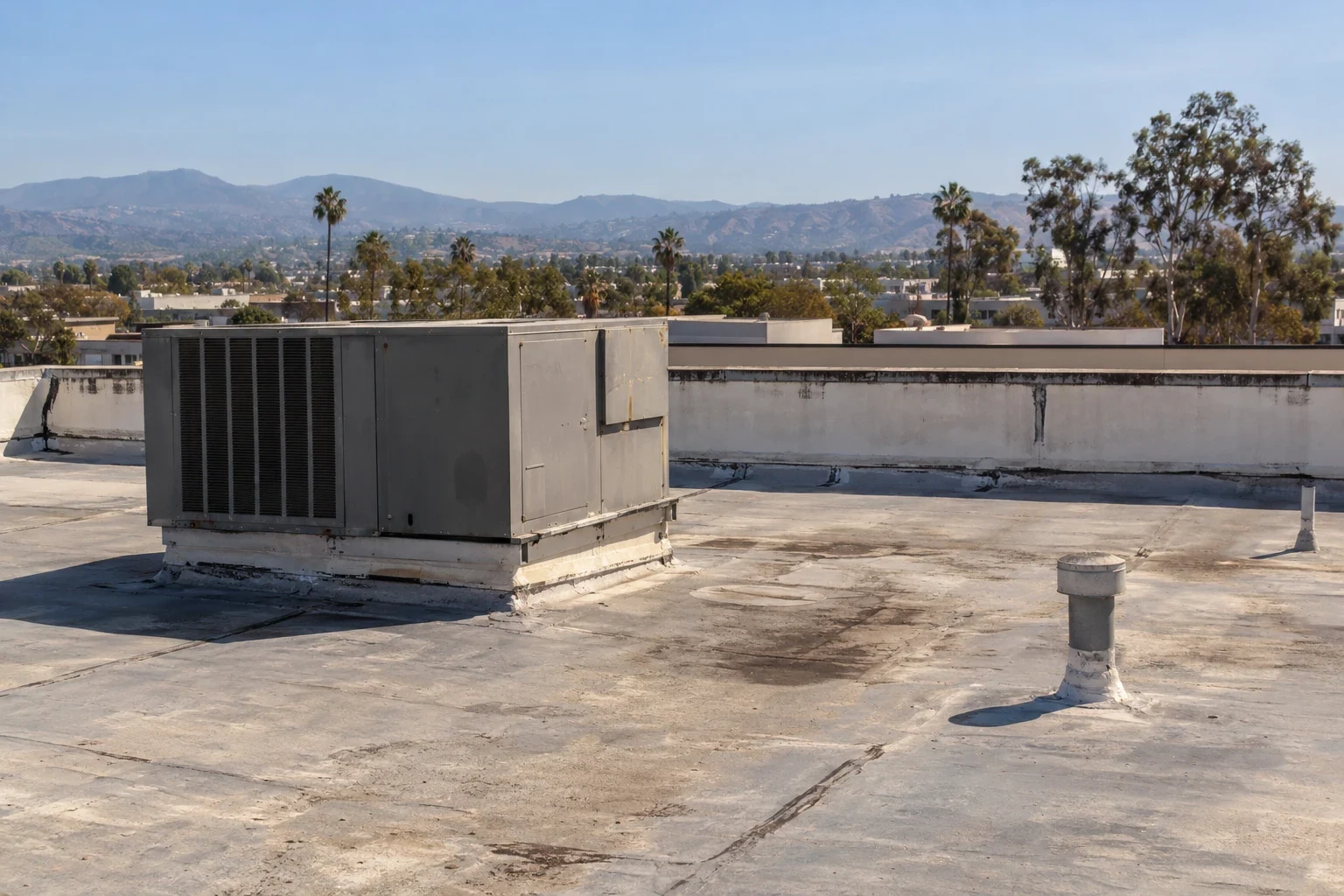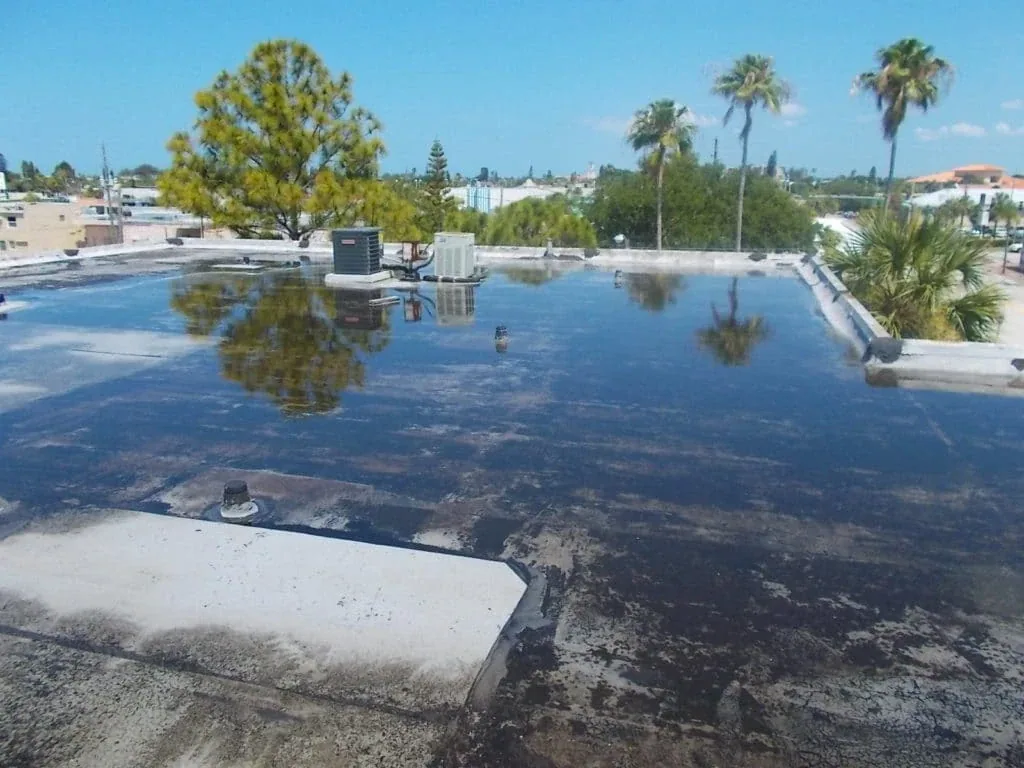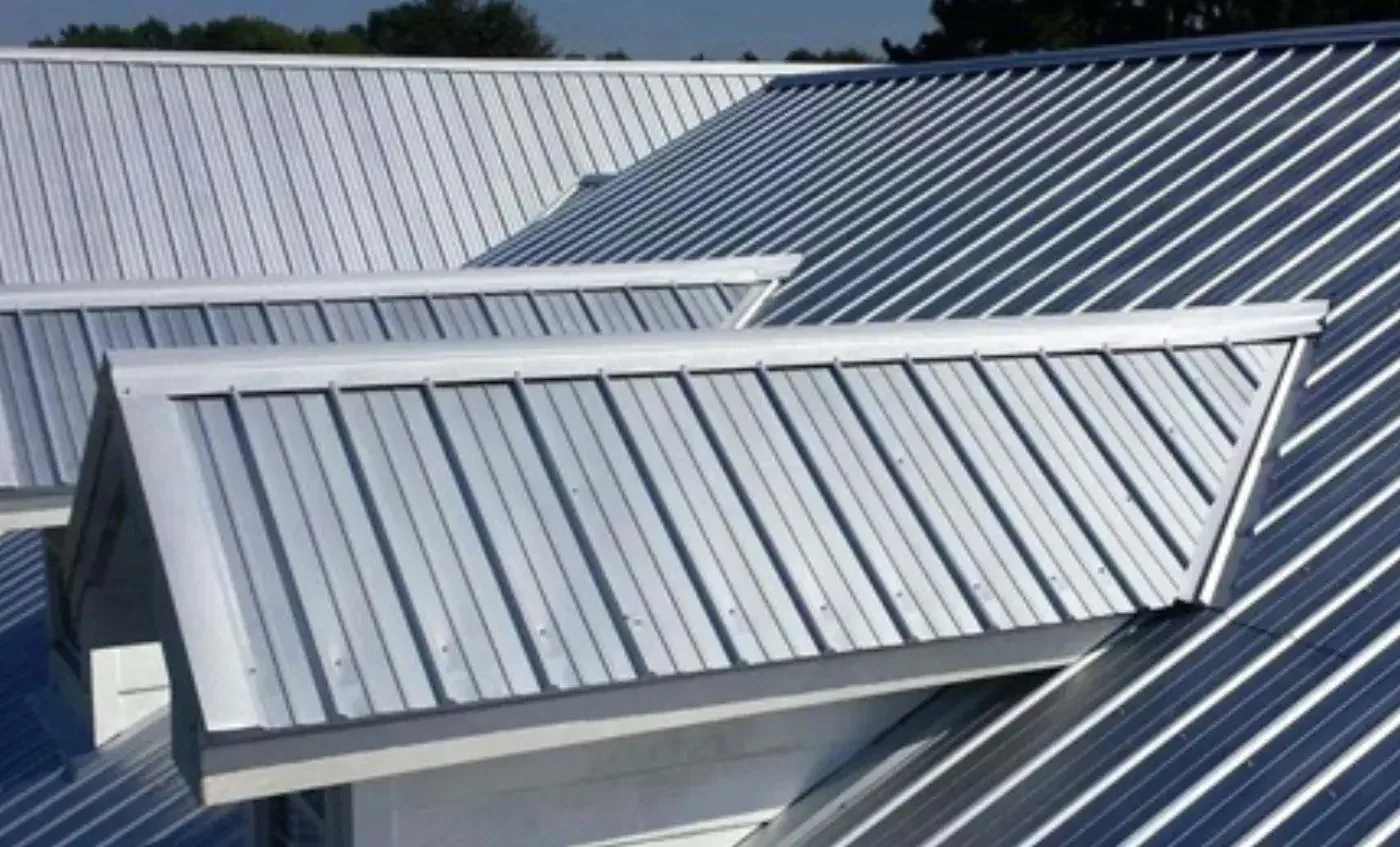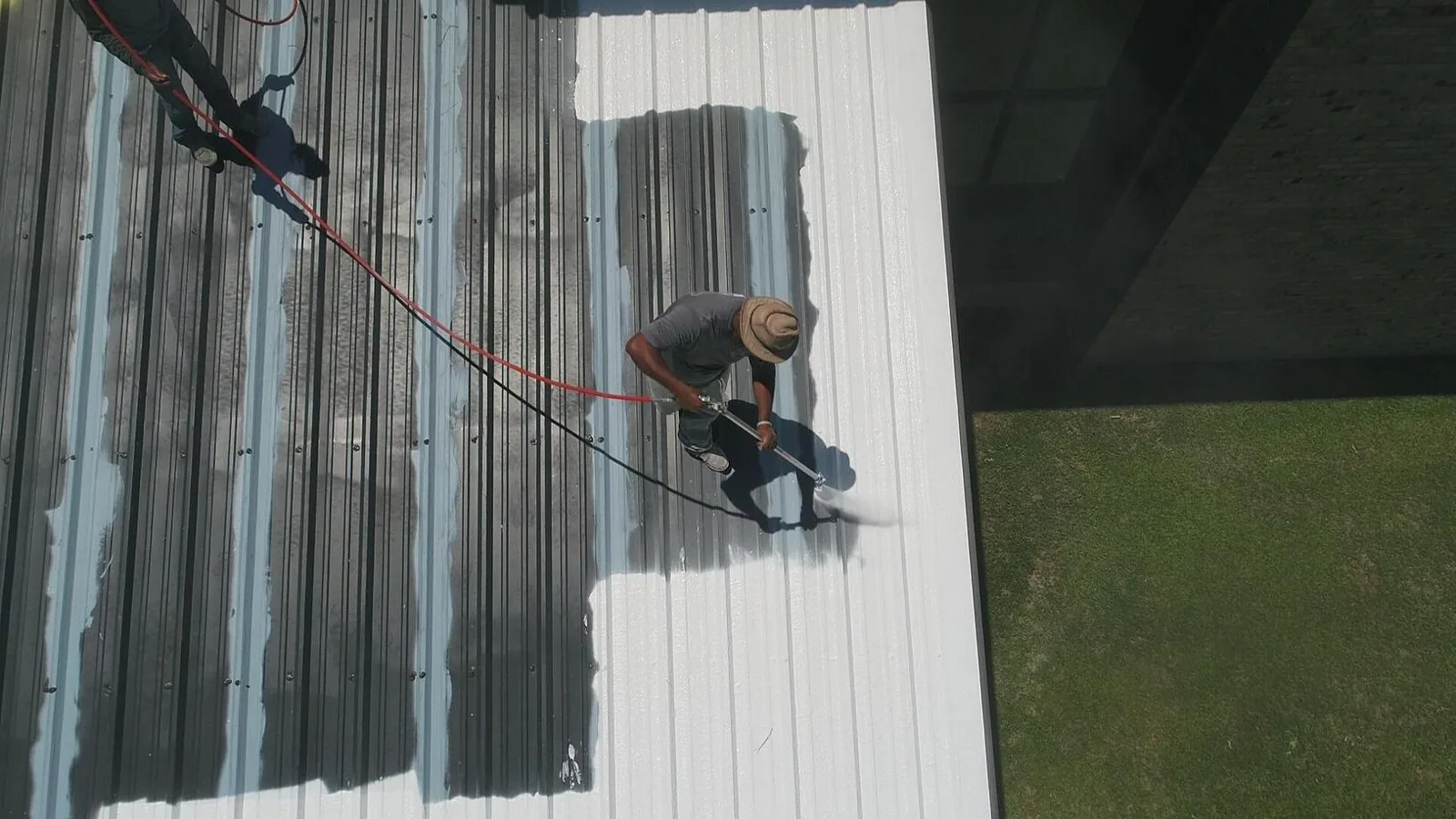
A row of backed-out screws at a metal roof lap gives the inspection a starting line. On an exposed-fastener roof in Simi Valley, we check the panel, washer, purlin, corrosion, and drainage path before deciding whether to replace fasteners or build a retrofit assembly. A new screw alone cannot correct an enlarged hole or a deteriorated support. We record which connections still hold and where the panel has moved.
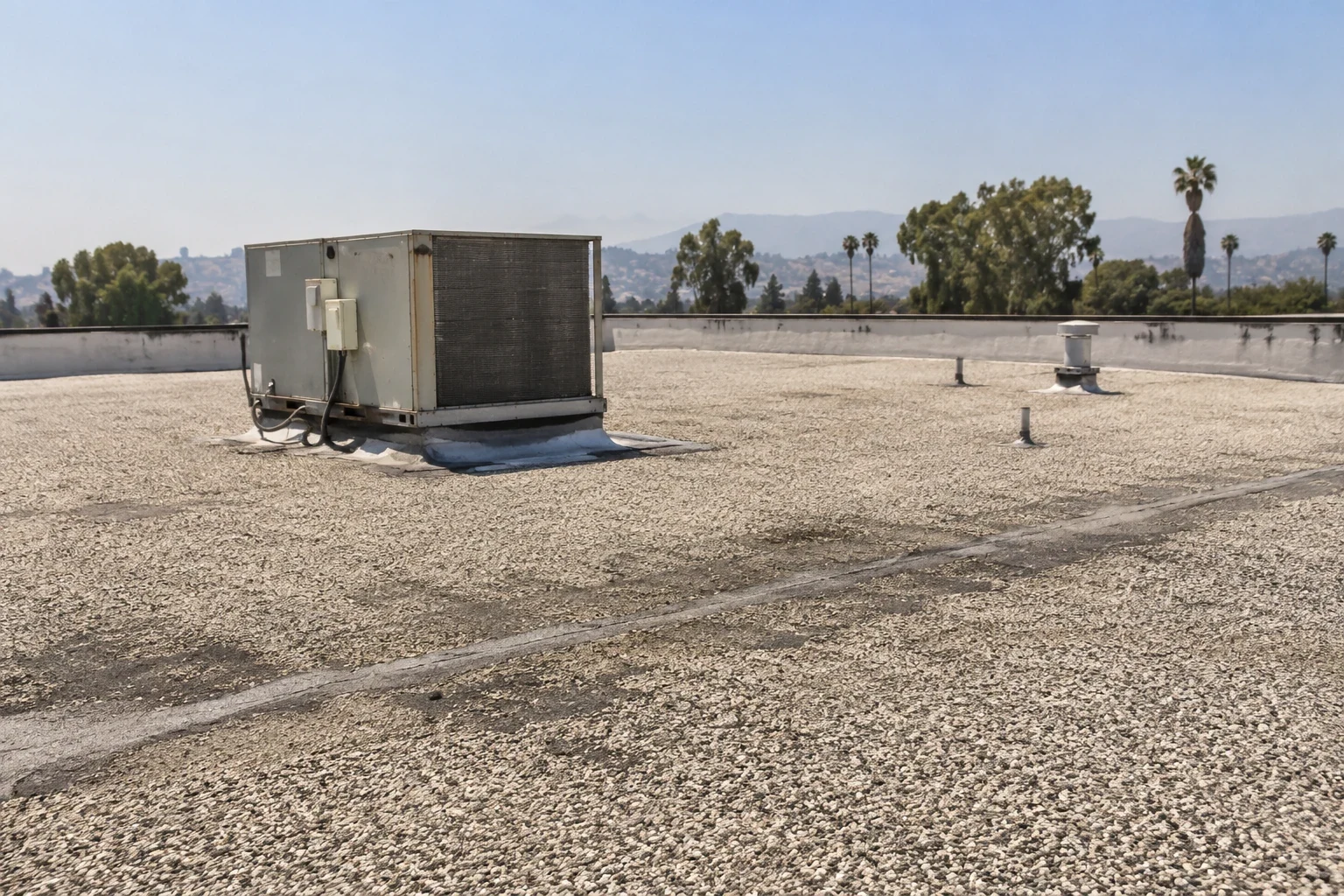
The City projects hotter summer conditions and more days above 97.2 degrees later this century. That context makes panel movement and gasket condition worth documenting, but the roof itself determines the scope. We inspect the existing attachment and nearby transitions, then prepare a roof inspection with a defined repair boundary and next decision.
Inspect screws and panel laps
An exposed washer that has cracked, compressed unevenly, or separated from the panel can allow water past the fastener. We examine screw alignment, pullout, corrosion, panel distortion, and the material below the fastener. A replacement screw must engage sound support and suit the panel profile. Oversizing a fastener to catch damaged metal may leave the connection unreliable. We mark representative conditions by roof zone before estimating a broader fastening program.
At side laps and end laps, we check sealant condition, overlap, and movement along the connection. Wind and temperature changes can work a loose lap, while debris and standing water can accelerate corrosion. A repair should restore the panel's water-shedding path and attachment, not merely close the visible line. The report identifies panels where a local correction is possible and those where the substrate needs further examination.
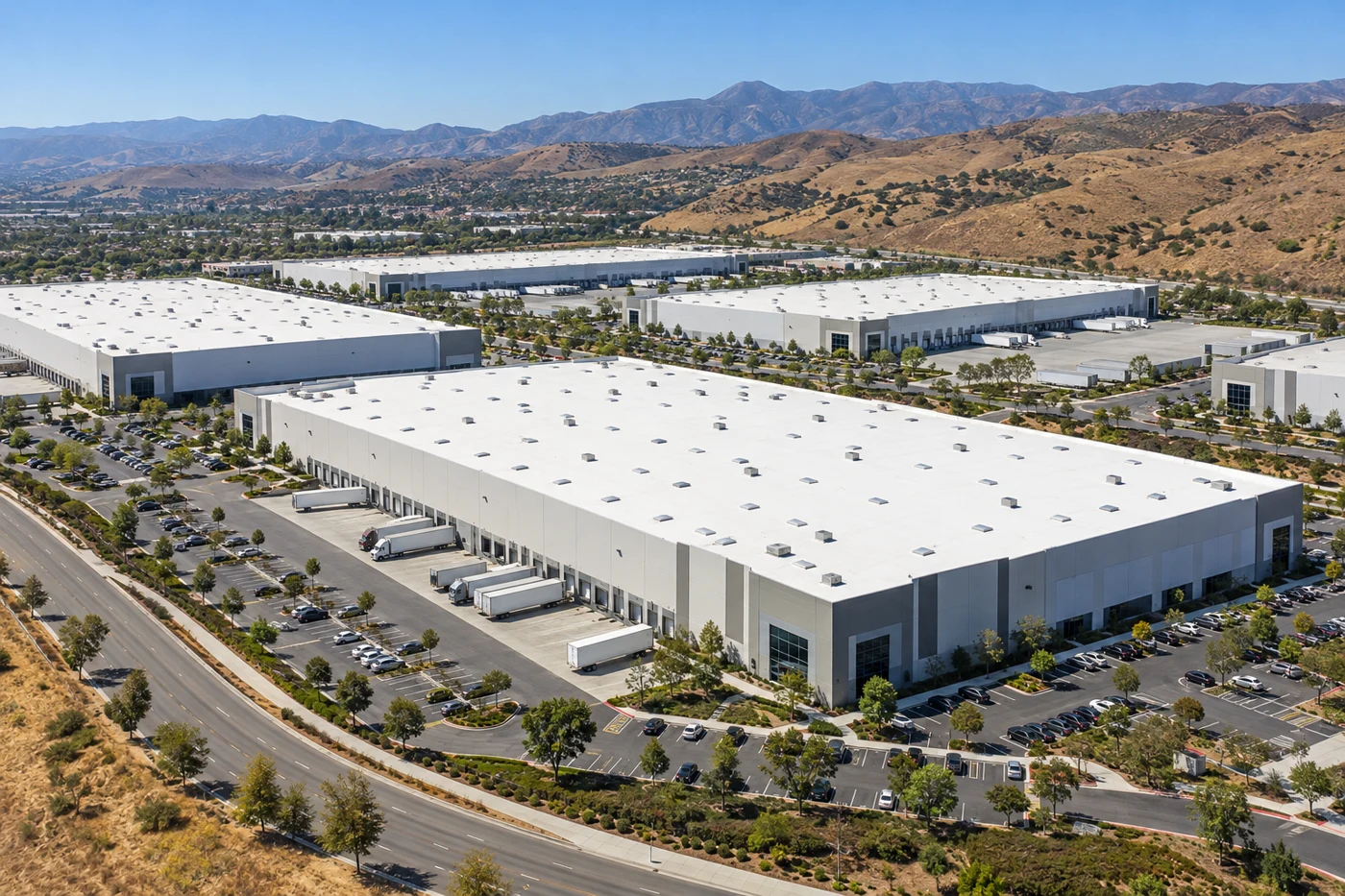
The City describes Simi Commerce Center as the alternate name for Voit Simi Business Park, a commercial and industrial area. That setting can include varied operations and roof access requirements. We confirm the actual equipment, service routes, and work limits at each property. The Simi Commerce Center area is a planning reference, not a substitute for measuring a panel or identifying its purlin.
Find the support below the sheet
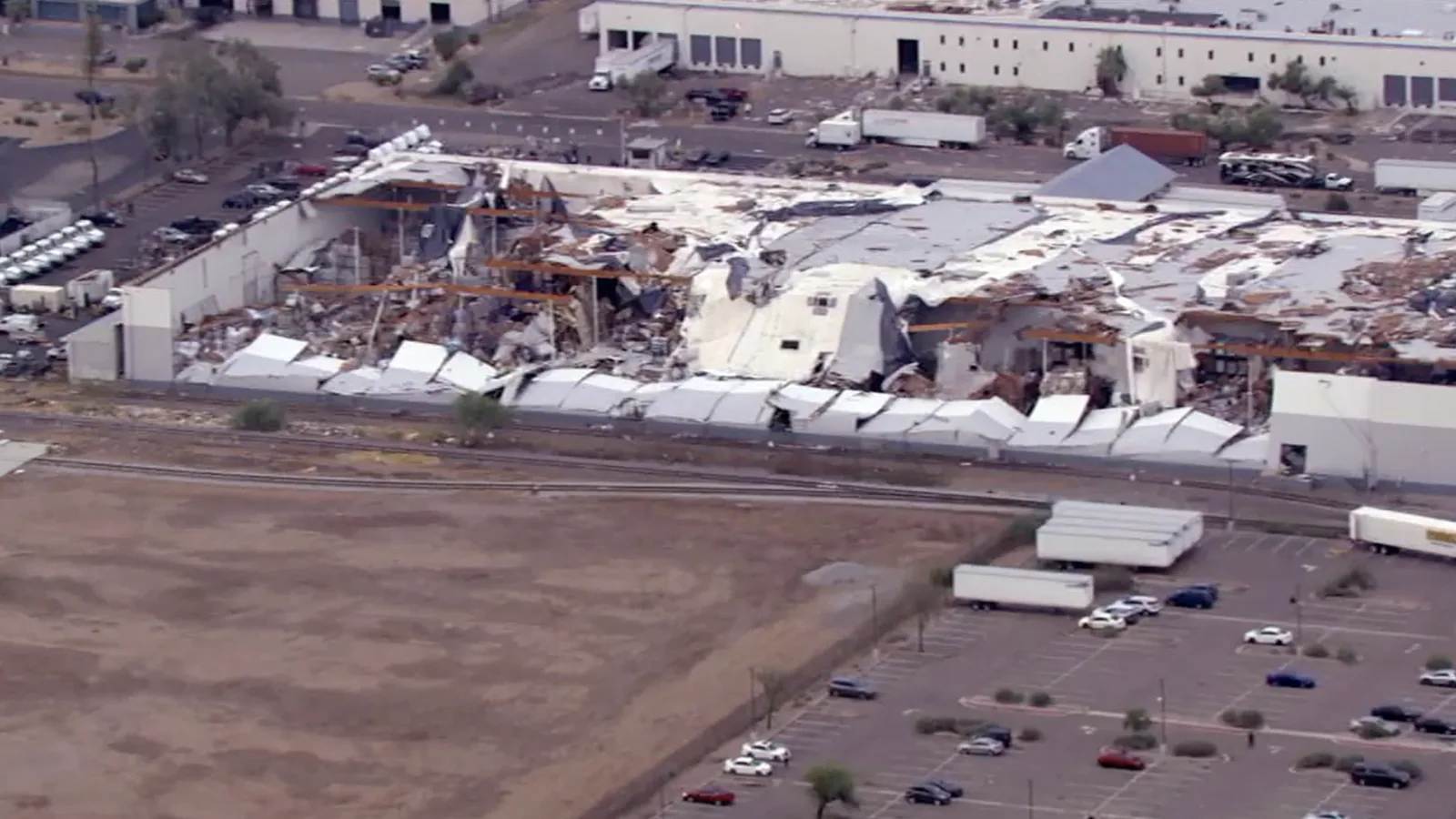
A fastener that spins without tightening may have missed the framing or lost its grip. We locate the structural support pattern and inspect the metal around each suspect connection. When the deck or purlin cannot be evaluated from the surface, a controlled opening may be required. We plan that opening with a dry-in method and approval contact before removing the panel. The exposed condition shows whether the connection can be repaired or whether the support itself requires review.
Corrosion needs a boundary. Surface oxidation at a cut edge differs from section loss around a fastener, panel seam, or valley. We document its extent and whether water has trapped beneath the sheet. If the panel remains sound, localized repair and coating may be appropriate under a specified system. If corrosion extends through the sheet or affects the attachment pattern, replacing the affected panels or evaluating a recover may be clearer.
Los Angeles Avenue includes multiple commercial properties and active street work on a defined segment between First Street and Erringer Road. We use this corridor context to plan deliveries and lift placement only after confirming property access. It does not reveal a building's structural system. The inspection record ties any proposed retrofit to visible panel, framing, and drainage evidence.