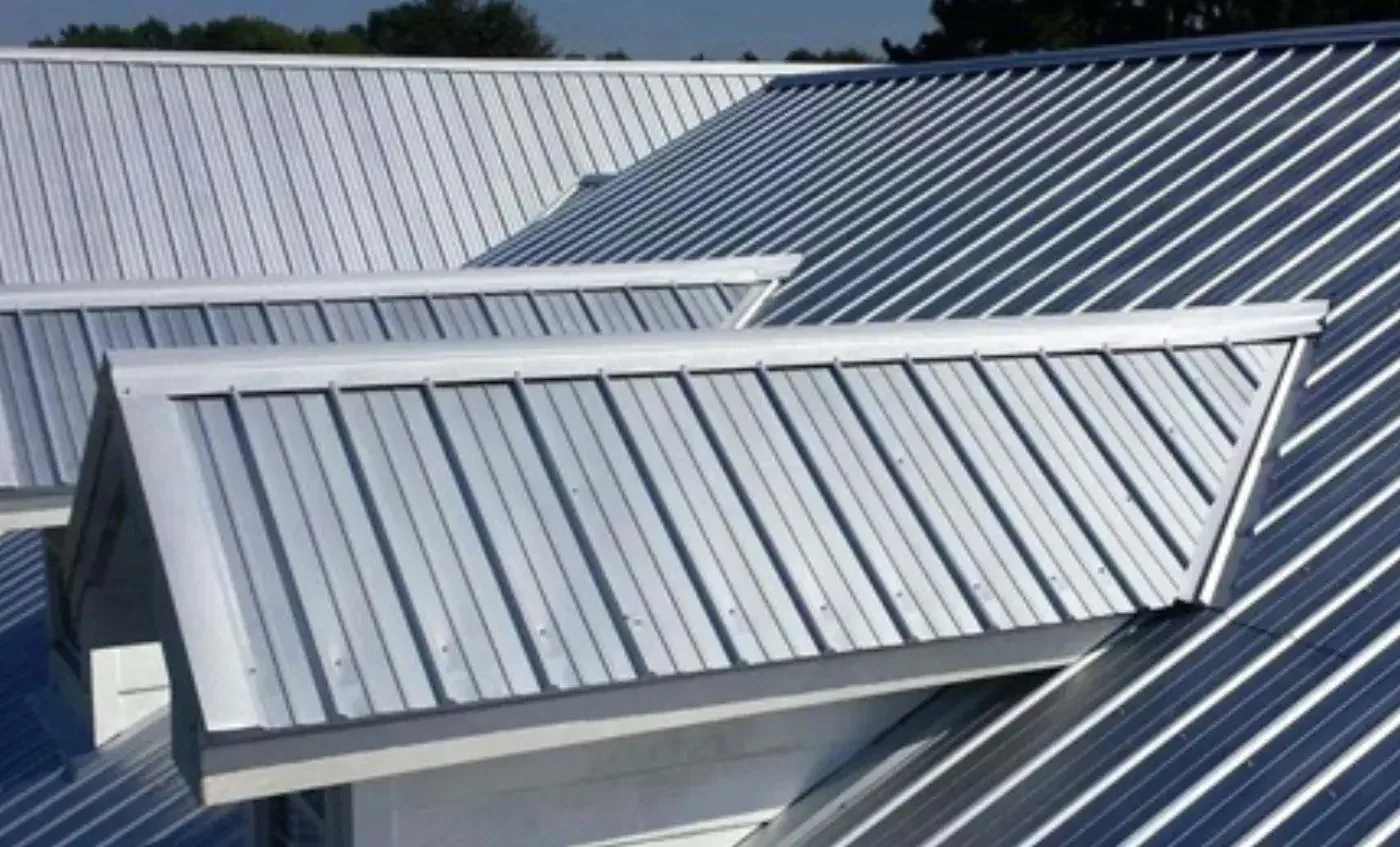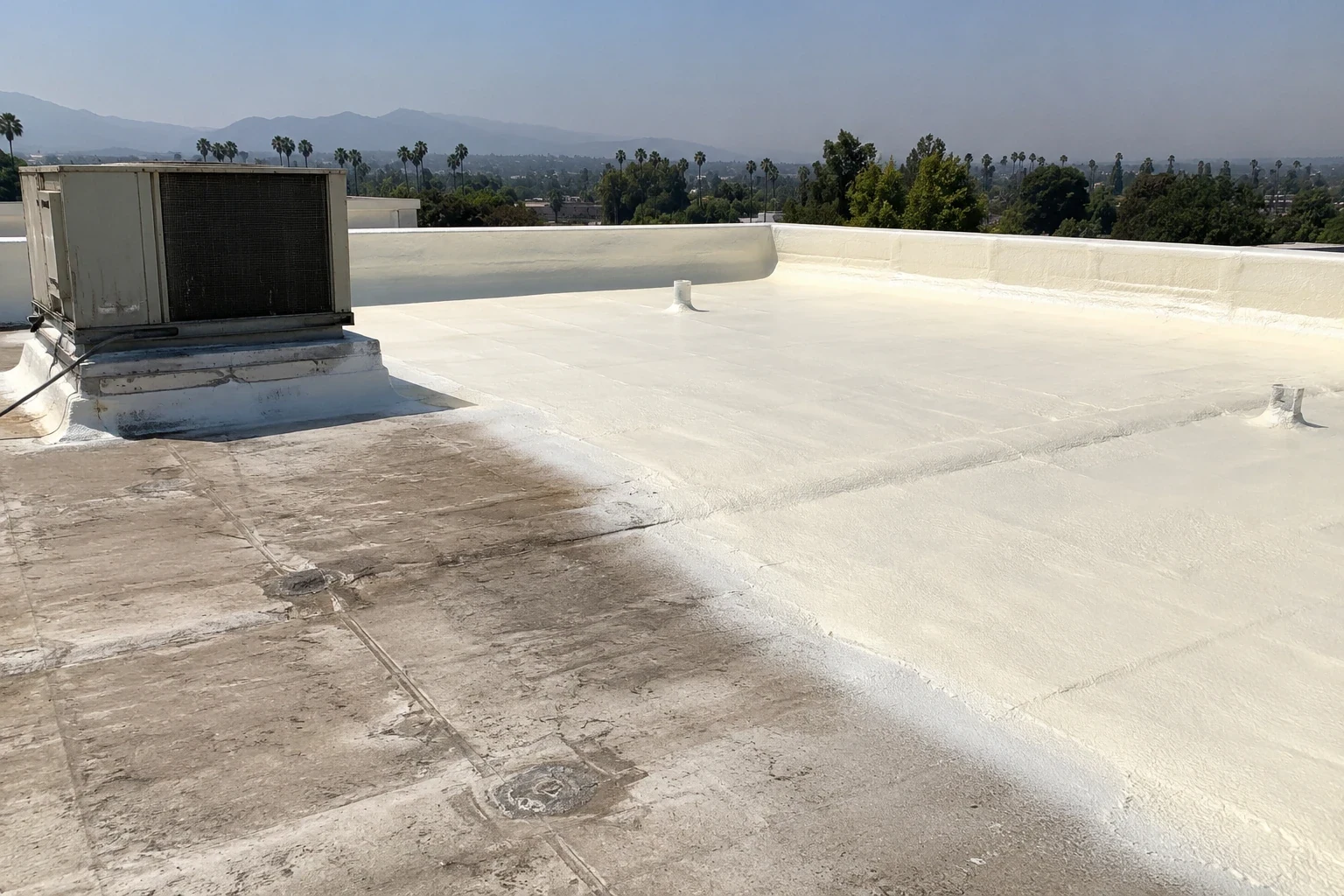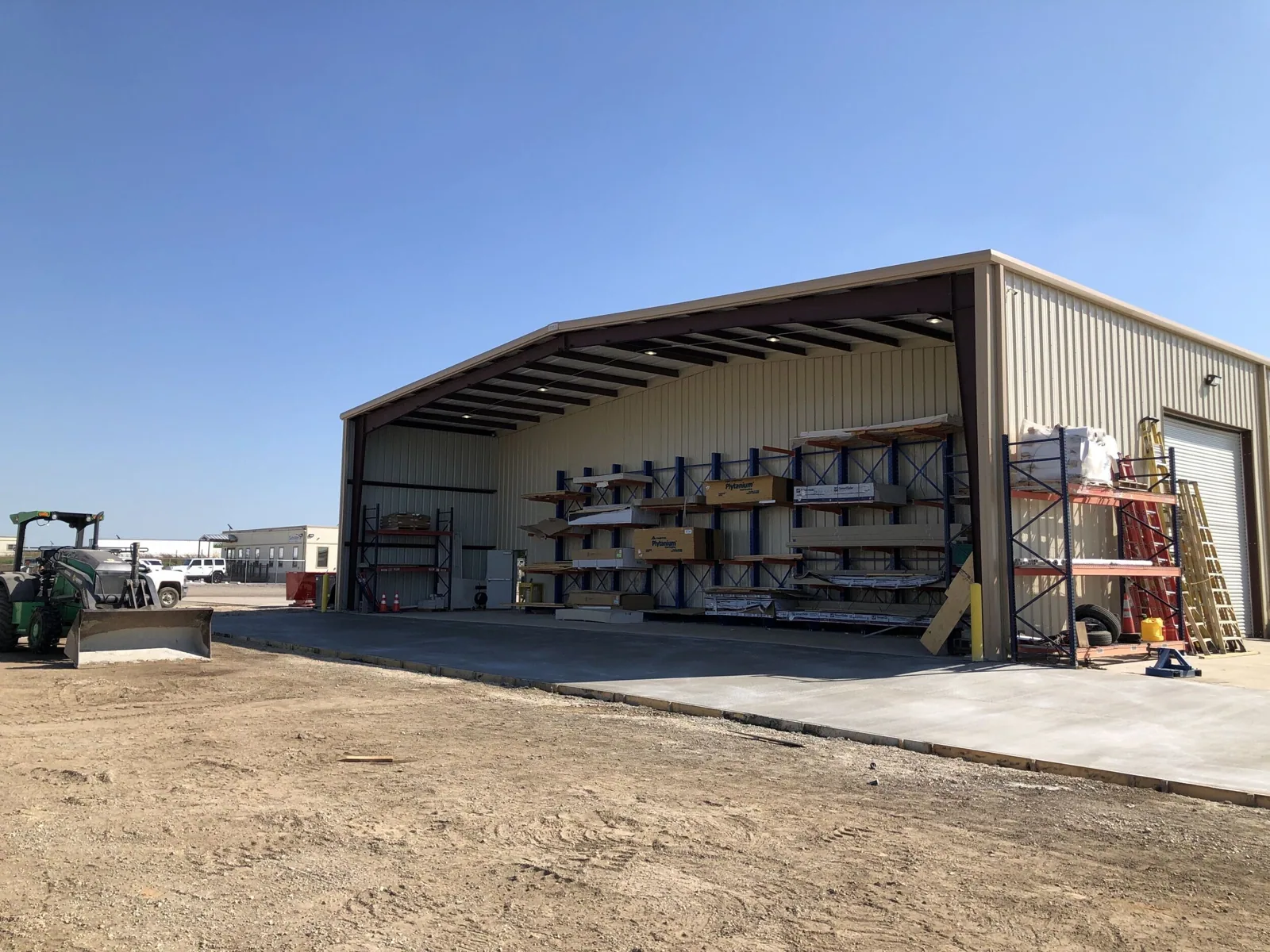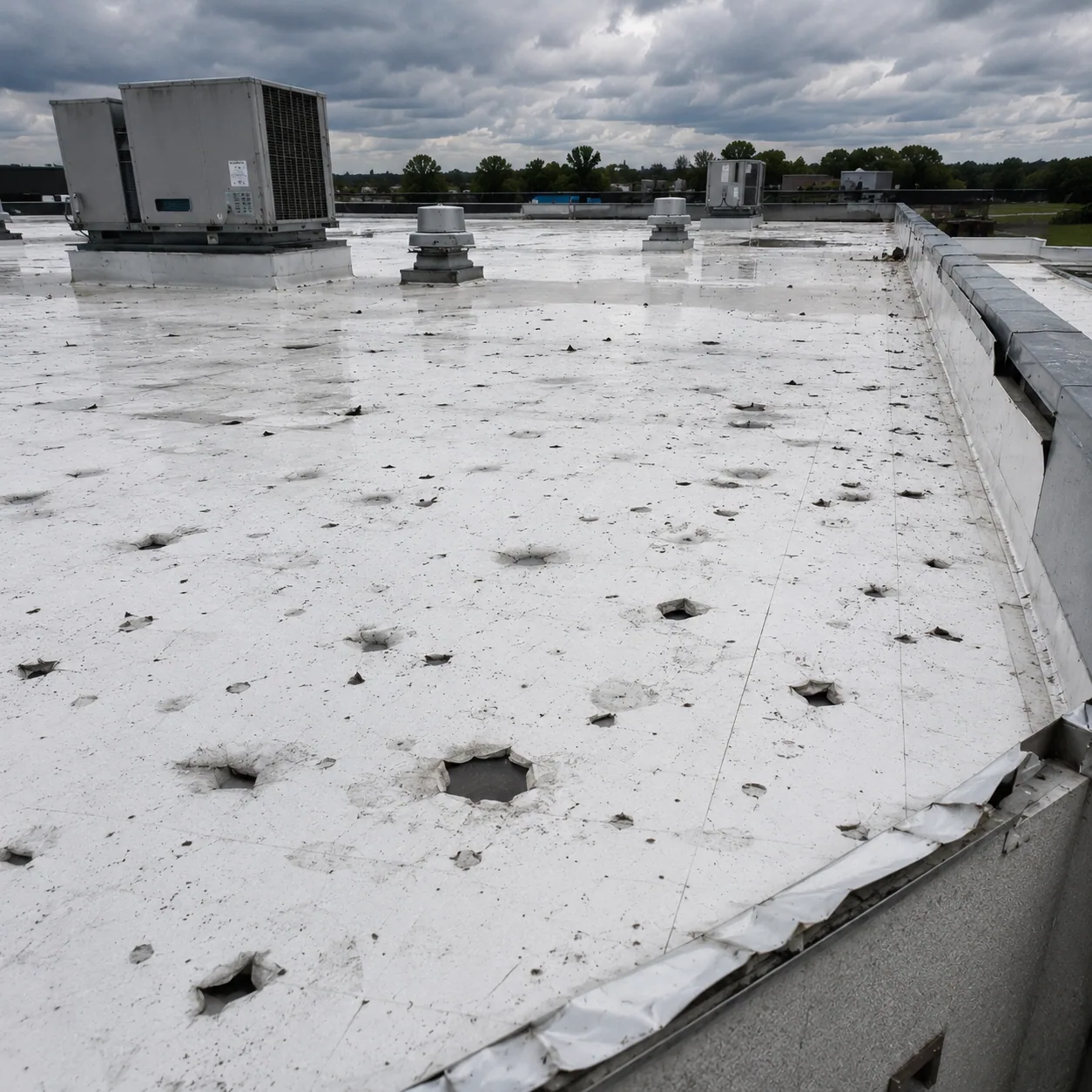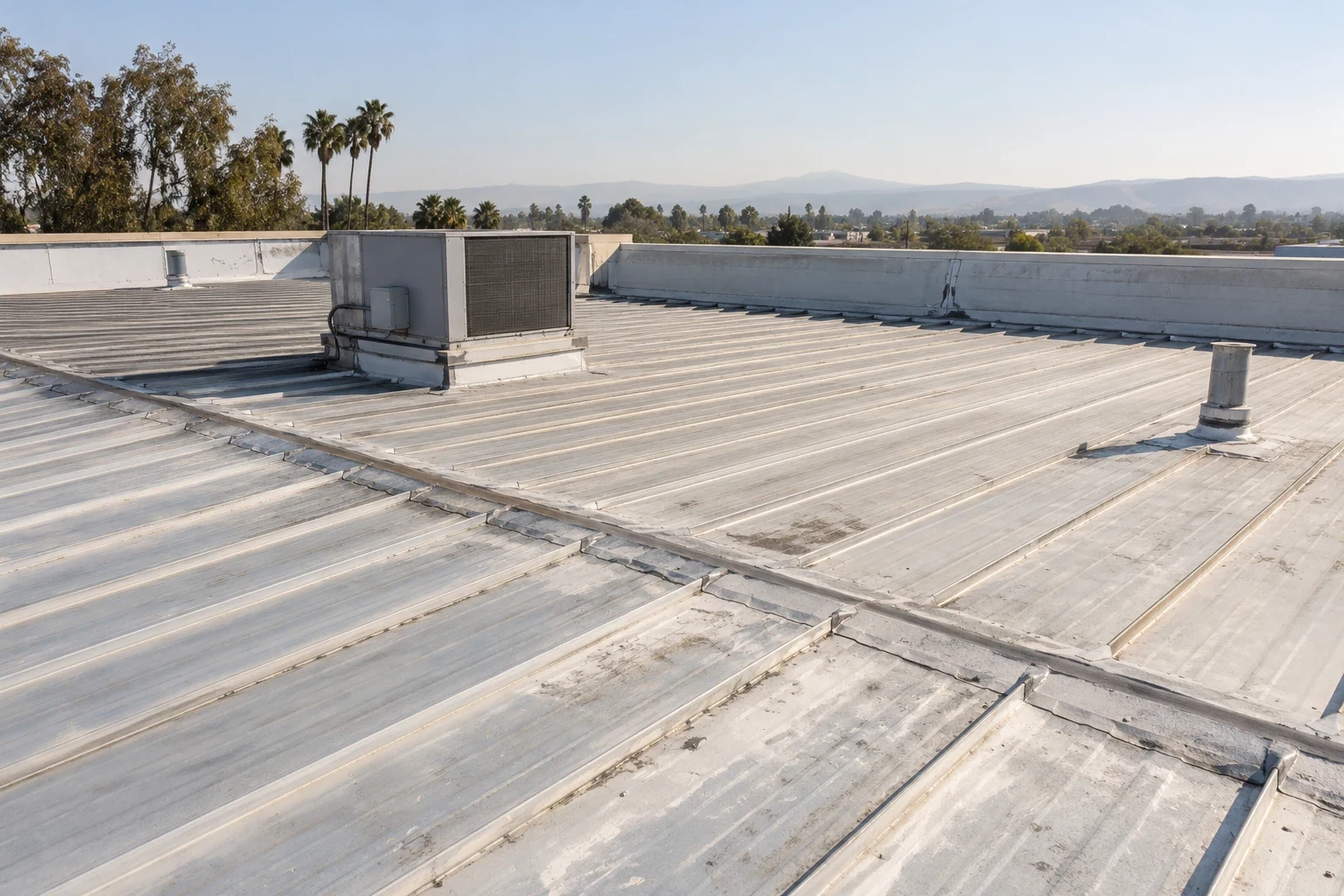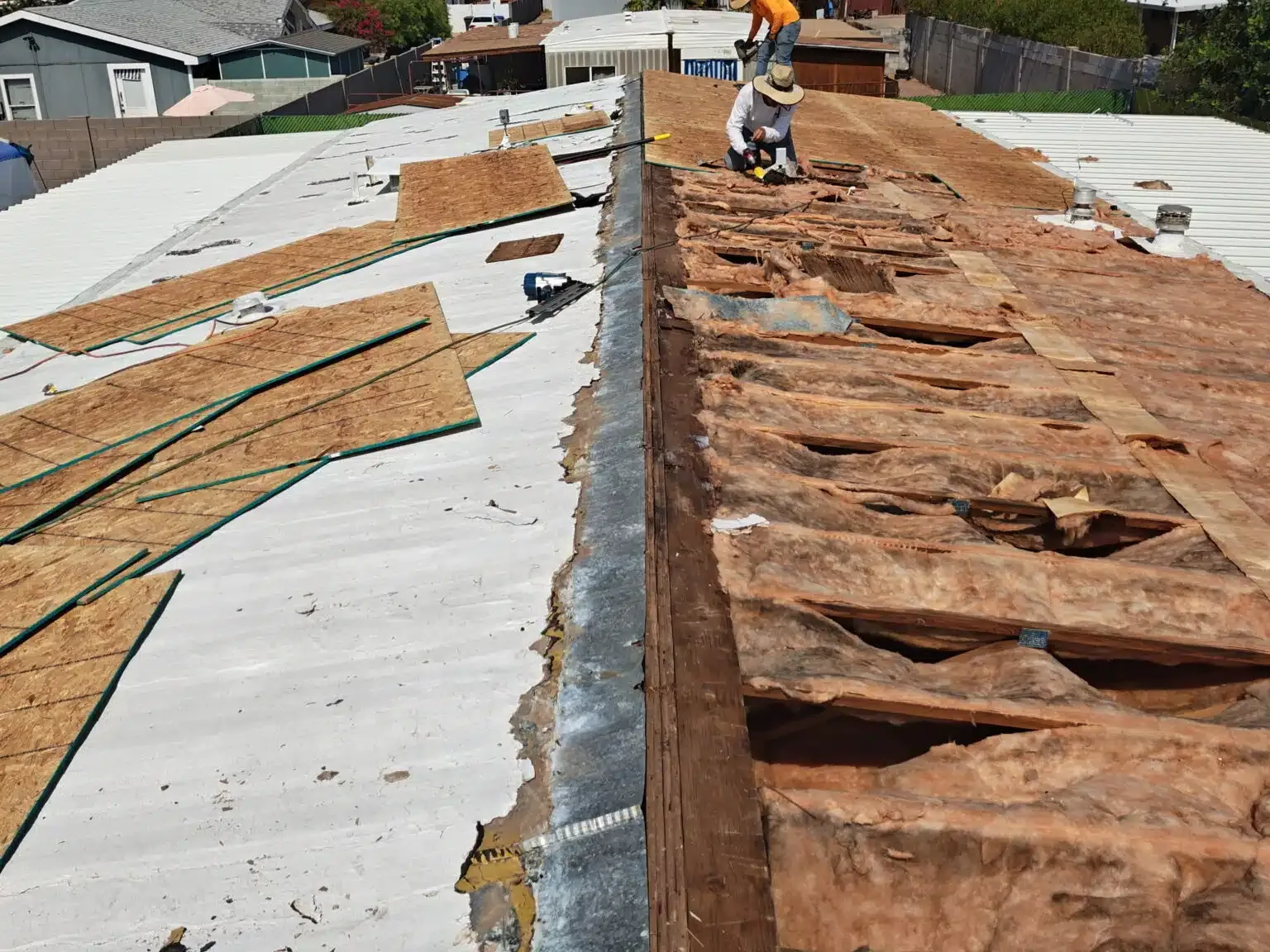
A raised seam that has opened at a rake changes the inspection boundary. On a standing seam metal roof in Simi Valley, we check panel engagement, clips, flashing, and the substrate before recommending a repair. The seam is only one part of the assembly. Water can enter at a penetration, travel along a concealed underlayment, then appear far from the roof opening. We trace the condition and record where the panels still move as designed.
The City's climate projections point to hotter summer conditions ahead. Metal panels expand and contract with temperature, so clip travel and movement joints belong in the inspection record. That local projection does not predict damage on an individual roof. We examine the installed details and prepare a commercial roof inspection that gives the facility manager a defined next decision.
Panel travel and clip attachment
A long metal panel needs room to change length without tearing at its fasteners or pulling the seam apart. We identify whether the roof uses fixed or sliding clips, how the panels terminate, and whether movement has marked the edge details. Oil canning, waviness, or a shallow crease can reflect several conditions. The surface appearance alone does not determine whether the panel has lost performance. We compare the pattern with seams, attachment points, and the roof geometry.
Where a panel has buckled near a fixed point, we inspect the clip line and end conditions. A loose fastener on an exposed-fastener panel is a different repair from a standing seam clip that has slipped under the sheet. We do not substitute one detail for the other. Records of the installed profile and manufacturer details help set the repair method. If the profile is unknown, we document the measured shape and seek confirmation before specifying replacement panels.
The West End Specific Plan area lies along State Route 118 between First Street and Oak Park, with Los Angeles Avenue and Easy Street on part of its southern edge. Those broad commercial and industrial settings have varied property layouts. We plan roof access and panel handling for the actual building, then note where a metal retrofit would depend on existing seam height and attachment.
Seam integrity and water entry
A standing seam keeps the panel joint raised, but its condition depends on the seam profile, field engagement, clips, and end details. We check for disengaged locks, splits, distorted ribs, sealant failure at transitions, and corrosion where dissimilar materials meet. A seam can remain closed through most of its run and still open at a corner or penetration. We record the location and length instead of calling the entire roof failed from one defect.
Water entry at a curb or pipe boot requires attention to both the panel cut and the flashing transition. A field bead of sealant cannot replace a formed closure or properly integrated flashing. We check whether the panel can be lifted safely, whether the clip line is accessible, and how the repair will shed water. The written scope describes the panel section, closure, and finish work. A related flashing failure repair may be needed where the opening is at a transition rather than along the seam.
At Tapo Street, the City reports façade and street-revitalization activity along an established commercial corridor. That does not identify roof types. It does make circulation and property access worth confirming when deliveries or lift placement are proposed. We coordinate the access plan with the facility manager and keep the seam findings separate from assumptions about nearby properties.