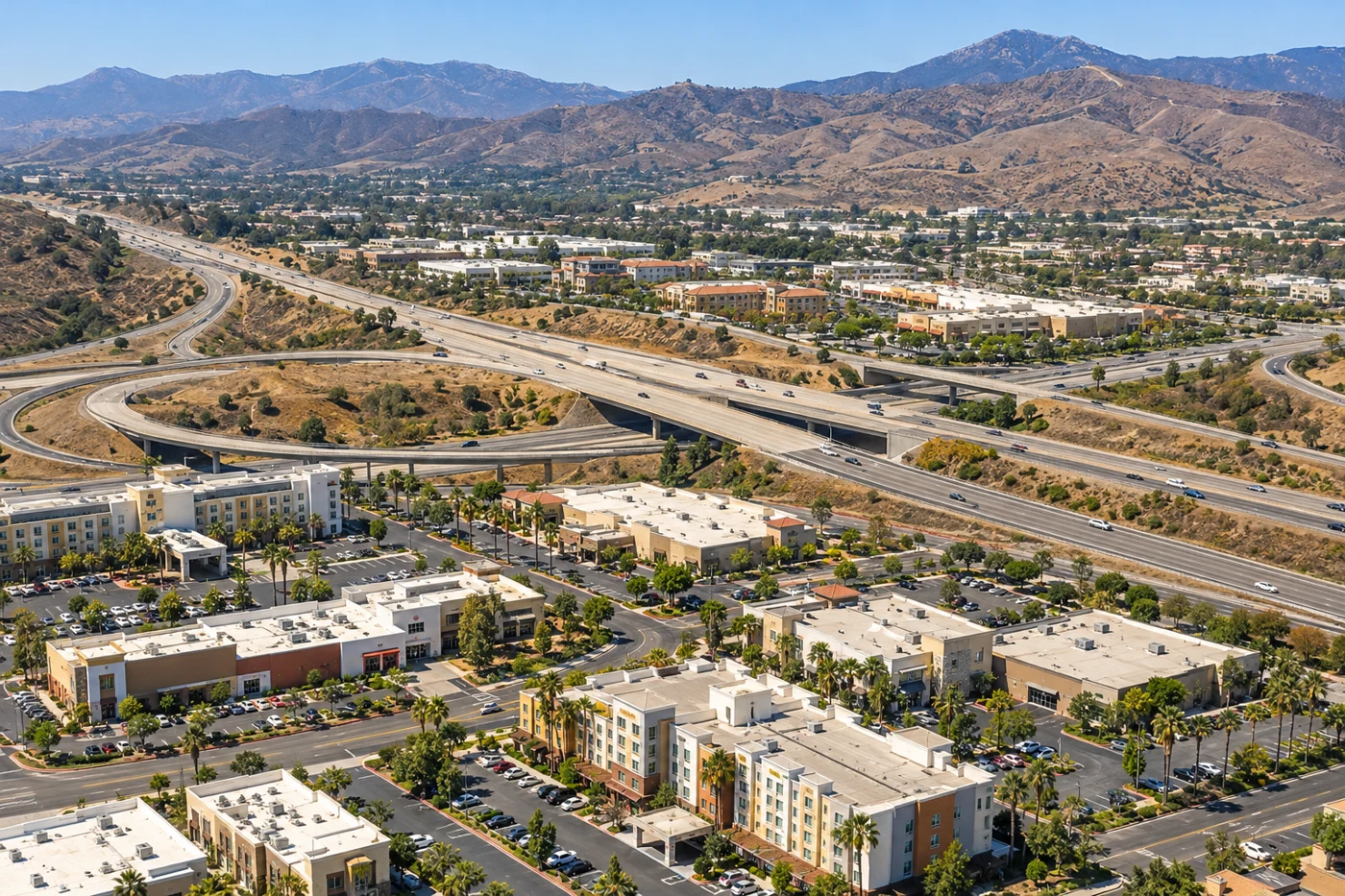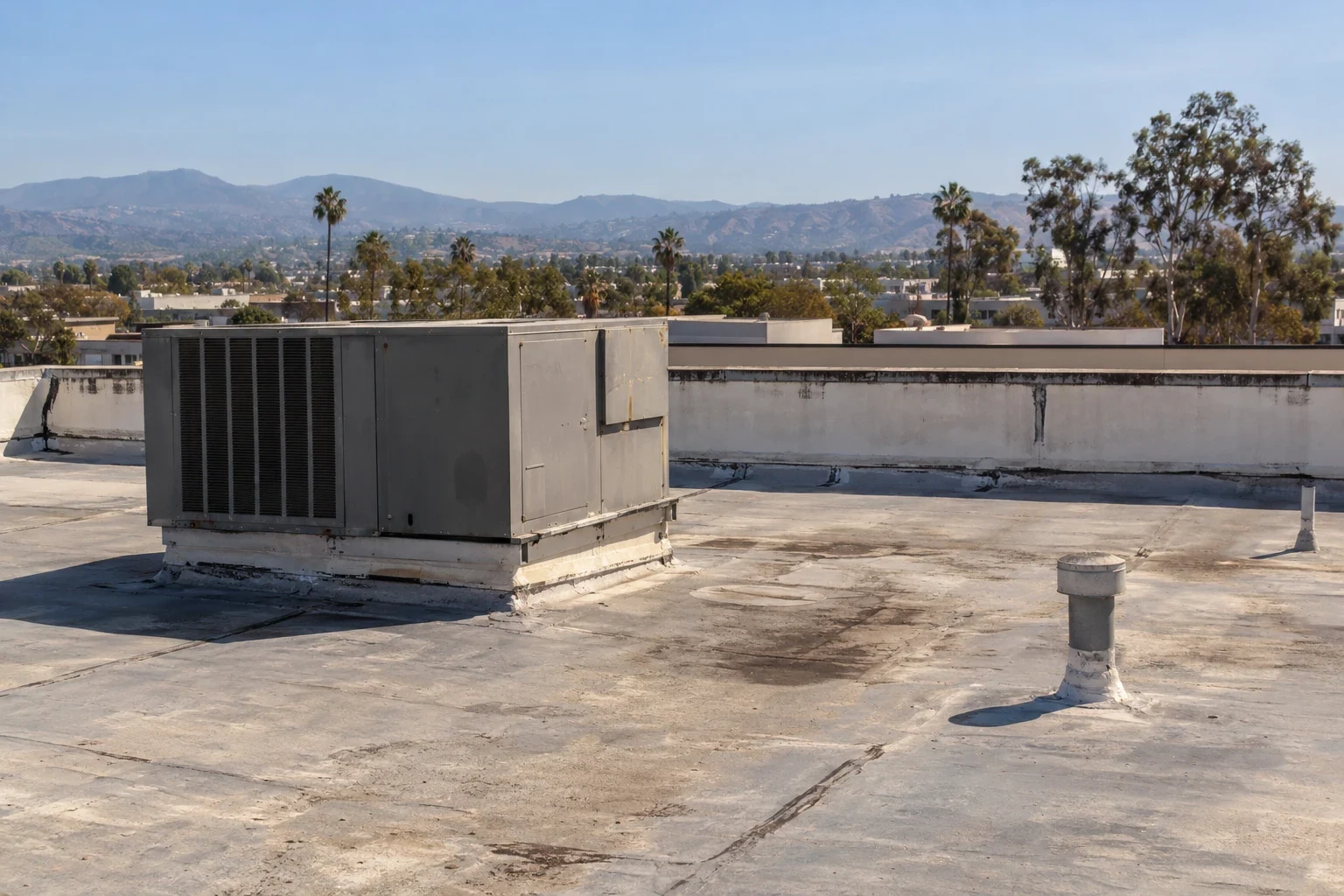
A roof near the Oxnard Boulevard and Highway 101 interchange may serve a workplace with a very different schedule from the next property. Oxnard's official GIS recognizes this interchange as a district, while city planning layers include commercial, manufacturing, business-park, and office categories. Those designations describe the planning framework. They do not identify a building's membrane, insulation, drainage, or operating limits. We start with the roof records and the reported condition, then inspect the relevant zones and set a repair boundary. A commercial roof inspection ties the field observations to the next decision.
Set the work area from the roof itself
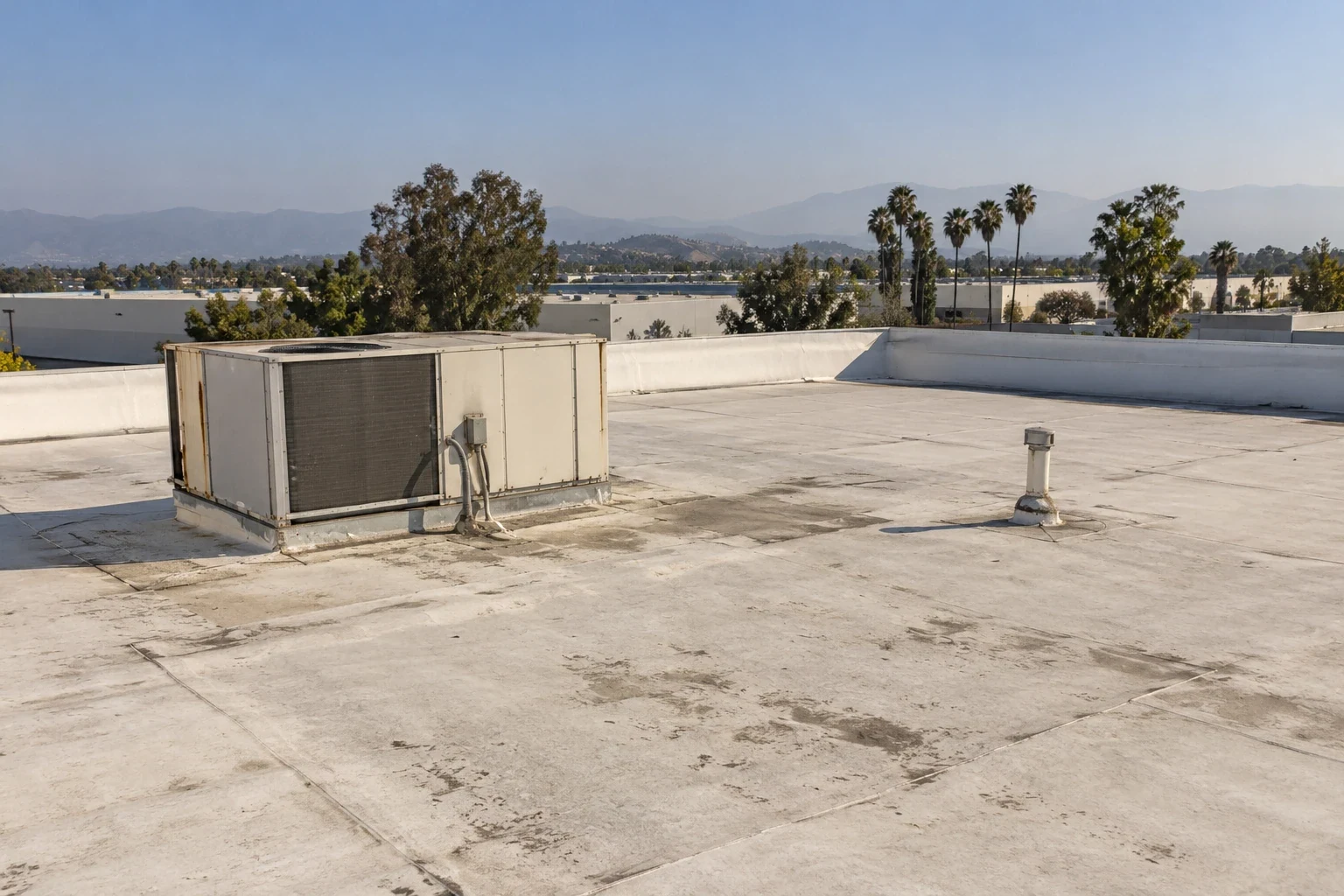
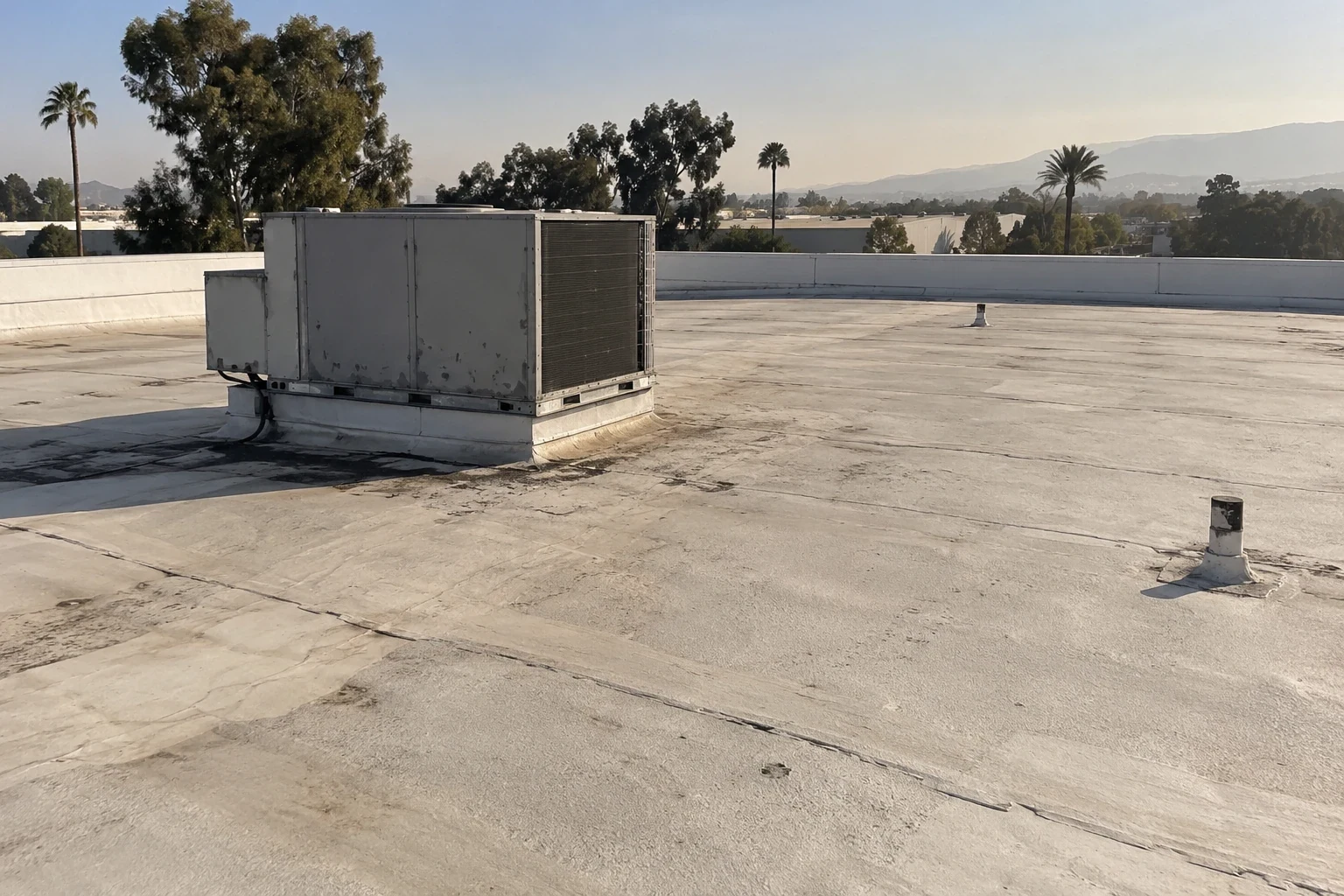
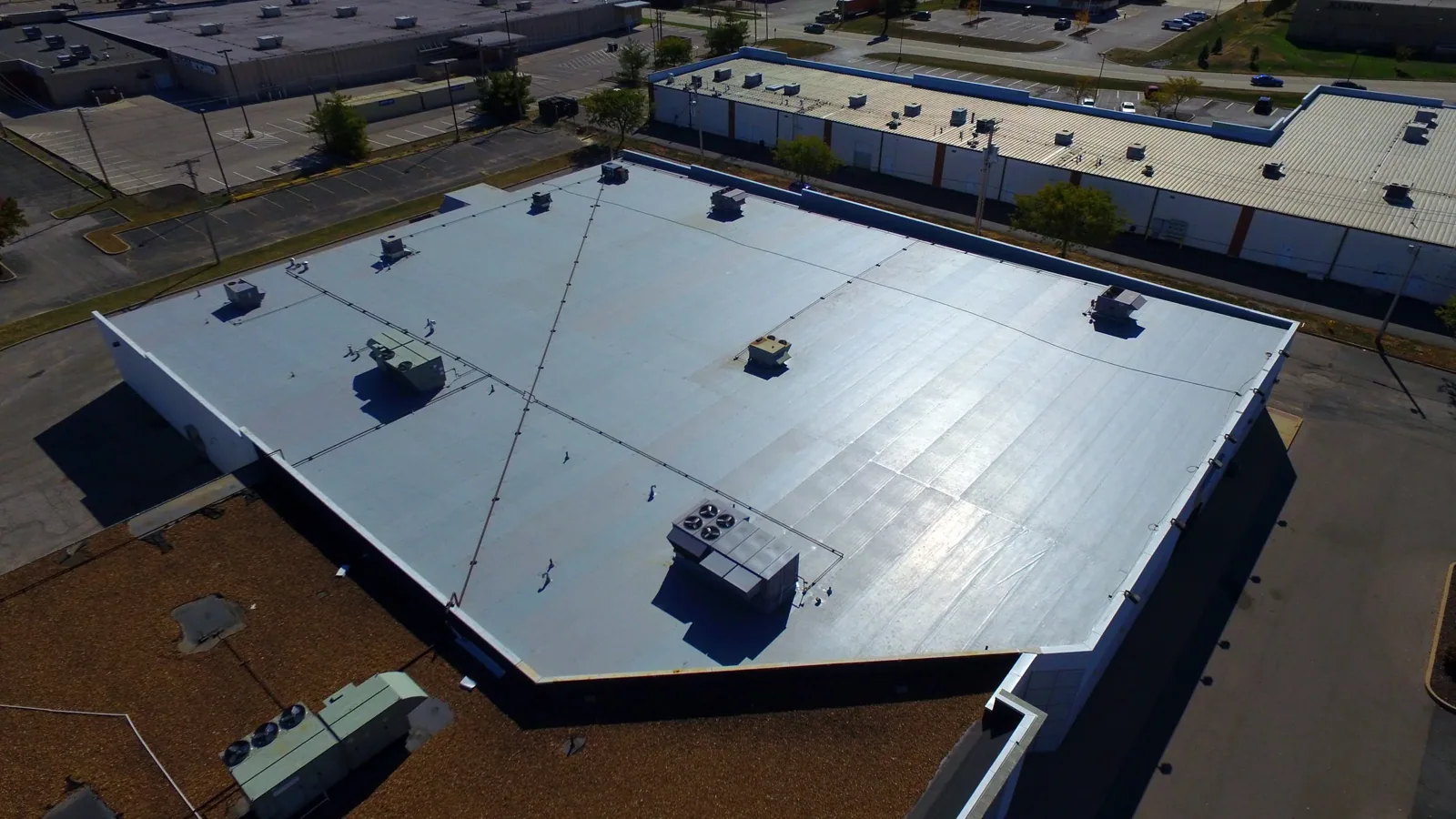
The interchange label gives an owner a useful geographic reference, but the inspection begins at the property line and roof access point. We confirm which building is involved, who can authorize entry, and what hours keep the site functioning. At the roof, we mark the membrane field, perimeter, penetrations, drains, and changes in elevation. A business-park or office designation does not establish any of those details. The condition record separates what is visible from questions that need a test or opening.
That distinction matters when a property has more than one roof zone. A leak report may relate to a curb, a seam, a wall turn, or a drain connection several feet from the interior mark. We photograph each observation and note its position against a roof sketch. If access is limited by equipment or a locked area, the record names the boundary so a later inspection can continue from a known point. Nearby Oxnard service coverage applies to the city as a whole, while this district page keeps the location reference specific.
Follow water through each transition
A dark ceiling tile tells us where water became visible, not where it crossed the roof. We compare the timing of the report with seams, curbs, conduit supports, wall transitions, and drainage points in the relevant zone. Water can move below a membrane before appearing inside, so we inspect the route between the likely entry details and the affected room. If the surface gives no clear answer, we can discuss infrared moisture mapping or a controlled opening before pricing a larger repair.
At a curb, the membrane turn, counterflashing, sealant, and nearby insulation form a small assembly that can behave differently from the open field. At a drain, we check the bowl, clamping ring, strainer, membrane termination, and path to the outlet. We mark whether a defect is isolated or whether moisture continues past the first repair candidate. A leak repair scope can then state what will be opened, what will be patched, and what must be inspected again after the repair.