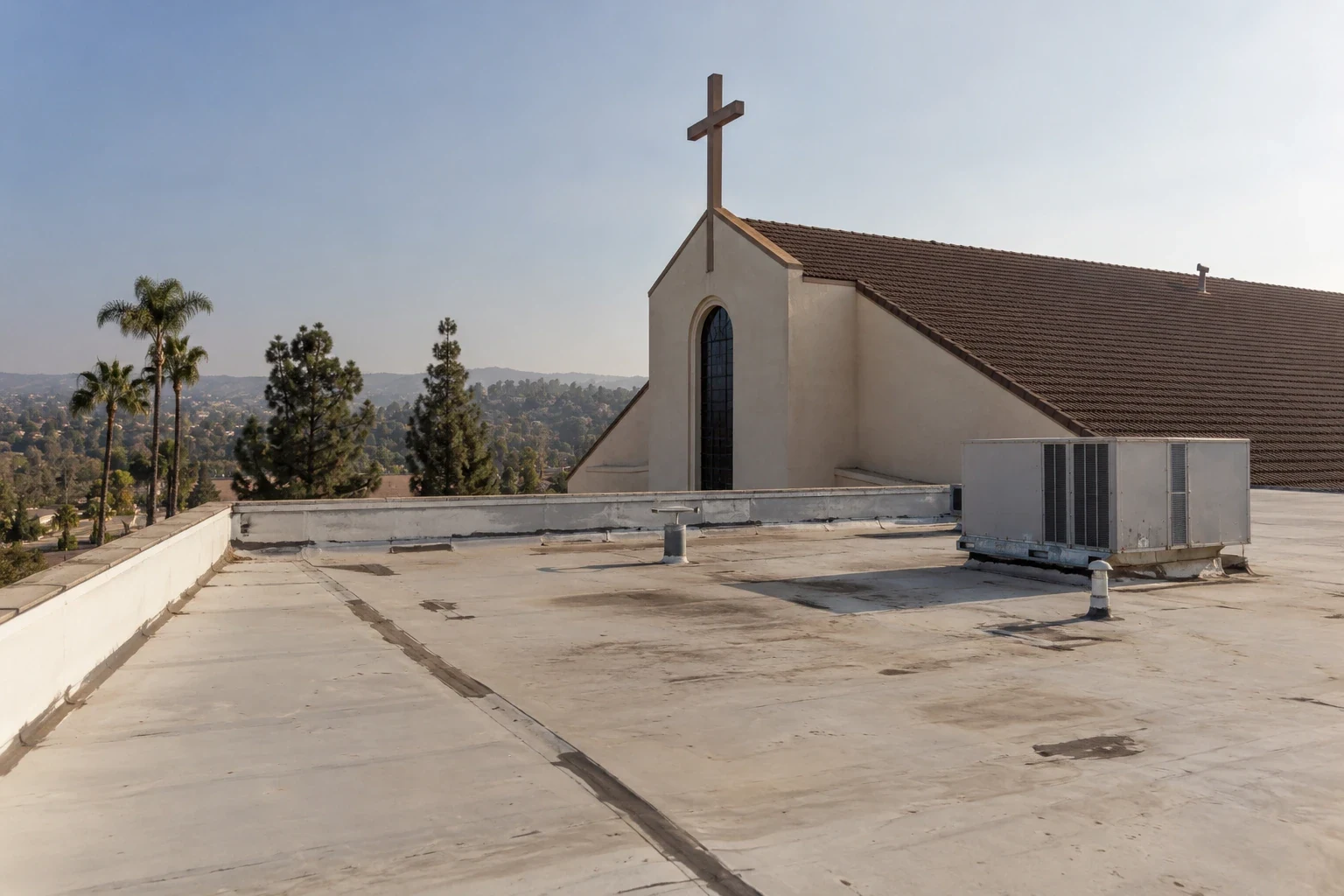
Water above a sanctuary or fellowship room needs a roof check that respects the calendar below. We start with the reported room, then inspect the roof zone for failed seams, drain problems, curb movement, and wall transitions. A ceiling mark can appear far from the entry point, so we trace before cutting. The first walk also records who can open the building, where materials may be staged, and when services or community events limit access.
Simi Valley has a warm, dry Mediterranean climate with periodic Santa Ana winds, according to the City's General Plan safety chapter. That is regional context, not evidence that any particular church roof has wind damage. Exposed edge metal, fasteners, and membrane terminations still deserve an inspection after strong conditions, especially where the roof meets a taller wall or rooftop equipment. The City identifies Tapo Street as an established commercial corridor with a façade-improvement program. That provides a local service-area reference, while the roof assembly and building schedule determine the work. A commercial roof inspection separates those two questions.
Find the entry point, not the ceiling outline
We compare the inside report with the roof plan, drainage path, and details above the room. Water can pass below a membrane or follow the deck before it shows indoors. We note the stain, active dripping, nearby mechanical equipment, and any prior patch, then check seams and penetrations in the corresponding zone. If there is no safe way to reach a detail during the first visit, the report states that limit rather than guessing at a repair boundary.
A small test opening may show whether insulation is wet or the deck needs further review. We document the location, material layers, and tie-in before closing it. If the defect sits at a wall or curb, a flashing repair can restore that transition while leaving sound field membrane in place. If water is entering during a service or event period, we can arrange emergency roof repair to protect the opening and then return to a permanent scope when the conditions allow.
Check edges, drains, and rooftop additions
Church properties may include different roof heights, additions, and service equipment. We inspect each connected section separately: edge metal, penetrations, skylight or curb transitions, drains, scuppers, and any seam repairs already in place. A new addition can meet an older roof at a detail that moves differently from either field. We photograph both sides of that transition and record which membrane or flashing carries the tie-in.
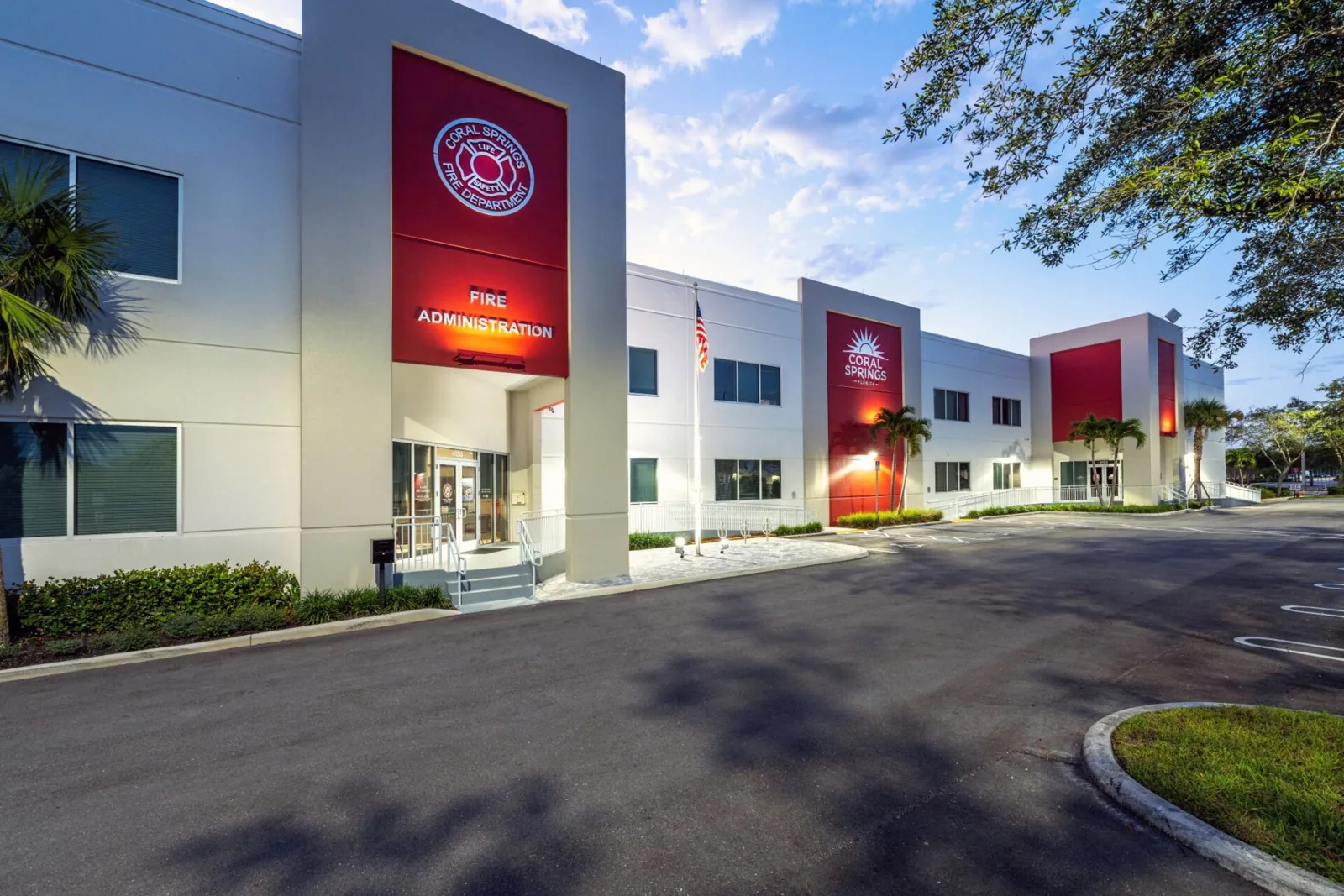
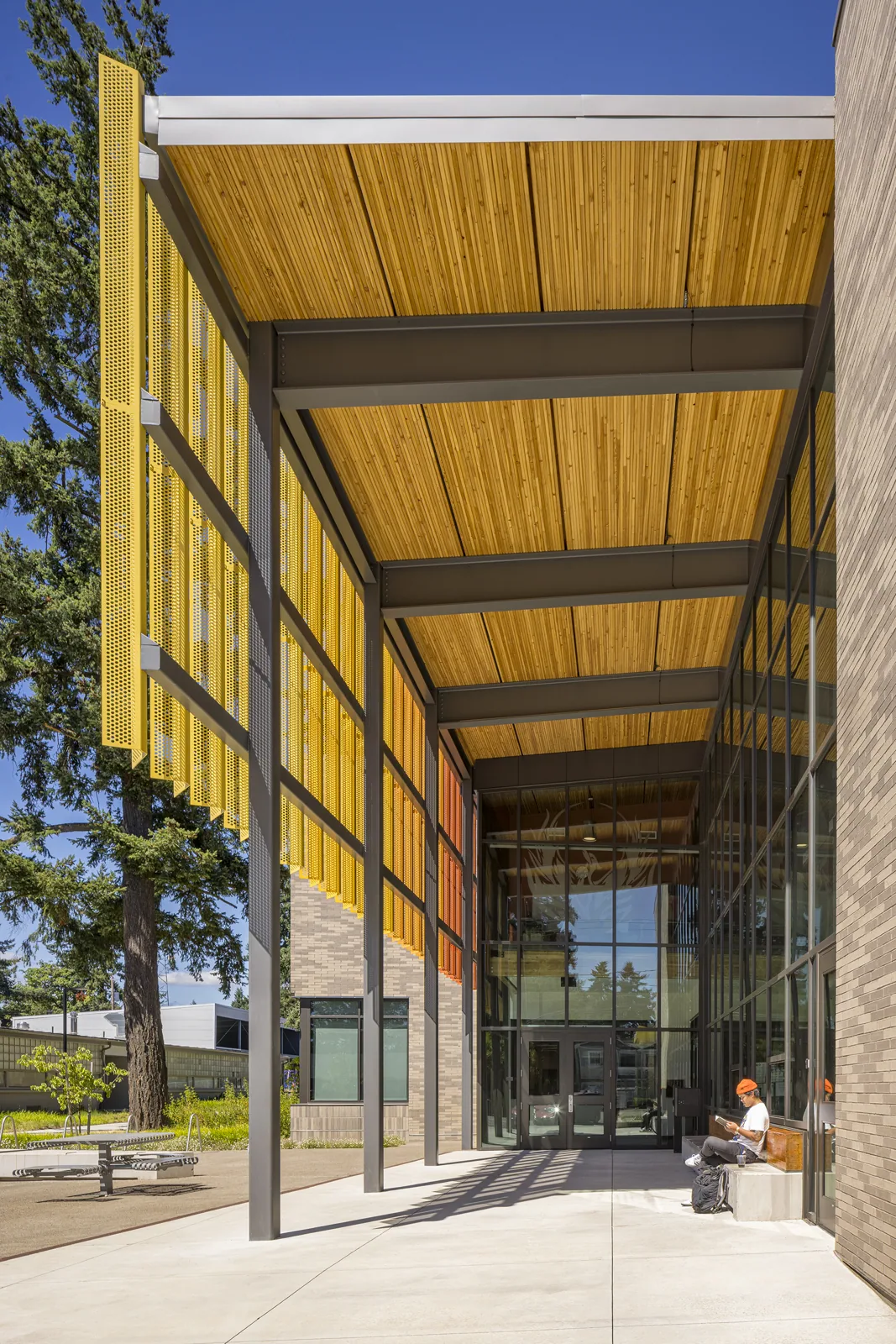
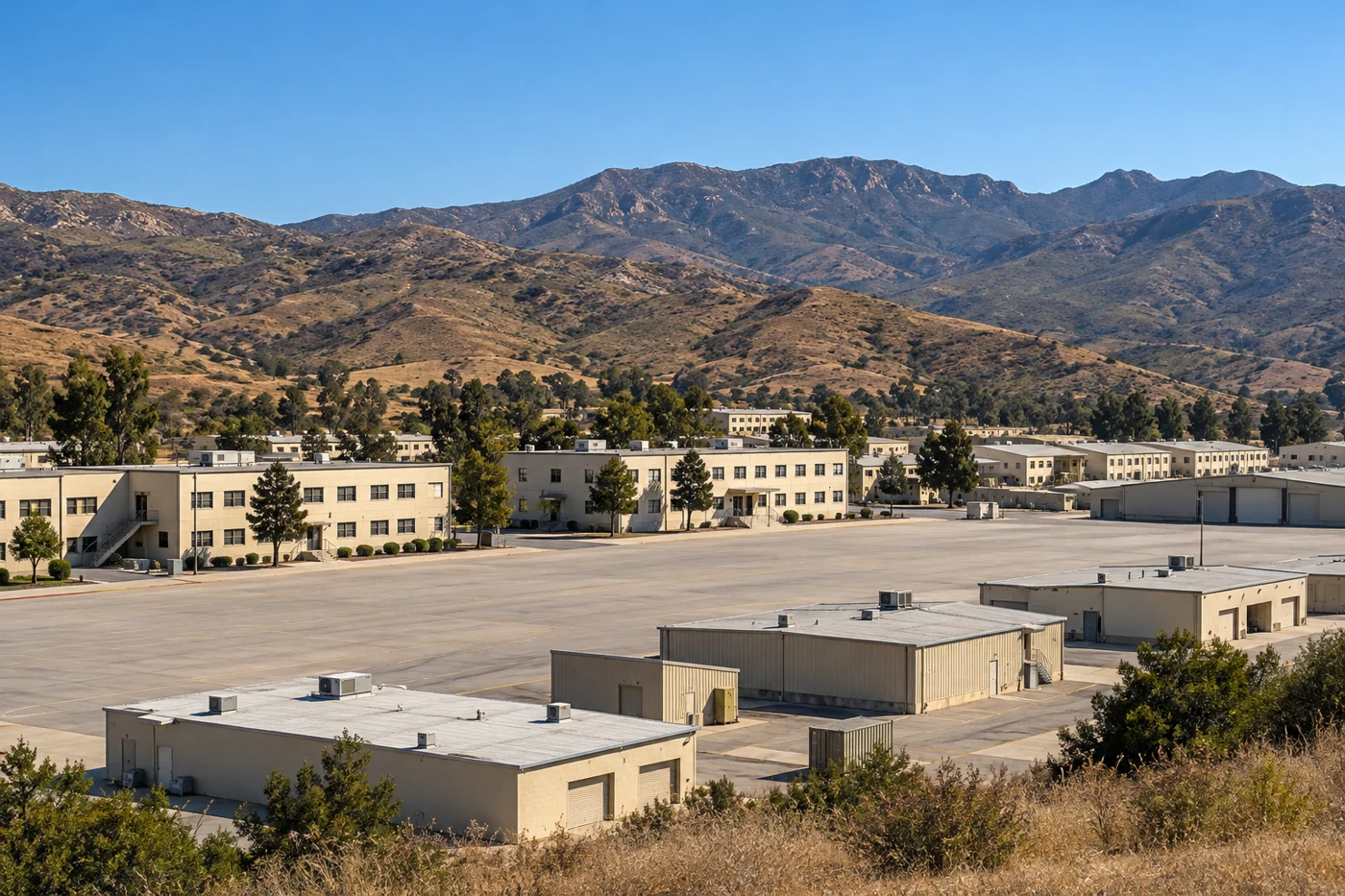
Simi Valley's City code materials identify the 2025 construction-code set as effective from January 1, 2026. For a reroof or substantial repair, the project team should confirm the permit review that applies to the actual scope. A report with photos helps the owner compare the roof condition with the plans and prior work. Where maintenance is shared with school or municipal properties, school roof planning and government-building roof work can involve separate access approvals, even when the same facilities contact coordinates the calendar. The roof records should keep each property distinct.