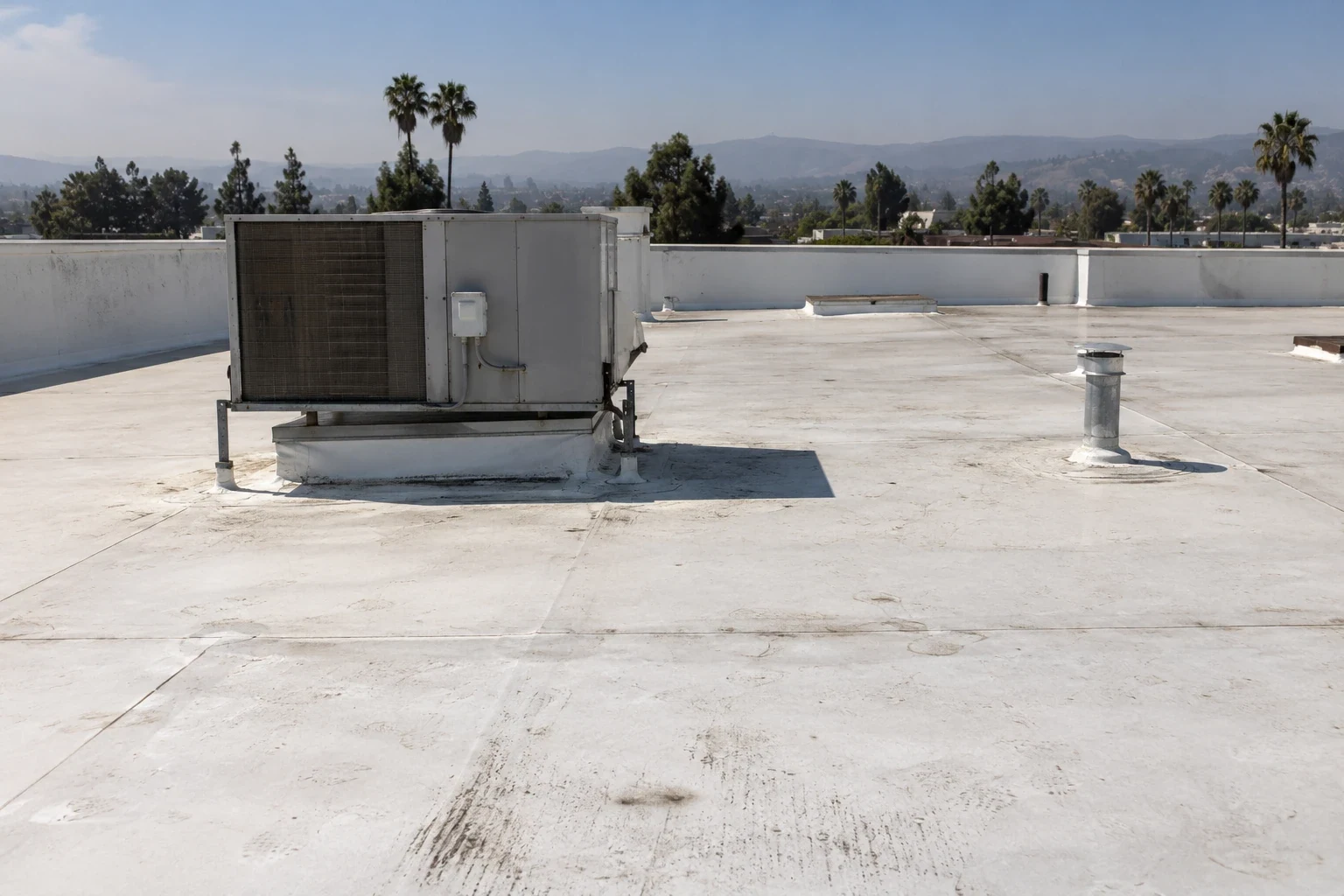
On a public building, a roof decision has to fit the assembly and the way the property serves people. We inspect the membrane field, drain bowls, curbs and edge terminations before setting a repair boundary. Simi Valley's planning projection points to hotter summer conditions over time, so exposed seams and transitions deserve direct inspection rather than an assumed service life. The city's adopted construction-code set also changed effective January 1, 2026. That makes project records, scope review and the applicable permit path part of planning work, not a substitute for looking at the roof. A commercial roof inspection connects the observed condition to the next decision.
Mark each roof zone
A municipal office, public works building and community-use property can have different additions, roof elevations and operating schedules. The file should identify each roof zone separately, including the system where records establish it, visible repairs, drainage points and equipment that limits access. We compare those records with the surface in front of us. A membrane label alone does not establish that seams are sound or that insulation below is dry.
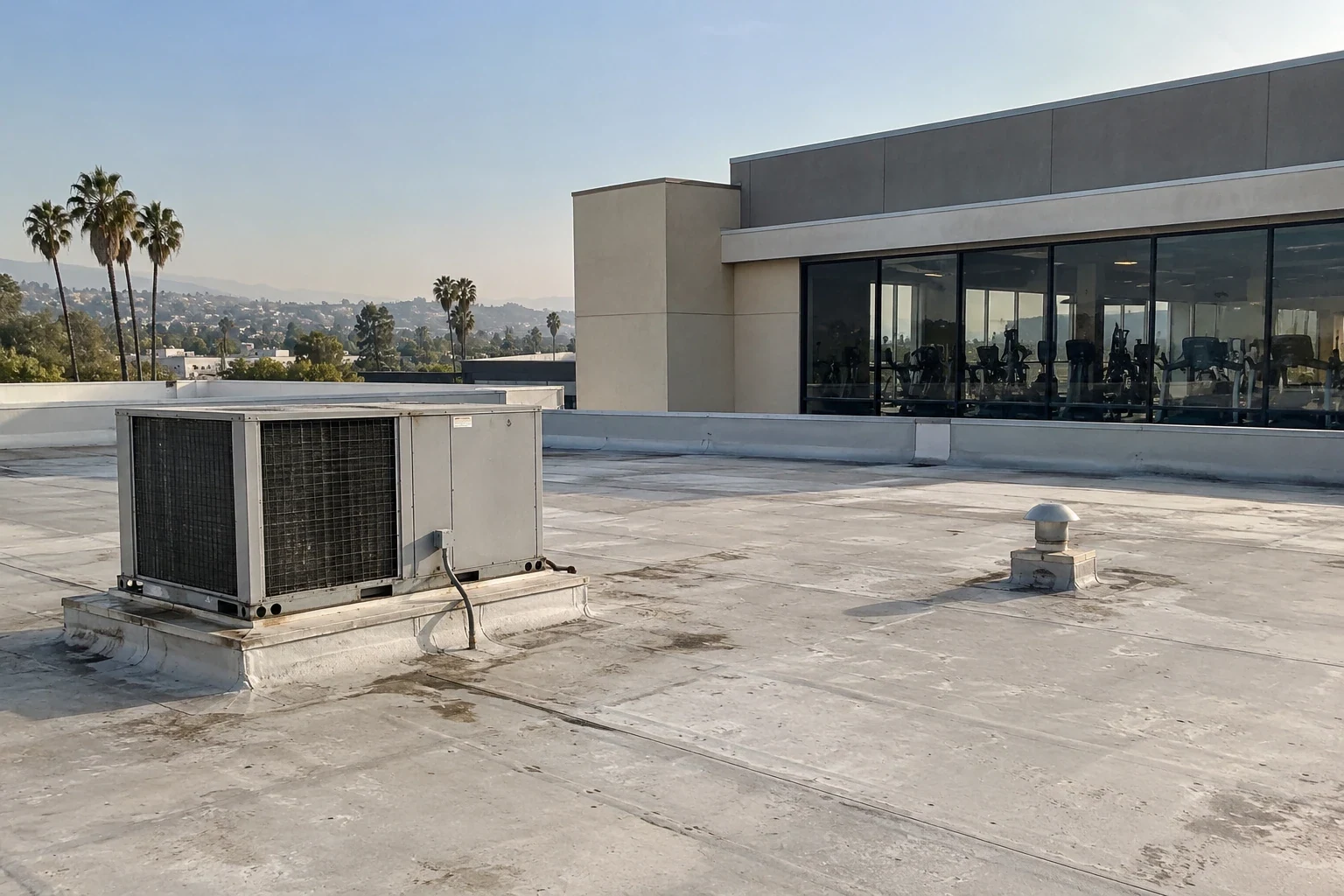
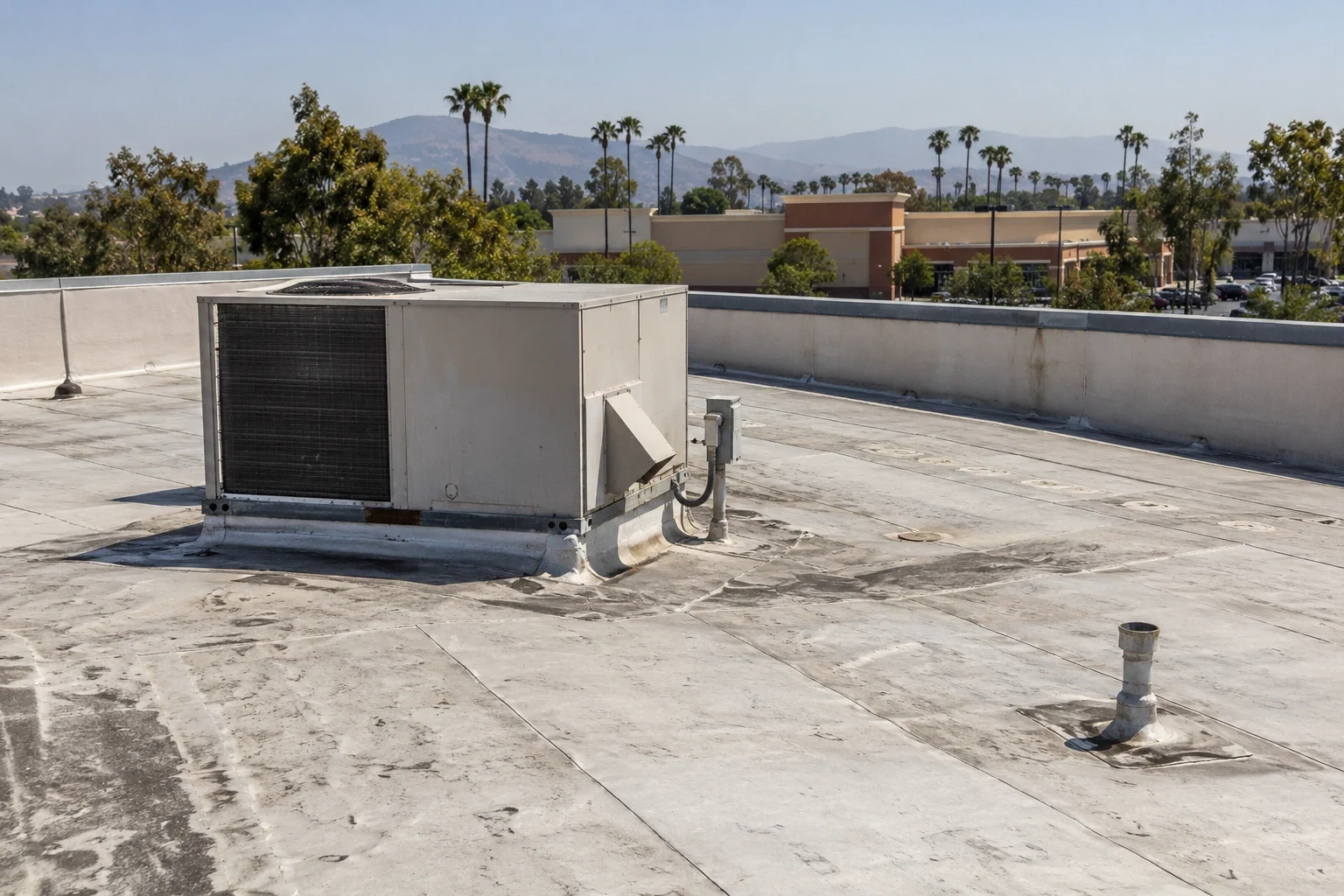
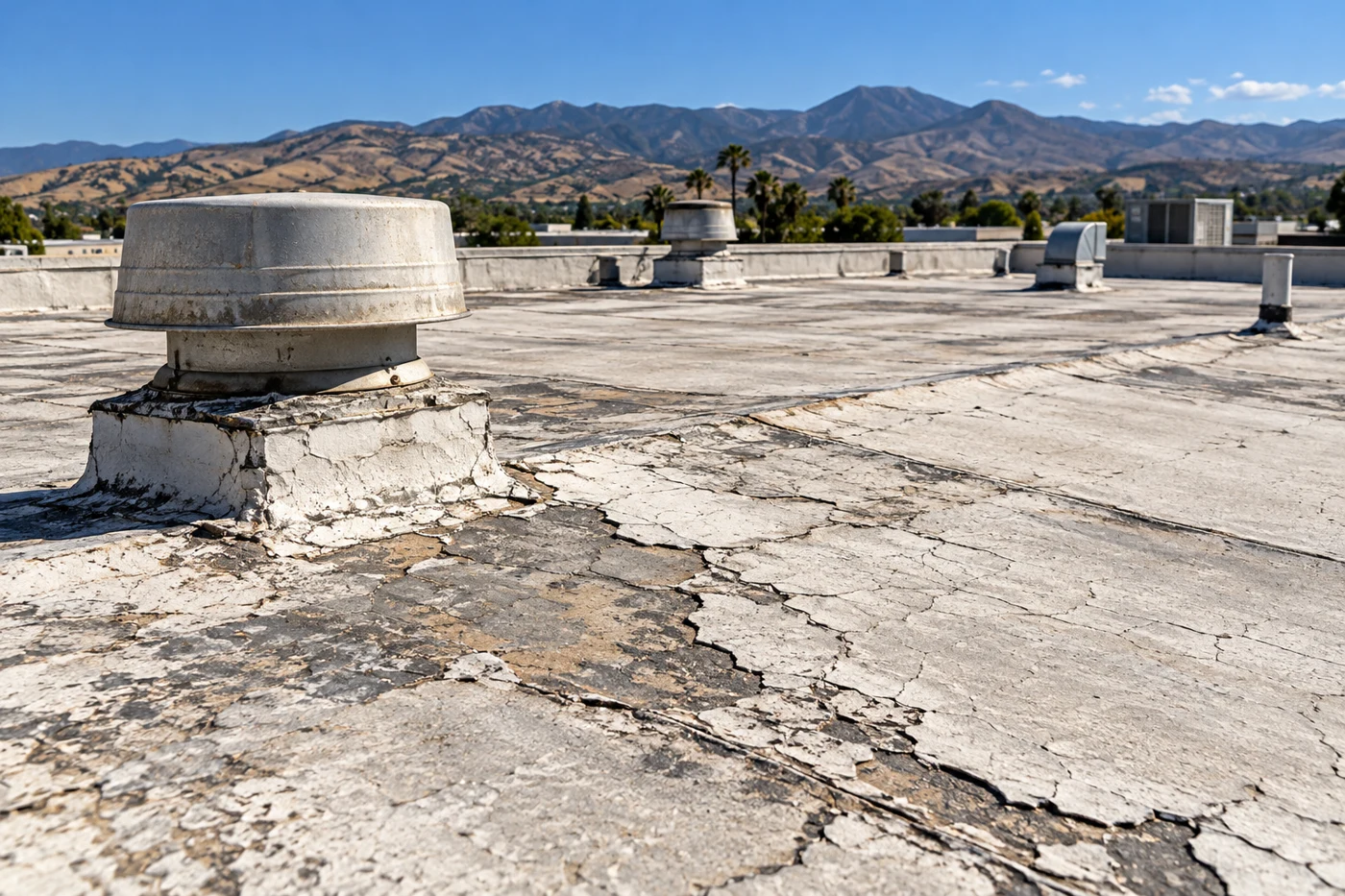
During a walk, we note open seams, surface splits, displaced edge metal, soft areas, ponding that persists after drainage should have occurred, and flashing that has separated from a curb or wall. Each observation is tied to a location and photograph. If a condition cannot be seen safely, the record says so and identifies the access or test needed before expanding the scope. For an occupied school, a school roof inspection still requires its own assembly record.
Follow water to an outlet
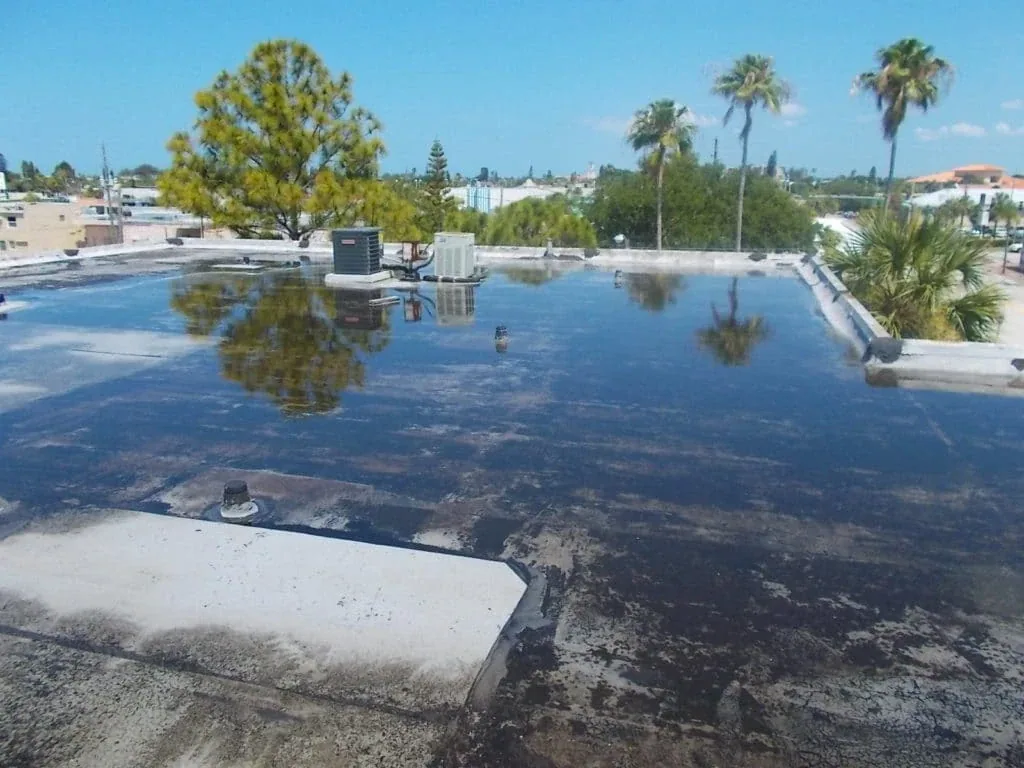
Water at a ceiling or wall is an interior observation, not a roof diagnosis. We compare the reported location with the roof layout, trace possible paths along seams and transitions, and inspect the drain bowl, scupper or edge where water leaves the assembly. A blocked outlet, failed flashing and wet insulation can produce symptoms in different places. The inspection record separates what is visible from what needs a controlled opening or moisture test.
Drainage work depends on the actual outlet and surrounding membrane. A drain bowl may have a loose clamping ring, an obstructed throat, a split transition or a connection that does not match the existing assembly. We document the condition, how the roof directs water toward it and whether the outlet can be reached without disrupting public access below. A drain and scupper repair should restore a sound connection and preserve the intended discharge route.
The West End Specific Plan area extends along State Route 118 from First Street to Oak Park, with Easy Street and Los Angeles Avenue on its southern boundary. Those planning limits identify an area, not a roof condition. We verify each property's own plan and history.