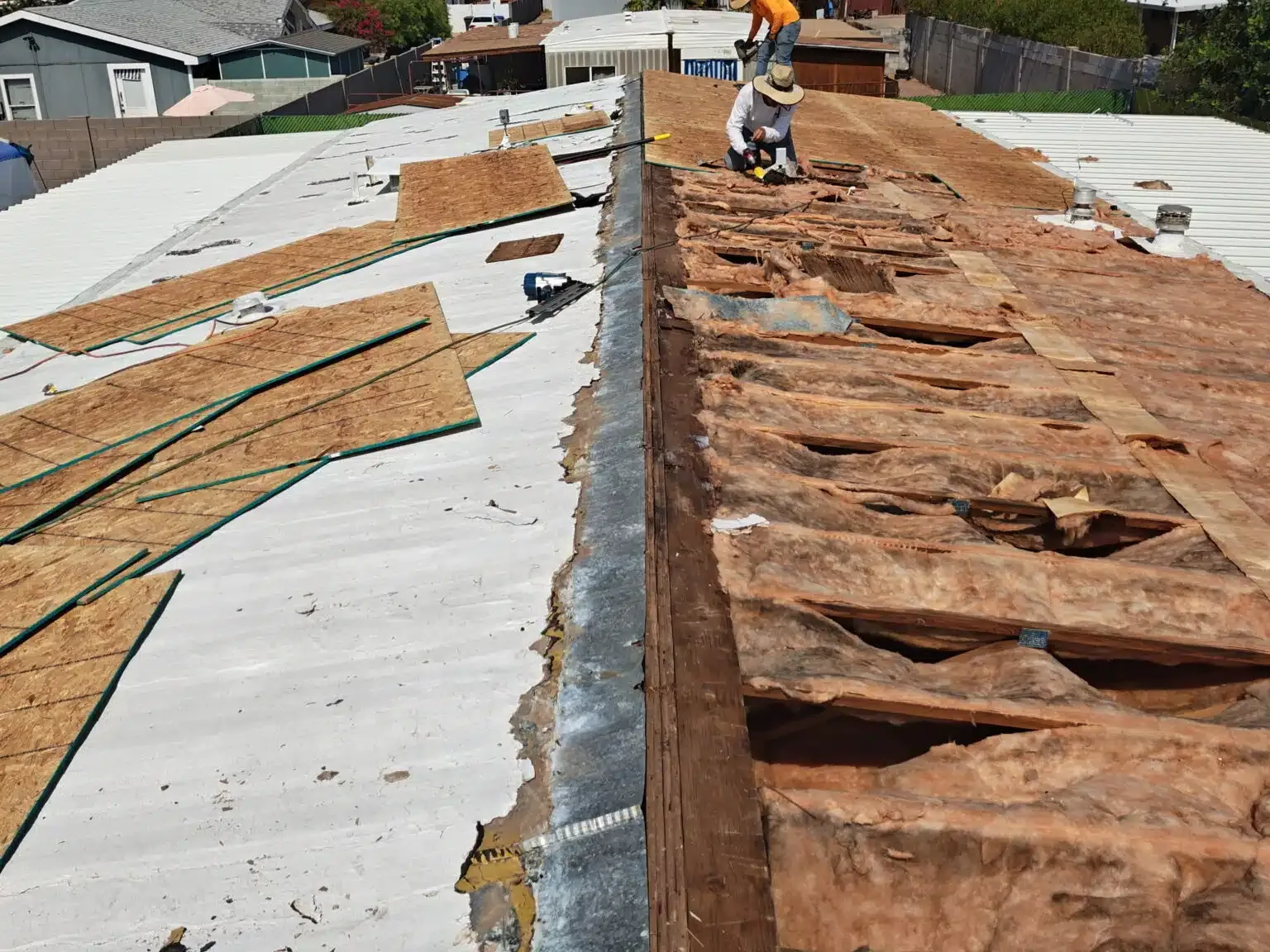
A ceiling stain in a classroom can send a facilities team toward the wrong roof bay. In Simi Valley, we start by matching the room to the roof zone, then trace the water path through drains, curbs, seams, and wall edges. That first walk gives the district a repair boundary before a crew opens the membrane or moves materials near an active school day. If the roof record is thin, we document what is visible and mark what needs a closer test.
The city's General Plan projects more days above 97.2 degrees and higher average temperatures over time. Heat works on exposed sealant and flashing, while seasonal rain tests the details that looked stable during a dry inspection. At a school near the West End Specific Plan area or Tapo Canyon Business Park, the first question is still local to the roof: where did water cross the assembly, and what must stay open below? A focused commercial roof inspection can answer that before a repair or capital request grows beyond the evidence.
Match the report to the roof zone
School buildings contain different rooms, schedules, and roof penetrations. A leak over a library may travel from a drain bowl or flashing detail well away from the ceiling mark. We record the reported room, roof access point, membrane type, equipment above, and any recent work before choosing a test opening. Photos should connect the interior symptom to the exterior condition, not just show a wet tile or a patch.
That map helps the facilities lead separate a single detail repair from a wider wet-insulation concern. An infrared survey can help identify temperature patterns after the roof and weather conditions are suitable, but the image is a lead to test, not a repair order. A hands-on check confirms the membrane, seams, terminations, and deck condition where access allows. District portfolios that also include civic facilities can use the same repair-boundary discipline on government buildings. When the evidence points to a narrow defect, a flashing repair can stay limited to the failed transition. When moisture extends beyond that boundary, the next step needs a measured opening and a written scope.
Check the details that move
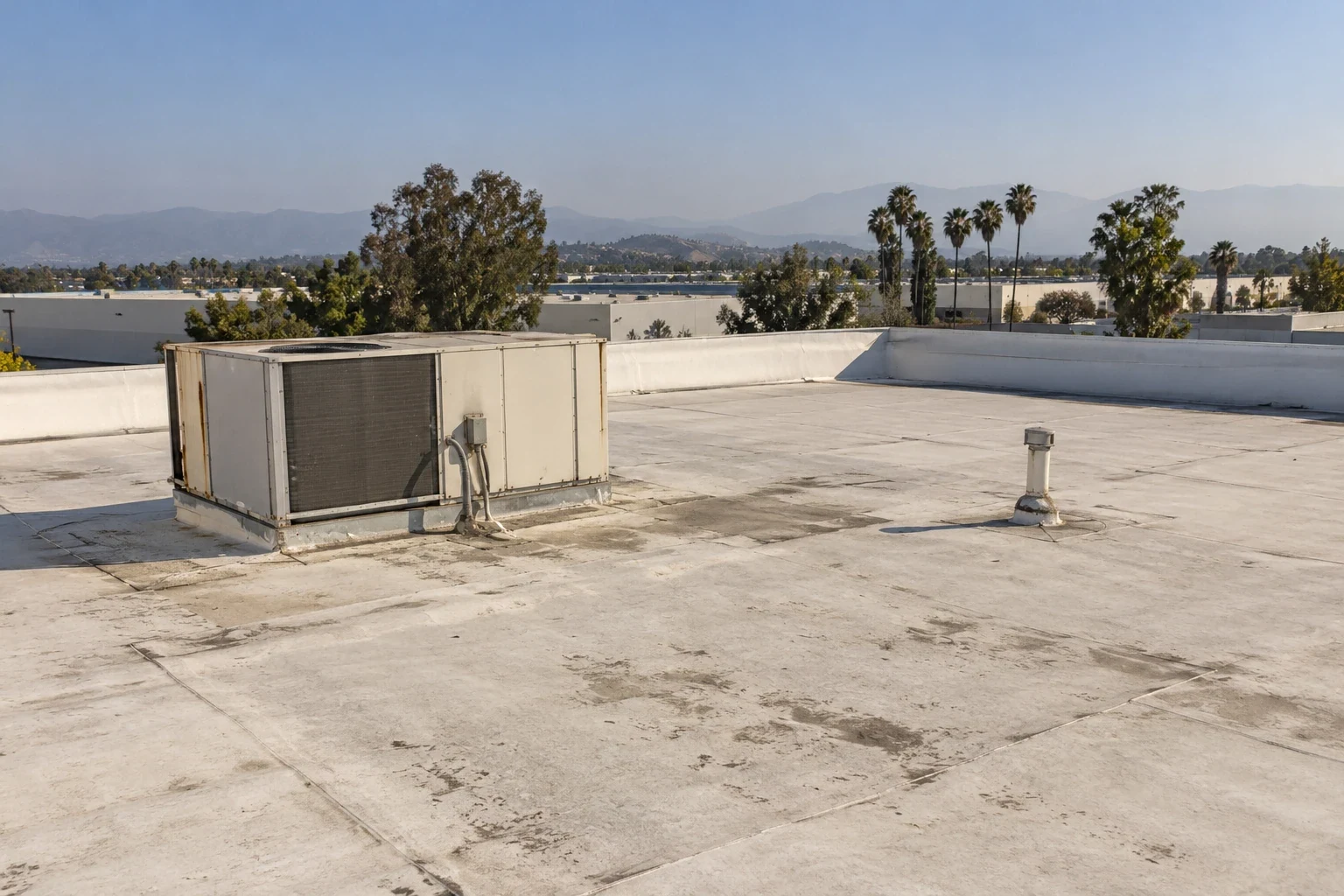
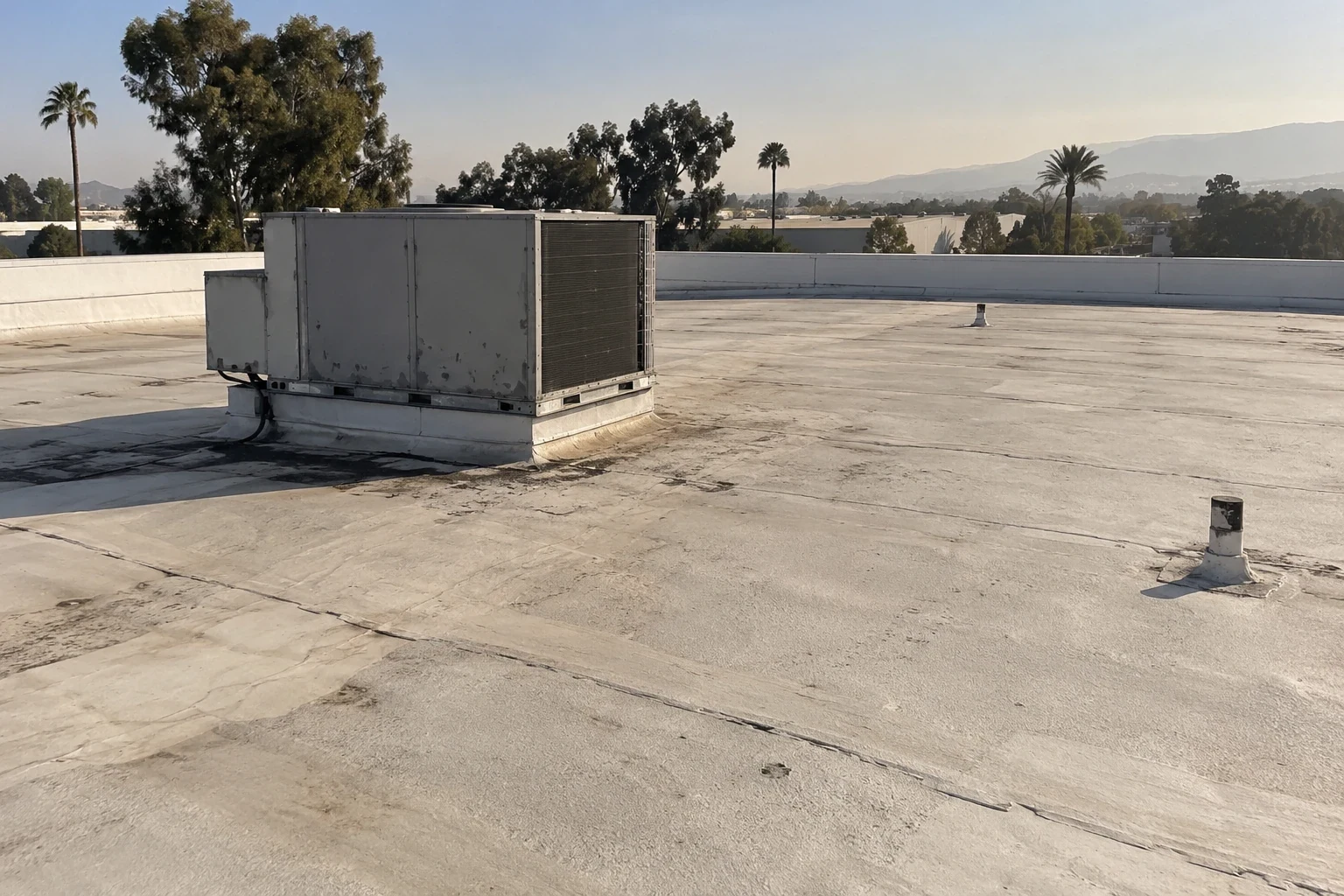
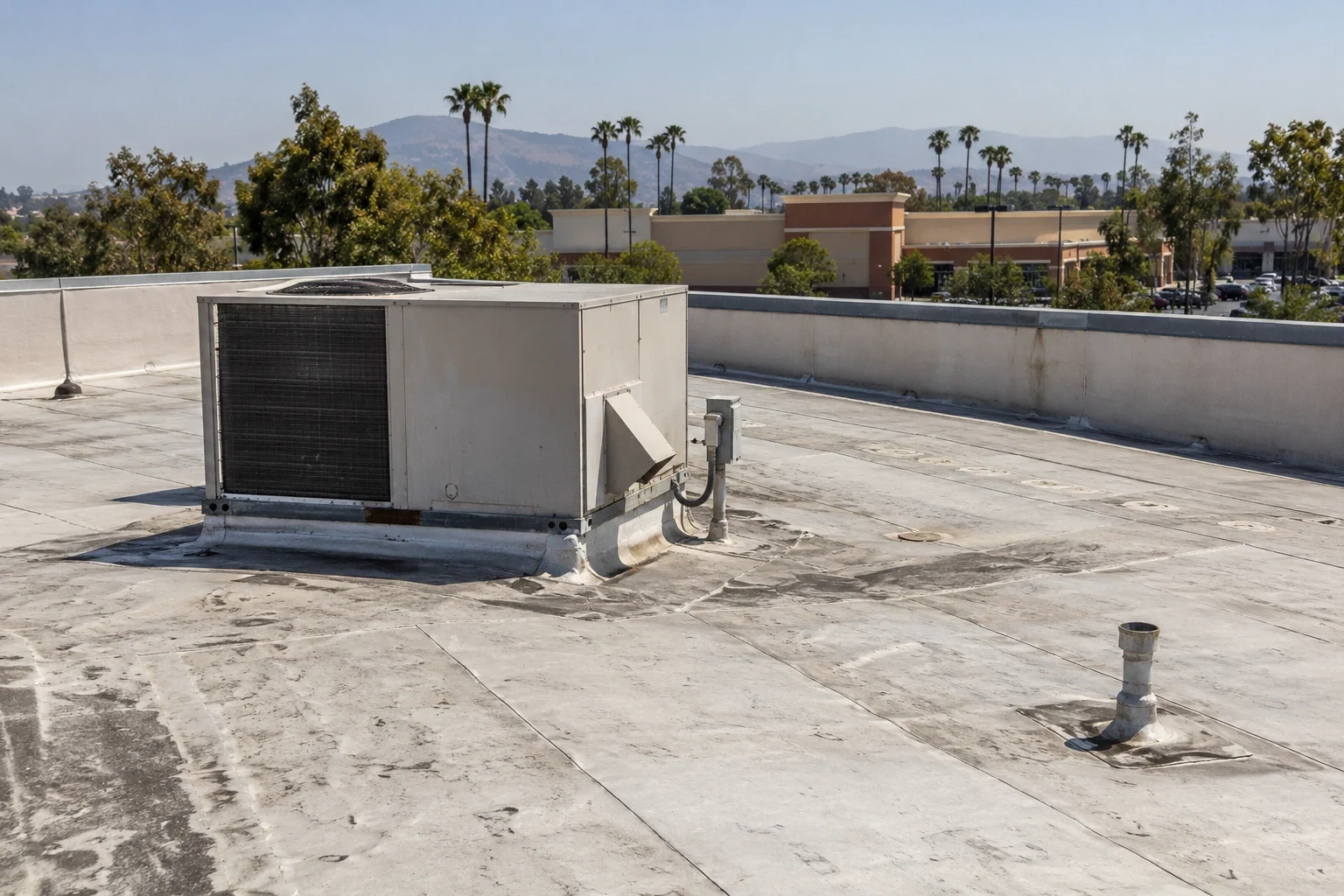
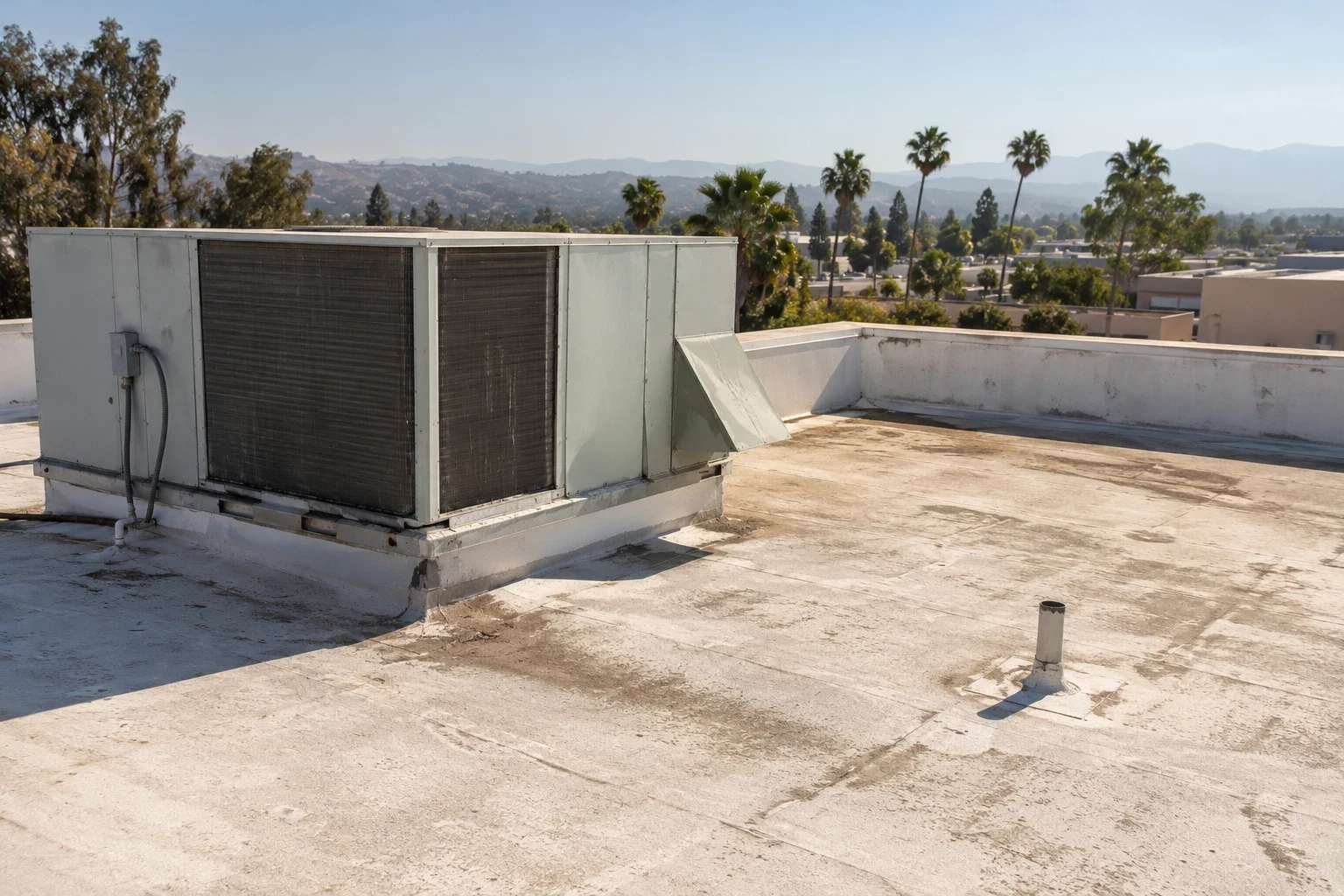
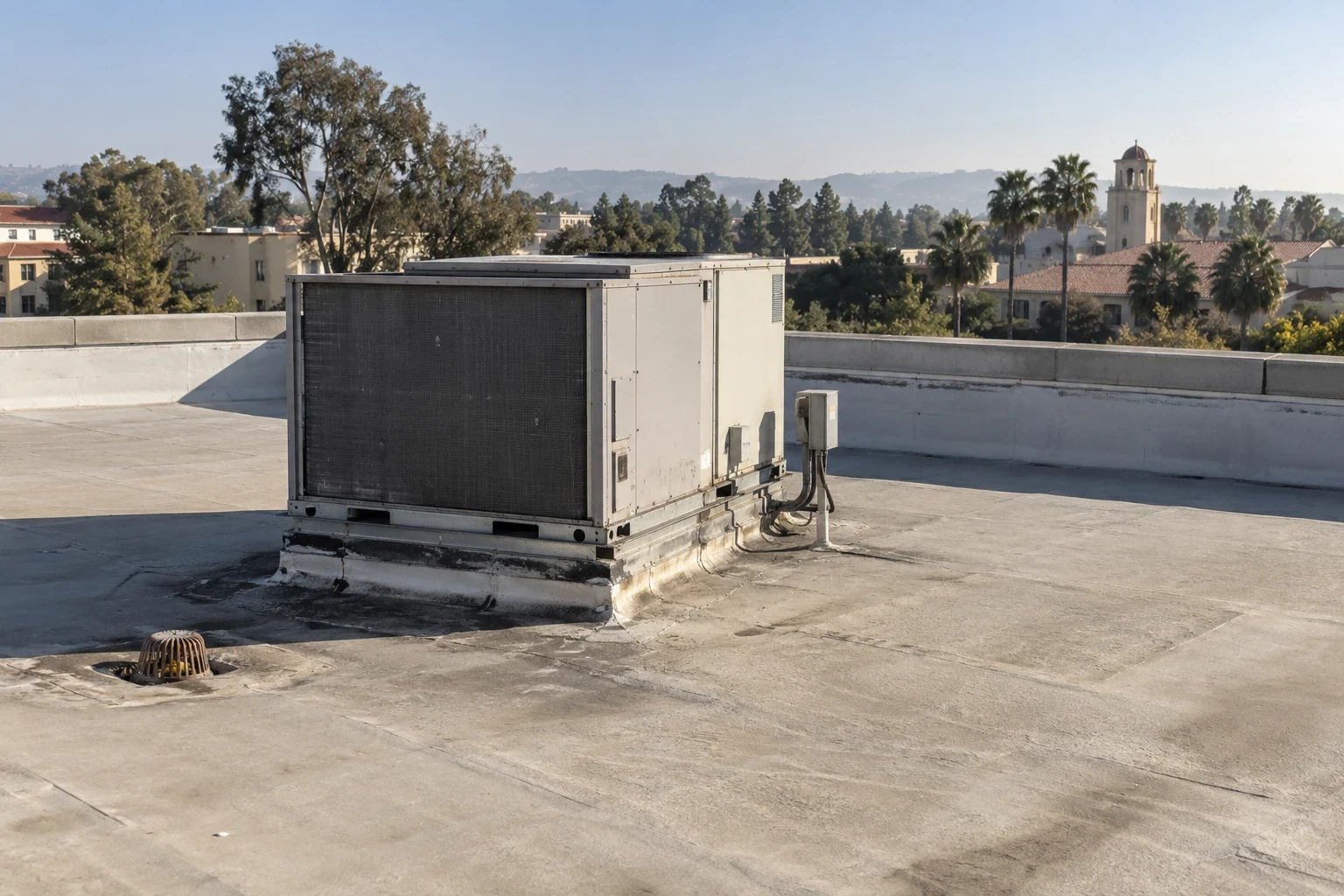
Roof edges, penetrations, and drains take different loads from the open membrane field. We look for separated laps, brittle sealant, loose metal, blocked drainage, and movement at curbs or wall transitions. On a school, rooftop units and service routes also matter because mechanical work can disturb a sound roof detail. The inspection notes which conditions are active, which are aged but holding, and which need another test before the district commits funds.
Heat exposure makes that separation useful. Simi Valley's projected increase in very hot days is a reason to review exposed seams and sealant before the next wet period, not proof that any particular campus has failed. Tapo Canyon Business Park sits near Tapo Street and Los Angeles Avenue, and the City describes business-park buildings as medium to large office or high-technology industrial space. That is a different use from a school, but the comparison makes one practical point: roof equipment, access paths, and interior operations should be recorded for the building in front of us. For recurring issues, photo-backed condition reports give the next decision a clear baseline. Facilities teams comparing other institutional needs can also review the access and sequencing considerations for college and university roofs.