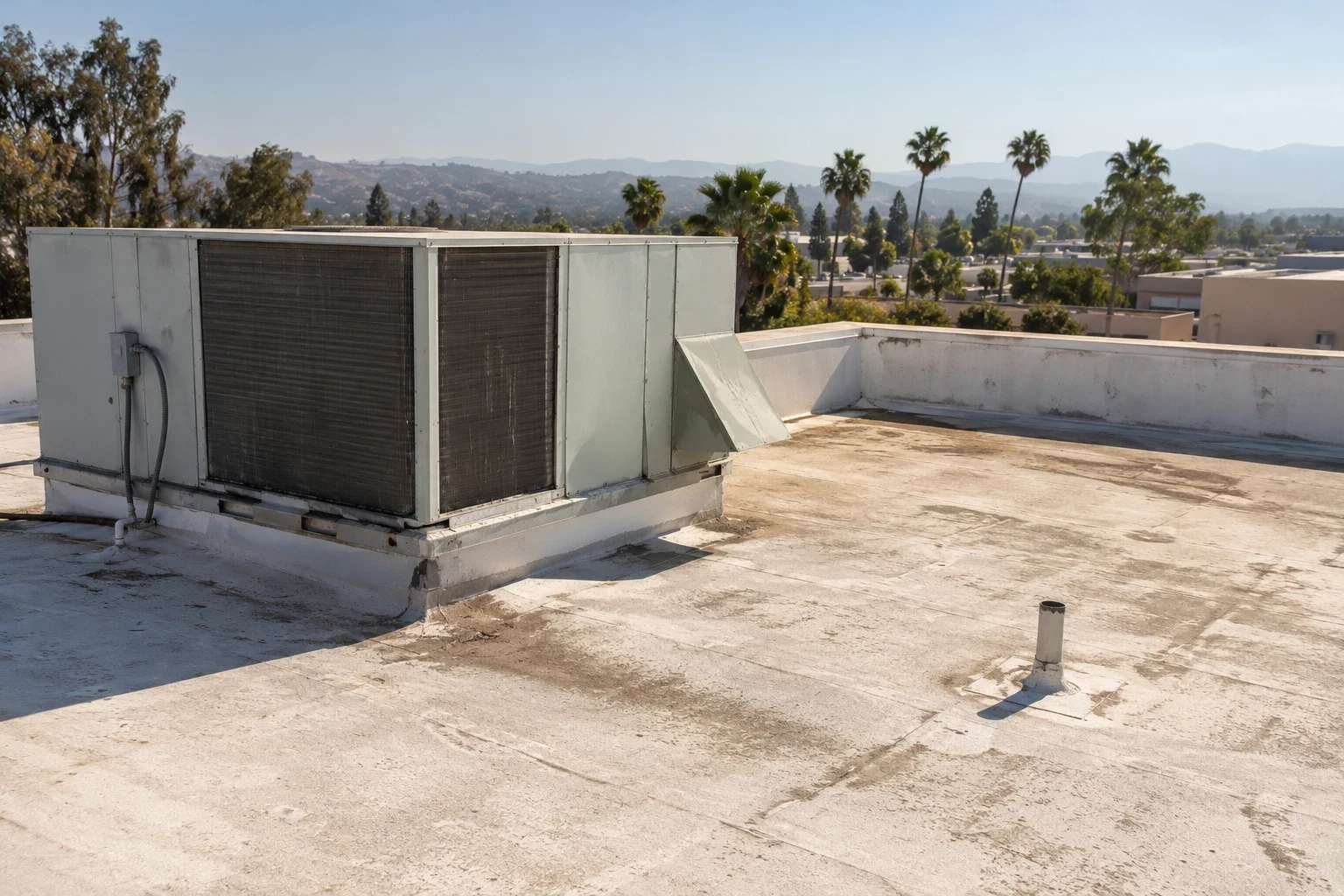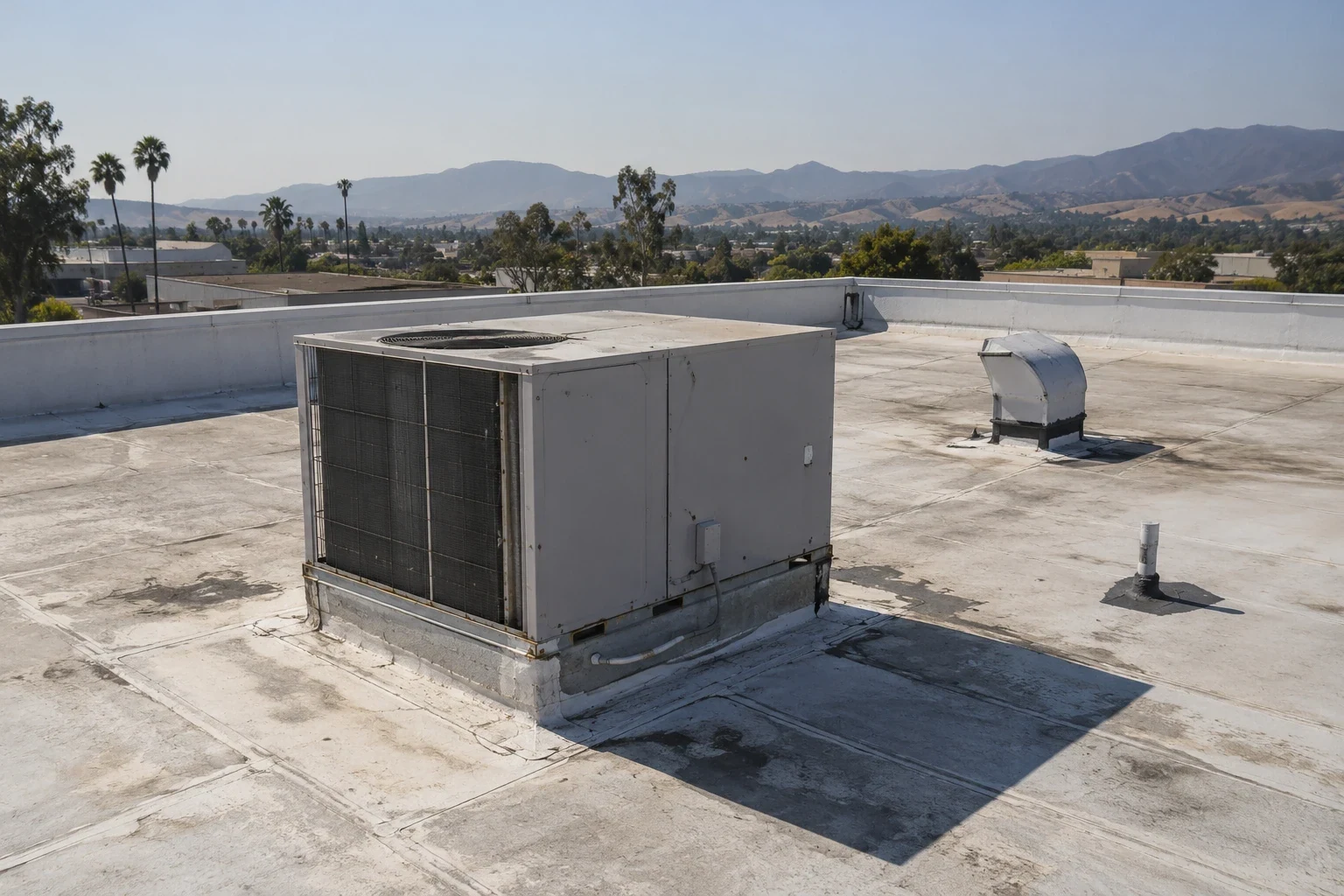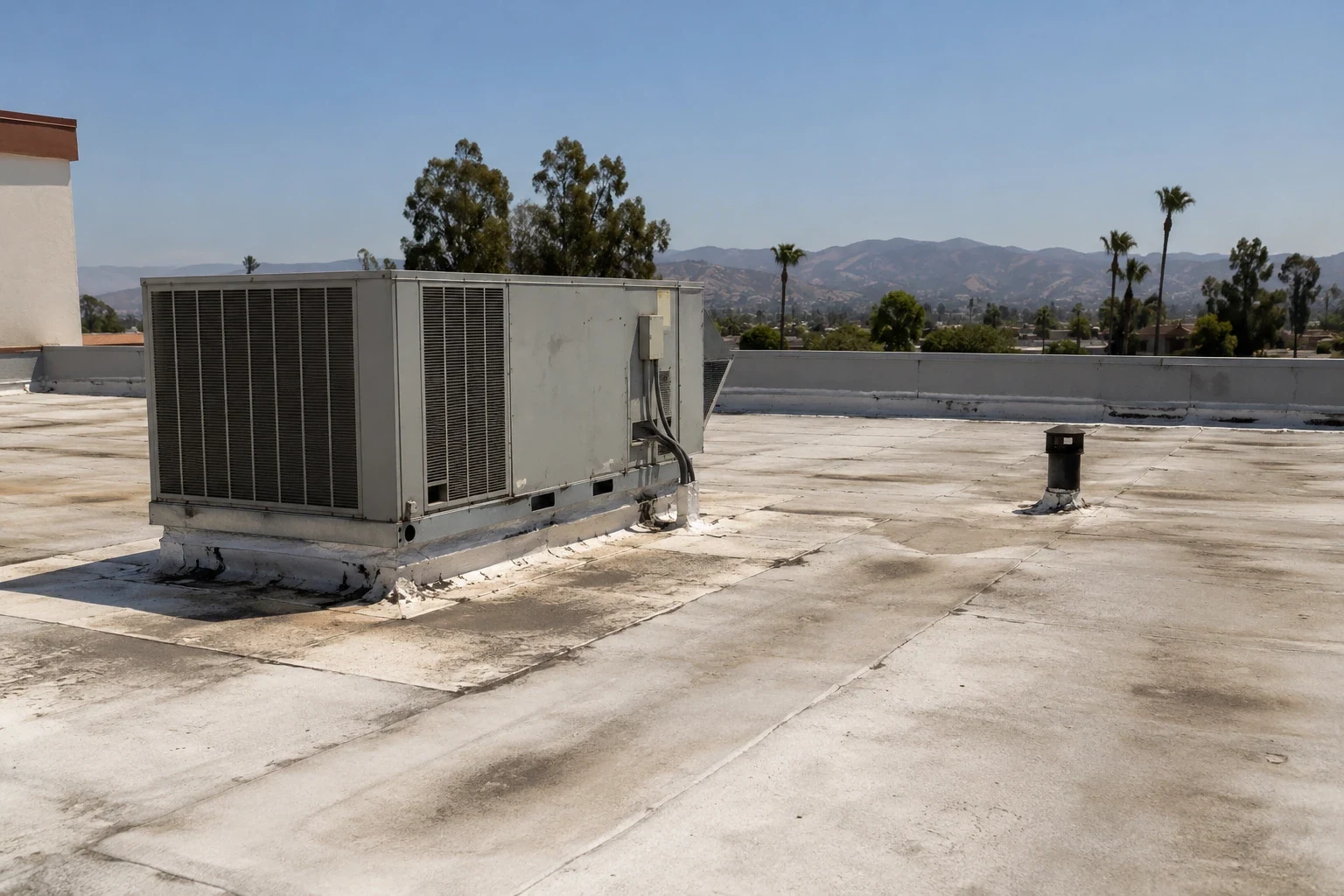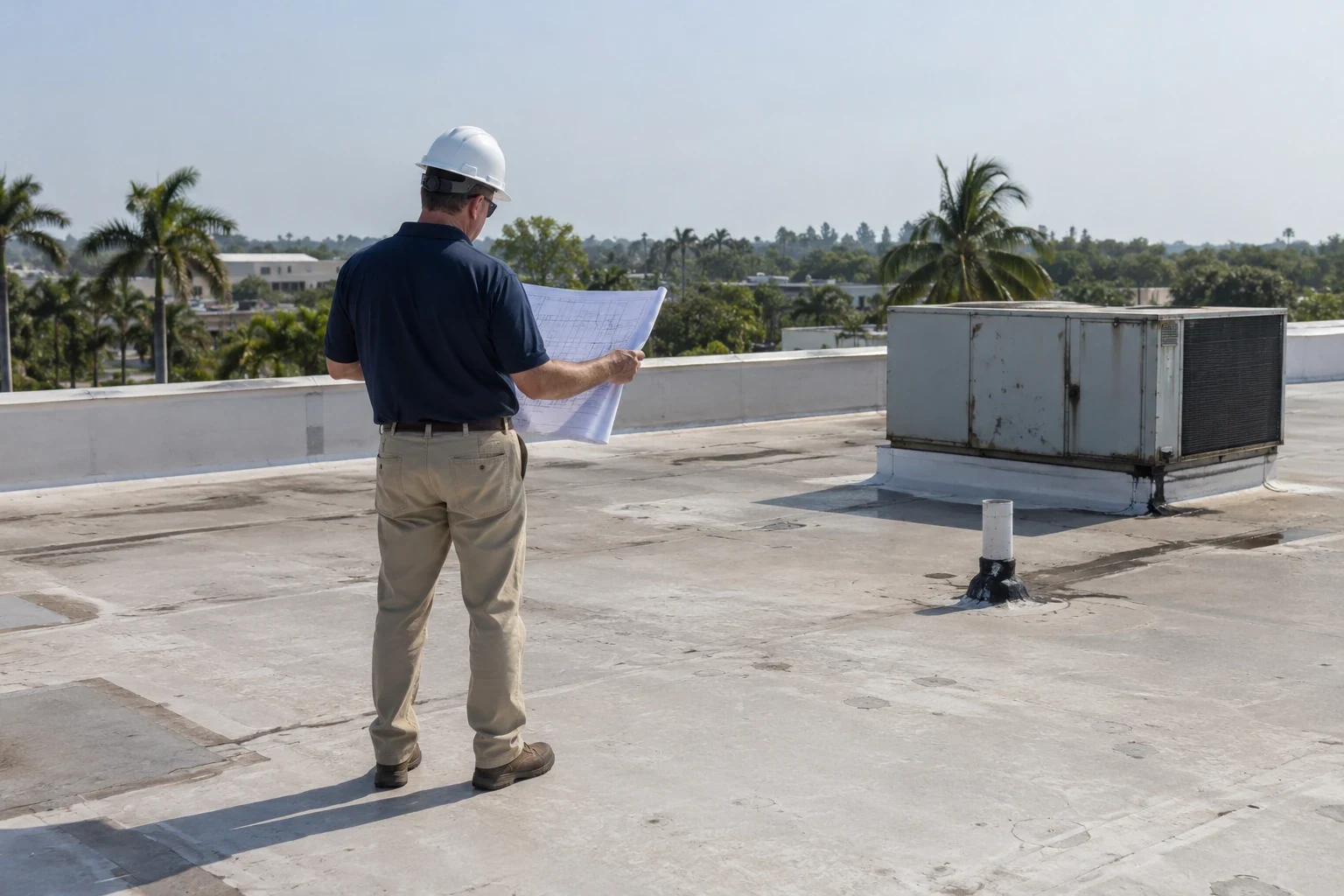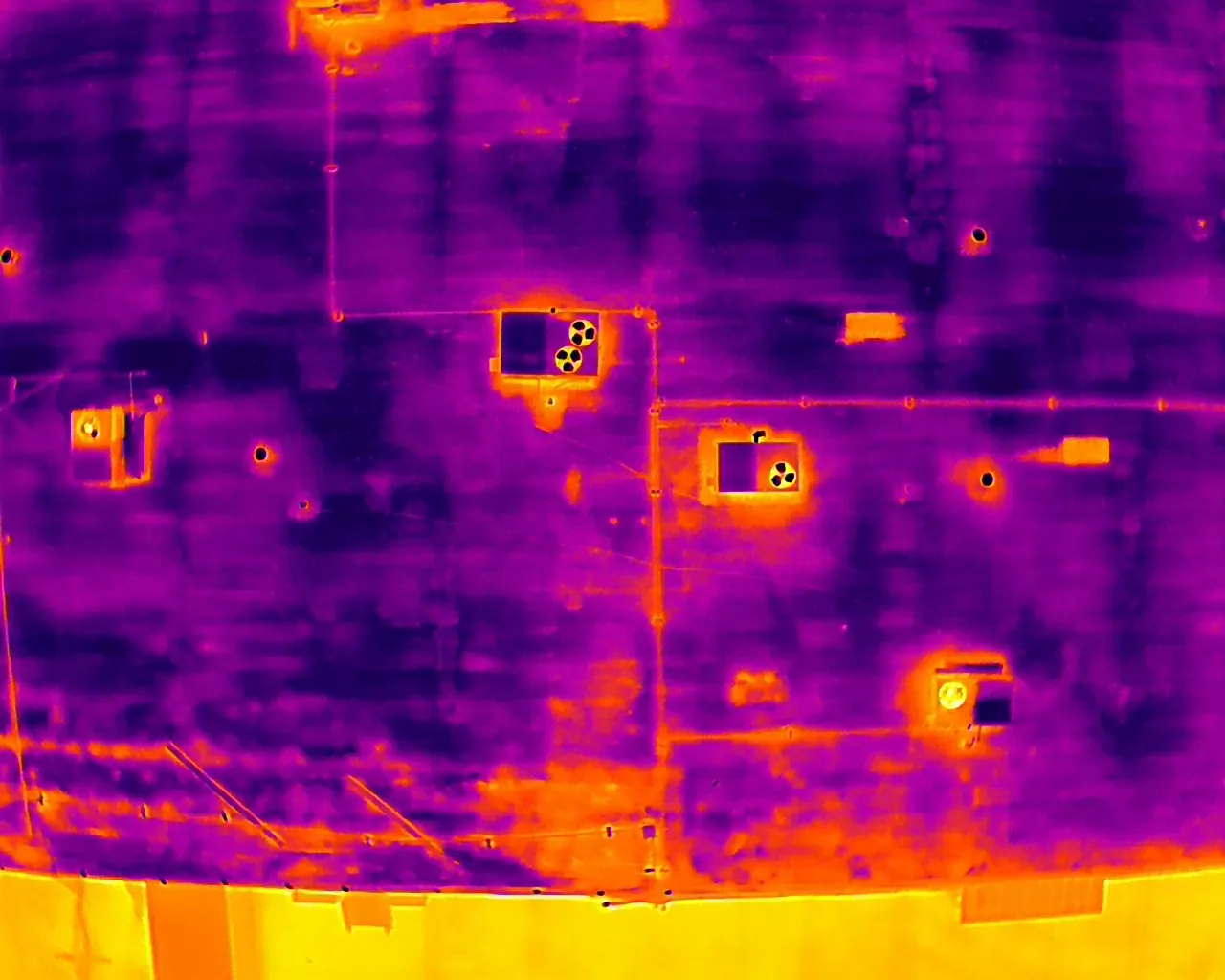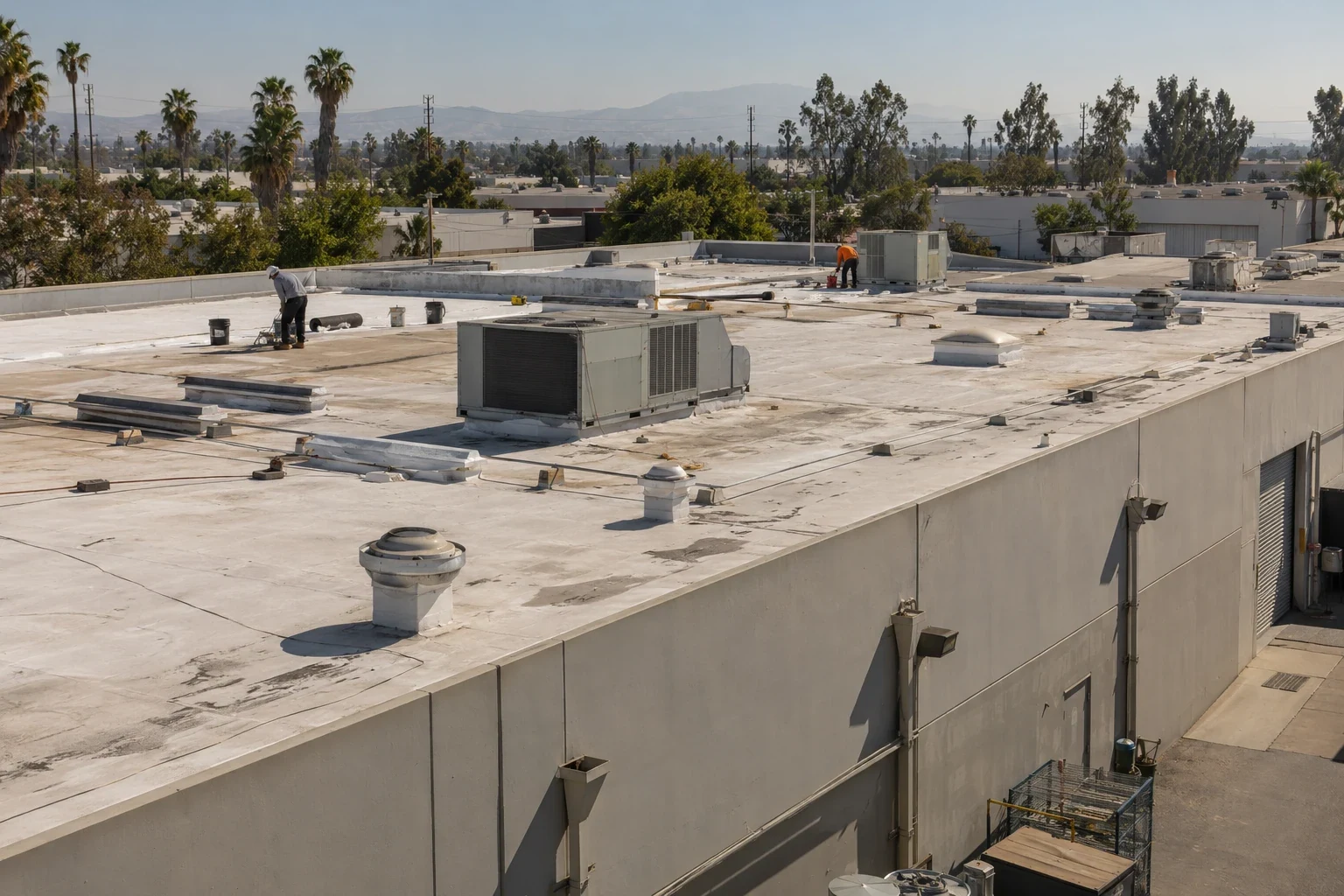
A portfolio list that says “patched” cannot tell a facility manager which seam was repaired or what remains to inspect. We build a roof record by building and zone, then keep findings, work, and open questions attached to that assembly. City planning materials associate Tapo Canyon business parks with possible office and technology-oriented industrial activity. For an asset record, the useful point is operational: note each facility’s loading constraints, rooftop equipment, and service hours rather than assuming those details from a district description. Our condition reporting process gives the owner a clear starting point for the next decision.
Give every roof a working record
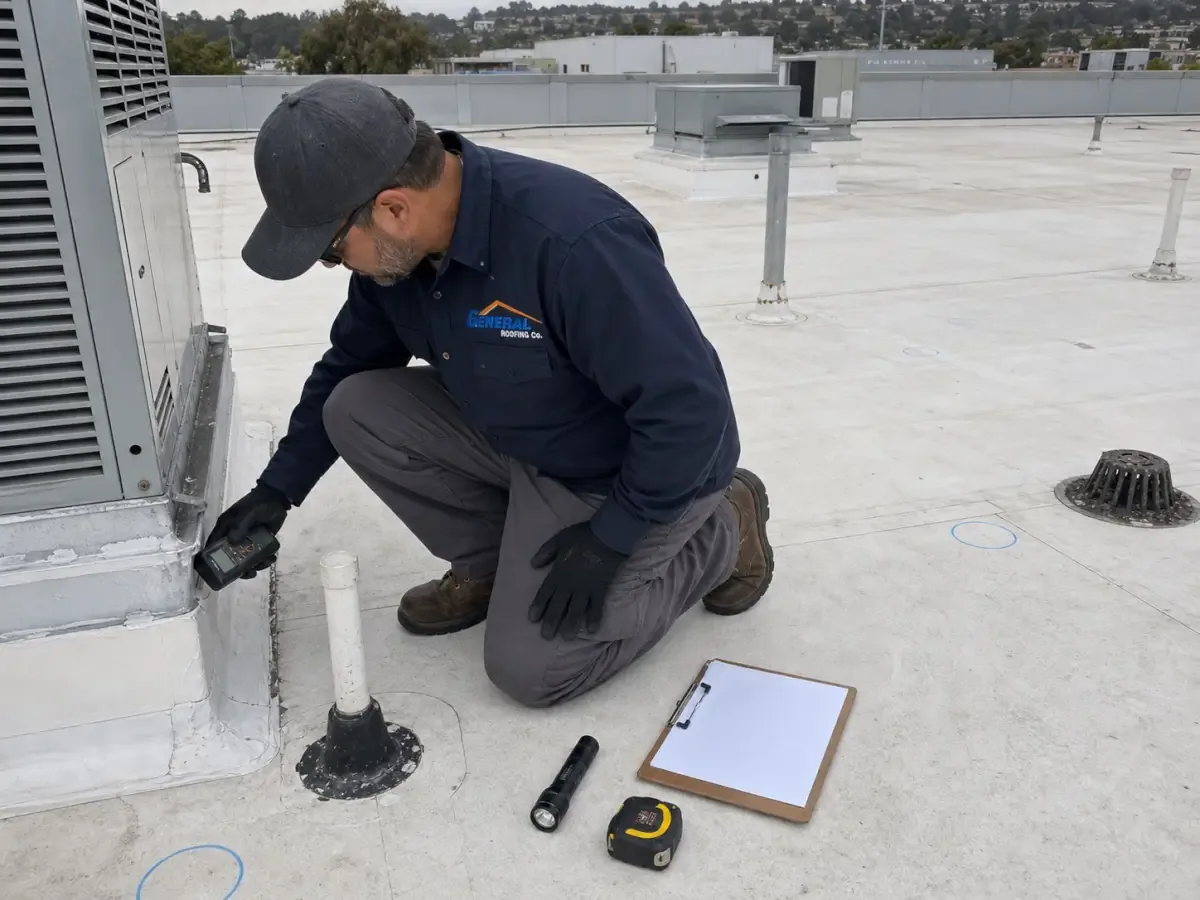
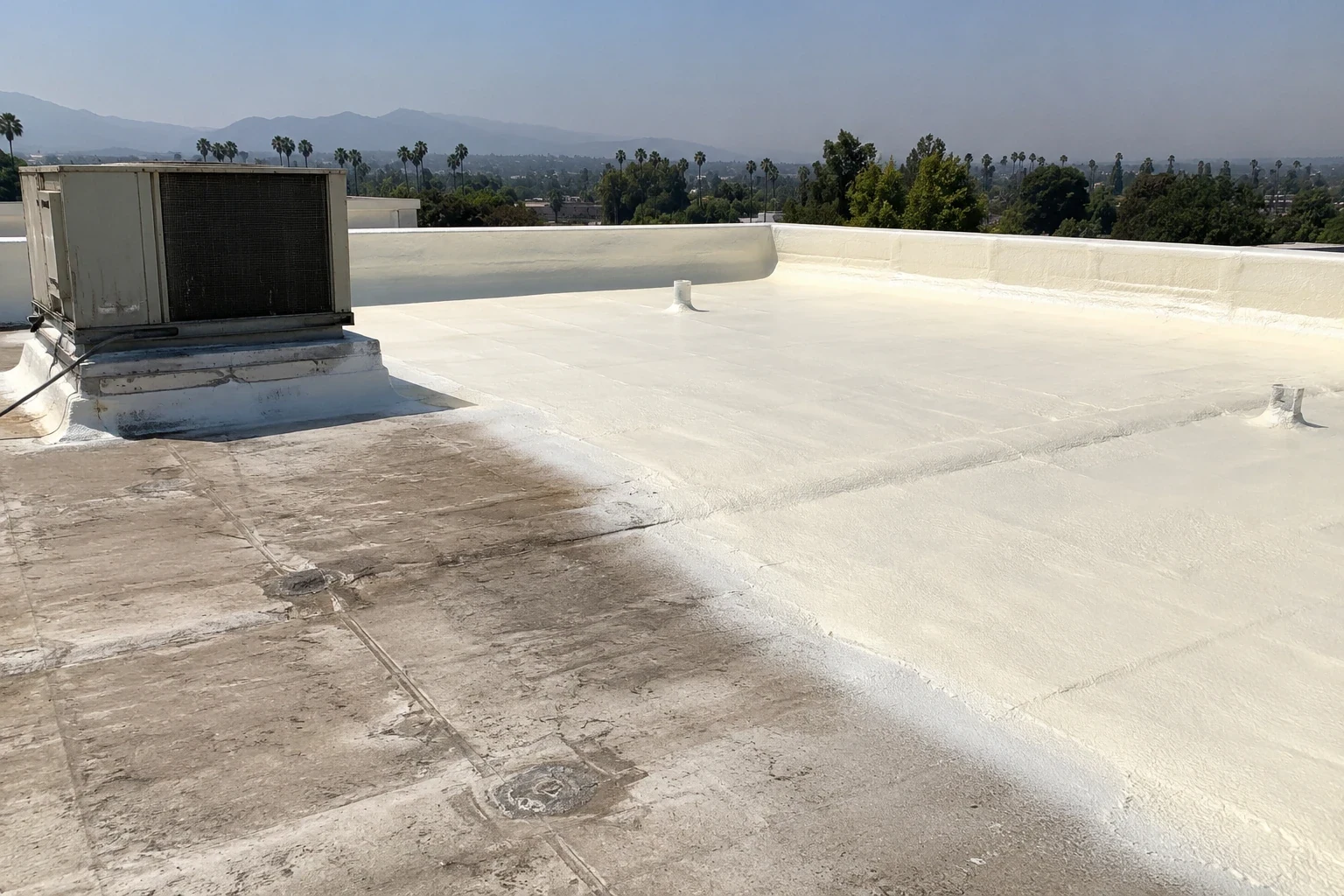
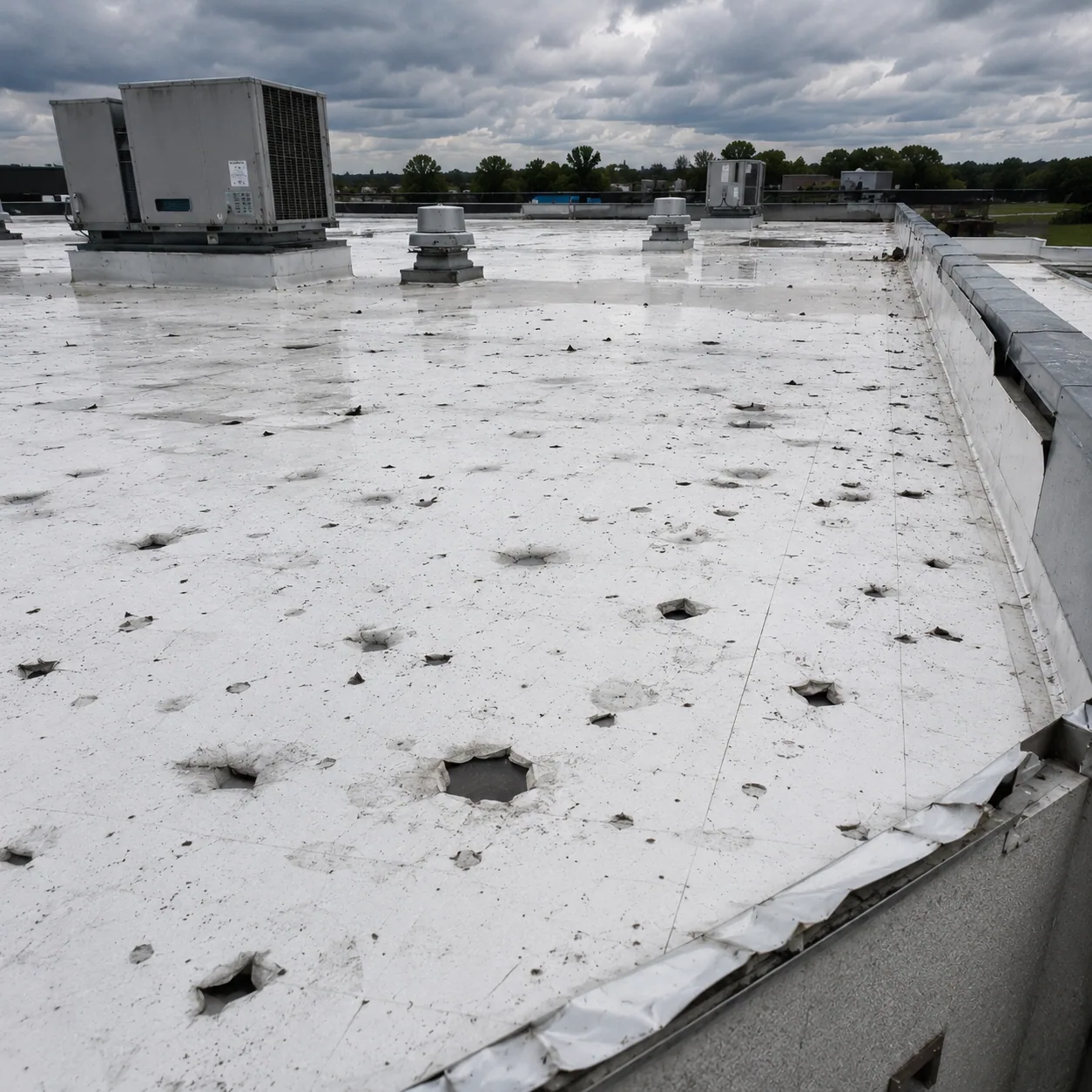
We record the roof system when it can be identified, the approximate roof zones, drainage points, penetrations, perimeter details, access limits, and visible repair history. Photos show the detail and a wider location view so another manager can find it. A condition label should lead to a decision, not stand alone. We separate confirmed wet insulation from a suspected area, a completed repair from an old patch, and an accessible zone from one that still needs a test.
For a business with several buildings, we use stable property and roof identifiers so the same name carries through inspection, proposal, and closeout. The City assigns a substantial share of local light-industrial land to the West End Specific Plan and also identifies office, research, business, and development parks there, but a district reference cannot identify a roof assembly. The record names the actual facility, roof zone, and date of inspection. The West End district can orient a local portfolio view; the field map still controls the work.
A multi-building roof program can use common fields while preserving differences in membrane, drainage, operations, and access. The warranty record tracks documents and required actions without implying coverage beyond the manufacturer’s terms.
Connect observations to an action
Each visit can track the same seams, drain bowls, curbs, edges, and prior repairs. We note whether a condition is stable, newly observed, or changed since the last inspection. When a water mark appears inside, we map the report to the roof above it rather than assuming the stain marks the entry. A survey can prioritize a test, while a controlled opening can confirm the insulation or deck condition. The record names the method and its limits.
Simi Valley’s General Plan projects hotter summer conditions, including more days above 97.2 degrees by mid-century. That planning projection is a useful portfolio risk context for exposed surfaces and inspection timing, but it does not describe any one roof. We record actual membrane movement, seam separation, or coating wear at the property. A capital planning review can then distinguish a maintenance item from a condition that may need a larger scope. A moisture survey belongs in the record with the test locations and follow-up openings, not as a blanket conclusion.
For roofs near Los Angeles Avenue or Tapo Street, the City’s façade-improvement record supports treating those names as established commercial corridors. They help assign a local property group, while the address and roof map identify the inspected building.