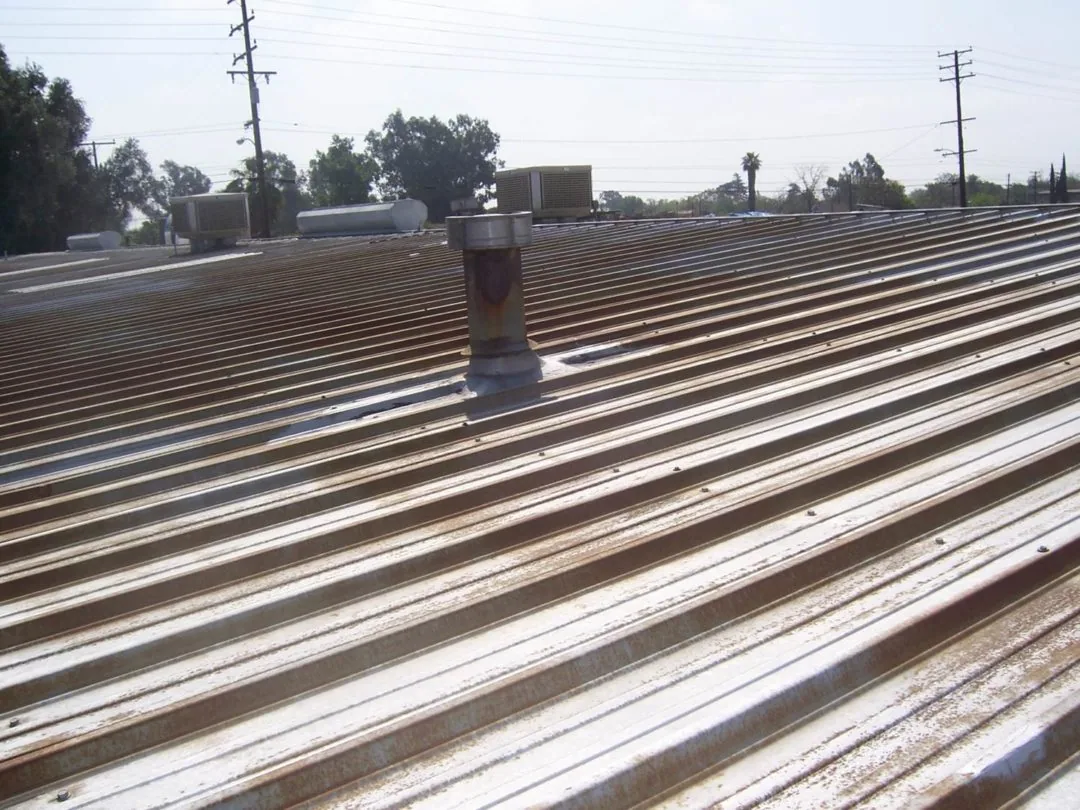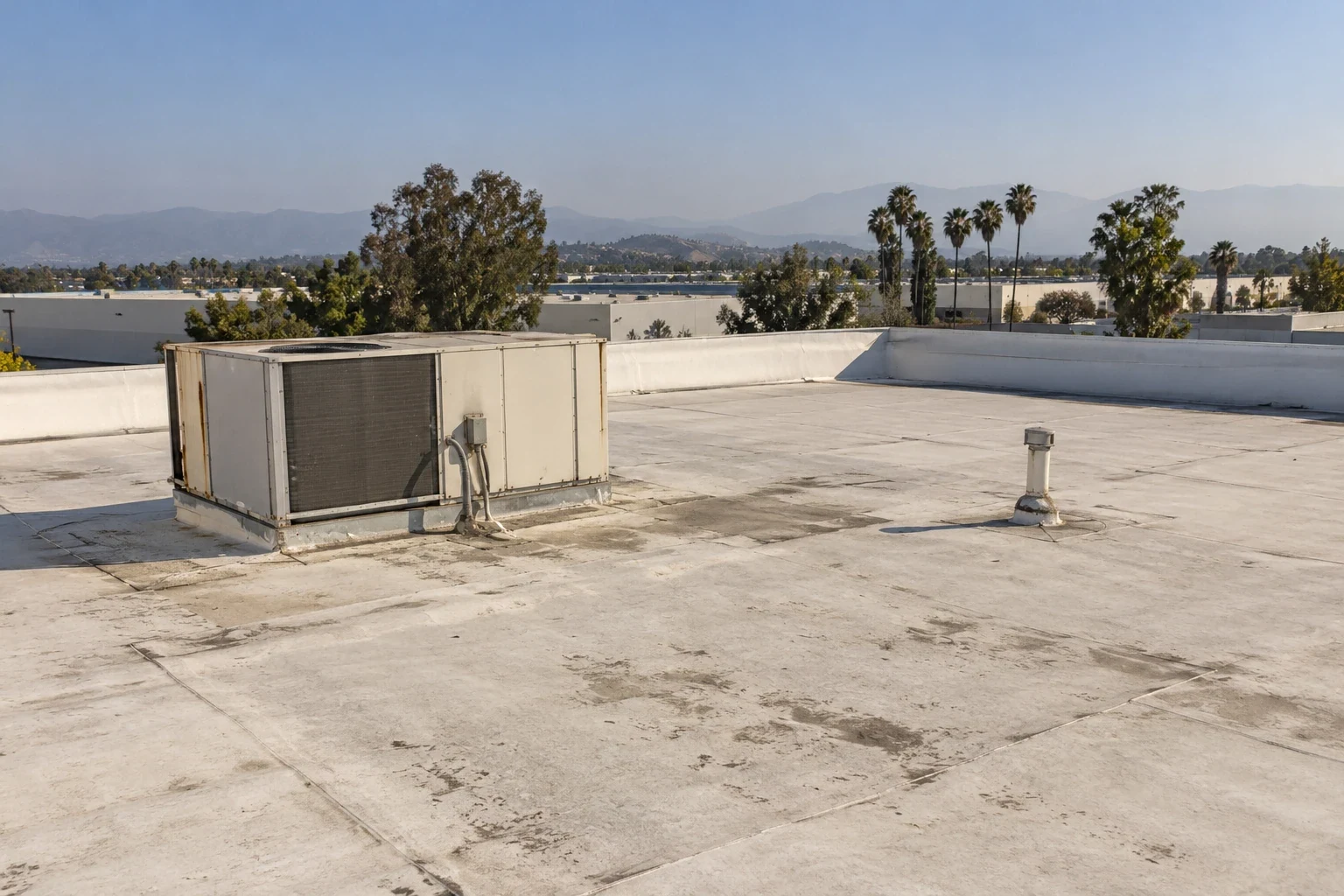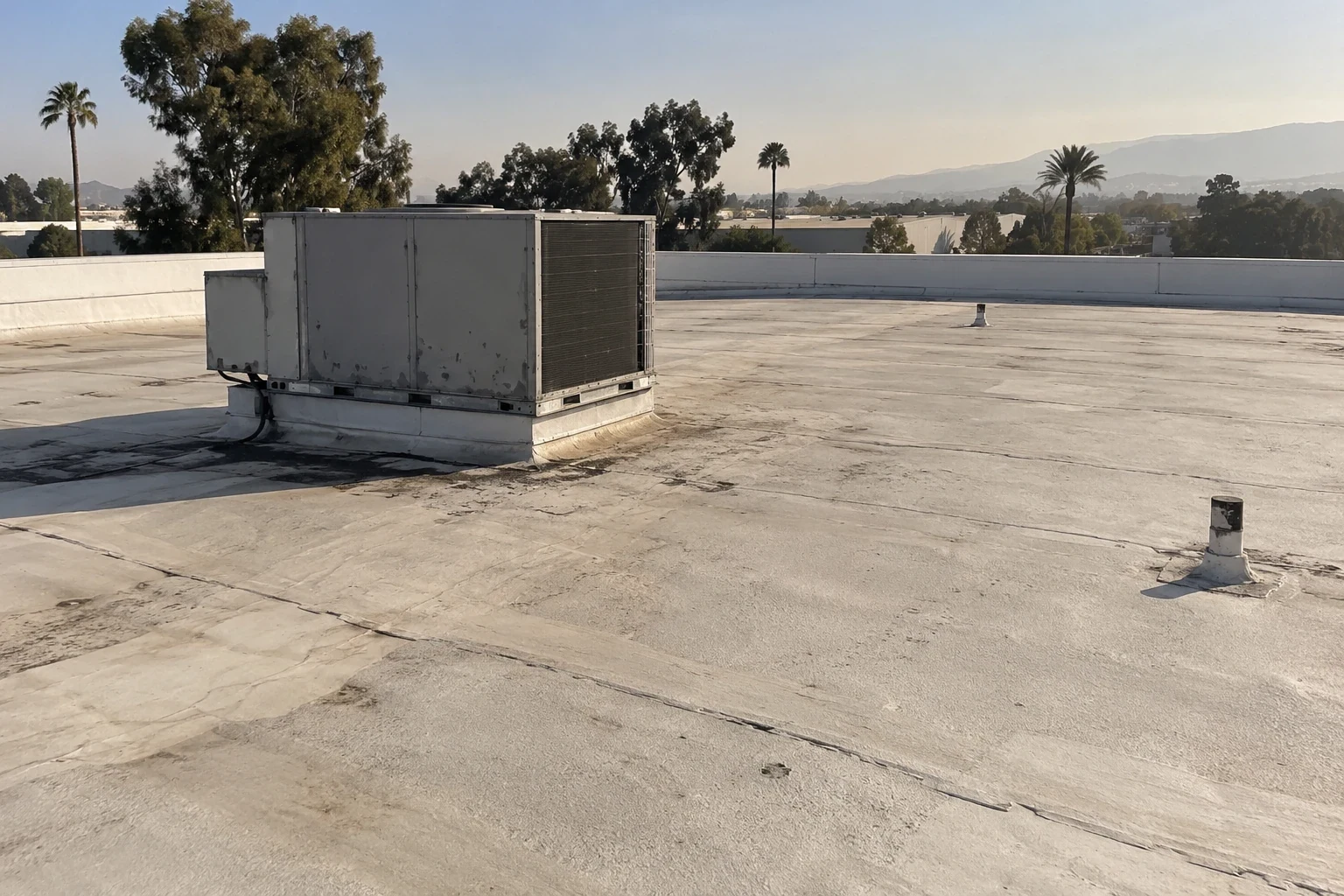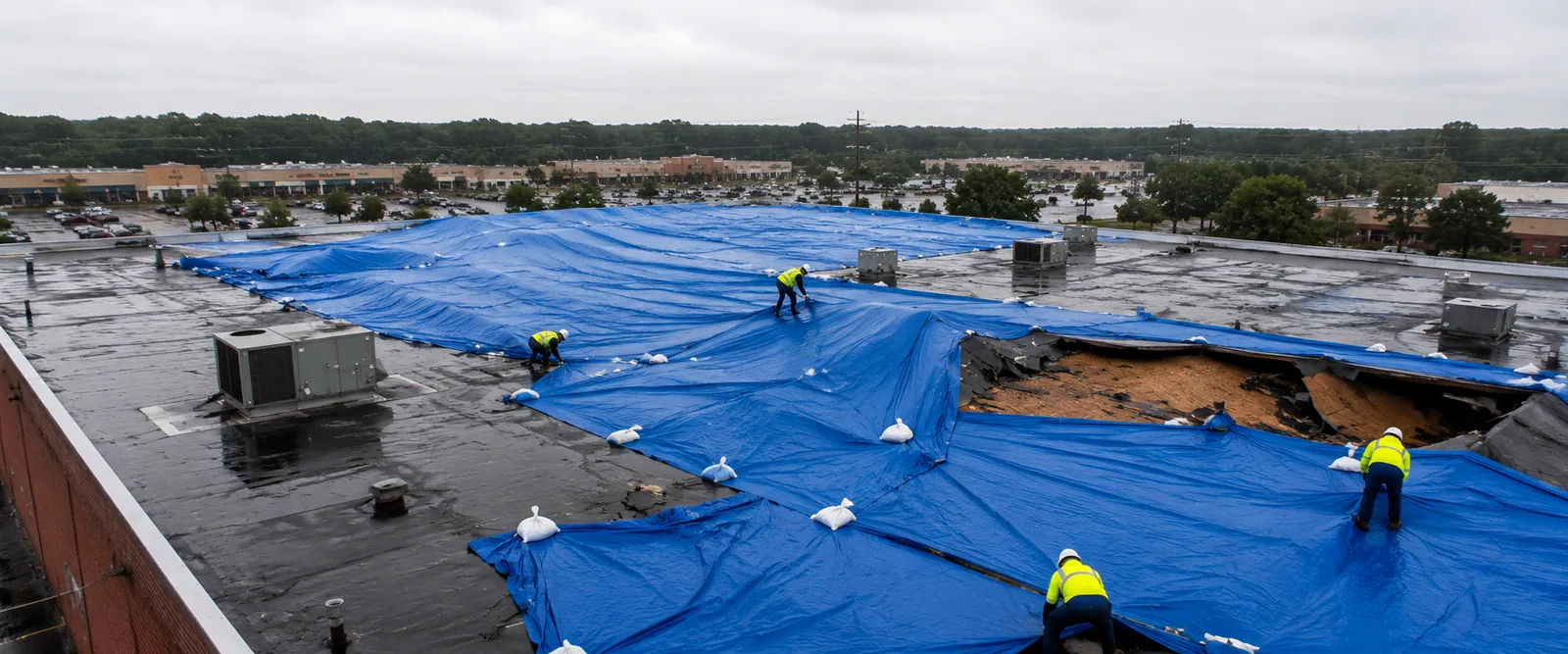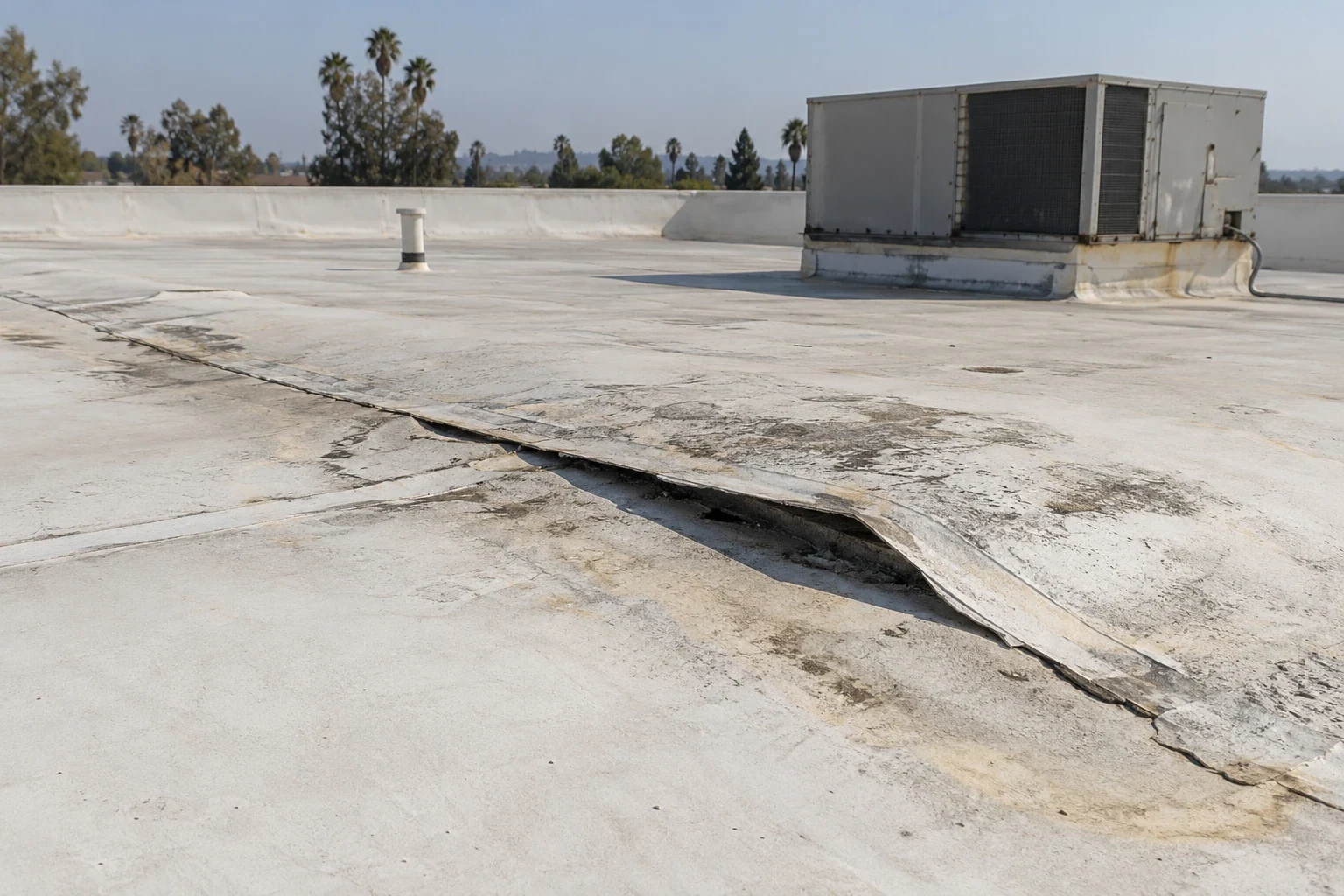
A lifted edge, displaced metal, or a loose membrane corner gives us a starting point, not a complete damage map. On a commercial roof in Simi Valley, we document the affected zone, compare nearby terminations, and check whether the field remains attached. The General Plan describes periodic Santa Ana winds as part of the region’s wildfire context. That broad condition does not establish what happened to an individual roof. We inspect the assembly itself and identify the repair limit before material is removed. A storm damage roof assessment can begin with the reported date, interior symptoms, and safe access details.
Separate the edge from the field
Wind-related conditions often appear where one roof component meets another. We check edge metal, coping, perimeter fastening, corners, rooftop curbs, and penetrations before assuming that a visible flap describes the full condition. A displaced termination may expose the membrane edge, while a split near a curb can follow a different movement path. Photographs pair the close detail with a wider roof-zone view.
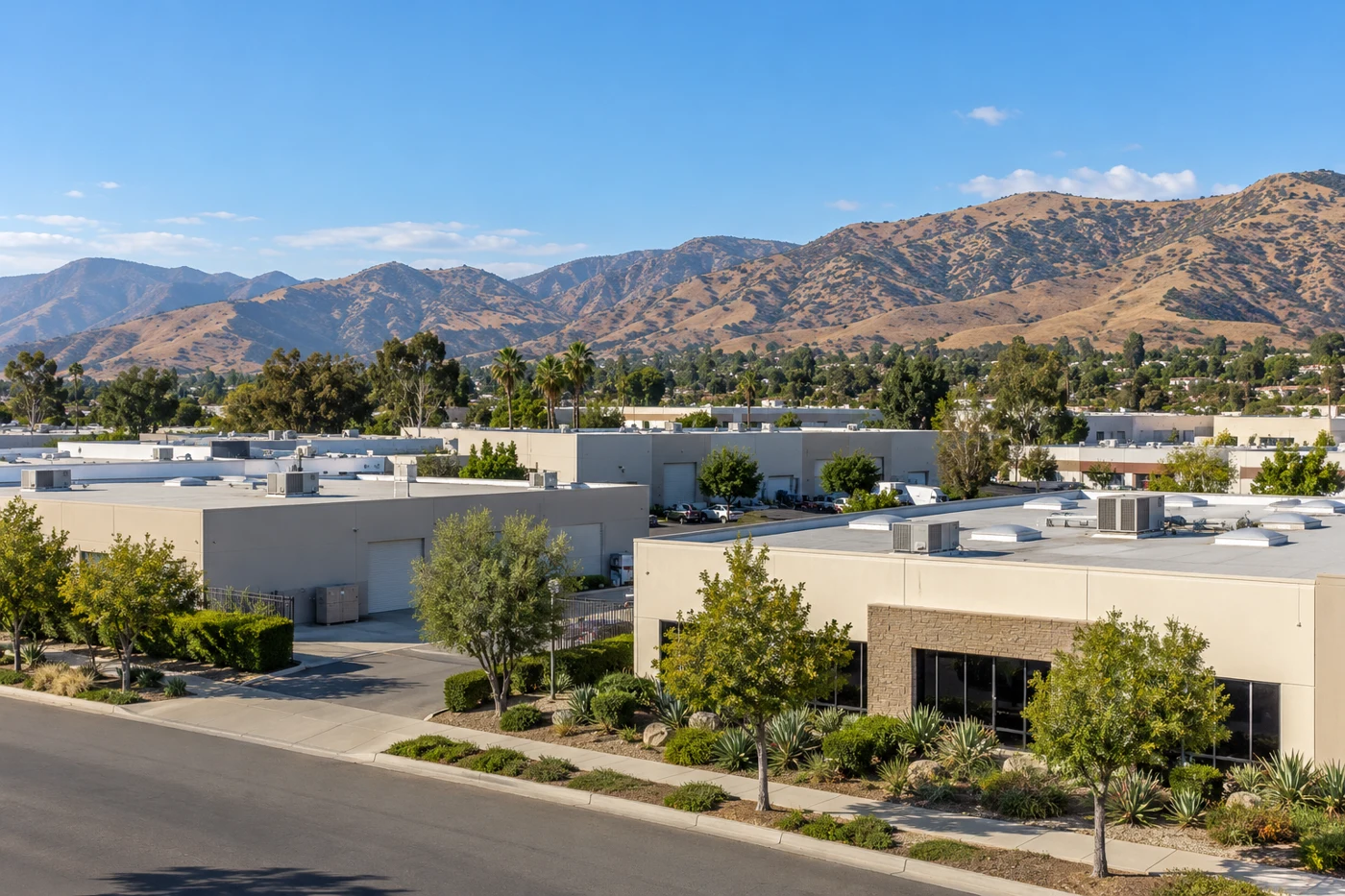
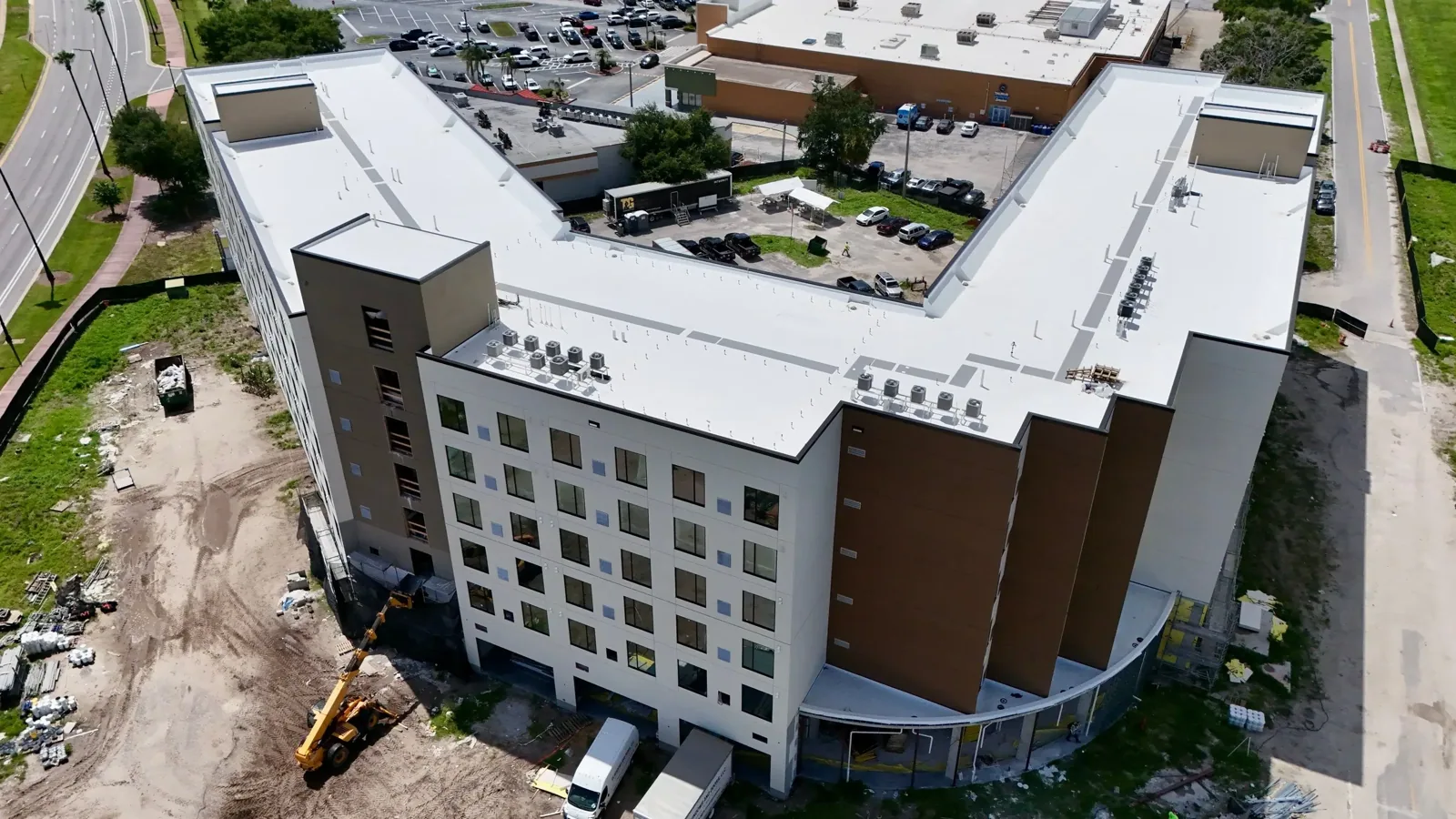
A facility in the West End planning area needs its own roof map, perimeter details, and access notes. We mark corners and edges individually, then compare the membrane field between them.
At a curb or expansion joint, movement can concentrate at a small transition. We examine sealant, counterflashing, seams, and the surface immediately around the detail. An interior leak below another roof bay may be related or independent, so the inspection tracks each symptom separately. A commercial roof inspection records accessible and inaccessible zones, the test performed, and the next evidence needed.
Trace openings before setting the repair
A wind-damaged roof can admit water at a tear, but the ceiling mark may appear somewhere else. We compare the reported room with seams, drains, deck flutes, insulation joints, and penetrations above it. Where the path remains uncertain, a moisture survey can help prioritize a controlled test, but temperature patterns alone do not confirm wet insulation. We explain the proposed opening, the material to protect below, and the dry-in limit before exposing the assembly. The boundary changes only when a test reveals a condition that warrants more work.
Older patches matter because they may hide a prior repair edge or a different membrane. We document patch material and lap direction without assuming its installation date or cause. If a section can be tied into sound material, a commercial roof repair can remain limited to that area. If attachment problems, wet insulation, or recurring splits extend beyond it, we show the owner where a broader review begins. A moisture survey can support test placement when roof conditions are suitable.
City materials describe Tapo Canyon business parks as medium and larger buildings with potential office or high-tech industrial uses. That land-use context makes rooftop service clearances and operating schedules relevant questions, not assumptions about any one building. We coordinate equipment access with the facility contact and keep the repair map tied to the actual curb, edge, or roof zone.