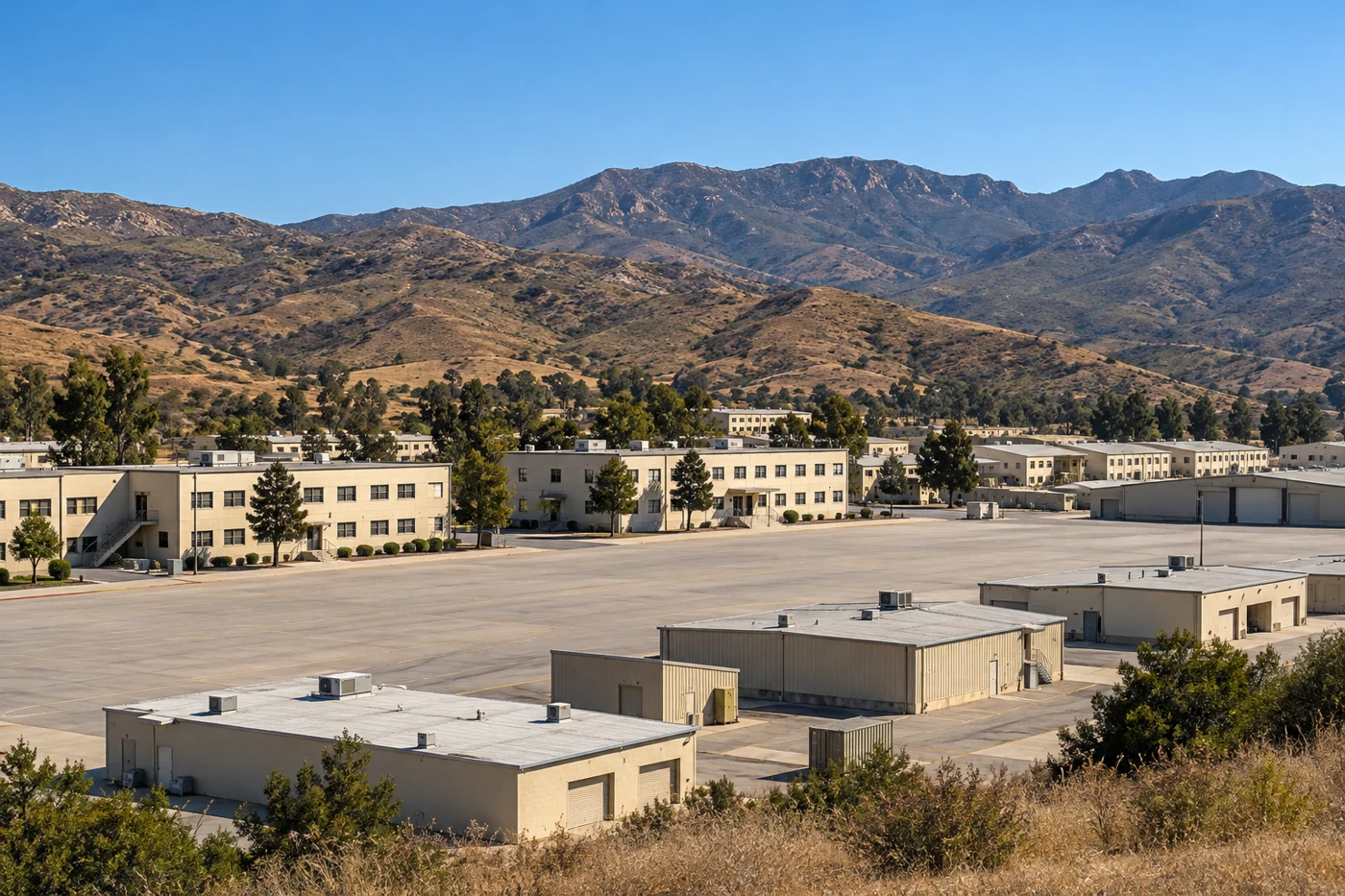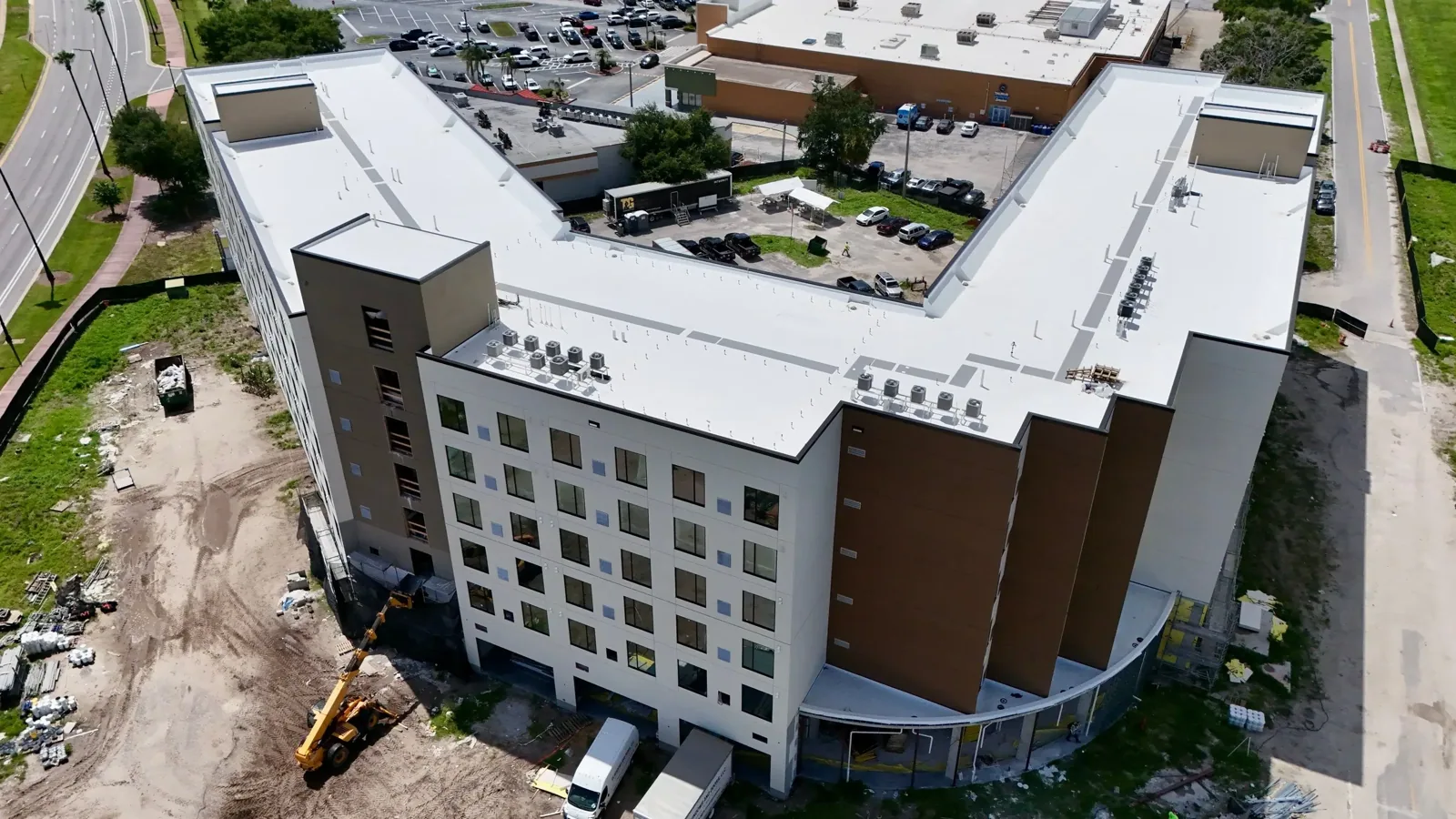
A maintenance building and an assembly hall put different demands on a roof, even when both sit within one controlled installation. We inspect the membrane field, drains, wall transitions and equipment curbs before defining a work zone. Daniels Hall Army Reserve Center in Sherman Oaks is documented with an assembly hall and a three-bay maintenance building. Those uses illustrate why roof planning must separate occupied areas from service functions. Simi Valley's Tapo Canyon business park also contains medium- to large-scale office and high-technology industrial properties, a different setting with its own access needs. For Army property, our inspection records the actual assembly and the approval point before a crew opens it. A commercial roof condition inspection starts that record.
Separate occupied and service roofs
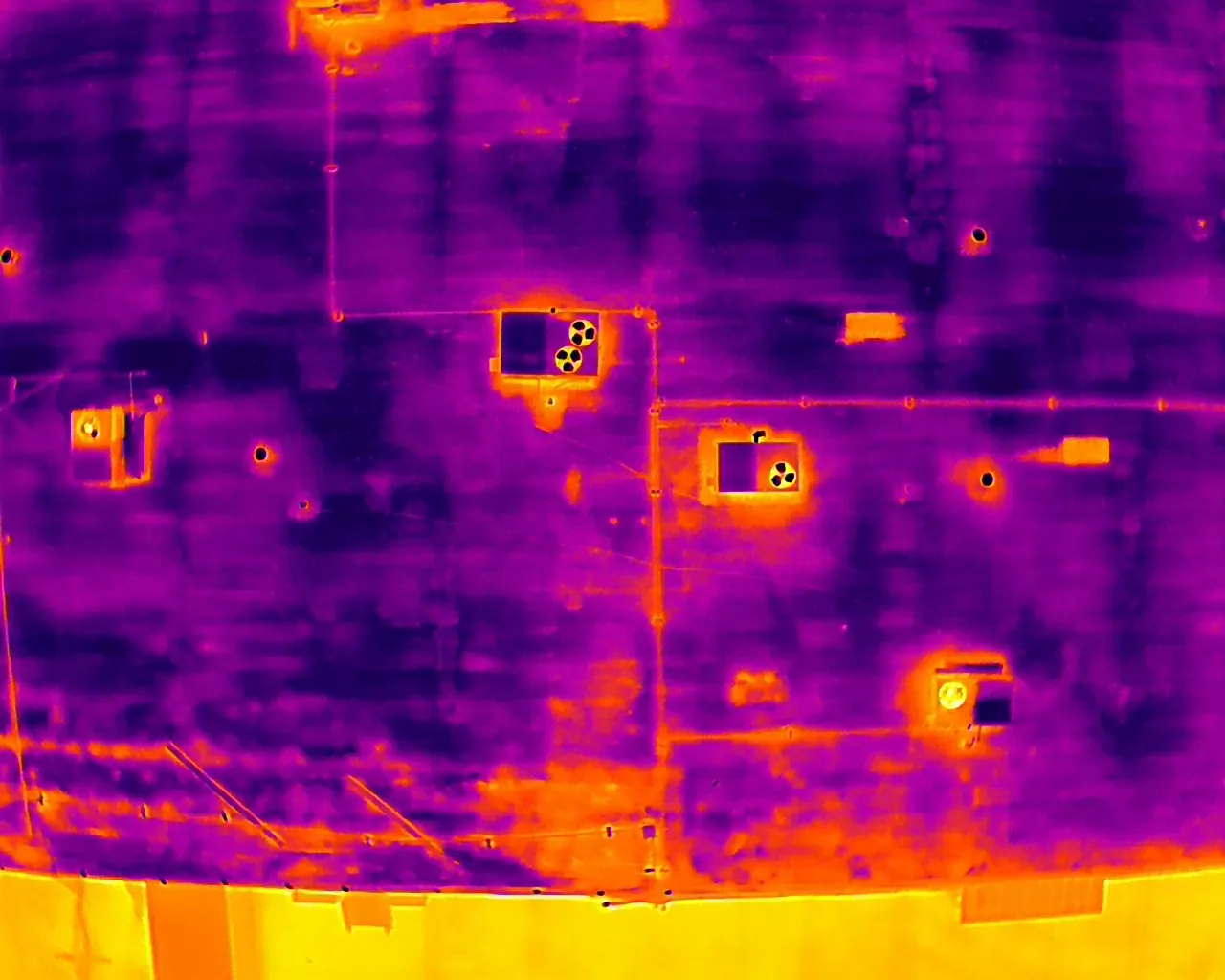
Installation property can include administrative rooms, shops, storage, vehicle maintenance and assembly spaces. The roof plan should map each structure and identify additions, equipment zones, drains and earlier repairs. We verify whether adjoining areas share one membrane or meet at an expansion joint. Records guide the walk, but field observations show whether seams hold and insulation is dry.
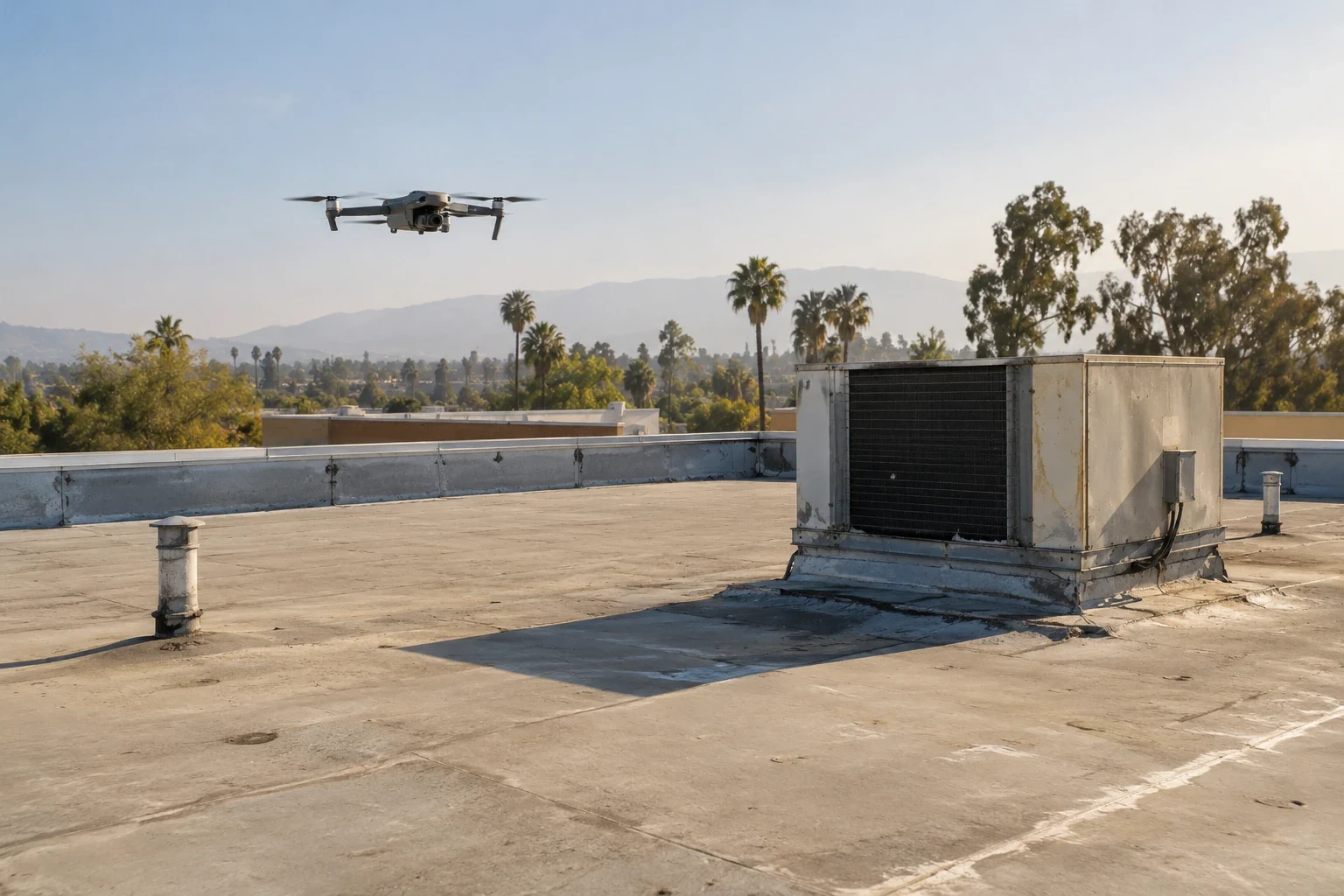
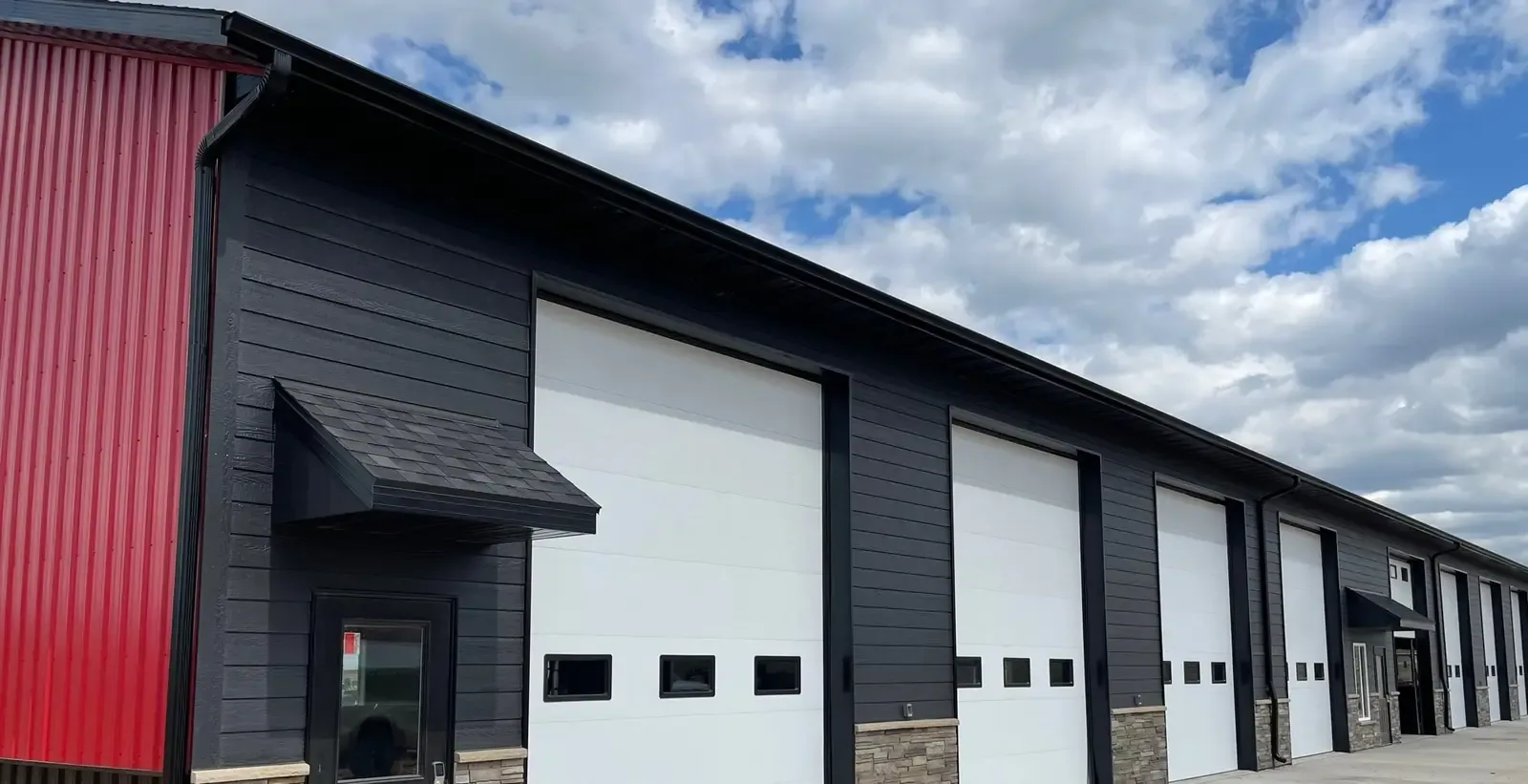
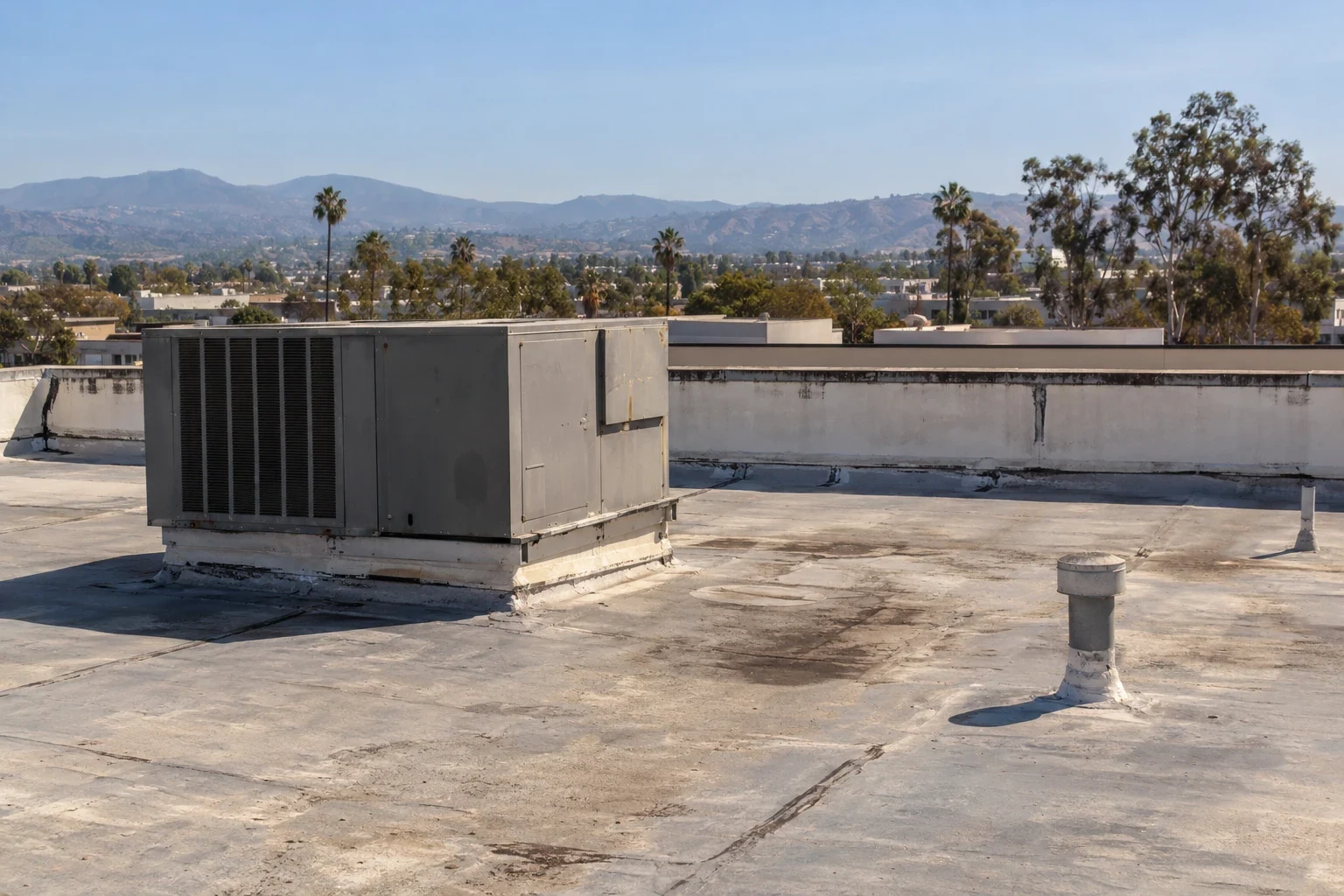
At maintenance buildings, exhaust, supports and service traffic put curbs and penetrations in view. We check flashing, membrane turn-up and fasteners. An assembly or administrative roof can have different drainage and interior sensitivities, so each photograph stays tied to its own zone.
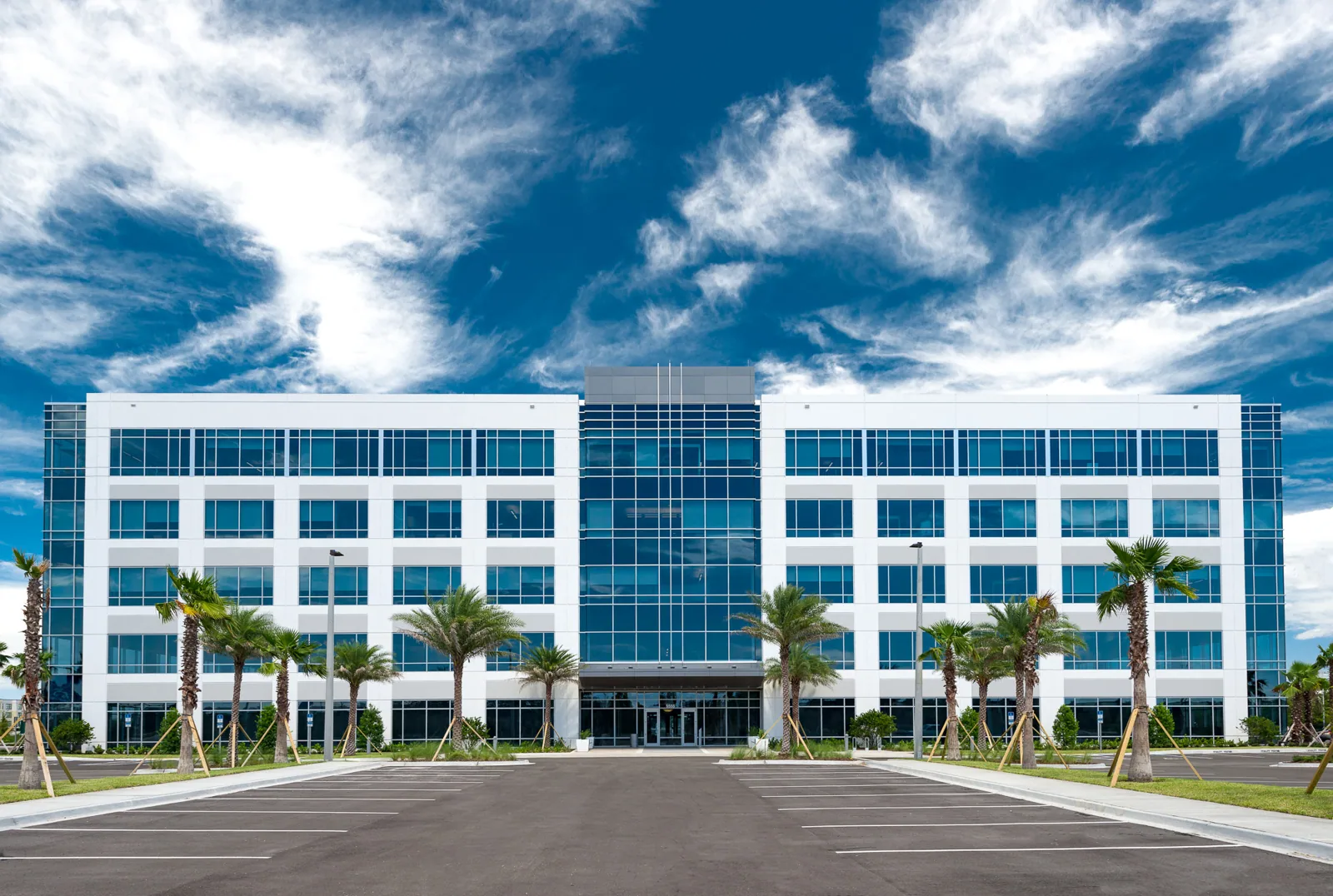
A government building roof review can help compare occupied space. An office roof assessment offers a useful comparison for occupied rooms. Each installation structure still needs its own system, access and condition record.
Inspect the interfaces first
Leaks around a maintenance bay can originate at a curb, duct, drain, wall or seam rather than over the interior stain. We compare the reported room with roof slope and inspect connected details. An opening at a curb can admit water into insulation, while a split drain connection may affect a larger field. A controlled test or core is useful only when the location, restoration method and approval are set before the assembly is opened.
Check the edge next. Metal termination can loosen, coping joints can separate and sealant can lose adhesion as materials move. We identify where the membrane ends, how it attaches, and whether the substrate can hold a repair. The proposed work should preserve a sound tie-in, including the transition between roof zones or an addition. A roof-edge and coping repair is scoped around the condition found, not just the visible piece of metal.
State Route 118 and Los Angeles Avenue are major Simi Valley arterials. For deliveries in the Ventura service area, the facility contact still confirms authorized entry, escort timing and staging limits. We note those controls on the roof plan.