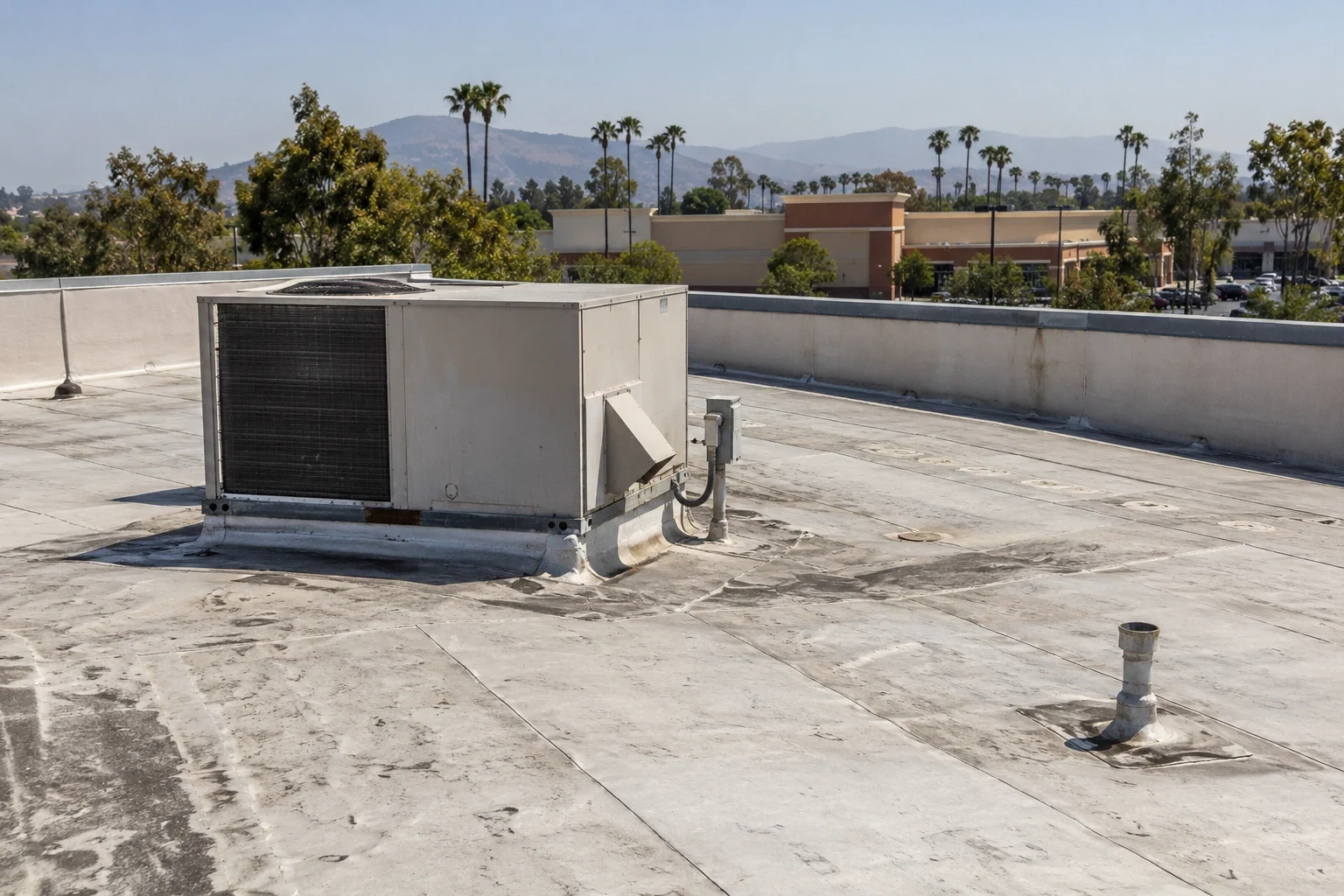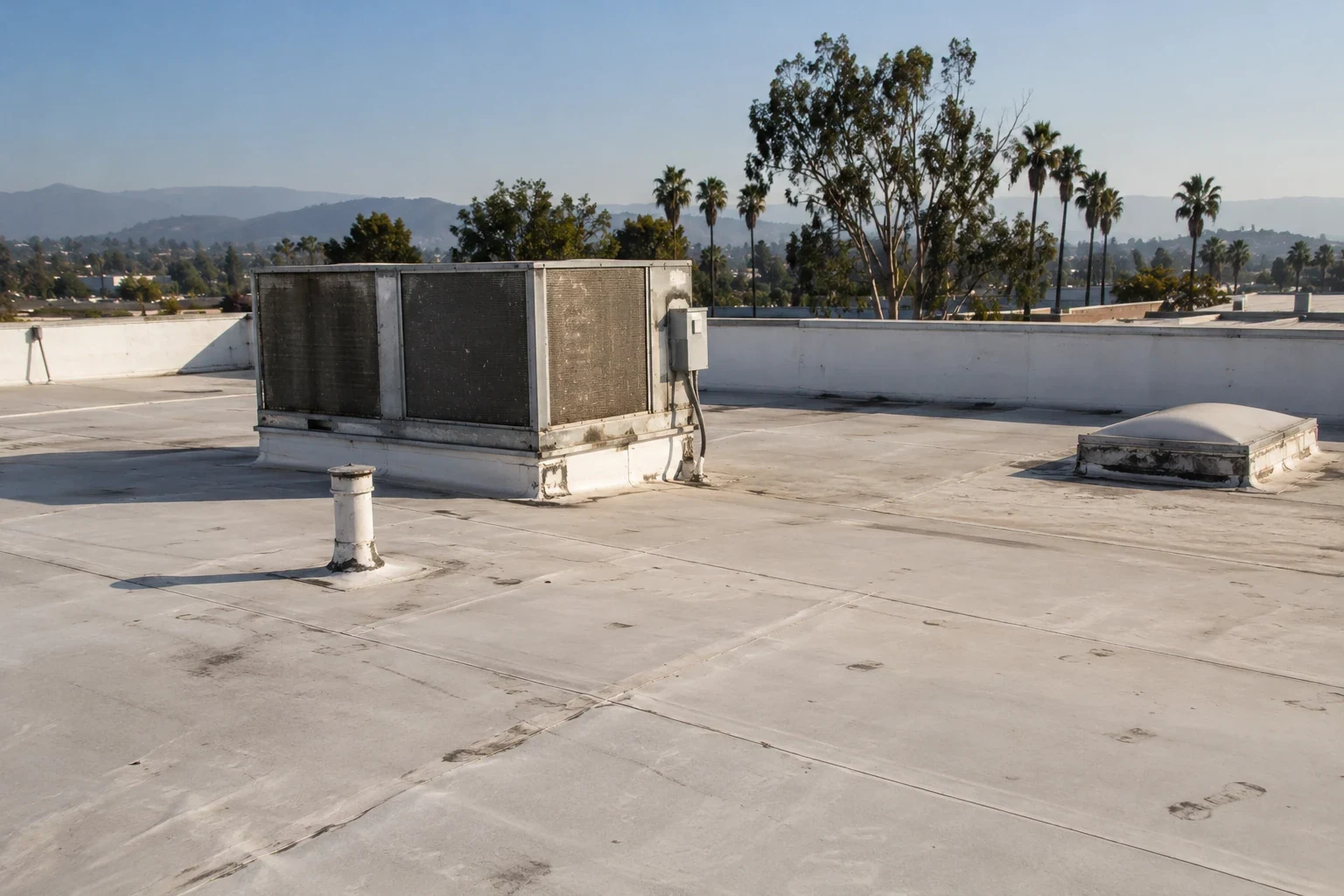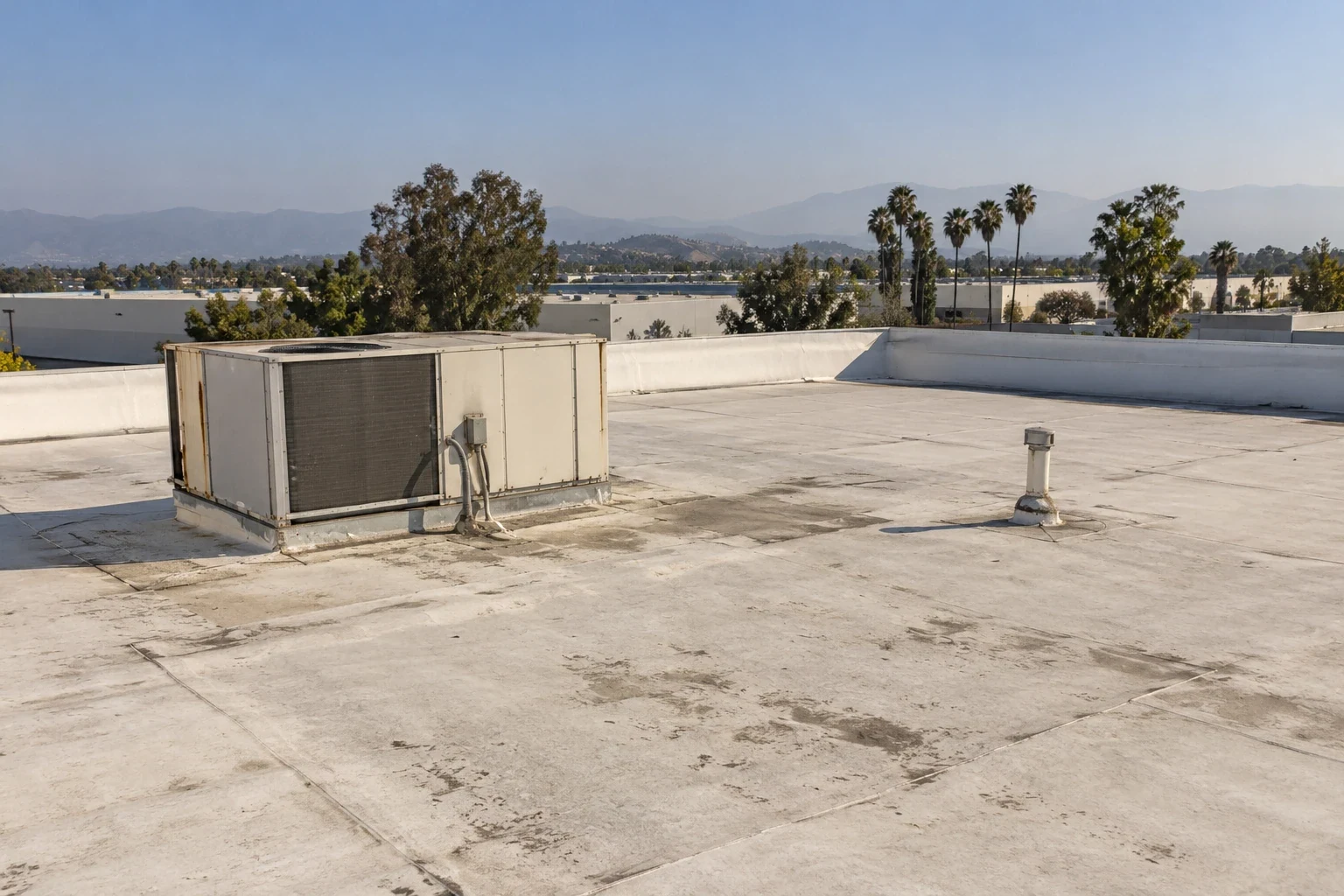
A split at a refrigeration curb can send water toward a sales-floor ceiling far from the roof opening. At a grocery store in Simi Valley, CA, we match the interior report to roof zones, drains, equipment supports, and the membrane transition before setting removal limits. The store contact identifies receiving periods, restricted areas, and service access. The roof determines the repair; the operating plan determines how we reach it and close it.
The City projects hotter summers, including more days above 97.2 degrees and higher average temperatures by mid-century. That exposure makes seam movement and curb flashing part of the inspection, but it does not prove damage at a particular store. We document the observed assembly and prepare a commercial roof inspection that separates confirmed defects from the next test.
Keep refrigeration zones distinct
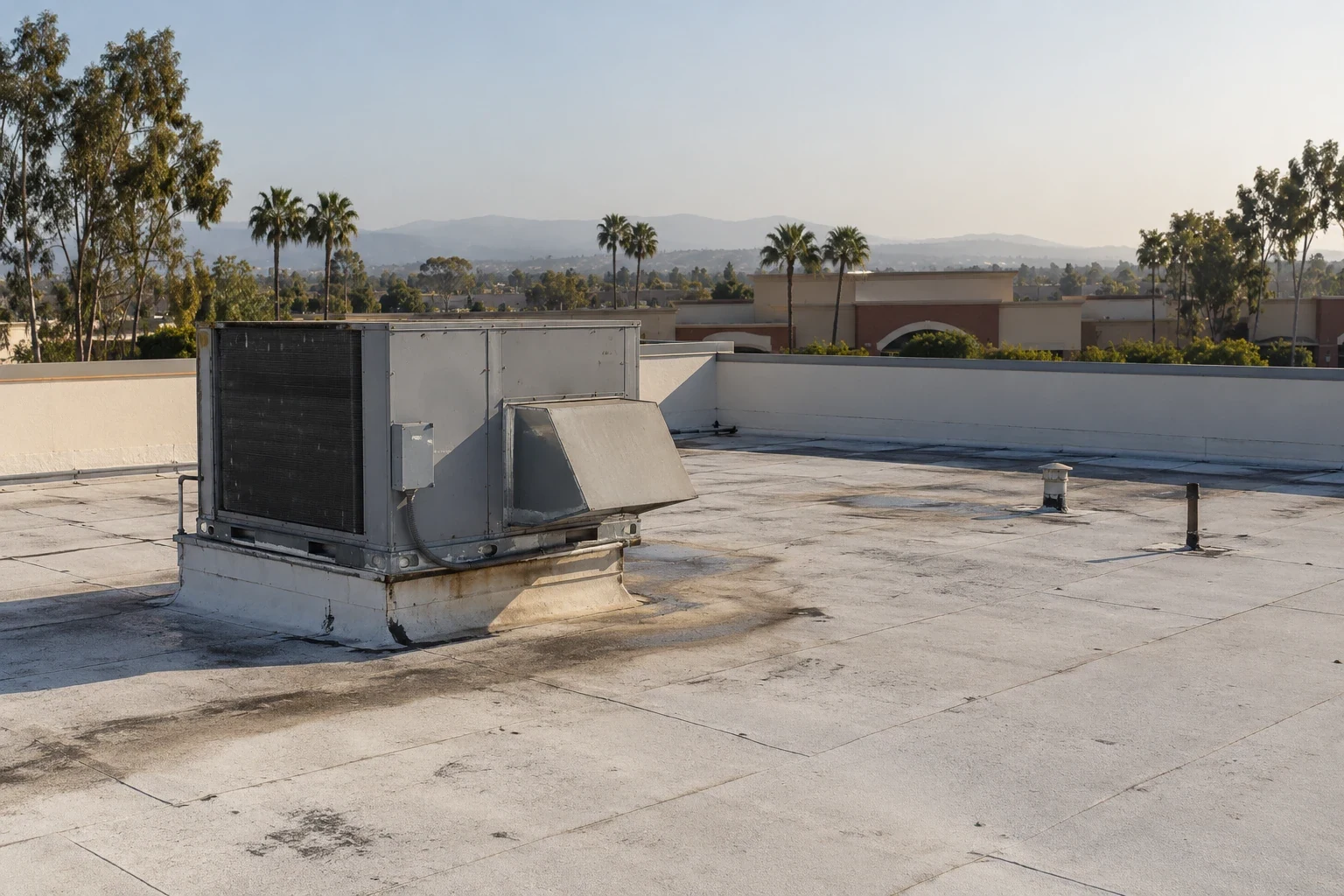
Refrigeration equipment, exhausts, electrical lines, and roof drains create separate interruption points in a membrane. We mark each curb, support, penetration, and patch in relation to the leak report. A stain near a walk-in area may trace to a curb across the roof or to a drain bowl with a failed connection. We inspect the membrane and flashing at the likely routes instead of assigning the ceiling location as the repair boundary.
Access around equipment matters during both inspection and repair. We confirm service clearances and identify who can isolate or move an item if its flashing must be rebuilt. The roofing scope stops at the roof interface, while the store's refrigeration technician handles the equipment connection. For a portfolio that also includes cold-storage roof zones, we keep each building's temperature controls and access requirements in its own work plan. A curb and support review records which connection needs roofing work and which remains with another trade.
Check the water path at drains
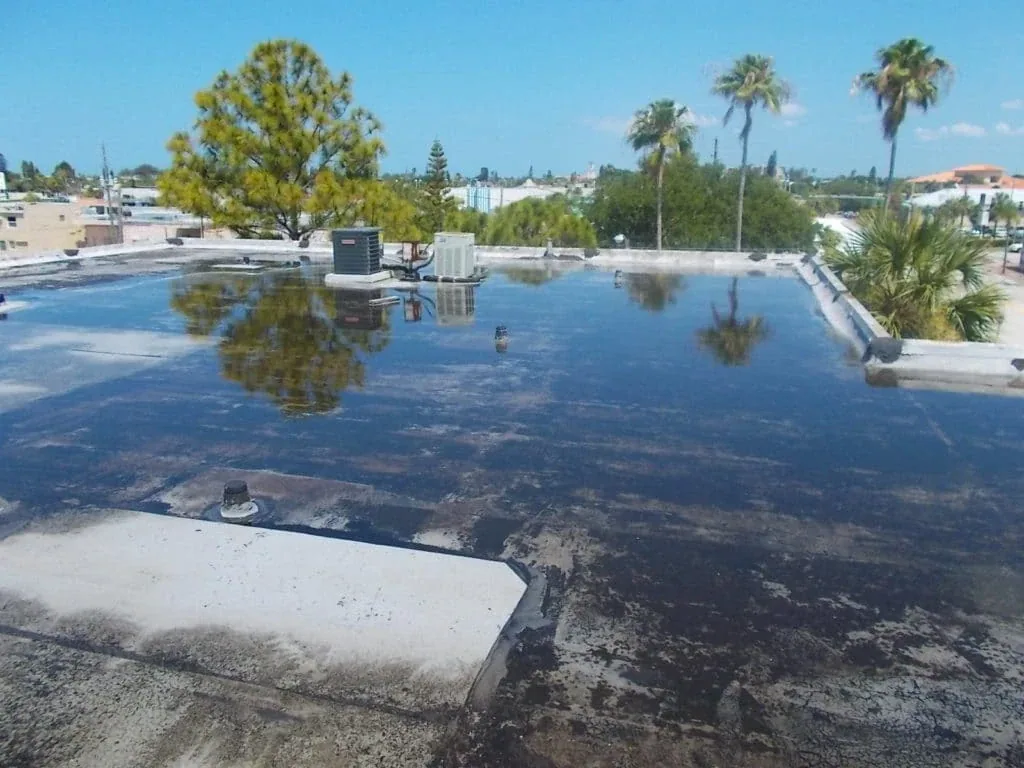
Grease exhaust, condensate lines, and roof debris can leave residue or moisture near an outlet. We inspect the drain bowl, strainer, clamping ring, membrane termination, and surrounding roof plane. A clear strainer does not confirm a secure connection beneath it. We compare the water line with the slope and test nearby seams before proposing a patch. If ponding continues after the drain is open, a grade or settlement review may be needed instead of another coating layer.
Where water remains near an outlet, we compare the basin elevation with the surrounding field and note whether the water line crosses a seam. Clearing the drain can restore flow, while a low field or settled deck calls for a different review. Fixed-point photographs help a later visit compare the same area.
At a curb, the metal and membrane need to meet without a gap, unsupported corner, or sealant-only repair. We check flashing height, fasteners, seams, and signs that later equipment service disturbed the transition. A drain or scupper repair can be written as a separate item when the outlet fails independently. For a store that shares a larger retail property, the broader shopping-center roof scope can include common-area interfaces, while each tenant roof area still needs its own condition map.