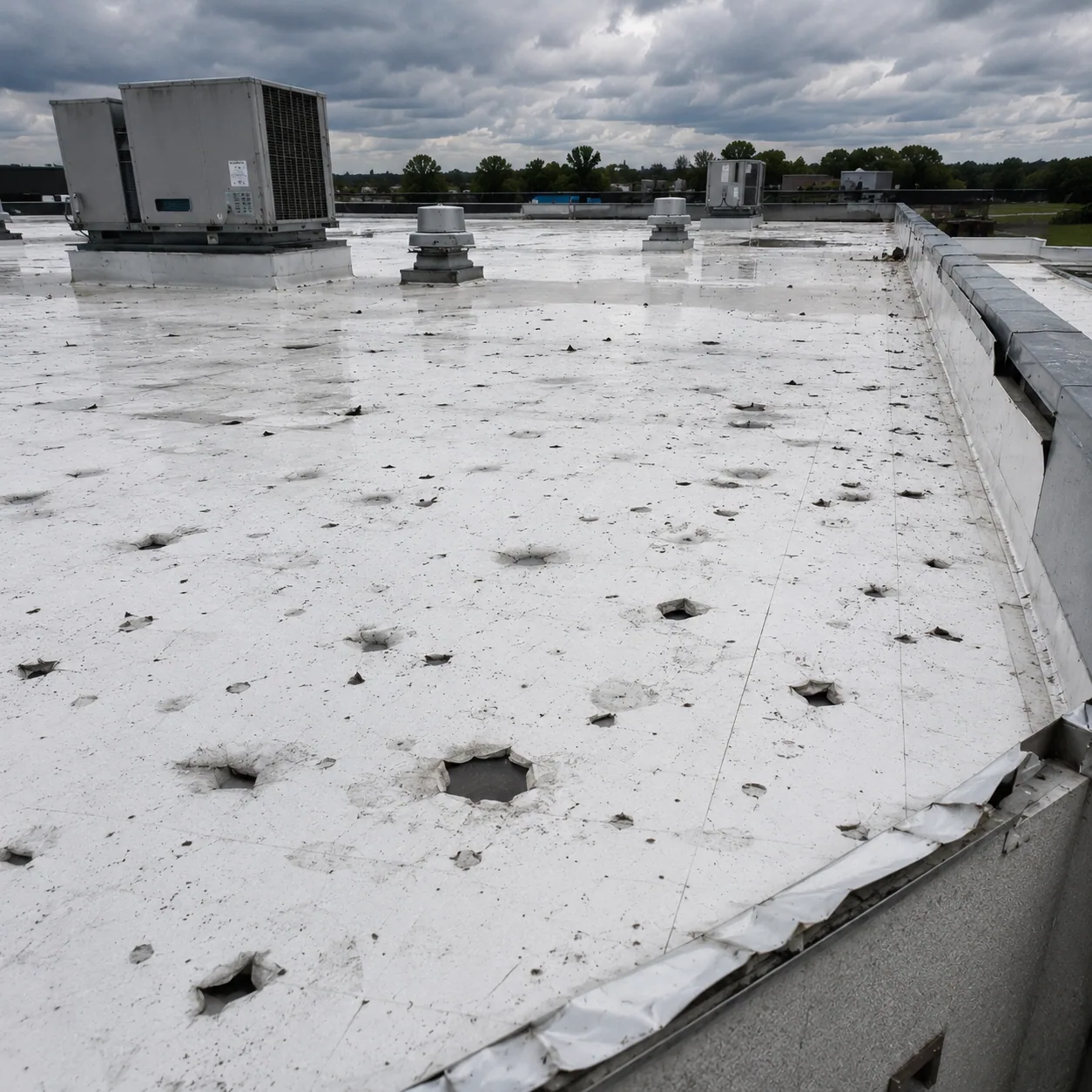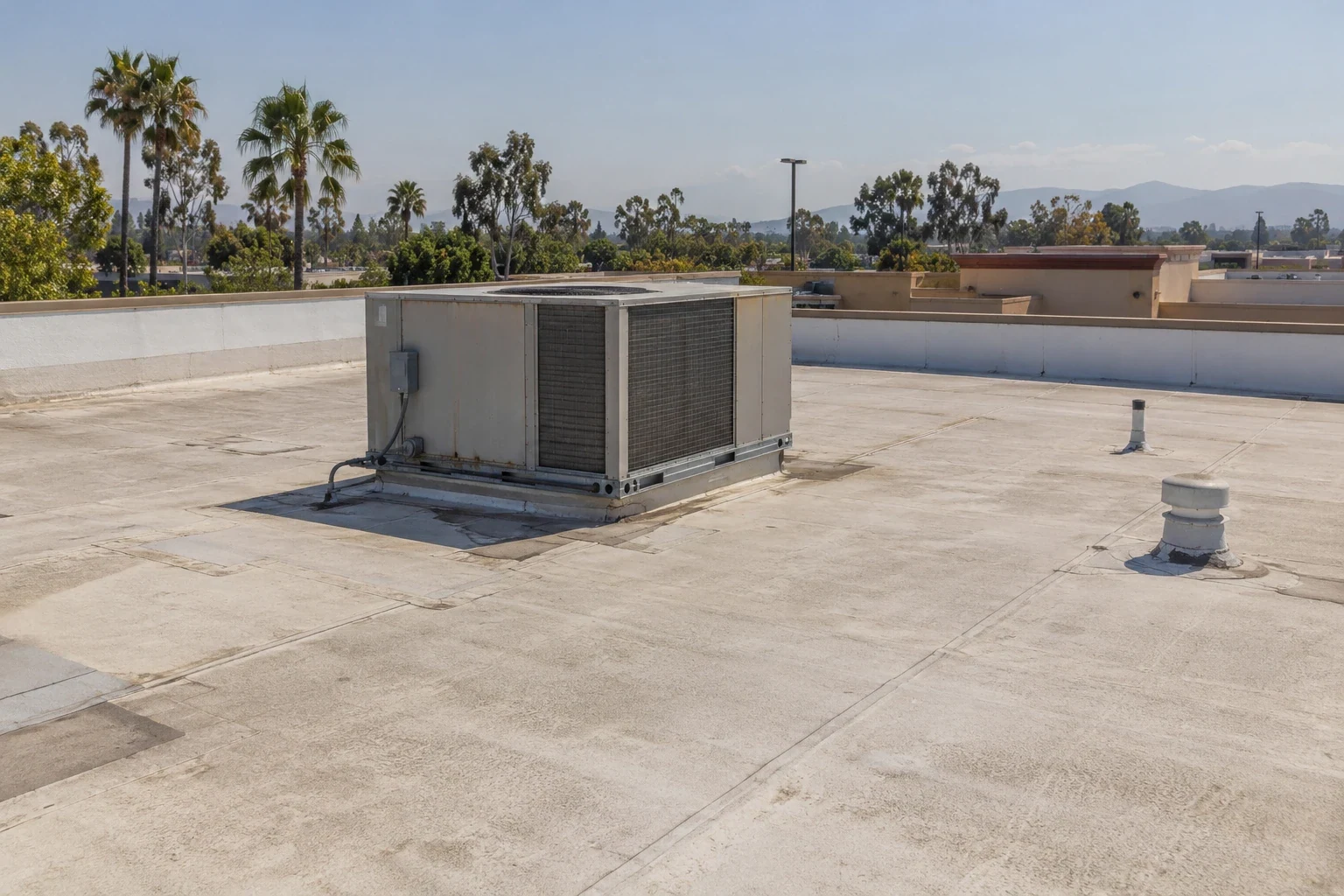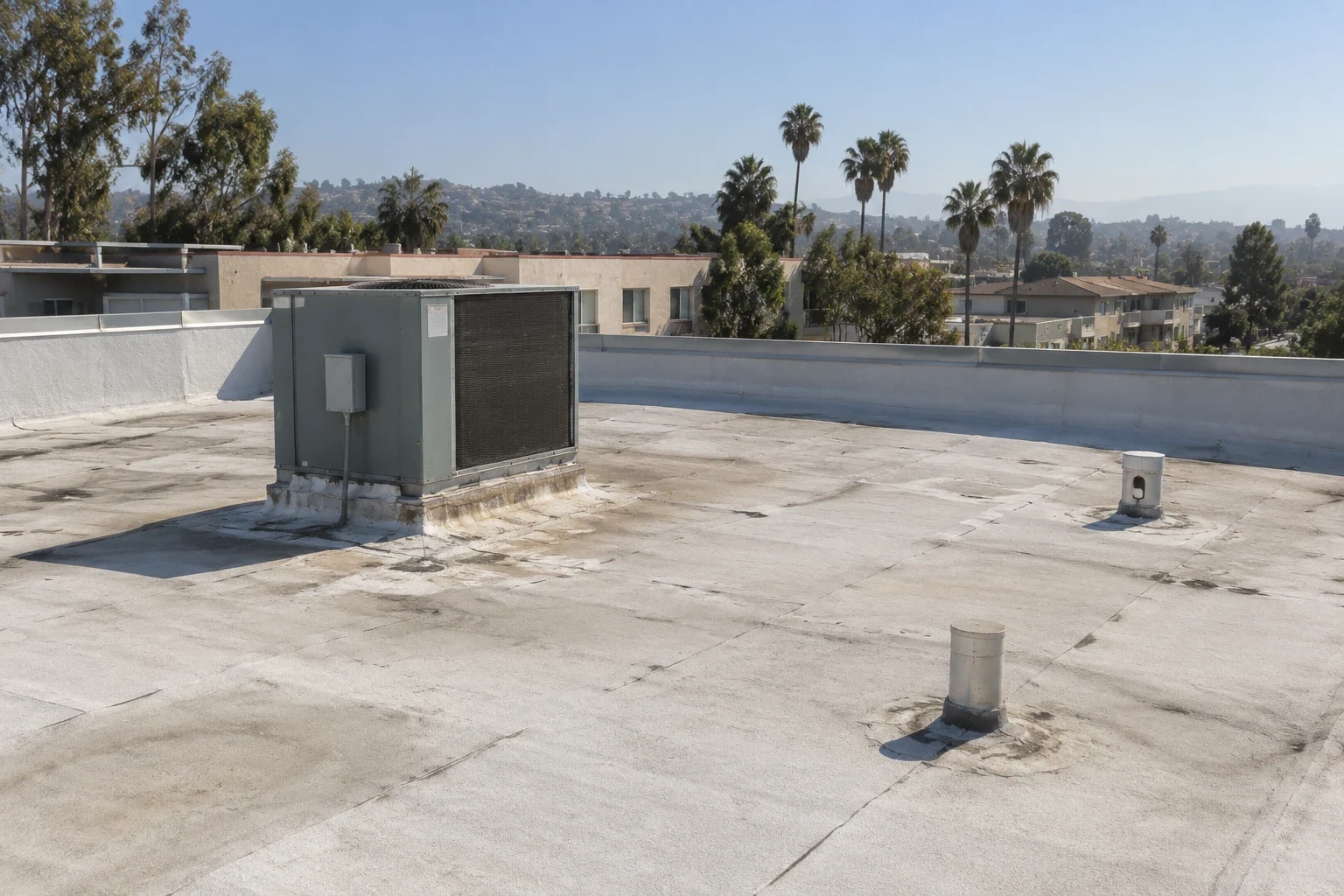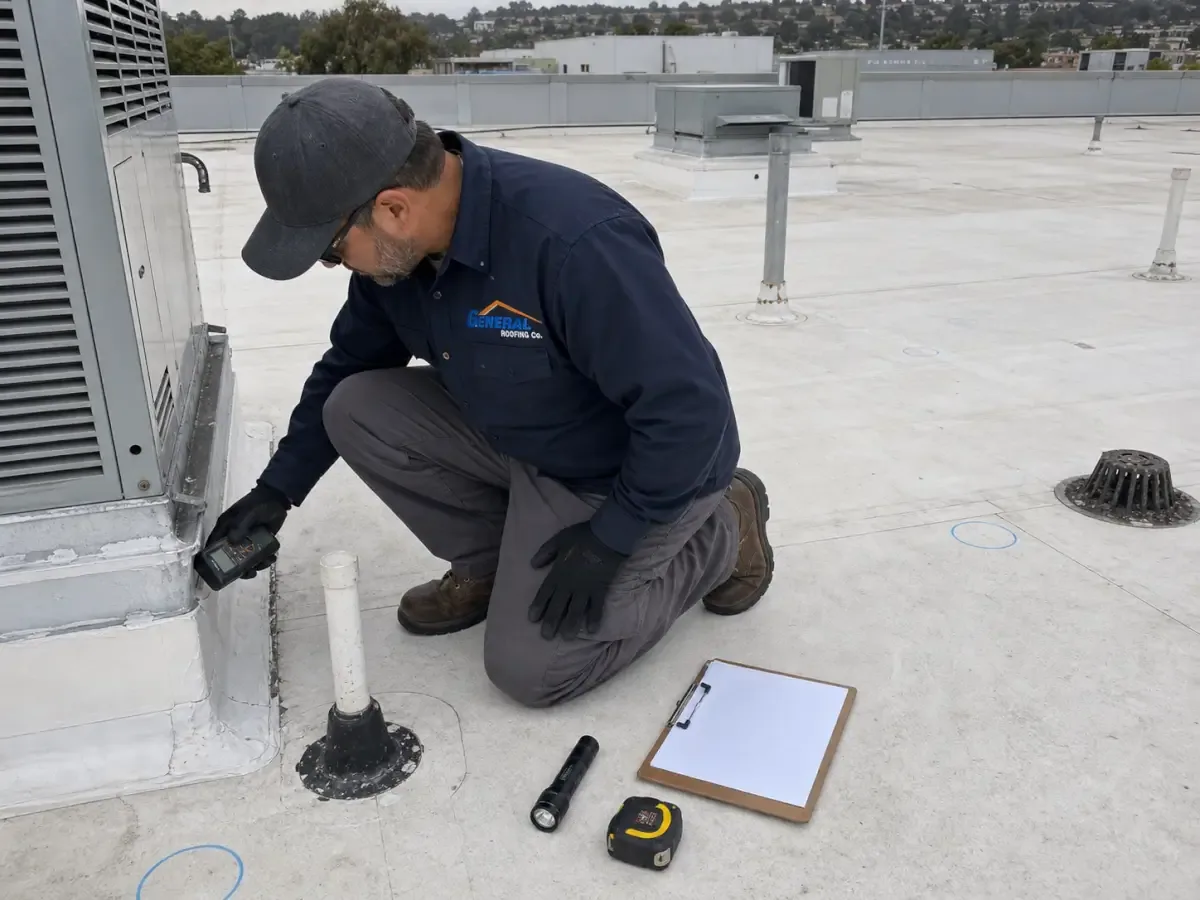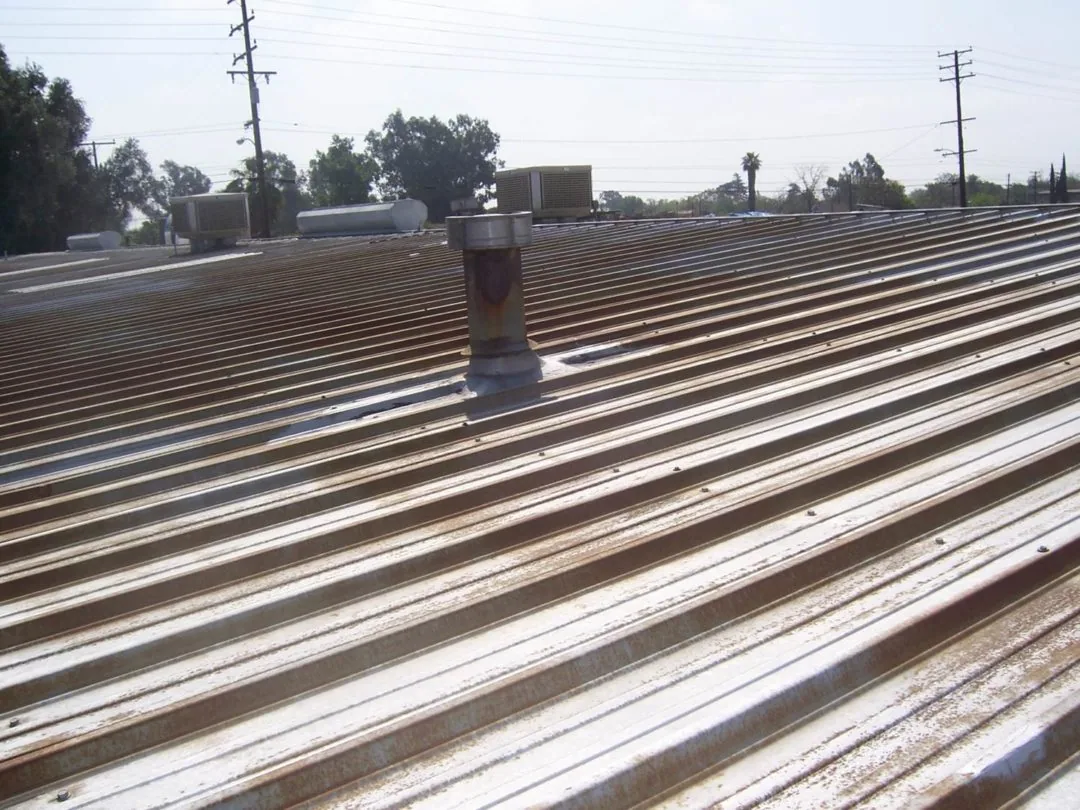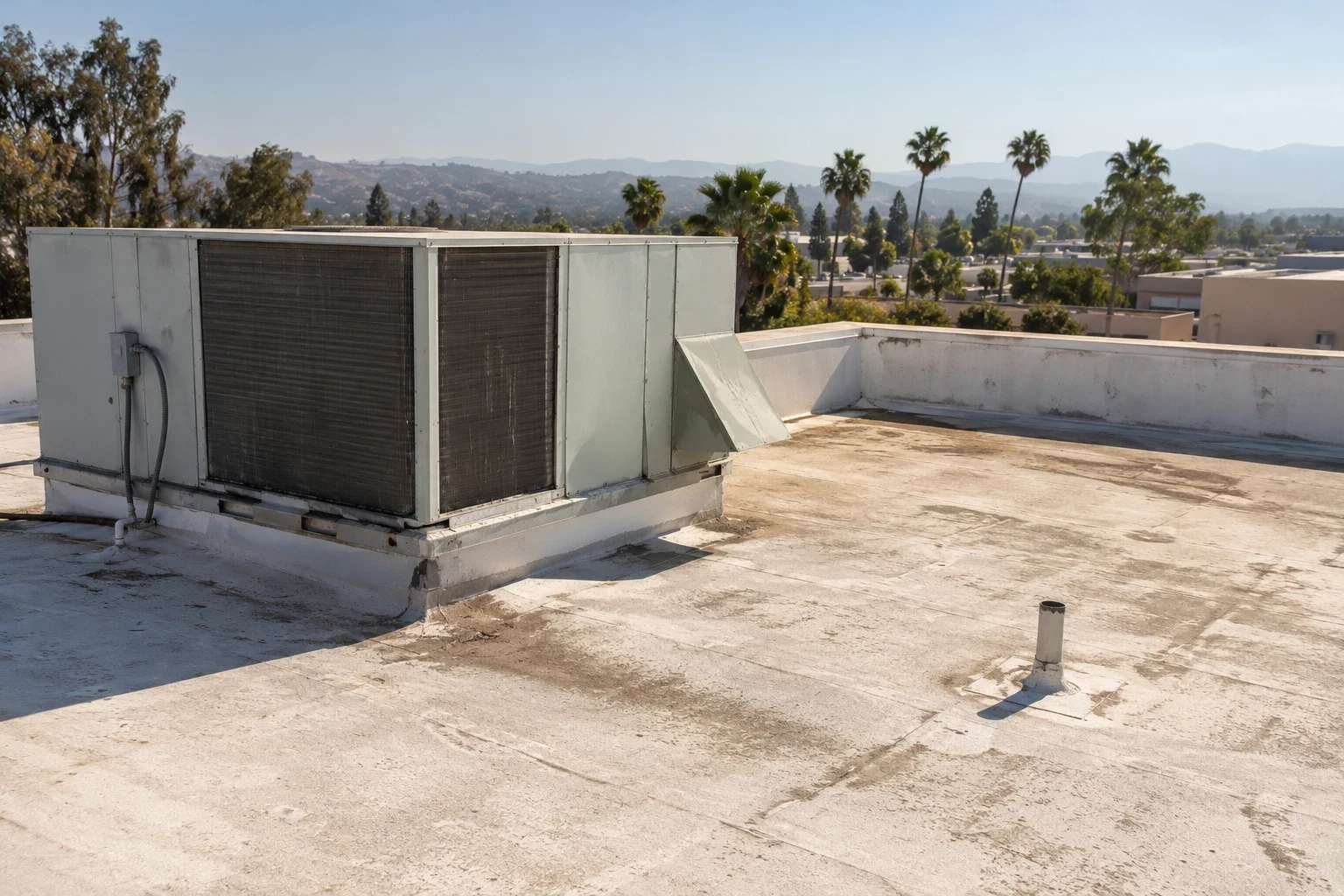
A claim file starts with the roof section exposed to weather, not the claim number. We identify the reported damage, photograph the membrane and related details, and separate what inspection found from what still needs testing. For a Simi Valley property manager, the useful first record names the affected zone, date, access limits, and whether water is active inside. That evidence supports a clear repair scope without promising a coverage decision.
A condition record can show seams, flashings, edge metal, drains, rooftop equipment, and prior repairs in context. We note whether observed damage appears consistent with one reported event or includes conditions requiring separate review. A roof claim documentation scope can organize the record while owner and carrier handle their own decisions.
Control the opening first
If water is entering, protect the interior and define a safe temporary dry-in. We record where the membrane is open, materials placed, work time, and which area remains exposed. The manager identifies rooms, electrical equipment, inventory, and access routes that need protection. Temporary stabilization is documented separately from permanent repair so the file does not treat emergency work as full restoration.
The crew can return to the same zone after conditions allow closer inspection. Photos need a wide view, a detail view, and a reference point that identifies the location on the roof plan. If an area remains unsafe or inaccessible, record that limit and schedule follow-up rather than describing it as inspected. A wind-damage roof review can track edge and seam observations when wind is part of the reported event.
Read local exposure carefully
City hazard planning treats dry Mediterranean conditions and recurring Santa Ana episodes as regional wildfire considerations. That does not prove a roof experienced wind or fire damage. We inspect the building for displaced metal, open seams, lifted flashing, smoke residue, or other conditions reported by the owner, and document each observation without assigning a cause the inspection cannot establish.
The municipal outlook also anticipates average highs and lows rising about 3 to 5 degrees Fahrenheit by mid-century, with a larger count of days over 97.2°F. On exposed surfaces, heat can affect work timing and the material behavior observed during a repair, but a city projection is not a condition reading for one roof. We record conditions present at the visit and keep the repair boundary tied to what is visible or tested.